


This article was automatically translated from the original Turkish version.
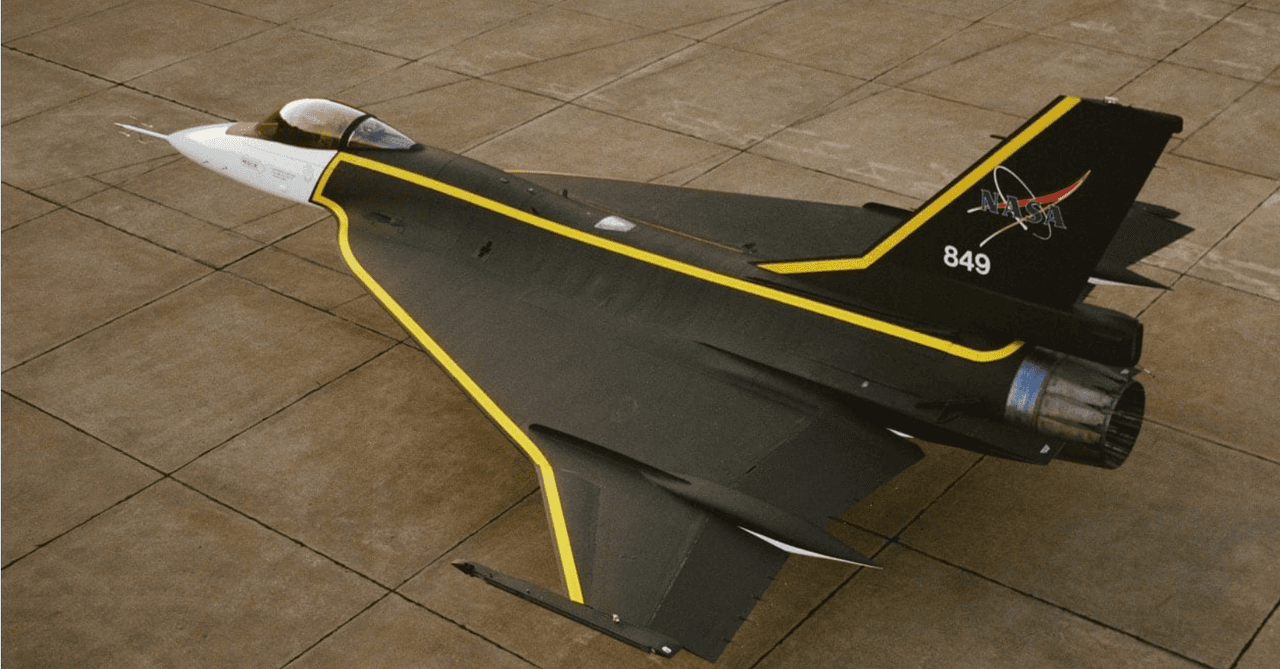
F-16XL
Maximum Speed | 2,253 km/h | ||||||||
|---|---|---|---|---|---|---|---|---|---|
Length | 17m | ||||||||
Weight | 9 980 kg | ||||||||
Range | 4 590 km | ||||||||
F-16XL is an experimental fighter aircraft developed by General Dynamics in the 1980s with the aim of surpassing the F-16 Fighting Falcon. The project was designed to achieve superior capabilities such as increased range, high weapons payload capacity and supersonic cruise performance. Although it was not selected by the United States Air Force over the F-15E Strike Eagle and never entered serial production, the F-16XL is recognized as a significant step in the development of fighter aircraft technology.
The F-16XL was developed within the framework of the Enhanced Tactical Fighter (ETF) program, which arose from the need for a new-generation tactical strike aircraft to replace the F-111 Aardvark. In this context, General Dynamics redesigned the existing F-16 platform with enhanced capabilities. Two prototypes were developed under the program:
The first flight was conducted on 3 July 1982.
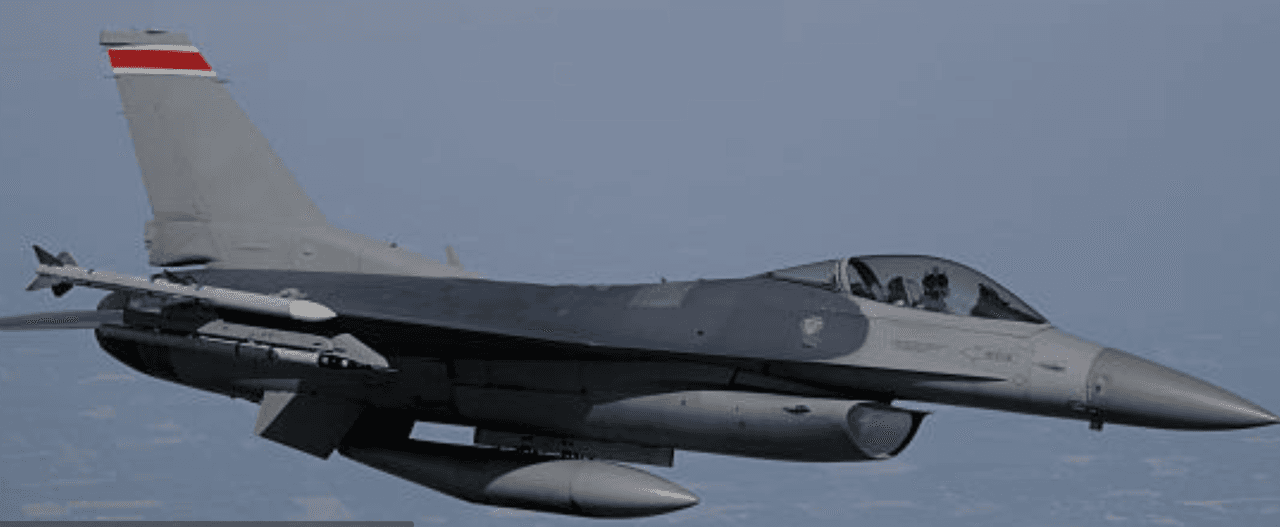
F-16 XL (Kaynak:
One of the most distinctive features of the F-16XL is its cranked-arrow delta wing configuration. This unique design provided numerous aerodynamic and operational advantages over the conventional F-16 platform. Thanks to the delta wing structure, the aircraft’s wing surface area was increased by approximately 120 percent, significantly enhancing flight performance.
The extended wing structure enabled the integration of up to 16 external weapons stations, substantially increasing the weapons payload capacity and strengthening the aircraft’s suitability for multi-role mission profiles. Additionally, this design extended the aircraft’s range, provided more stable supersonic cruise performance and improved fuel efficiency, thereby significantly increasing endurance.
The F-16XL draws attention not only through its design but also through its technical capabilities. The aircraft made its first flight on 3 July 1982 and was tested with different engine configurations. Equipped with the Pratt & Whitney F100-PW-200 and F100-PW-229 engines, the F-16XL achieved a maximum speed of Mach 2.0. Its supersonic cruise capability was successfully demonstrated during tests, with the aircraft exhibiting high performance in this domain.
The aircraft has a service ceiling of approximately 15,200 meters and a maximum takeoff weight of 21,770 kilograms. With 16 external weapons stations, the F-16XL can carry up to 13,600 kilograms of ordnance. Its extended fuselage and delta wing configuration give it a unique aerodynamic profile. The design accommodates both single-pilot and twin-pilot configurations.

F-16 XL Çizimleri (Kaynak:
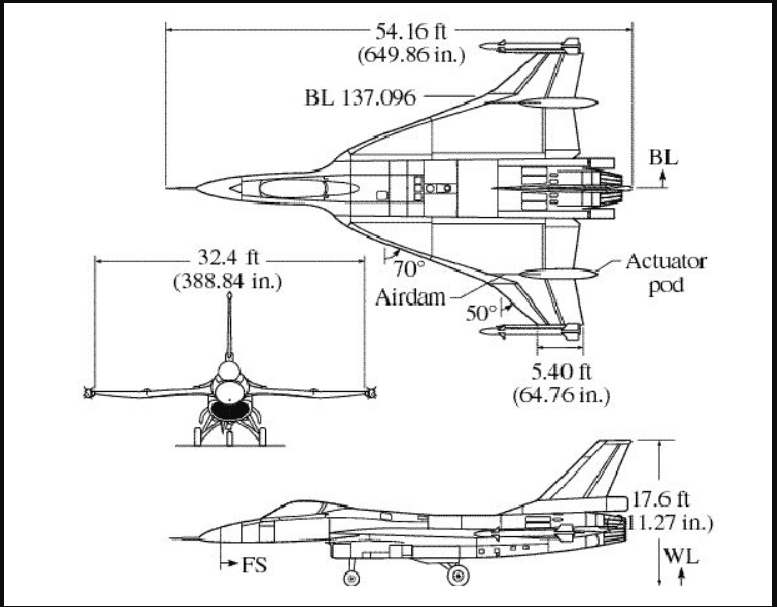
F16XL Teknik Tasarım Çalışmaları (Kaynak: John E. Lamar)
The F-16XL stands out as one of the first experimental American fighter aircraft capable of sustained supersonic flight without afterburners, known as supercruise. This feature offers significant operational advantages beyond mere speed. The ability to cruise at supersonic speeds without afterburners reduces radar signature and fuel consumption, thereby extending mission duration. This provides both reduced detectability and strategic range advantages.
The delta wing design of the F-16XL contributed significantly not only to aerodynamic performance but also to weapons payload capacity. Thanks to its expanded wing surface, the aircraft was equipped with 16 external weapons stations. This configuration allowed the simultaneous integration of various types of ordnance, enhancing effectiveness in both air-to-air and air-to-ground missions. In addition to air-to-air missiles such as the AIM-9 Sidewinder and AIM-120 AMRAAM, it could carry precision-guided munitions such as the Mk-82, GBU-10 and GBU-12. External fuel tanks were also integrated into the system to extend range. This versatile weapons configuration elevated the F-16XL to a highly advanced level of multi-role mission capability.
Despite all its technical achievements, the F-16XL was not produced under the United States Air Force’s Enhanced Tactical Fighter (ETF) program. In the final stage of the program, the decision favored the F-15E Strike Eagle. This choice was heavily influenced by the fact that the F-15E was already in active service and had an established operational history. Additional factors contributing to this decision included the F-15E’s greater internal fuel capacity, compatibility with existing logistics infrastructure, and more economical and straightforward training and maintenance procedures. As a result, the F-16XL did not progress to serial production. However, the project was not entirely abandoned; the aircraft was subsequently used for many years by NASA as a platform for aerodynamic research and testing.
The F-16XL is regarded as an important experimental platform in the history of fighter aircraft engineering, where advanced technologies were tested. Its advanced features—particularly the delta wing design, high weapons payload capacity and supercruise capability—set it apart from its contemporaries. Data and design insights gained from the project, while not directly applied, contributed indirectly to the development process of fifth-generation fighter aircraft. In this context, aerodynamic analyses and engineering outputs from the F-16XL project are believed to have served as references during certain design phases of modern fighters such as the F-22 Raptor and the F-35 Lightning II. Although it never entered serial production, the F-16XL made a substantial contribution to modern air power concepts and holds an important place in aviation history.
Air & Space Forces Magazine. 1983. "F-16XL: The Experimental Falcon".
F-16.net. "F-16XL: Cranked Arrow Delta."
Plane Historia. "F-16XL - The Supersonic Fighter That Lost to the Strike Eagle."Accessed Adresi.
RAAF Documentary. "F-16XL Documentary." Accessed [Date].Accessed Adresi.

F-16XL
Maximum Speed | 2,253 km/h | ||||||||
|---|---|---|---|---|---|---|---|---|---|
Length | 17m | ||||||||
Weight | 9 980 kg | ||||||||
Range | 4 590 km | ||||||||
Development Process
Delta Wing Design
Technical Specifications
Supercruise Capability
Weapons Payload Capacity
Program Cancellation
Legacy and Impact