

This article was automatically translated from the original Turkish version.
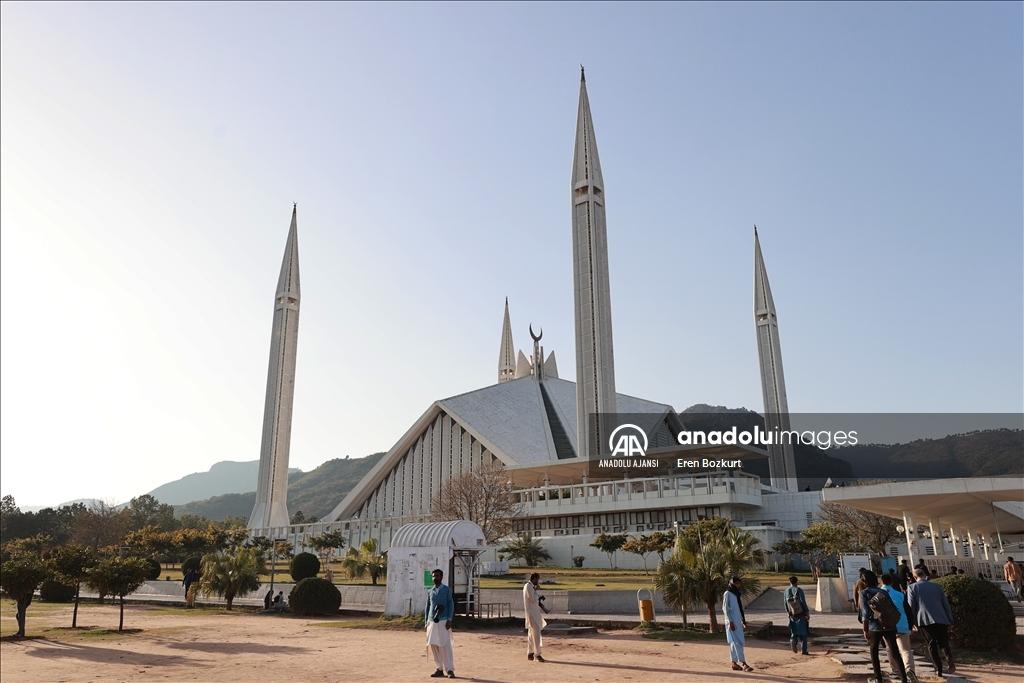
Faisal Mosque is a place of worship located in Islamabad, the capital of Pakistan, distinguished by its architectural design, construction process, and public functions. The mosque was financed by Saudi Arabia and bears the signature of Turkish architect Vedat Dalokay.
The Faisal Mosque was constructed in Islamabad, the planned capital of Pakistan, as a project financed by Saudi Arabia. Construction began in 1976 and lasted approximately ten years. The project was integrated into the development of Islamabad as a planned capital and designed as one of the key elements of the city’s urban fabric.
A competition was held to select the architectural design, inviting submissions from architects across different countries. The winning design was submitted by Turkish architect Vedat Dalokay. His design attracted attention due to its departure from classical mosque typology.
Following its completion, the Faisal Mosque came to be recognized not only as a place of worship but also as one of the iconic landmarks of Islamabad. Over time, it has become a major point of visitation for both the Pakistani public and international tourists.
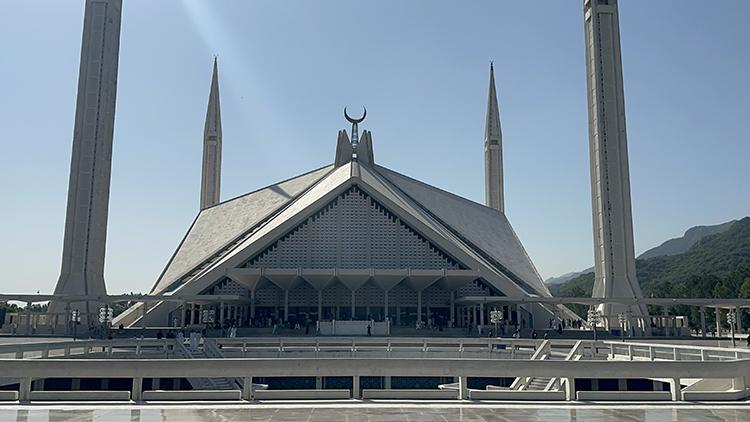
Image of Faisal Mosque (Anadolu Agency)
The architectural design of the Faisal Mosque is by Turkish architect Vedat Dalokay. Unlike traditional domed mosque typologies, the structure features a main mass resembling a tent. This approach reflects a modern architectural interpretation.
The four minarets located at the corners of the mosque were inspired by the slender, tall minarets of Ottoman mosque architecture but reinterpreted in a contemporary style.
The interior of the Faisal Mosque is designed to provide a vast, column-free prayer space. This arrangement allows the congregation to gather in a single unified area, ensuring spatial coherence.
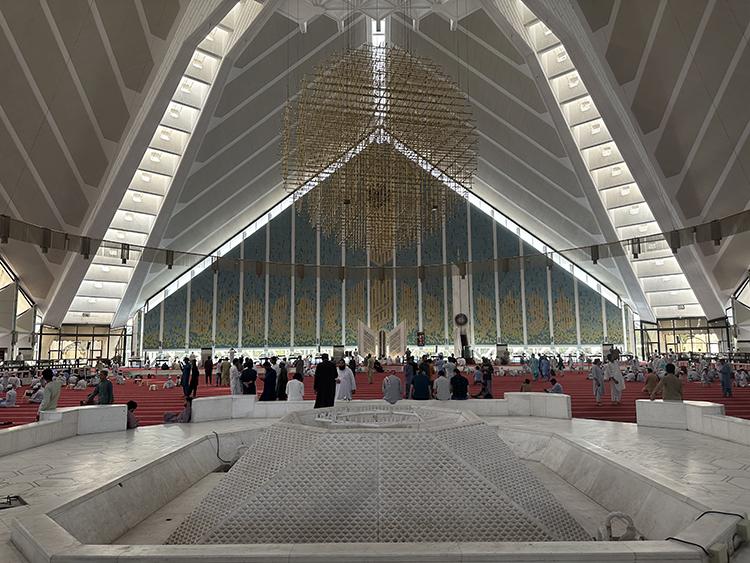
Interior of Faisal Mosque (Anadolu Agency)
Beyond its religious function, the Faisal Mosque stands out for its open public spaces that serve as accessible social areas for the community. The surrounding open grounds have been organized as public spaces available for visitors.
In this regard, the Faisal Mosque functions not only as a place of worship but also as a center facilitating social interaction.
The Faisal Mosque is regarded as one of the most significant works in Pakistan reflecting Turkish architectural influence. Through its architectural approach and scale, it holds a symbolic position within Pakistan’s modern architectural heritage.
Accessed November 26, 2025.
Anadolu Ajansı. "Pakistan’da Faysal Camisi, halka sunduğu sosyal yaşam alanıyla öne çıkıyor." Accessed December 29, 2025.
Anadolu Ajansı. "Pakistan’da Türk mimarın imzasını taşıyan eser: Faysal Camisi (Foto Galeri)." Accessed December 29, 2025.
Anadolu Ajansı. "Pakistan’da Türk mimarın imzasını taşıyan eser: Faysal Camisi (Foto Galeri)." Accessed December 29, 2025.
Anadolu Ajansı. "Pakistan’da Türk mimarın imzasını taşıyan eser: Faysal Camisi." Accessed December 29, 2025.
TRT Haber. "Pakistan’da bir Türk imzası: Faysal Camii." Accessed December 29, 2025.

History
Architectural Features
Interior Layout
Social and Public Functions
Cultural and Symbolic Significance