


This article was automatically translated from the original Turkish version.
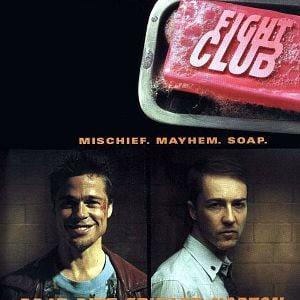
Fight Club (Film)
Director(s) | David Fincher | ||||||||
|---|---|---|---|---|---|---|---|---|---|
Screenwriter(s) | Jim Uhls | ||||||||
Lead Roles | Brad Pitt, Edward Norton, Helena Bonham Carter | ||||||||
Production Year | 1998 | ||||||||
Duration | 2 hours 19 minutes | ||||||||
IMDb Rating | 8.8/10 | ||||||||
Genre | Drama Thriller | ||||||||
Fight Club (Fight Club) is a cult film in the drama and thriller genres, released in 1999 and directed by David Fincher. Adapted from the novel of the same name by Chuck Palahniuk, the film was distributed by 20th Century Fox. Starring Brad Pitt, Edward Norton and Helena Bonham Carter, the production quickly attained an iconic status in cinema history due to its critique of modern society and psychological depth. The film premiered in theaters on 10 December 1999.
Fight Club centers on the story of Jack (the narrator), an insurance clerk trapped in the monotony of life and consumerist culture. Suffering from insomnia, Jack seeks solace by attending support group meetings. During this time he meets the eccentric Marla Singer. His life is fundamentally changed when he encounters the charismatic and anarchist Tyler Durden. Tyler introduces Jack to Fight Club, a secret underground organization that evolves beyond a physical and psychological arena for men into a rebellion against societal order. The film explores themes of identity, consumer society and chaos.
Fight Club Trailer (MOVIE PREDICTOR)
Fight Club was filmed in 1998 under the direction of David Fincher. The screenplay was written by Jim Uhls and is based on Chuck Palahniuk’s 1996 novel. Principal photography took place largely in Los Angeles, with minimalist set designs and visual effects employed to create the film’s dark and chaotic atmosphere. Fincher’s stylized directorial approach influenced the film both visually and thematically. Despite its low budget, the film attracted attention for its innovative narrative.
Consumer Culture and Rebellion
The film critiques the consumer-driven nature of modern society and the way individuals lose themselves within this system. Fight Club emerges as a physical and ideological rebellion against this order.
Identity and Dual Life
Jack’s relationship with Tyler Durden reflects internal conflicts and the search for identity. The film interrogates the concept of self within a framework of psychological tension.
Social Gender and Masculinity
Fight Club examines the crisis of male identity in modern society and the violent expression of suppressed emotions. Masculinity is portrayed both critically and ironically.
Fight Club was released worldwide on 10 December 1999. Initially receiving mixed reviews and failing to achieve the box office success expected, the film gradually attained cult status and developed a large fan base. It garnered praise for its bold narrative and social critique, while also facing criticism from some quarters for its violent content and anarchist themes. In particular, the final scene and the surprise twist are regarded as among the most iconic moments in cinema history.
Beyazperde. "Dövüş Kulübü: Fotoğraflar." Accessed May 2, 2025. https://www.beyazperde.com/filmler/film-21189/fotolar/.
IMDb. "Fight Club." Accessed May 2, 2025. https://www.imdb.com/title/tt0137523/?ref_=mv_close.
MOVIE PREDICTOR. "FIGHT CLUB (1999) | Full Movie Trailer." YouTube, Accessed May 2, 2025. https://www.youtube.com/watch?v=Y6cwmHL2tFI&pp=ygUeZMO2dsO8xZ8ga3Vsw7xiw7wgcmVzaSBmcmFnbWFu

Fight Club (Film)
Director(s) | David Fincher | ||||||||
|---|---|---|---|---|---|---|---|---|---|
Screenwriter(s) | Jim Uhls | ||||||||
Lead Roles | Brad Pitt, Edward Norton, Helena Bonham Carter | ||||||||
Production Year | 1998 | ||||||||
Duration | 2 hours 19 minutes | ||||||||
IMDb Rating | 8.8/10 | ||||||||
Genre | Drama Thriller | ||||||||
Plot
Cast
Production
Thematic Structure
Release and Reception
Awards and Nominations