

This article was automatically translated from the original Turkish version.
Fliya böreği is a traditional dish preserved across a broad region extending from the Balkans into Anatolia, recognized as a characteristic and labor-intensive pastry of Albanian culinary culture. Also known as the "queen of pides," "layered pide," or "flija," it is made by layering a fluid dough of flour, water, and salt with a rich mixture prepared from dairy products, using a specialized cooking technique. Fliya is not merely a food item but carries ritualistic value, symbolizing social solidarity, hospitality, and intergenerational identity transmission as an element of intangible cultural heritage.
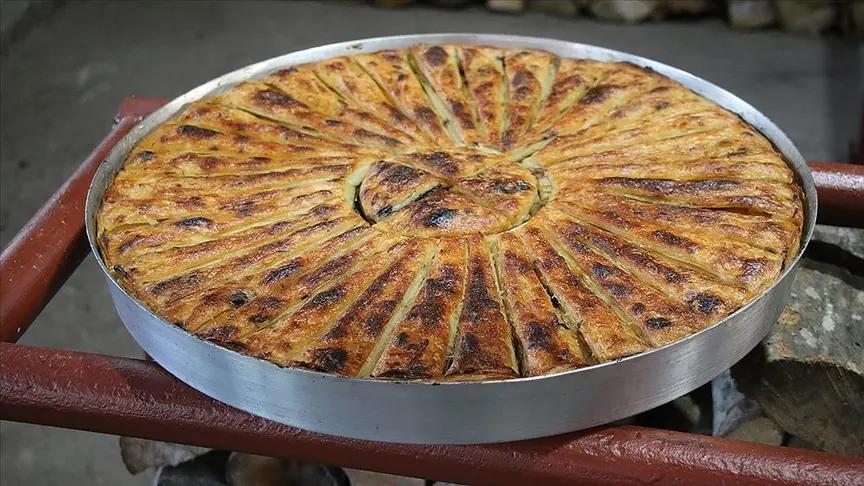
Fliya (Anadolu Ajansı)
The tradition of fliya has been carried through migration routes from regions of the Balkans with dense Albanian populations to other geographic areas. In Türkiye, Albanian communities who migrated from Kosovo in 1912 and settled in Kapıağzı village, part of Niksar district in Tokat, have preserved this centuries-old delicacy in its original form for over a century. In the Balkans, it ranks among the most cherished traditional foods in the Prizren region of Kosovo and around the capital of North Macedonia, Skopje.
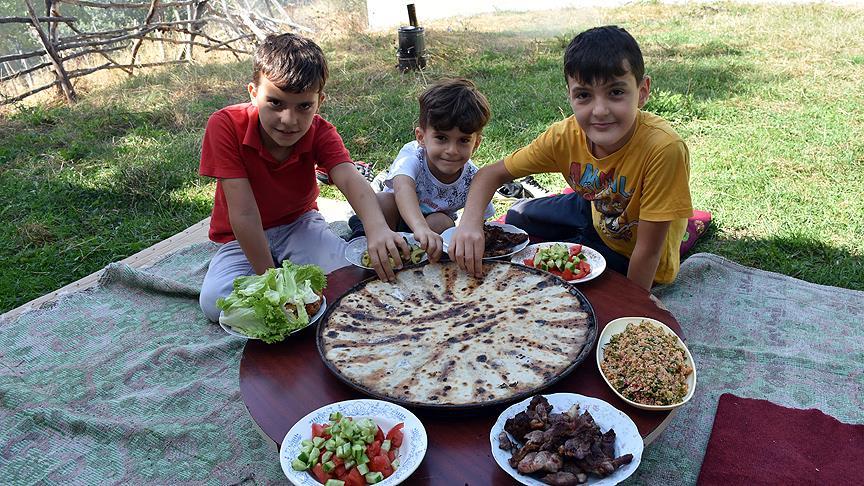
Fliya has become a shared cultural value among Turk and Albanian communities, particularly serving as an essential component of guest tables in rural settlements and immigrant villages where traditional customs are actively maintained.
The preparation of fliya relies on the careful combination of a few basic ingredients with patience and technical skill.
Fliya Böreği (Anadolu Ajansı)
• Fluid Dough: Made by whisking flour, water, and salt until a smooth consistency is achieved.
• Fat Mixture: Composed of butter, kaymak, and milk; in some regional variations, yogurt is also added to this mixture.
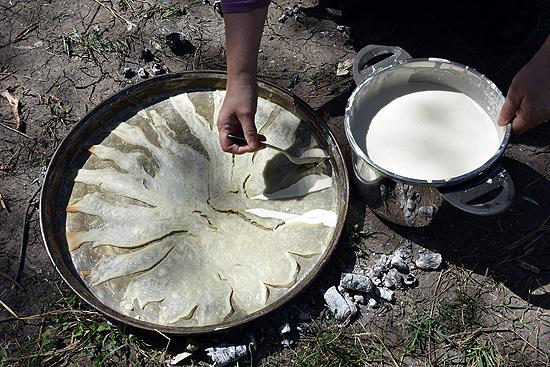
The preparation process differs from modern culinary techniques and is based on the principle of "top-down cooking." After the liquid dough is poured into a tray, it is covered with a special metal lid, called a sac, which has been heated over a wood fire. Each layer is browned by the intense heat from above, then brushed with the fat mixture before a new layer of dough is added. This process is repeated until approximately seven to eight layers are formed, taking about three hours depending on the intensity of the fire. Once cooking is complete, a final layer of kaymak and milk is added to enhance the flavor depth.
The most essential element in giving fliya its distinctive taste is the traditional cooking setup. The following tools play a central role in the process:
• Sac and Sacayağı: The tray is placed not directly over the fire but on a platform called a sacayağı. The primary purpose is to prevent the bottom of the pastry from burning and to ensure heat is delivered only from above, through the sac.
• Wood Fire and Embers: Embers derived from a wood fire are used for cooking. Placed on top of the sac, these embers allow each layer to brown evenly and under controlled conditions.
Fliya is regarded as a vital instrument in preserving collective memory and identity. Its lengthy preparation and need for continuous supervision transform the cooking process into a communal activity known as "imece." This strengthens bonds among family members and neighbors. Fliya is more than an everyday meal; it gains significance during moments of social gathering such as holidays, weddings, special visits, and traditional ceremonies. Offering fliya to guests is considered a tangible expression of the value and respect accorded to them.
Anadolu Ajansı. "Arnavut Mutfağının Eşsiz Lezzeti, Pidelerin Kraliçesi: 'Fliya'." Accessed February 4, 2026. https://www.aa.com.tr/tr/kultur-sanat/arnavut-mutfaginin-essiz-lezzeti-pidelerin-kralicesi-fliya/2554453
Anadolu Ajansı. "Arnavutların Asırlık Lezzeti: Fliya Böreği." Accessed February 4, 2026.
EC Ma Ndryshe and the Six Municipalities of thePrizren Yöresinin. *Geleneksel Beslen*. Prizren, Kosovo, 2015. Accessed February 4, 2026.
Sarıtunç, Berrin. "Balkan Mutfak Kültürünün Somut Olmayan Miras Boyutu: Ritüeller, Kimlik ve Toplumsal Bellek." Türk Folklor Araştırmaları 372 (2026 / I): 153-180. Accessed February 4, 2026. https://dergipark.org.tr/tr/download/article-file/5562810

Historical Background and Geographic Distribution
Ingredients and Preparation
Cooking Technology and Equipment
Social Function and Intangible Heritage