

This article was automatically translated from the original Turkish version.
+2 More
Length(s) | 2.529 m | ||||||||
|---|---|---|---|---|---|---|---|---|---|
Type(s) | Cantilever Bridge Railway Bridge | ||||||||
Material(s) | Steel | ||||||||
Location | Scotland Firth of Forth | ||||||||
UNESCO Status | 2015 World Heritage | ||||||||
Usage | Passenger and Freight Transport | ||||||||
Number of Towers | 3 Double Cantilever Towers | ||||||||
Year of Opening | 1890 | ||||||||
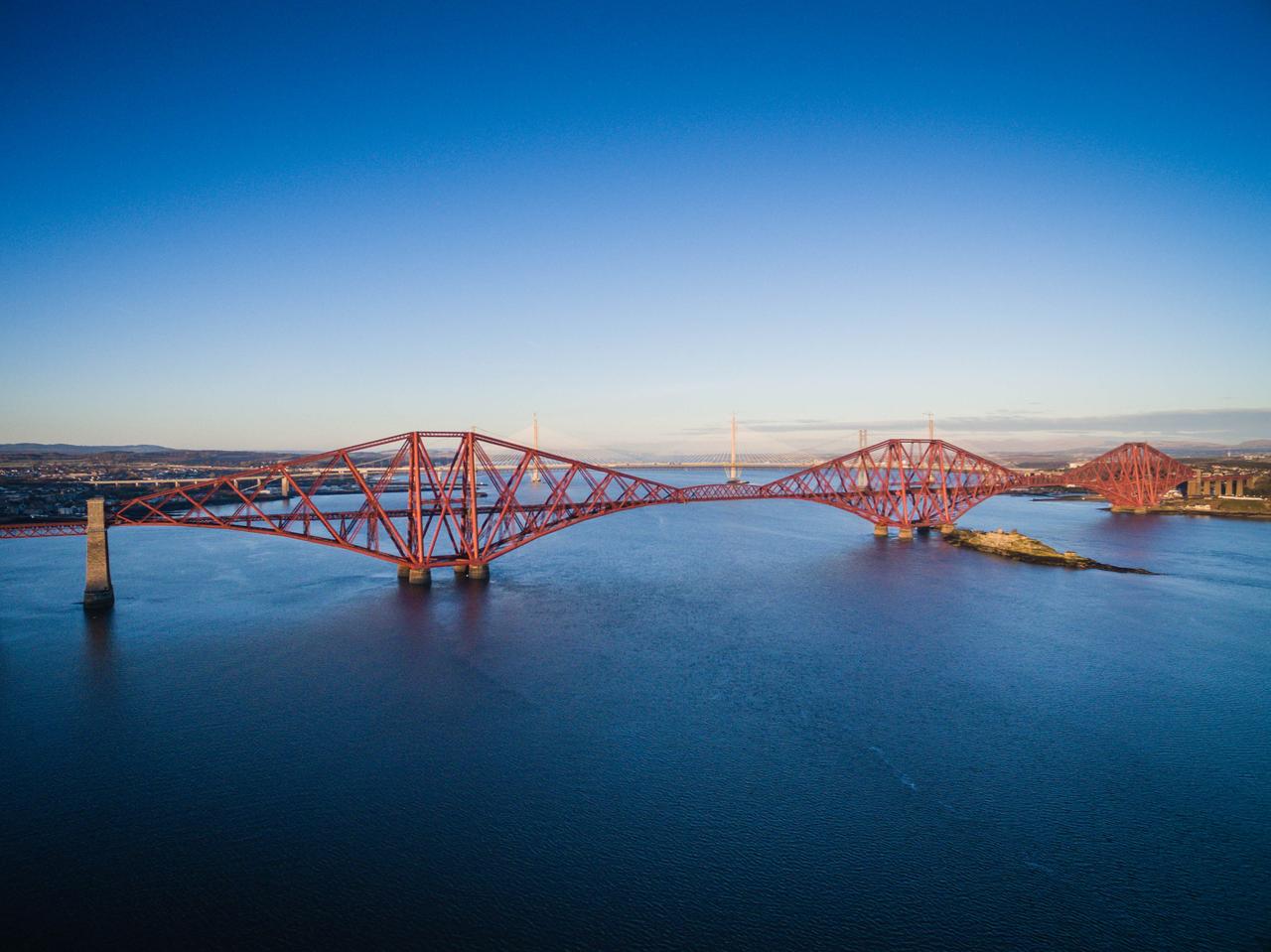
Forth Bridge is a railway bridge spanning the Firth of Forth in eastern Scotland, northwest of Edinburgh. Opened in 1890, the bridge provides a continuous railway connection between Fife and Edinburgh and remains in active use for both passenger and freight transport. The structure is supported by three pairs of cantilever towers and two suspended spans. In 2015, the Forth Bridge was inscribed on the UNESCO World Heritage List. The bridge holds historical significance for its engineering design, structural scale and the materials used.
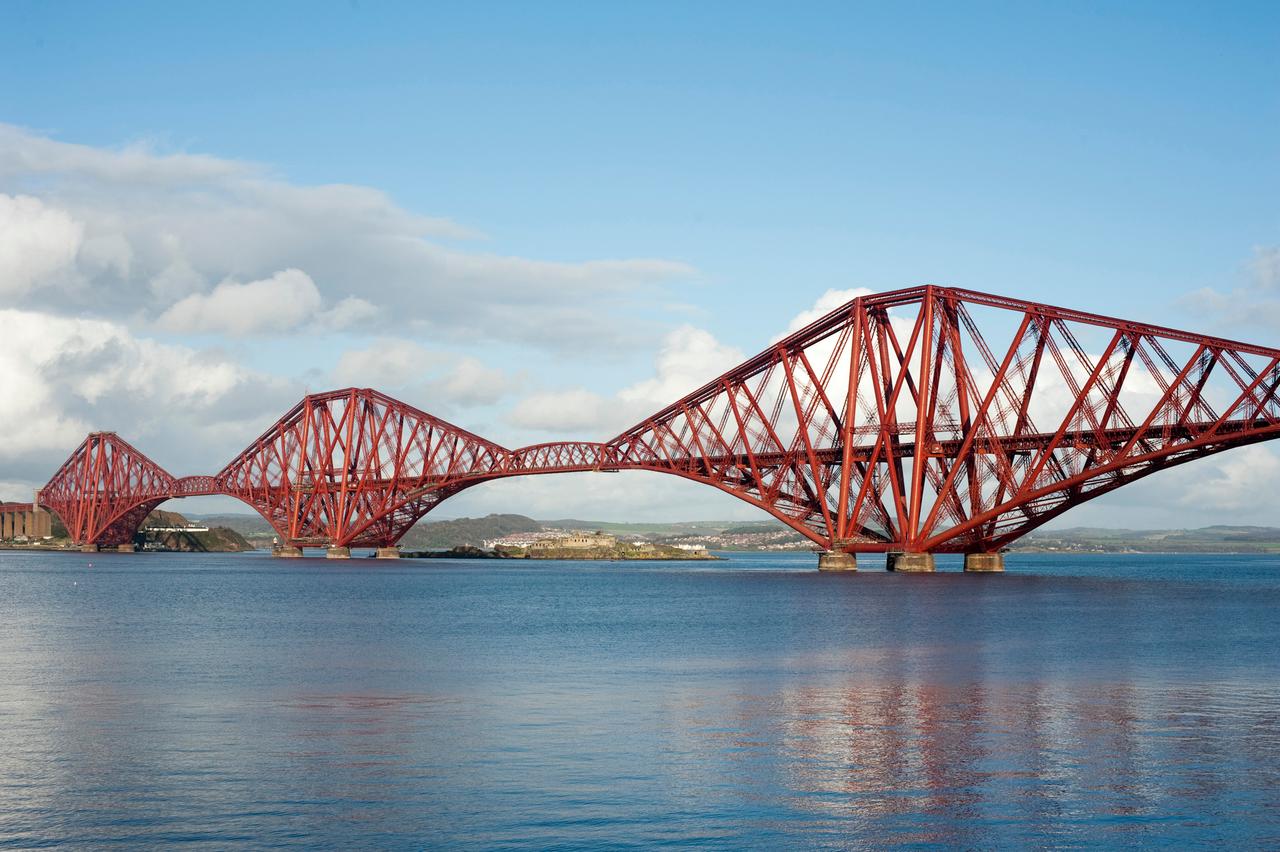
Forth Bridge (Flickr)
Construction of the Forth Bridge began in 1882 and was completed in 1890.【1】 The bridge was designed by Benjamin Baker, with engineering consultation by Sir John Fowler, and constructed by a consortium led by William Arrol. During construction, a large workforce was employed and innovative steel materials and riveting techniques were applied. The three pairs of cantilever towers, each cantilever arm and the two suspended spans were assembled using advanced engineering methods of the time.
The construction of the bridge enabled the East Coast railway line to provide uninterrupted service from London to Aberdeen. The quantity of steel used, the number of rivets and the assembly methods of structural elements constitute a significant example of contemporary engineering practice. At the time of its opening, the bridge featured some of the longest cantilever spans in the world and reflected technological standards in material selection, craftsmanship and structural integrity.
The Forth Bridge is positioned to span the wide estuarine area of the Firth of Forth. Connecting Fife to Edinburgh by rail, the bridge is 2,529 metres long and is among the earliest examples of multi-span cantilever bridges and remains one of the longest such structures today.【2】 The bridge’s location and overall form were determined with consideration for environmental conditions and navigation channels. Its longitudinal and visual integrity was designed to harmonize with the surrounding natural and urban landscape. The bridge, together with other nearby structures such as the Forth Road Bridge and the Queensferry Crossing, was planned to create a continuous and balanced architectural composition along the estuary. The design process balanced aesthetic and environmental requirements with technical criteria.
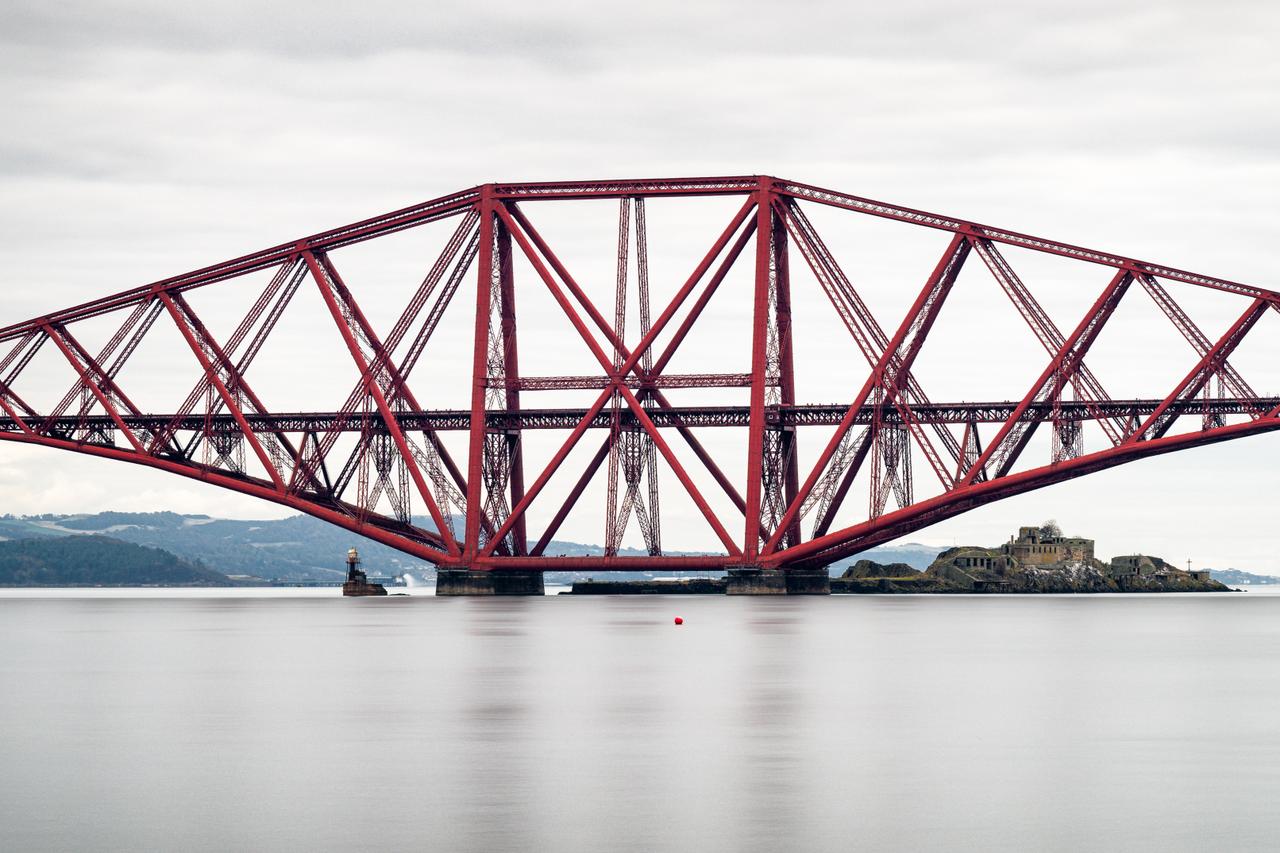
Forth Bridge (Flickr)
The Forth Bridge is supported by three pairs of cantilever towers. Each tower is built on a granite foundation and stands approximately 110 metres high. The cantilever arms extend 207 metres in each direction and are connected by two suspended spans. This arrangement ensures balanced load distribution across the large spans. The total span length of 521 metres created by the three main towers was among the longest cantilever spans in the world at the time of opening.【3】
The placement of the towers and spans was designed with consideration for navigation channels and natural ground conditions on the Firth of Forth. The geometry of the cantilever arms and suspended spans was calculated to ensure balanced transmission of structural loads. This configuration is critical to the bridge’s long-term durability and operational functionality.
The superstructure of the Forth Bridge consists largely of structural elements formed by riveting steel plates. The steel plates were assembled into tubular forms to create the primary load-bearing members. These elements run along the towers and cantilever arms of the bridge, while lighter steel components are used in sections subjected to tensile forces. Tens of thousands of tons of steel plates and millions of rivets were used in the superstructure, collectively forming the bridge’s load-bearing system. The visible exposure of structural components is one of the defining features of the bridge’s industrial character.
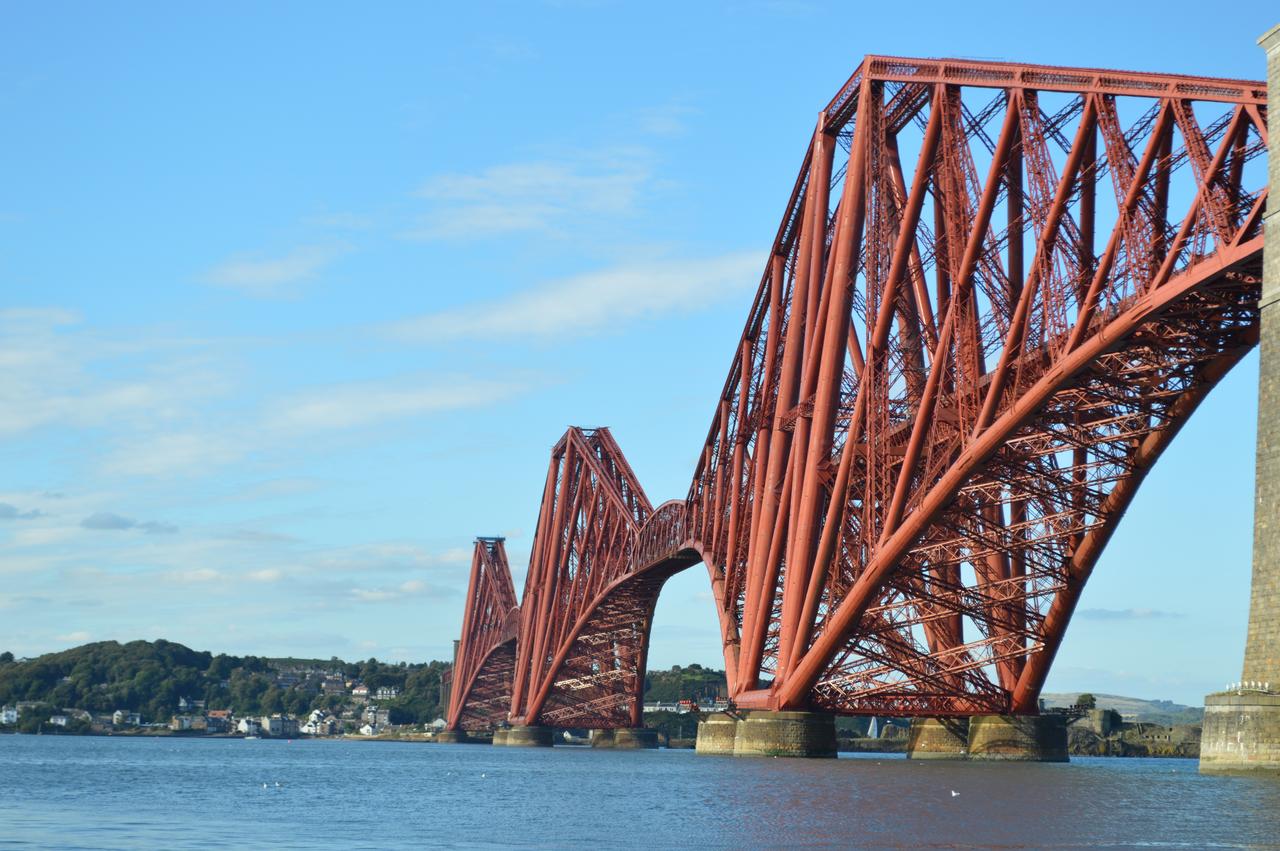
Forth Bridge (Flickr)
The bridge was constructed for railway transport and facilitates the passage of passenger and freight trains across the Firth of Forth. By establishing a direct rail link between Fife and Edinburgh, it became a vital component of the regional transport network. Today, the bridge remains in active service, supporting regular train schedules and ensuring the continuity of rail transport. The load-bearing system was designed to safely transfer railway loads and to ensure the bridge’s long-term operational viability.
The Forth Bridge is protected under one of the highest levels of legal heritage status due to its architectural and historical significance. The structure is listed under Category “A”, a classification reserved for buildings of special architectural or historical interest, ensuring the preservation of its structural features and surroundings. Ownership of the bridge belongs to Network Rail Limited, which is responsible for its maintenance and operation. A collaborative body, the Forth Bridges Forum, comprising Transport Scotland, Historic Environment Scotland and local authorities, oversees its management. This forum ensures regular cooperation to preserve the bridge’s structural integrity, plan maintenance works and implement conservation principles established under its World Heritage status. The surrounding environment is also subject to various cultural and natural heritage protection regulations, and management plans aim to sustain the bridge’s original characteristics.【4】
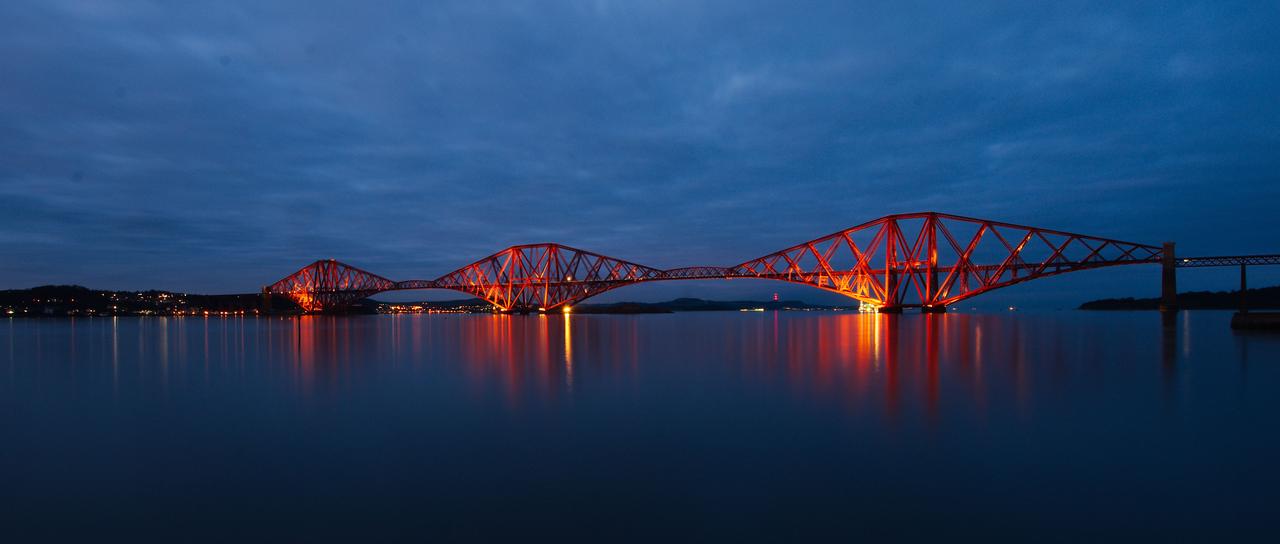
Forth Bridge (Flickr)
The Forth Bridge is a significant example reflecting the development of railway transport and the historical evolution of large-scale engineering structures. As a railway crossing over the Firth of Forth, it serves as a critical infrastructure element ensuring continuity in the regional transport network. It is recognized as a landmark in bridge design and construction for its pioneering use of cantilever spans, large-scale application of steel and advanced engineering planning. In recognition of these qualities, the Forth Bridge was inscribed on the UNESCO World Heritage List in 2015.【5】 The World Heritage status ensures the bridge’s protection and international recognition not merely as a transport infrastructure but as an engineering structure of cultural heritage value.
Dick, Ian. “Forth Bridge.” Flickr. Accessed March 11, 2026. https://www.flickr.com/photos/ian_d/31263923793/
Government of the United Kingdom. “Forth Bridge to Become World Heritage Site.” GOV.UK. Accessed March 11, 2026. https://www.gov.uk/government/news/forth-bridge-to-become-world-heritage-site
Hagdorn, Magnus. “Forth Bridge.” Flickr. Accessed March 11, 2026. https://www.flickr.com/photos/hagdorned/25647659532/
Historic Environment Scotland. “UNESCO Plaque Unveiled for the Forth Bridge World Heritage Site.” Historic Environment Scotland Resmî Web Sitesi. August 21, 2017. Accessed March 11, 2026. https://www.historicenvironment.scot/about-us/news/unesco-plaque-unveiled-for-the-forth-bridge-world-heritage-site/
Kilby, Eric. “Forth Rail Bridge Section.” Flickr. Accessed March 11, 2026. https://www.flickr.com/photos/ekilby/55130642240/
Kite, S., N. Hussain, and M. Carter. “Forth Replacement Crossing – Scotland, UK.” *Procedia Engineering* 14 (2011): 1480–1484. Accessed March 11, 2026. https://www.sciencedirect.com/science/article/pii/S187770581101263X
Newton-Syms, Timo. “Forth Bridge.” Flickr. Accessed March 11, 2026. https://www.flickr.com/photos/timo_w2s/34935438711/
Photies, SR. “Forth Bridge.” Flickr. Accessed March 11, 2026. https://www.flickr.com/photos/108294605@N06/15122413832/
Travel Stock Photos. "Forth Bridge Panoramic." Flickr. Accessed March 11, 2026. https://www.flickr.com/photos/everywherephoto/20224688809/
UNESCO World Heritage Centre. “The Forth Bridge.” *Liste du patrimoine mondial*. sy. 1485. Accessed March 11, 2026. https://whc.unesco.org/en/list/1485/
UNESCO in the UK. “The Forth Bridge.” Accessed March 11, 2026. https://unesco.org.uk/our-sites/world-heritage-sites/the-forth-bridge
[1]
Historic Environment Scotland, “UNESCO Plaque Unveiled for the Forth Bridge World Heritage Site,” Historic Environment Scotland Official Website, 21 August 2017, Last Access: 11 March 2026, https://www.historicenvironment.scot/about-us/news/unesco-plaque-unveiled-for-the-forth-bridge-world-heritage-site/
[2]
UNESCO World Heritage Centre, “The Forth Bridge,” Liste du patrimoine mondial, no. 1485, Last Access: 11 March 2026, https://whc.unesco.org/en/list/1485/
[3]
A.e.,
[4]
A.e.,
[5]
Historic Environment Scotland, “UNESCO Plaque Unveiled for the Forth Bridge World Heritage Site,” Historic Environment Scotland Official Website, 21 August 2017, Last Access: 11 March 2026, https://www.historicenvironment.scot/about-us/news/unesco-plaque-unveiled-for-the-forth-bridge-world-heritage-site/


Length(s) | 2.529 m | ||||||||
|---|---|---|---|---|---|---|---|---|---|
Type(s) | Cantilever Bridge Railway Bridge | ||||||||
Material(s) | Steel | ||||||||
Location | Scotland Firth of Forth | ||||||||
UNESCO Status | 2015 World Heritage | ||||||||
Usage | Passenger and Freight Transport | ||||||||
Number of Towers | 3 Double Cantilever Towers | ||||||||
Year of Opening | 1890 | ||||||||
Construction Process
Architectural Design
Towers and Spans
Materials and Function
Conservation and Management
Cultural Significance