


This article was automatically translated from the original Turkish version.
+2 More
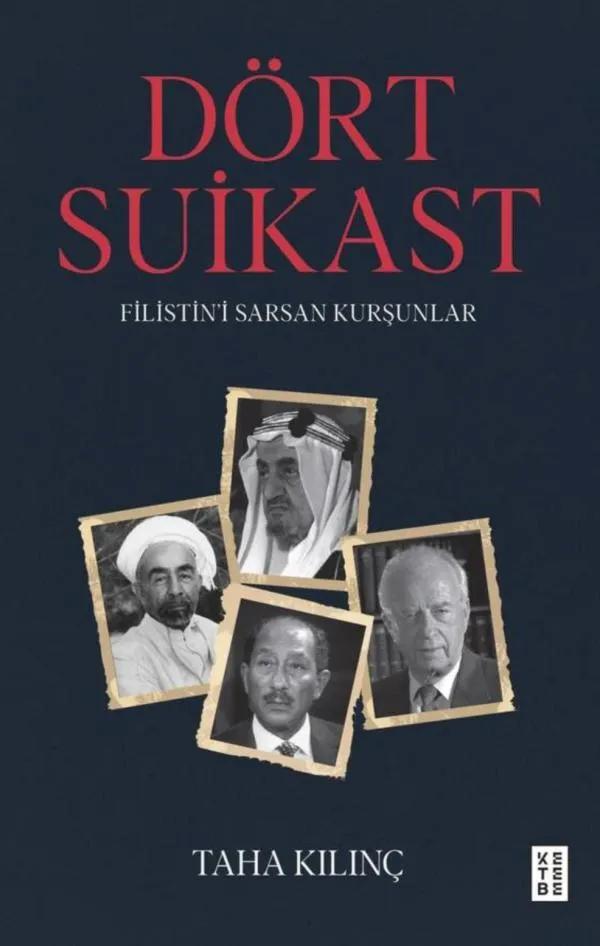
Four Assassinations: Bullets That Shook Palestine is a historical work authored by Taha Kılınç and published in 2024 by Ketebe Yayınları. The book examines four major political assassinations in the 20th century Middle East, directly linked to the Palestine and Jerusalem issues: King Abdullah bin Hussein of Jordan (20 July 1951), King Faisal bin Abdulaziz of Saudi Arabia (25 March 1975), President Muhammed Enver Sedat of Egypt (6 October 1981), and Israeli Prime Minister Yitzhak Rabin (4 November 1995).
The book analyzes, in a documentary style, the regional and global impacts of these assassinations, the historical trajectory of the Palestinian issue, and the political dynamics of the Middle East. Kılınç places the backgrounds, perpetrators, and consequences of the assassinations within their historical context to offer a perspective aimed at understanding the complex structure of the Palestinian question.
The book analyzes pivotal moments in 20th century Middle Eastern history through the assassinations of four leaders centered on Palestine and Jerusalem. Each assassination is treated in a separate chapter, with detailed examination of the historical background, the motives of the perpetrators, and the impact on regional politics. The work is organized with thematic coherence, presenting the reader with a unified view of the multiple dimensions of the Palestinian issue.
Assassination of Abdullah bin Hussein (1951): Abdullah bin Hussein, the first king of Jordan, was killed by a Palestinian while attending Friday prayers at the Al-Aksa Camii in Jerusalem. The assassination occurred due to Abdullah’s policies regarding the partition of Palestine and his secret negotiations with Israel. The book explores how Jordan shaped its Palestinian policy and the reactions it provoked across the Arab world.
Assassination of Faisal bin Abdulaziz (1975): King Faisal of Saudi Arabia was killed by his nephew Faisal bin Musaid. Kılınç argues that this assassination was connected to Faisal’s support for the Palestinian cause and his role in the 1973 Arab-Israeli War oil embargo. The assassination marked a significant turning point in Saudi Arabia’s foreign policy.
Assassination of Muhammad Anwar Sadat (1981): Egyptian President Sadat was killed by an Islamist group due to his role in the Camp David Accords and the peace process with Israel. The book analyzes how this event affected Egypt’s Palestinian policy and its standing in the Arab world.
Assassination of Yitzhak Rabin (1995): Israeli Prime Minister Rabin was killed by an extreme-right-wing Israeli Jew for his support of the Oslo Peace Process. Kılınç provides a detailed analysis of the assassination’s impact on Israeli-Palestinian peace negotiations and the political turmoil it triggered within Israel.
Kılınç argues that each assassination was directly linked to the Palestinian issue and that the victims’ actions regarding this issue were decisive in their targeting. The book emphasizes that these assassinations were not merely the loss of individual leaders but forced all parties involved—the Arab states, Israel, and international actors—to reevaluate their policies. The work examines, from a historical perspective, how these events influenced the balance of power in the Middle East, the Arab-Israeli wars, and peace processes.
Four Assassinations: Bullets That Shook Palestine is increasingly preferred by those seeking to understand the historical roots of the Palestinian issue, particularly in light of developments in Gaza after 7 October 2023.

No Discussion Added Yet
Start discussion for "Four Assassinations: The Bullets That Shook Palestine (Book)" article
Content and Structure of the Book
Assassinations and Historical Context
Core Theses of the Book