
 Recently Added:
This article was automatically translated from the original Turkish version.
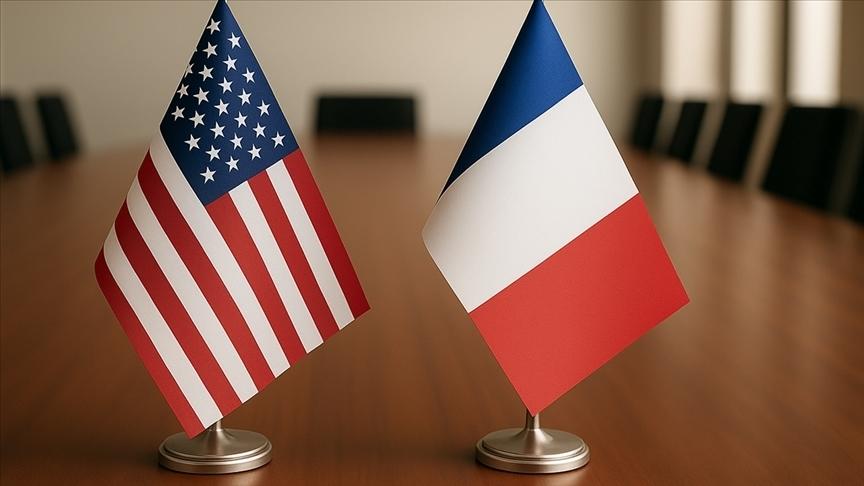
In February 2026, a diplomatic tension arose between France and the United States. The situation began when Charles Kushner, the U.S. Ambassador to Paris, failed to attend an official summons issued by the French Ministry of Foreign Affairs. French authorities had invited the ambassador to provide clarification in response to statements made by the U.S. administration following the death of an extreme right-wing activist in Lyon.
The U.S. ambassador’s refusal to attend the scheduled meeting was viewed by France as a breach of diplomatic norms. French Foreign Minister Jean-Noël Barrot emphasized that ambassadors representing a country are expected, as part of their diplomatic duties, to respond to invitations extended by the host country’s Ministry of Foreign Affairs. Consequently, the failure to comply was recorded as a serious violation of diplomatic protocol.
Following the refusal to attend the summons, the French government decided to restrict Ambassador Kushner’s direct contact with French government officials. As a result, his ability to meet certain high-level officials was temporarily suspended.
The French Ministry of Foreign Affairs’ summons was based on statements issued by the U.S. Embassy that commented on internal developments in France. The American side’s remarks suggesting that “violent left-wing movements were gaining strength” were interpreted by France as interference in its domestic politics. For this reason, the ambassador was requested to clarify the nature and intent of those statements.
French authorities stressed the principles of sovereignty and non-interference in internal affairs. Foreign Minister Barrot stated that France would not accept external actors interpreting its national political debates. This stance was framed within the context of upholding diplomatic customs and the principle of mutual respect.
The ministry also clarified that the access restrictions did not signify a complete severing of diplomatic relations between the two countries. However, the ambassador’s direct contact with French government officials was limited.
Charles Kushner is the U.S. Ambassador to Paris appointed by the President of the United States. Throughout his tenure, he has been at the center of various diplomatic disputes. It is known that he was previously summoned by the French Ministry of Foreign Affairs over remarks concerning antisemitism in France and did not attend that summons either.
A similar situation occurred in February 2026, when the ambassador again declined to attend the summons. In response, the French government imposed an access restriction as a diplomatic measure within the framework of established norms. Nevertheless, the ambassador’s diplomatic status and official duties continued.
Given the approximately 250-year history of diplomatic relations between France and the United States, it was noted that communication channels were not fully closed. The crisis was managed not by terminating the ambassador’s posting but by limiting his direct access to officials.
Following the decision to restrict access, diplomatic contacts between the two countries continued. A telephone conversation took place between Ambassador Kushner and French Foreign Minister Jean-Noël Barrot, during which the United States affirmed that it had no intention of interfering in France’s domestic politics.
The parties reached an agreement to hold a face-to-face meeting in the near future. The French side clarified that the imposed restrictions were limited to direct contact with specific government officials and that the ambassador could continue performing his diplomatic duties.
Al Jazeera. “France restricts US ambassador’s access to officials after summons no-show.” Accessed February 25, 2026. https://www.aljazeera.com/news/2026/2/24/france-restricts-us-ambassadors-access-to-officials-after-summons-no-show
Anadolu Ajansı. "French foreign minister demands ‘explanations’ after US ambassador skips summons." Accessed February 25, 2026.
BBC News. “US ambassador to France set for talks with foreign minister after row.” Accessed February 25, 2026. https://www.bbc.com/news/articles/c8d5eg5pl34o
Euronews. "US ambassador to France barred from government access after failing to show up for summons." Accessed February 25, 2026. https://www.euronews.com/2026/02/24/us-ambassador-to-france-barred-from-government-access-after-failing-to-show-up-for-summons
Reuters. “US envoy calls French minister after foreign ministry snub, source says.” Accessed February 25, 2026. https://www.reuters.com/world/us-envoy-calls-french-minister-after-foreign-ministry-snub-source-says-2026-02-24

The French Ministry of Foreign Affairs temporarily restricted direct contacts between the U.S. Ambassador in Paris and French government officials following the ambassador’s refusal to attend an official invitation. Tensions have arisen between the two countries regarding diplomatic protocols and official access, and both parties have decided to continue engagement in the coming period.
No Discussion Added Yet
Start discussion for "France–United States Diplomatic Tension (February 2026)" article
February 25, 2026
Diplomatic Protocol and Request for Clarification
February 25, 2026
Ambassador Charles Kushner’s Position
February 25, 2026
Subsequent Diplomatic Contacts