This article was automatically translated from the original Turkish version.
+2 More
Name | Fushimi Inari Taisha (伏見稲荷大社) | ||||||||
|---|---|---|---|---|---|---|---|---|---|
Common Name | O-Inari-san | ||||||||
Location | Kyoto Fushimi-ku Japan | ||||||||
Type | Shinto Shrine (Jin̄ja) | ||||||||
Chief Deity | Inari Okami | ||||||||
Main Structures | Rōmon (Main Gate - Gift of Toyotomi Hideyoshi, 1589), Honden (Main Shrine Building - Important Cultural Property) | ||||||||
Important Messenger | Kitsune (Fox) – It is the messenger spirit of the deity (Tsukai) | ||||||||
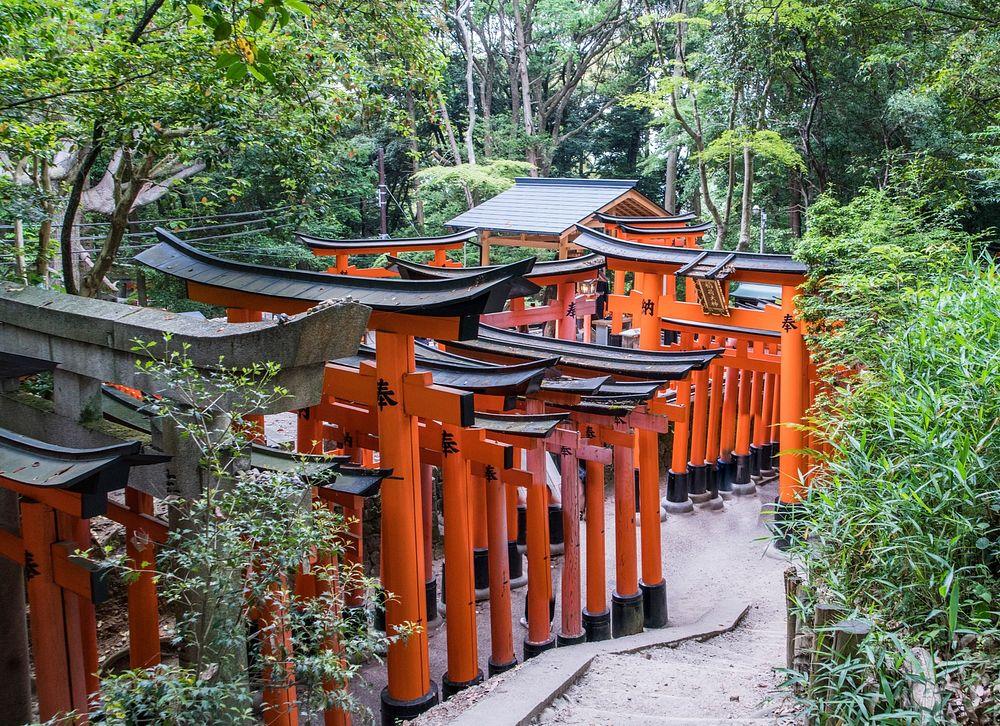
Fushimi Inari Taisha is a nationally recognized and historically significant Shinto shrine located in the Fushimi district of southern Kyoto, Japan’s former capital. It serves as the head shrine (Sōhonsha) of approximately 30,000 Inari shrines (O-inari-san) throughout Japan. The shrine is especially famous for its thousands of vermilion-orange torii gates, arranged in continuous tunnel-like corridors (Senbon Torii) that stretch from the main shrine buildings up the slopes of the sacred hill known as Inariyama.
According to official records, the founding of Fushimi Inari Taisha dates back to 711 CE during the Nara period. The name "Inari" is derived from the combination of the Japanese words "ine", meaning "rice," and "naru", meaning "to grow" or "to become," forming the phrase "Ine nari" (rice harvest) or "Ine ni naru." 【1】
The founding legend is recorded in the Yamashirokoku Fudoki, an ancient report presented to the emperor. According to the tale, Irogu no Hatanokimi, an ancestor of the Hata clan, shot an arrow at a rice cake. The cake transformed into a swan, flew to the sacred Inariyama, and landed there, where auspicious signs of rice cultivation appeared. This event is regarded as the beginning of the consecration of Inari Okami.
View of Fushimi Inari Taisha (TokyoStreetView - Japan The Beautiful)
Throughout its history, the shrine has been protected and rebuilt by both imperial and military leaders.
The history of Fushimi Inari Taisha began in 711 CE (Hatsuuma) with the enshrinement of Inari Okami at Inari Mitsugamine, the sacred site where the deity resides. In 927, the shrine was recorded in the Engishiki Jinmyocho, the official register of all shrines in Japan, as having high status, and was later elevated to the highest rank among Shinto shrines in 942. In 1000, the renowned court lady Sei Shonagon visited the shrine and described her ascent of the buildings in her diary, Makura no Soshi (The Pillow Book), noting how tiring the climb was.
In 1336, during the escape of Emperor Godaigo, he prayed to Inari no Kami after losing his way and was protected by a visible red cloud, giving rise to the legend of the "three lanterns." The shrine suffered major destruction in 1468 during the Ōnin War, when a large fire destroyed much of its structures. However, it was revitalized in 1589 with donations from the powerful daimyo Toyotomi Hideyoshi, who commissioned the construction of the Main Gate (Rōmon).
In the modern era, the main sanctuary building (Honden) was designated an Important Cultural Property in 1909, and after World War II, the shrine was officially registered as a religious organization in 1946. In 1961, the shrine celebrated the 1250th anniversary of Inari Okami’s enshrinement with ceremonies, and most recently, in 2011, it marked the 1300th anniversary of its founding with formal observances.

Fushimi Inari Taisha (Picryl)
The architecture of Fushimi Inari Taisha is built around two main components that reflect its history, belief system, and the devotion of its followers: the Senbon Torii tunnels and the main shrine structures (Rōmon and Honden).

Senbon Torii – Thousand Torii Tunnels (Flickr)

Main Gate Rōmon and Honden (Flickr)
The belief system of Fushimi Inari Taisha encompasses a broad range of blessings extending from its agricultural and fertility roots to modern-day prosperity. The shrine serves as a home for a pantheon of deities who revere Inari Okami as a supreme protector.
The principal deity of the shrine, Inari Okami (or Inari no Kami), is one of the most venerated gods in Japanese belief. Historically, as its name suggests, it began as the deity of rice and harvest ("Ine nari"). However, as Japan’s social and economic structure evolved, the scope of Inari Okami’s blessings expanded. Today, devotees pray to Inari Okami for the following, and the deity is regarded as the patron of these domains:
Texts from the shrine itself, illustrating the inclusive nature of its faith, summarize the deity’s virtues as: "The exalted being who feeds us, clothes us, and shelters us" (providing basic life needs) and "who enables all of us to live in abundance and joy."【2】
The main sanctuary building (Honden) of Fushimi Inari Taisha houses five distinct Inari deities under a single roof. These deities are regarded as the Five Sacred Pillars, symbolizing the diverse virtues represented by Inari Okami as a single supreme entity:

Diagram Representing the Five Sacred Pillars (Generated by AI)
Fushimi Inari Taisha is renowned for its abundance of fox statues (Kitsune), yet these foxes are not deities themselves. They are the earthly messengers (Tsukai) of Inari Okami, serving as intermediaries between the deity and humans. They are typically depicted standing guard at the entrance to the shrine grounds and around the main worship areas. The objects held in their mouths carry symbolic meanings:

Kitsune at Fushimi Inari Taisha (Pexels)
Access to the shrine is convenient, and visitors are advised to use public transportation due to high visitor volumes.
Fushimi Inari Taisha has been regarded as a sacred site for over a thousand years since its founding in 711 CE. To preserve its sanctity and dignity, strict rules are enforced to ensure all visitors may worship or tour in peace:
Fushimi Inari Taisha. "Access." Accessed October 6, 2025.https://inari.jp/en/access/
Fushimi Inari Taisha. "Enshrined Deity." Accessed October 6, 2025.https://inari.jp/en/saijin/
Fushimi Inari Taisha. "Greetings from the Head Priest." Fushimi Inari Taisha. Accessed October 6, 2025.https://inari.jp/en/about/
Fushimi Inari Taisha. "History." Fushimi Inari Taisha. Accessed October 6, 2025.https://inari.jp/en/history/
Fushimi Inari Taisha. "Requests from Fushimi Inari Taisha." Accessed October 6, 2025.https://inari.jp/en/request/
Kirk, Angus. “The Incredible Avenue of 10,000 Torii Gates at the Fushimi-Inari Shrine in Kyoto JPG.” Flickr. Accessed October 6, 2025.https://www.flickr.com/photos/anguskirk/18428855632
McGrath, Ted. “2017 – Japan – Kyoto – Fushimi Inari – 3 of 8 JPG.” Flickr. Accessed October 6, 2025.https://www.flickr.com/photos/time-to-look/34967979593/
Picryl. “Fushimi Inari Taisha Shrine, Kyoto, Japan (Places & Monuments) JPG.” Accessed October 6, 2025.https://picryl.com/media/fushimi-inari-taisha-shrine-kyoto-japan-places-monuments-79cc22?zoom=true
Piwnicki, Marek. "Fox Sculpture at Fushimi Inari Taisha Temple, Japan JPG." Pexels. Accessed October 6, 2025.https://www.pexels.com/photo/fox-sculpture-at-fushimi-inari-taisha-temple-japan-10747679/
TokyoStreetView - Japan The Beautiful. "Fushimi Inari Taisha - Kyoto - 伏見稲荷大社 - 4K Ultra HD." YouTube. Uploaded May 19, 2021. Accessed October 6, 2025.https://www.youtube.com/watch?v=QSoZJC8gLJM
[1]
Fushimi Inari Taisha, "History." Fushimi Inari Taisha, Erişim 6 Ekim 2025, https://inari.jp/en/history/
[2]
Fushimi Inari Taisha, “Greetings from the Head Pries,” Fushimi Inari Taisha, Erişim 6 Ekim 2025, https://inari.jp/en/about/

Name | Fushimi Inari Taisha (伏見稲荷大社) | ||||||||
|---|---|---|---|---|---|---|---|---|---|
Common Name | O-Inari-san | ||||||||
Location | Kyoto Fushimi-ku Japan | ||||||||
Type | Shinto Shrine (Jin̄ja) | ||||||||
Chief Deity | Inari Okami | ||||||||
Main Structures | Rōmon (Main Gate - Gift of Toyotomi Hideyoshi, 1589), Honden (Main Shrine Building - Important Cultural Property) | ||||||||
Important Messenger | Kitsune (Fox) – It is the messenger spirit of the deity (Tsukai) | ||||||||
No Discussion Added Yet
Start discussion for "Fushimi Inari Shrine" article
Founding and History
Historical Turning Points
Architectural Features of Fushimi Inari Taisha
Senbon Torii (Thousand Torii Tunnels)
Main Gate (Rōmon) and Honden
Belief System of Fushimi Inari Taisha
Inari Okami and Their Virtues
The Five Sacred Pillars (Main Sanctuary Building)
Fox Symbolism (Kitsune)
Visitation and Conduct Guidelines
Access and Transportation Information
Behavior and Visitation Rules