 Recently Added:
This article was automatically translated from the original Turkish version.
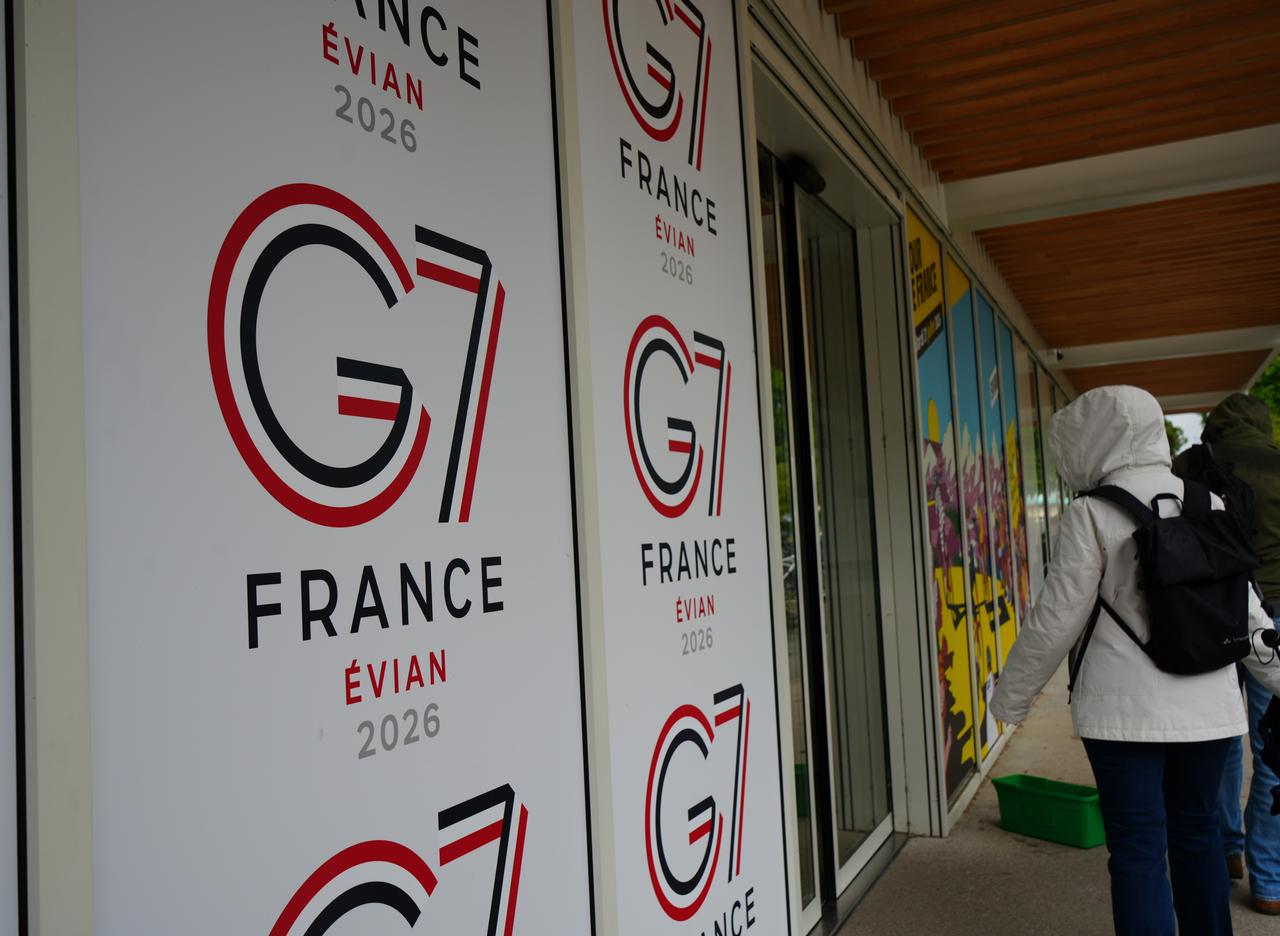
G7 Leaders Summit will be held in Évian-les-Bains, France, from 15 to 17 June 2026. The summit, which brings together the world’s advanced economies, is expected to address global economic issues, international security, energy supply, climate change, trade policies, artificial intelligence technologies, and ongoing regional conflicts. The summit is taking place against the backdrop of recent developments in the Middle East, the Russia-Ukraine war, and global economic challenges. The French government has implemented extraordinary security measures in eastern France near the Swiss border due to the participation of world leaders.
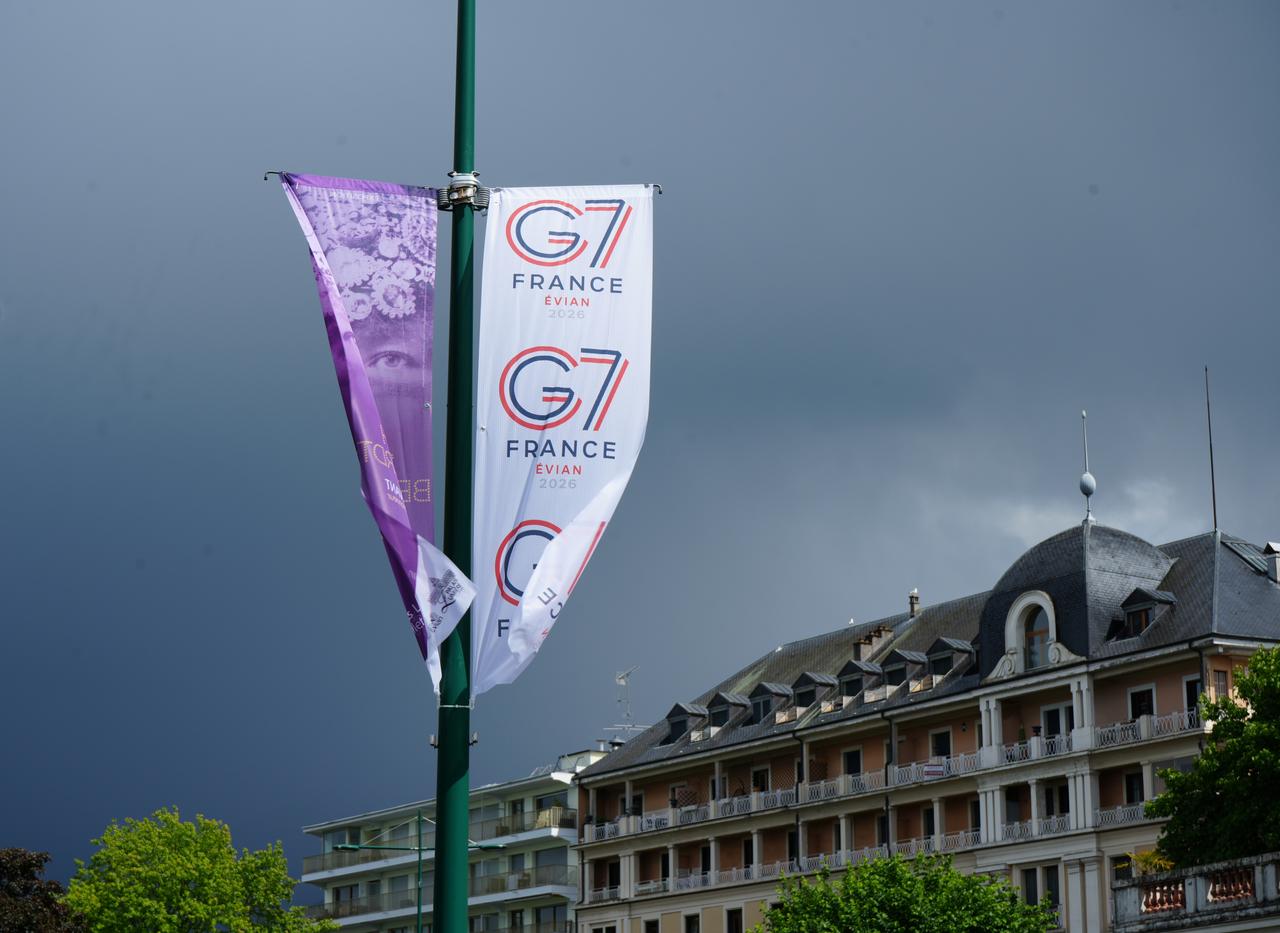
Final Preparations Completed in Évian-les-Bains, Host of the G7 Summit in France (11 June, 2026) Anadolu Agency
French authorities have deployed approximately 14,000 police, gendarmerie, and fire personnel to ensure the summit’s security. Security measures extend beyond Évian-les-Bains and its surroundings to the France-Switzerland border. Airspace restrictions have been imposed over areas where leaders will be accommodated, and strict controls have been implemented on land and lake transportation.
Authorities have stated that due to the summit’s global significance, extensive preparations have been made to counter potential protests, security threats, and actions that could disrupt public order. A significant portion of the security plan focuses on ensuring the safe arrival of leaders at meeting venues.
Prior to the summit, large-scale demonstrations against the G7 were held in Geneva, Switzerland. Thousands gathered in Mon Repos Park and marched to protest the global policies of G7 countries. Demonstrators later conducted various actions in the city center and around Lake Geneva.
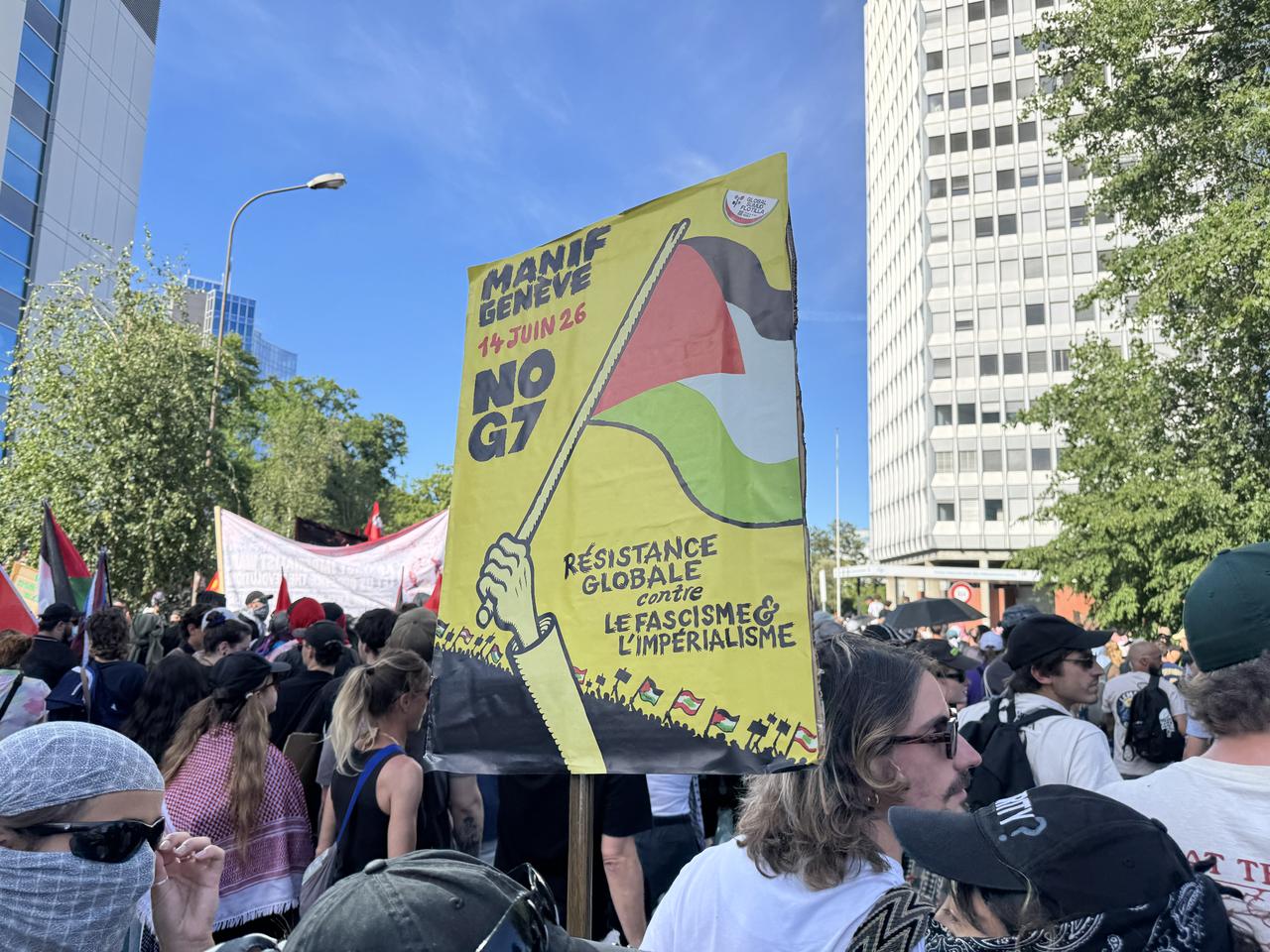
Demonstrations in Geneva (14 June, 2026) Anadolu Agency
Key issues raised during the protests included global economic inequality, arms proliferation, international conflicts, and environmental concerns. Many demonstrators carried slogans criticizing the influence of G7 countries in global politics and argued that these nations have not made sufficient contributions to resolving global crises.
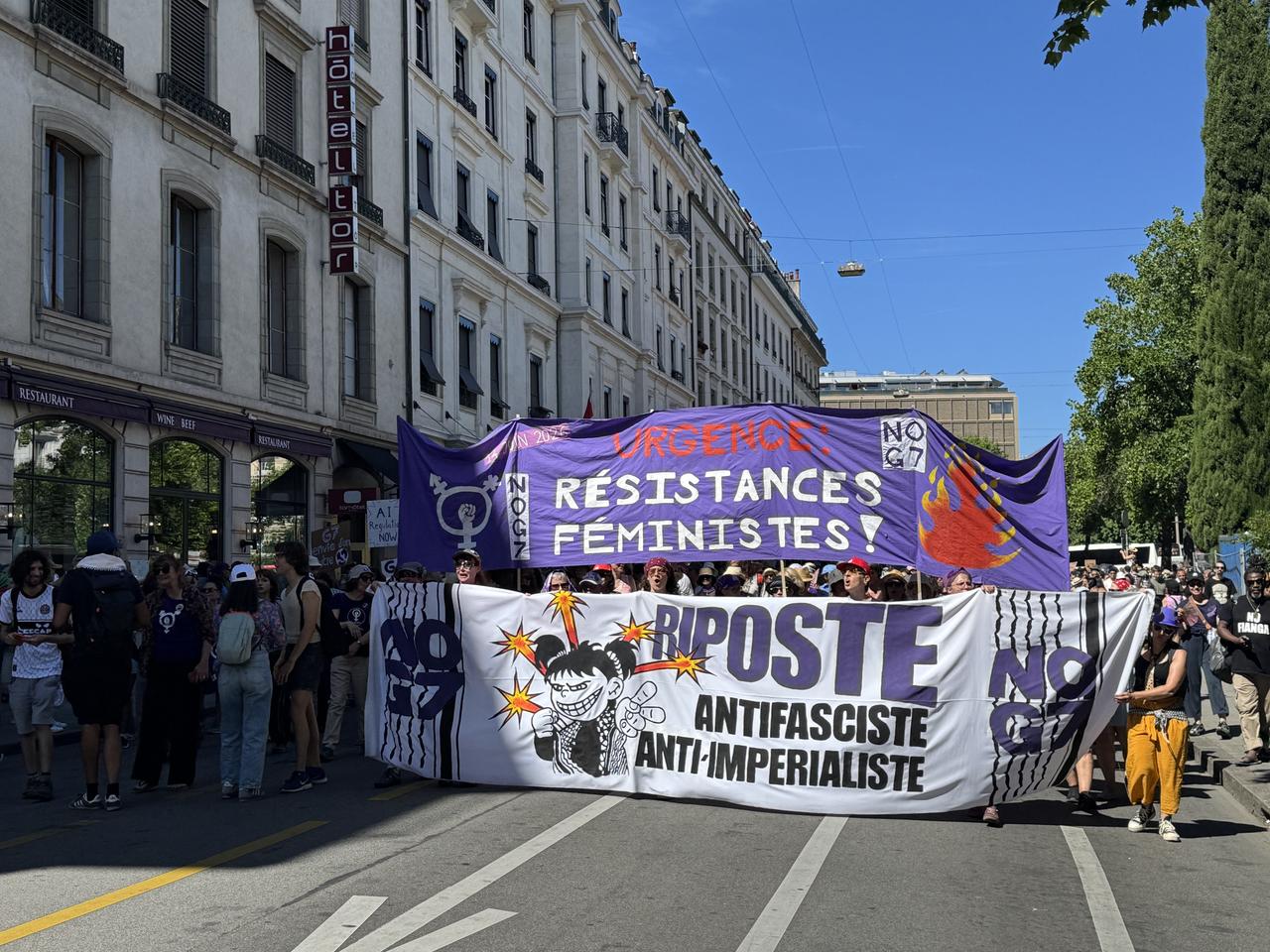
Demonstrations in Geneva (14 June, 2026) Anadolu Agency
The most prominent feature of the demonstrations was the response to developments in Gaza. Many participants carrying Palestinian flags protested against Israel’s attacks on Gaza and its blockade policies. Demonstrators called on G7 countries to take more decisive action on Gaza and expressed solidarity with the Palestinian people.
Banners reading “No to the G7” were hung on buildings across various parts of Geneva, and Palestinian flags were displayed at several locations. Protesters emphasized that global leaders must assume greater responsibility for ending wars and resolving humanitarian crises.
Although the majority of demonstrations proceeded peacefully, incidents escalated after masked groups engaged in vandalism. Several vehicles and businesses were damaged, and some United Nations buildings in the area also sustained damage.
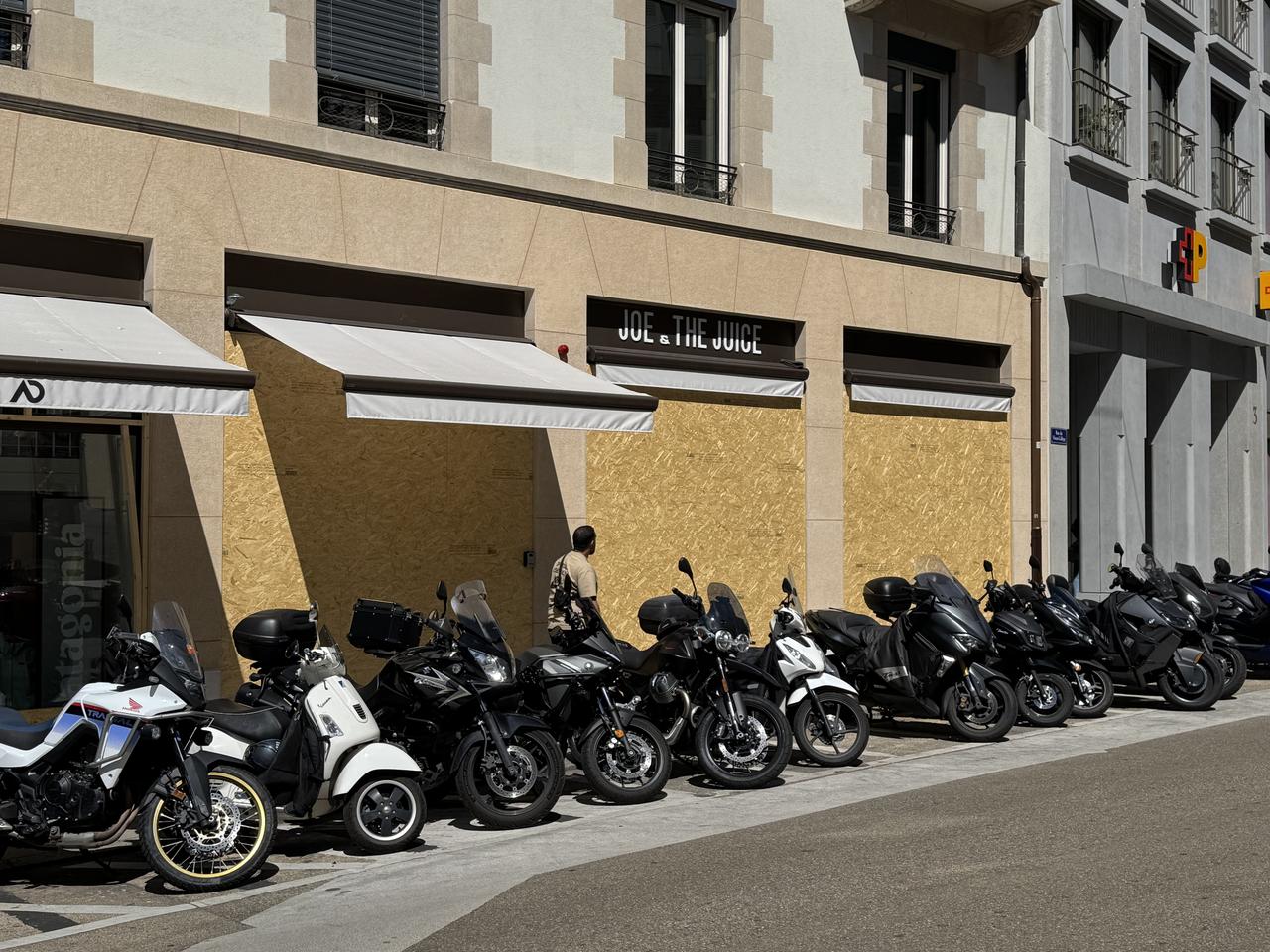
Security Measures in Geneva (12 June, 2026) Anadolu Agency
In response to rising tensions, Swiss police used pepper spray against demonstrators. Following police intervention, the crowds dispersed and the protests ended. Security measures in the area were further intensified as a result of the incidents.
Many participants in the demonstrations criticized the role of G7 countries in the global economic system, wars, and international crises. Protesters called for an end to conflicts worldwide, the abandonment of arms proliferation policies, and the establishment of a more just international order.
Statements made during the demonstrations highlighted humanitarian crises in conflict zones, particularly in Palestine, and demanded that leaders end wars and support diplomatic solutions. These pre-summit protests once again demonstrated that G7 meetings face not only diplomatic agendas but also widespread global social opposition.
Anadolu Ajansı. "Cenevre'de Barışçıl Başlayan G7 Zirvesi Karşıtı Eylem, Polisin Biber Gazlı Müdahalesiyle Son Buldu." Accessed June 15, 2026. https://www.aa.com.tr/tr/dunya/cenevrede-bariscil-baslayan-g7-zirvesi-karsiti-eylem-polisin-biber-gazli-mudahalesiyle-son-buldu/3966875
Associated Press (AP). "Trump Heads to G7 Summit With Wind at His Back After Announcing Agreement Aimed at Ending Iran War." Accessed June 15, 2026. https://apnews.com/article/trump-g7-france-iran-ukraine-992fb57188610d04660fb342c53e639e
CNN. "Live Updates: Iran War and G7 Summit." Accessed June 15, 2026.
Deutsche Welle (DW). "Police Fire Tear Gas at Anti-G7 Protesters in Geneva." Accessed June 15, 2026.
Reuters. "G7 Leaders Meet in France After U.S. and Iran Declare Agreement to End War." Accessed June 15, 2026. https://www.reuters.com/world/china/g7-leaders-meet-france-after-us-iran-declare-agreement-end-war-2026-06-15/
https://edition.cnn.com/2026/06/15/world/live-news/iran-war-g7-summit
https://www.dw.com/en/police-fire-tear-gas-at-anti-g7-protesters-in-geneva/a-77548464
G7 Leaders Summit began on 15 June 2026 in Évian-les-Bains, France. French President Emmanuel Macron welcomed the participating leaders at the Hotel Royal. Macron’s wife, Brigitte Macron, also hosted the leaders and their spouses at the official welcoming ceremony.
Representing the European Union, European Council President António Costa and European Commission President Ursula von der Leyen attended the summit. In a press conference held before the summit, Costa stated: "This G7 summit is taking place at a decisive moment. The decisions we make here will send a clear signal of our determination to defend the foundations of global stability and cooperation."
Prior to the summit, Macron held a video conference on 11 June with representatives of the G7 countries as well as China, India, Brazil, South Korea and Kenya, addressing macroeconomic imbalances and global economic governance. France’s presidency also invited leaders from various non-G7 countries to participate in specific working sessions.
According to the program released by the European Council, summit leaders addressed the following topics in multiple working sessions: geopolitical issues; peace in Ukraine and European security; developments in the Middle East; international partnerships and solidarity; more balanced economic growth; and the future of artificial intelligence. In addition, central to the agenda were the implementation of the framework agreement reached between the United States and Iran and the issue of the reopening of the Strait of Hormuz.
The first session of the summit’s main program, held on 16 June under the title "Building Peace in Ukraine," was convened at the special invitation of Ukrainian President Volodymyr Zelensky.
Zelensky arrived in Évian-les-Bains on the morning of 16 June and held a brief bilateral meeting with Macron in the garden of the Hotel Royal. Macron emphasized that Zelensky’s presence would strengthen the G7’s support for Ukraine. Prior to attending the summit, on 15 June, Zelensky announced that the historic Kyiv-Pechersk Lavra monastery in Kyiv had suffered severe damage in a Russian attack. The assault on this millennium-old complex, listed by UNESCO as a World Heritage Site, provoked strong international condemnation; the French Foreign Minister compared the attack to the bombing of Notre-Dame Cathedral in Paris.
During his meeting with Trump, Zelensky showed photographs taken after the monastery’s bombing. European diplomatic sources noted that this move had a significant psychological impact.
In a statement made in Kyiv on 15 June, Zelensky announced that he had invited Russian President Vladimir Putin to meet face-to-face either at the G7 summit or in the United States. Zelensky reported that the United States supported this invitation and noted that both Trump and Macron would be present at the summit, creating a favorable opportunity for such a meeting. However, Russian Presidential Spokesperson Dmitry Peskov stated that no formal invitation had been received from Ukraine through official channels and reiterated that Putin would be willing to meet Zelensky in Moscow if he were prepared for negotiations.
Speaking at the Ukraine-focused session, Zelensky stated that a constructive atmosphere prevailed within the G7 and that all leaders agreed Russia could not win the war and must reach a settlement as soon as possible. Zelensky also noted that all leaders acknowledged Russia’s continued targeting of civilian infrastructure and highlighted Trump’s positive stance on providing Ukraine with additional air defense missiles. According to Zelensky, the G7 also discussed additional sanctions against Russia, particularly targeting the energy sector, banking and defense industries.
In a message posted on the X platform after the meeting, Zelensky stated: "The top priority is to strengthen Ukraine’s air defense and advance diplomacy to compel Russia to end the war. Peace is needed." He also noted that he had secured significant commitments from the G7, including additional air defense missiles, licenses for the production of these systems, inclusion of a winter support package and increased pressure on Russia. "All of this must be implemented. Russia must learn that this war will never become normal," he added.
A French diplomatic source confirmed to Reuters that the meetings, described as "highly productive," had resulted in G7 leaders uniting in their support for Ukraine and agreeing to intensify pressure on Russia. The same source stated that the leaders had also reached consensus on expanding sanctions on Russian oil and gas. A European diplomat noted that the atmosphere of the session was "extremely positive" and that Trump remained present until the end of the meeting.
European Commission President von der Leyen, in a message posted on X after the session, stated: "The wind is turning for Ukraine. The situation in 2026 is very different from 2025. Ukraine is bravely resisting on the front lines. Russia’s fatigue is now clearly visible. That is precisely why now is the right time to double our support."
Trump announced during a bilateral meeting with Qatar’s Emir Sheikh Tamim bin Hamad Al Thani at the sidelines of the summit that he would meet Zelensky on the same day. Trump expressed disappointment over Russia’s continuation of the war and the high number of military casualties on both sides, stating: "Russia must reach an agreement." Trump also said regarding the Ukraine issue: "I have resolved eight wars. This is the one I thought would be easiest to solve," a claim that sparked public debate.
Zelensky met with Trump and U.S. Secretary of State Marco Rubio during the summit’s sideline talks and shared photos of the meeting on his Telegram account. Zelensky noted that coordinating positions is always important and highlighted Trump’s positive approach toward providing Ukraine with additional air defense missiles.
After meeting with Zelensky, Trump told journalists that Russia must reach a peace agreement with Ukraine and that he would do everything in his power to end the war. "I will do everything in my power," Trump said, emphasizing the large number of young lives lost on both sides and calling the situation unacceptable. Trump also stated that the G7 had held a "very good" meeting with Zelensky.
One of the most comprehensive agenda items of the G7 summit was the framework agreement reached between the United States and Iran. The preliminary agreement digitally signed by Washington and Tehran on Monday was seen as the beginning of a process leading to a formal signing ceremony in Geneva on 19 June. The agreement outlines a 60-day negotiation schedule during which critical issues such as Iran’s enriched uranium and the lifting of international sanctions are to be discussed.
Upon arriving at the summit, Trump announced that the agreement had already been signed and that the Strait of Hormuz had begun to reopen partially. "I am very happy, it is signed. The deal is fully signed. And the strait has already begun to open partially. A few mines remain, but they have been found. But essentially, ships are now starting to move. It will be fully open by Friday," he said.
Following his meeting with UAE President Sheikh Mohamed bin Zayed Al Nahyan, Trump delivered a comprehensive assessment on the Middle East agenda. Trump confirmed that the Strait of Hormuz would be "fully open by 19 June," adding: "Ships are now moving smoothly. Oil flows have restarted and prices are falling rapidly. The stock market is surging. Very good things are happening and, more importantly, Iran will not have nuclear weapons."
Speaking about plans regarding Iran’s enriched uranium, Trump said: "When we seize it, we will destroy it. Our goal is not to possess it but to eliminate it. We already have plenty ourselves." Trump indicated that Iran’s nuclear facilities had moved deeper into mountainous terrain and emphasized the difficulty of reaching them. He noted that only the United States and China possess the necessary equipment for such operations and reaffirmed that they would not allow nuclear proliferation.
Trump firmly rejected reports that the United States would pay Iran, stating: "No, we are only allowing ourselves the option to invest in the future if we choose. We have no obligations." He also announced that he would release the text of the agreement to the public, likely through a press conference where he would read it word for word and submit it to Congress. Comparing the agreement to the Joint Comprehensive Plan of Action (JCPOA) signed during the Obama administration, Trump said: "That was a path toward nuclear weapons. Mine is a wall against nuclear weapons."
Before the summit, French President Macron described the U.S.-Iran agreement as "a good thing" in an interview with TF1. Macron stated that the G7 would hold a dedicated session on Iran and that it would "do everything" to implement the agreement and restore peaceful navigation through the Strait of Hormuz. Macron opposed any tolls on transit through the Strait of Hormuz, arguing that it would violate international law.
Macron indicated that France and the United Kingdom, which are leading a peaceful and defensive mission for the Strait of Hormuz, would act when conditions permit. He announced that the French aircraft carrier Charles de Gaulle, relocated from the Eastern Mediterranean to the Red Sea, could be deployed to the region within days and that the first surveillance flights could begin the following day. Macron also insisted that the agreement must include provisions on Iran’s nuclear and ballistic missile capabilities and emphasized that enriched uranium must either be removed to a third country or diluted and placed under the supervision of the International Atomic Energy Agency (IAEA).
Macron also addressed Trump’s threat to impose new tariffs on French wine and champagne if France did not lift customs duties on American technology companies. "Customs duties benefit no one. The United States will not decide French customs duties. Not while I am here. We will conduct a respectful but firm negotiation," he said.
German Chancellor Friedrich Merz, in a statement at Berlin-Brandenburg Airport upon departing for the summit, noted recent positive developments in the Middle East and expressed satisfaction at the U.S.-Iran agreement. Merz thanked all partners contributing to the agreement, particularly Pakistan and Qatar, and congratulated both Trump and Iran.
Merz emphasized that the agreement must be implemented with determination and reiterated that the Strait of Hormuz must remain permanently and unconditionally open for freedom of navigation. He stressed that upcoming negotiations must ensure the irreversible and verifiable termination of Iran’s military nuclear program. The German Chancellor also emphasized that the agreement must remain valid in Lebanon and pledged continued support for efforts in this direction.
Regarding Ukraine, Merz argued that Ukraine was in a stronger position and that Russia could not achieve a military victory. He added that Russia was also in severe economic difficulty, stating: "For the first time, a window of opportunity for diplomacy is slowly opening."
During a working lunch on 16 June, G7 leaders addressed the Middle East agenda, focusing particularly on the safe reopening of the Strait of Hormuz and the identification of alternative energy routes to bypass the strait. The presidents of the UAE and Qatar, as well as the President of Egypt, also attended the lunch. Macron stated after the meal that the priority was "to conclude a solid and serious agreement."
Following his meeting with UAE President Al Nahyan, Trump announced that he would publicly release the full text of the U.S.-Iran Agreement Memorandum in an official setting: "I will read it word for word so that the media reports it accurately." He also stated he would submit the document to Congress and predicted that second-phase negotiations with Iran would proceed "quite rapidly."
In remarks during G7 sideline talks, Trump stated that, following the agreement with Iran, the United States was now in a position to end exemptions on Russian oil. "We can do this soon because oil is now flowing," Trump said, recalling that the exemptions had been introduced to control energy price spikes caused by the U.S.-Israel-Iran conflict.
During his meeting with the Qatari Emir, Trump delivered a sharp criticism of Israeli Prime Minister Netanyahu. While emphasizing his "excellent relationship" with Netanyahu, Trump clearly stated that the Israeli leader needed to act more responsibly on Lebanon. Trump argued that Syria could resolve the Hezbollah issue "better" than Israel, saying: "The person currently governing Syria is very good with Hezbollah and does not like them." Trump stressed that Israel has been fighting Hezbollah for a very long time and has suffered many casualties, calling for an immediate end to the conflict.
In the afternoon of 16 June, partner countries joined the second phase of the G7 summit. Egyptian President Abdel Fattah el-Sisi, South Korean President Lee Jae-myung, Indian Prime Minister Narendra Modi, Brazilian President Luiz Inácio Lula da Silva and Kenyan President William Ruto joined G7 and European Union leaders for a family photo. The afternoon session was themed "Building New Partnerships."
Al Jazeera. "Trump Says He Will Push for Peace in Ukraine after Meeting Zelenskyy at G7." Accessed June 17, 2026. https://www.aljazeera.com/news/2026/6/16/g7-leaders-meet-in-france-with-iran-and-ukraine-high-on-agenda.
Anadolu Ajansı. "Macron, İran-ABD Mutabakatının Hayata Geçirilmesi İçin G7 Zirvesi’nde Her Şeyi Yapacaklarını Söyledi." Accessed June 17, 2026. https://www.aa.com.tr/tr/dunya/macron-iran-abd-mutabakatinin-hayata-gecirilmesi-icin-g7-zirvesinde-her-seyi-yapacaklarini-soyledi/3967587.
Anadolu Ajansı. "Trump, Amaçlarının İran’daki Uranyuma ‘Sahip Olmak Değil Yok Etmek’ Olduğunu Savundu." Accessed June 17, 2026. https://www.aa.com.tr/tr/dunya/trump-amaclarinin-irandaki-uranyuma-sahip-olmak-degil-yok-etmek-oldugunu-savundu/3968842.
CNN. "Trump Meets World Leaders at G7 Summit with Iran Agreement High on Agenda." Accessed June 17, 2026. https://edition.cnn.com/2026/06/16/world/live-news/iran-war-g7-summit
Reuters. "G7 Summit 2026 Live: Trump Discusses Iran, Ukraine with World Leaders." Accessed June 17, 2026. https://www.reuters.com/world/g7-summit-2026-live-trump-discuss-iran-ukraine-with-world-leaders-2026-06-16/
Reuters. "G7 Summit 2026 Live: Trump Says G7 Had ‘Very Good’ Meeting with Zelenskiy." Accessed June 17, 2026. https://www.reuters.com/world/g7-summit-2026-live-trump-discuss-iran-ukraine-with-world-leaders-2026-06-16/
The G7 Leaders Summit, held in Évian-les-Bains, France, from June 15 to 17, 2026, was an international meeting addressing issues such as global security, economic stability, artificial intelligence transformation, irregular migration, health policies, and developments in the Middle East. In addition to the G7 member states, leaders from Qatar, the United Arab Emirates, Egypt, India, Kenya, South Korea, and Ukraine also attended. The summit particularly highlighted the agreement reached between the United States and Iran on June 14 and the support provided to Ukraine.
A unified stance on support for Ukraine was emphasized, with calls for continued coordination among Western nations in the context of the Russia-Ukraine war. Simultaneously, tensions in the Middle East, disruptions in maritime traffic through the Strait of Hormuz, and their impact on energy markets featured prominently on the leaders’ agenda. The details and regional implications of the agreement between the United States and Iran became one of the most debated topics of the summit.
The presence of U.S. President Donald Trump was one of the most notable aspects of the meeting, due to both his diplomatic interactions and public statements. French media and international news organizations assessed that the summit was significantly shaped by Trump’s participation and remarks. Trump’s entrance to a meeting on the third day with the words “Hello, boss, it’s me” became a symbolic moment of the summit.
French President Emmanuel Macron undertook various initiatives to strengthen dialogue among the leaders during the summit. French media reported that special diplomatic efforts were made to ensure Trump did not leave the summit early. In this context, Macron hosted a special reception in his honor at the Palace of Versailles. Additionally, Macron’s images meeting world leaders, shared on social media accompanied by music reflecting the cultural elements of their respective countries, generated widespread public反响.
Various protocol moments and social interactions among the leaders received extensive coverage in international media. Trump’s engagements with other leaders, brief disruptions during group photo sessions, and dialogues among the leaders were widely shared on social media platforms. A notable development was German Chancellor Friedrich Merz presenting Trump with a German national team jersey bearing the word “Trump” as a gift.
One of the summit’s off-agenda but publicly notable developments was Italian Prime Minister Giorgia Meloni’s announcement that she had quit smoking. During a conversation with other leaders, when the topic arose, Meloni stated she had stopped smoking some time earlier, a remark that was widely reported by various media outlets.
One of the most prominent developments during the G7 Summit was the agreement reached between the United States and Iran. The agreement was signed by Trump during a reception hosted by Macron at the Palace of Versailles. It was stated that the details of the agreement would be shaped through subsequent negotiations.
In his statements during the G7 Summit, Trump said the primary objectives of the agreement with Iran were to prevent Iran from acquiring nuclear weapons and to restore normal maritime traffic through the Strait of Hormuz. Trump indicated that the agreement would be signed shortly and announced that the parties would begin a 60-day detailed negotiation process thereafter.
Trump stated that if the negotiation process failed, military options could be reconsidered. He noted that if Iran failed to comply with the agreement’s terms, the United States could reassess military intervention, while reaffirming that a diplomatic solution remained the preferred option, though alternatives remained on the table.
Trump announced that technical talks regarding Iran’s stockpile of enriched uranium would begin immediately. He indicated that options for the destruction, monitoring, or placing under international control of the uranium would be evaluated. He also stated that maritime traffic through the Strait of Hormuz had begun to gradually return to normal.
Trump made statements regarding approximately $300 billion in frozen assets attributed to Iran. He indicated that these funds could be released if Iran adheres to the agreement and stated that the future of sanctions would depend on Tehran’s compliance with the deal.
Trump criticized Israel’s military operations in Lebanon. While affirming Israel’s right to self-defense, he argued that some attacks were disproportionate and that operations targeting Beirut had produced unnecessarily destructive consequences. Trump suggested that Israel could adopt more measured approaches in its fight against Hezbollah.
Trump stated that he generally maintained good relations with Benjamin Netanyahu but acknowledged disagreements on Lebanon. He expressed the view that Netanyahu sometimes reacted excessively and argued that Israel should exercise greater caution in its regional operations.
Trump indicated that a broader peace process in the Middle East was a goal and stated that expanding the Abraham Accords was among the priorities of U.S. foreign policy. He argued that Saudi Arabia’s participation in the process would have significant regional impact.
Trump said he thanked Xi Jinping and Vladimir Putin for their constructive stance on Iran. He specifically expressed satisfaction that China had not supplied weapons to Iran during the process.
Anadolu Ajansı. "Fransa’daki G7 Liderler Zirvesi'ne Trump'ın ‘Patron Benim’ Çıkışı Damga Vurdu." Accessed June 18, 2026. https://www.aa.com.tr/tr/dunya/fransadaki-g7-liderler-zirvesine-trumpin-patron-benim-cikisi-damga-vurdu/3970482
BBC News. "G7 Summit: Live Updates and Developments from Évian." Accessed June 18, 2026. https://www.bbc.com/news/live/c8j2ewl0dpxt
Politico. "Trump and Allies Keep the Peace at the G7 Summit After Months of Tumult." Accessed June 18, 2026. https://www.politico.com/news/2026/06/17/trump-and-allies-keep-the-peace-at-the-g7-summit-after-months-of-tumult-00966117
The Guardian. "Trump Says ‘I Am the Boss’ at G7 Summit as Leaders Agree ‘New Steps to Put Pressure’ on Russia – Europe Live." Accessed June 18, 2026. https://www.theguardian.com/world/live/2026/jun/17/g7-leaders-evian-donald-trump-ukraine-russia-war-iran-latest-news-updates

The G7 Leaders Summit, which began in Évian-les-Bains, France, came to the forefront amid intense security measures and protests. The French government deployed approximately 14,000 police, gendarmerie and fire service personnel to ensure the safety of the leaders. Meanwhile, in Geneva, Switzerland, thousands of people participated in demonstrations against the G7. During the protests, which highlighted developments in Gaza and global conflicts, police intervened with pepper gas due to incidents caused by some groups.
No Discussion Added Yet
Start discussion for "G7 Leaders Summit (2026)" article
June 15, 2026
Comprehensive Security Operations
June 15, 2026
G7-Protest Demonstrations in Geneva
June 15, 2026
Protests on Gaza and Palestine
June 15, 2026
Anti-Summit Demonstrations
June 15, 2026
Social Opposition to the Summit
June 17, 2026
A. Agenda Items of the Summit
June 17, 2026
VI. The U.S.-Iran Agreement at the Summit
June 18, 2026
Trump’s Statements on the Iran Agreement