

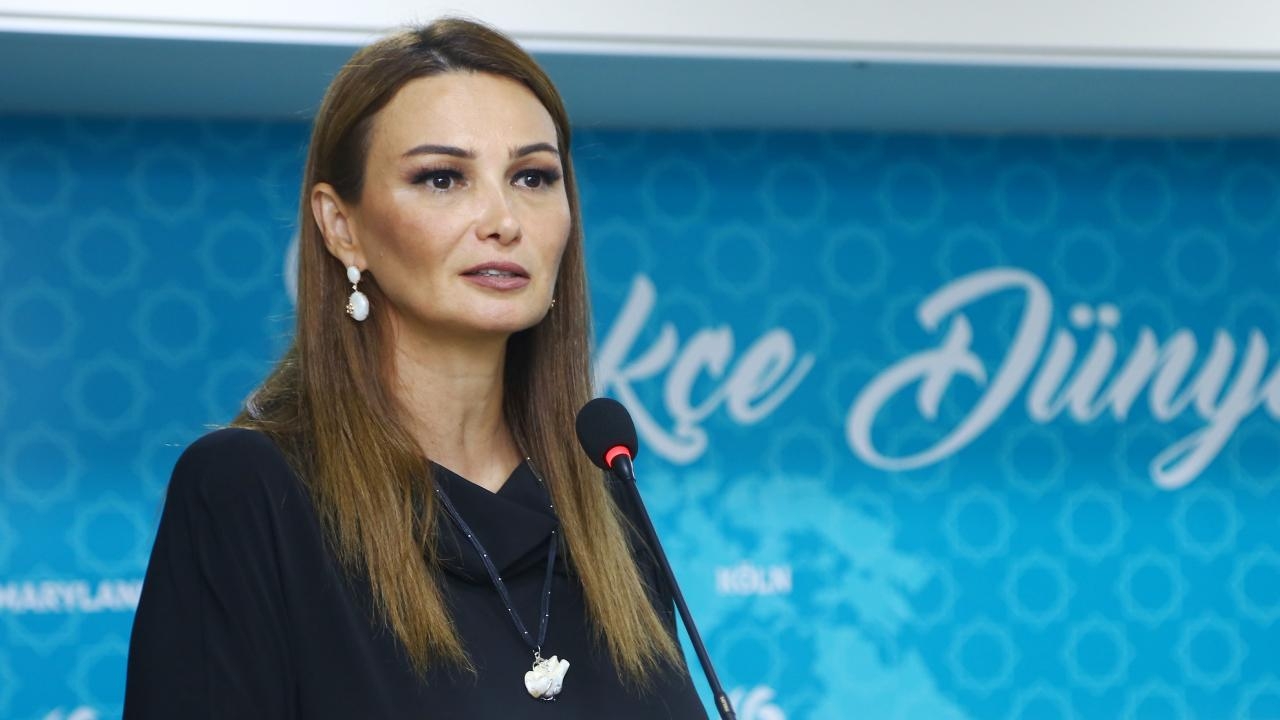

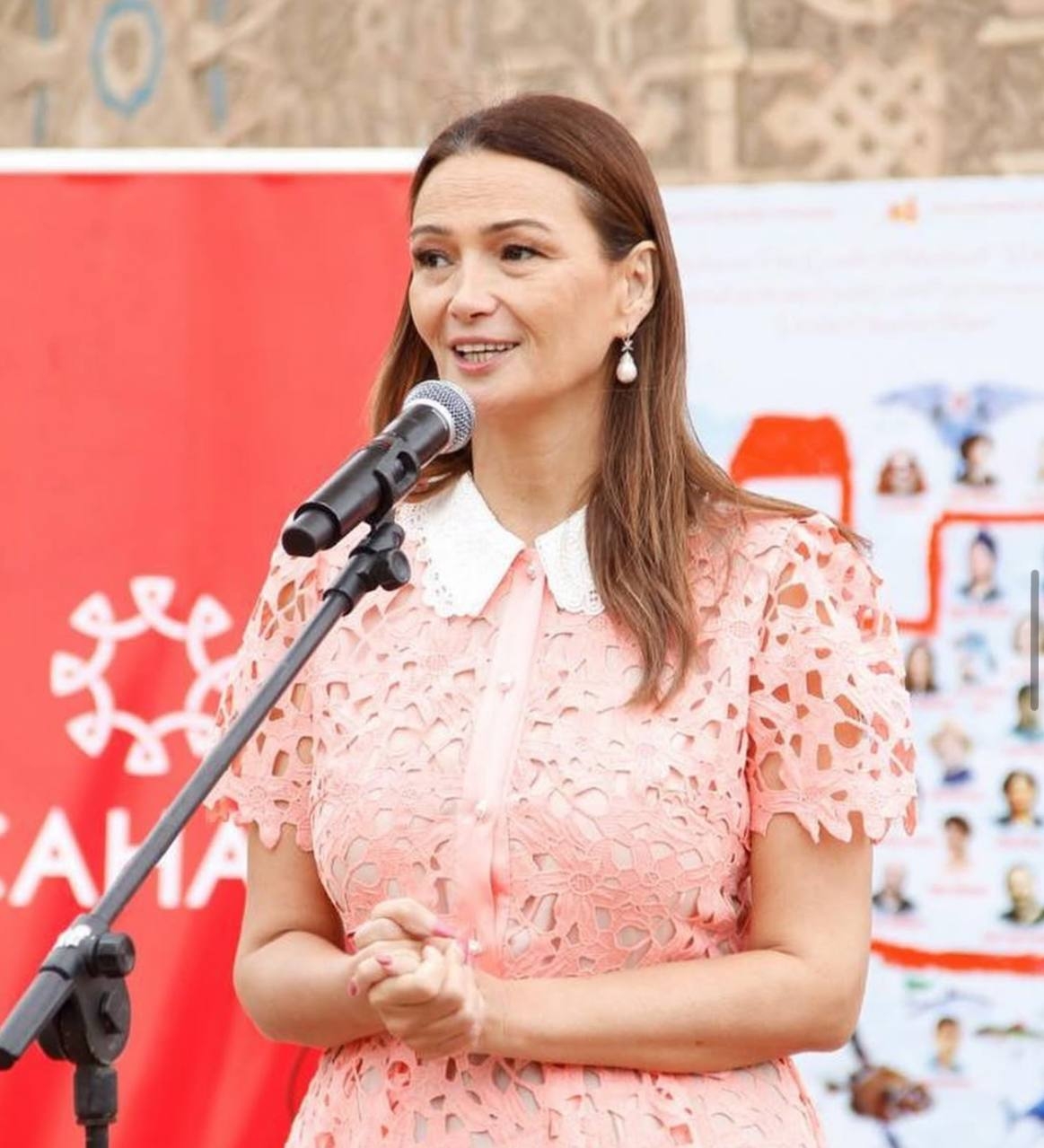
Ganirə Ələsgər qızı Paşayeva was born on 24 March 1975 in the village of Düz Qırıqlı, Tovuz District of Azerbaijan. After completing her primary and secondary education in Tovuz, she continued her higher education at the Faculty of Pediatrics of Azerbaijan Medical University. In addition to her medical studies, she also graduated from the Faculty of International Law at Baku State University.
Paşayeva, distinguished by her multidisciplinary education, specialized in both healthcare and law. In addition to Azerbaijani Turkish, she spoke English and Russian. She was unmarried.
Speech on the Khojaly Genocide (TRT Avaz)
Paşayeva entered the media field in 1998, beginning her career as a reporter at ANS Television. During this period, she also served as a news presenter, program author, and editor. Through her experience in media, she became a well-known public figure.
In 2005, she was appointed head of the Public Relations Department of the Heydər Əliyev Foundation. In the same year, on 6 November 2005, she ran as an independent candidate in the parliamentary elections and was elected as a member of the National Assembly of Azerbaijan from the Tovuz election constituency. She held this position continuously through the third, fourth, fifth, and sixth convocations.
Ganirə Paşayeva held several row key positions within the National Assembly of Azerbaijan. Particularly as Chair of the Culture Committee, she led significant initiatives aimed at preserving and promoting Azerbaijan’s cultural heritage.
She was also a member of the Permanent Commission on International and Interparliamentary Relations. She served as head of the Azerbaijan–Georgia Interparliamentary Working Group and as an active member of the Azerbaijan–Turkey, Azerbaijan–India, and Azerbaijan–Japan interparliamentary friendship groups. She represented Azerbaijan as part of its delegation to the Parliamentary Assembly of the Council of Europe (PACE).
Ganirə Paşayeva was recognized as a significant personality across the Turkic world. As a politician who played a bridging role between Azerbaijan and Türkiye, she frequently participated in events held in Türkiye, appeared as a guest on television programs, and delivered speeches on various platforms. She was widely known for the statement: “The strength of Türkiye is the strength of the Turkic world.”
In addition to her journalism and political career, Paşayeva was also known as a writer, distinguished by her deep interest in poetry and literature. She gained a broad readership through works such as “Vətən Qorxusu”, “Allah Sevən Qalblərdədir”, “İtirdiyim Xoşbəxtlik”, “Solmasın Gül Ömürlər”, “Sevgi Başqadır”, “Quma Yazılan Acılar”, “Sahibsiz Sanılan Nəğmələrimiz”, “Turan Yolçusu”, “Türk Ruhunun Söz Bayrağı Əhməd Cavad”, “Qarabağdan Doğan Günəş”, “Ay Hörşidbanu Natəvan Fatimə Xanım Kəminə”, “Azərbaycan Ədəbiyyatında Qarabağ Hekayələri”, and “Müstəqilliyə Həsr Olunmuş Ömür – Yusif Vəzir Çəmənzəminli”, all published primarily in Türkiye.
She authored numerous writings and undertook extensive activities dedicated to the preservation of cultural heritage and the promotion of shared values within the Turkic world.
Launch of the book "The Scent of Homeland" (TRT Avaz)
Interview conducted with Ganimə Paşayeva in Shusha (Organization of Turkic States)
Ganirə Paşayeva was admitted to a hospital in Baku on 24 September 2023 due to an unexplained hypotensive condition and placed in the intensive care unit. Despite all medical interventions, she passed away on 28 September 2023. Her funeral prayer was held at the Heydər Mosque in the capital Baku, after which she was laid to rest at the state-level burial site of II Fəxri Xiyaban. The funeral ceremony was attended by family members, numerous members of the Azerbaijani National Assembly, Turkish officials, and many admirers.
In 2017, World Ganirə Paşayeva was appointed Deputy Chair of the Alpagut Federation. Throughout her life, she actively fought for the unity and strength of the Turkic world in political, cultural, and scientific spheres.
Professional Career
Political Activity and Influence
Relations with the Turkic World
Literary, Scientific, and Cultural Activities
Death