


This article was automatically translated from the original Turkish version.
+2 More

Famagusta is a historic city located on the coast of the Turkish Republic of Northern Cyprus (TRNC), home to one of the Mediterranean’s most significant ports. Its accumulation spanning from antiquity to the present, layered architecture, and multicultural social structure grant it a distinguished position within the Eastern Mediterranean region.
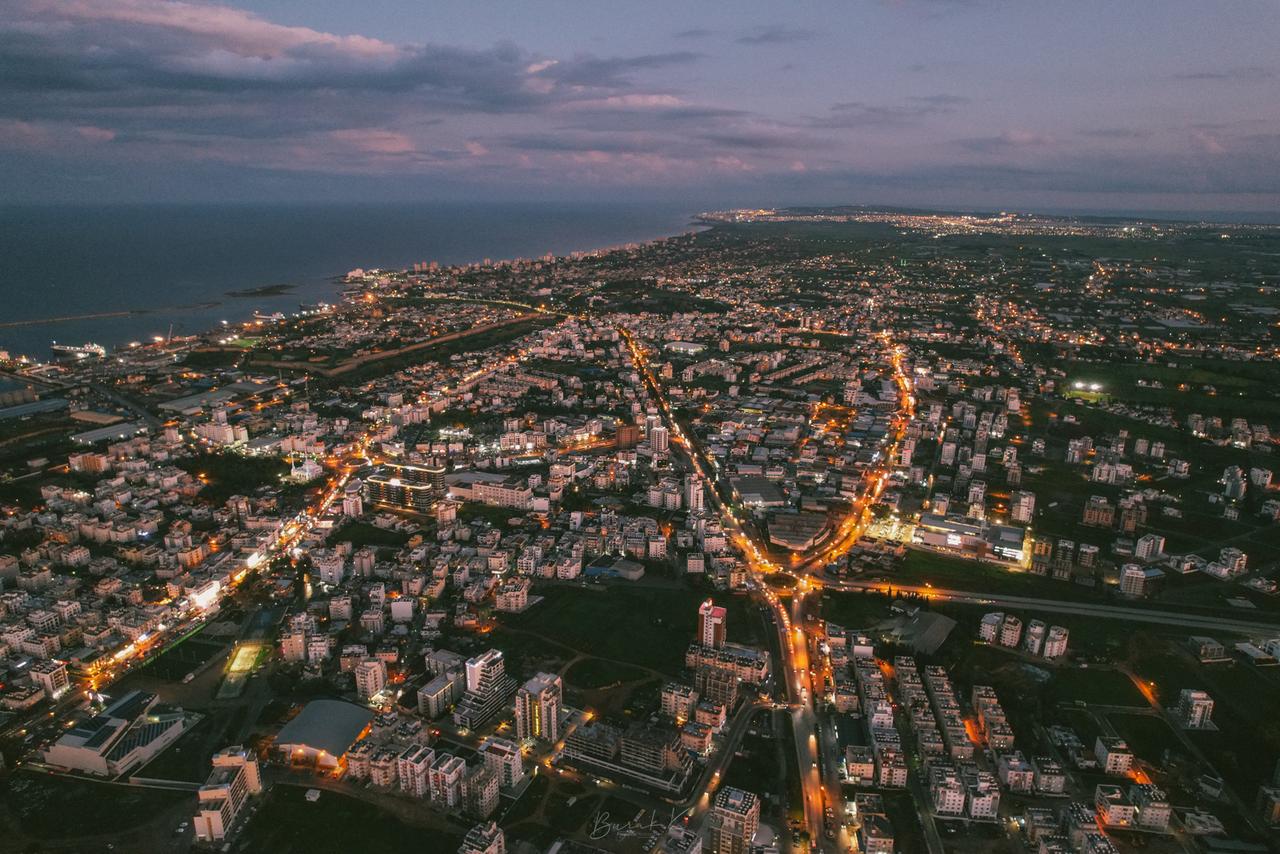
The history of Famagusta extends back to the 3rd century BCE, when it was founded by Ptolemy I under the name “Arsinoe.” Its Greek name, “Ammochostos,” meaning “buried in sand,” is evocative both geographically and historically. Following the destruction of Salamis during raids in 647/648 CE, refugees from that city settled in Famagusta. With the beginning of Lusignan rule over the island in 1192, Famagusta became the seat of the Lusignan kings and experienced its golden age as a port city.
The fall of Acre during the Crusades in 1291 brought Latin clergy and merchants to the city, significantly increasing its population and establishing it as a major commercial hub. During this period, Famagusta became one of the wealthiest cities in the Mediterranean world. In 1372, the city was occupied by the Genoese and remained under their administration until 1469, after which it reverted to Lusignan control. In 1489, with Venice’s takeover of the island, Famagusta was fortified with walls and transformed into a military center.
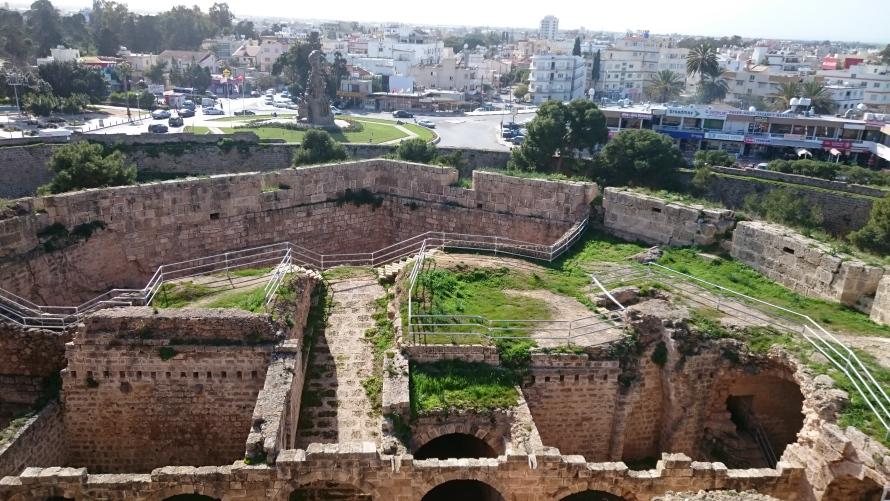
During Venetian rule, the city’s walls and defensive structures were renovated to accommodate advances in gunpowder weaponry. The city became a vital base for the Venetian navy in the Eastern Mediterranean.
In 1571, the city was conquered by the Ottomans and incorporated into the Ottoman Empire as a sanjak of Cyprus. During this period, religious, commercial, and social institutions were constructed, solidifying the city’s Ottoman-Turkish identity. Throughout the Ottoman era, Famagusta served as an important administrative center and hosted notable figures such as Namık Kemal, Suphi and Kutup.
Additionally, numerous madrasas, tekkes, and mosques were built during the Ottoman period to support education and religious activities. The Kutup Osman Tekke, the headquarters of the Halvetiye Sufi order on the island, holds particular significance as the place where the exiled Kutup Osman died.
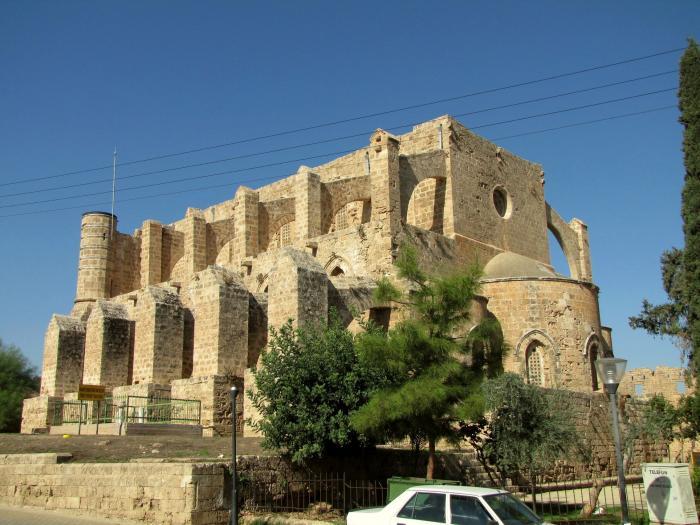
Famagusta possesses a unique architectural heritage. The Mustafa Pasha Camii, originally built in the 14th century as a church and later converted into a mosque, is one of the most important examples of Gothic architecture in Cyprus. This landmark, recognized by the historic fig tree in front of it, remains one of the city’s iconic symbols.

The city walls, extensively rebuilt during the Venetian period for defense against the Ottomans, include notable structures such as Othello Castle, the Porta del Mare Gate, and the Ravelin Gate, all exemplary of military architecture. These structures are not only historical defensive elements but have also become integral to the city’s contemporary cultural life through the events they host.

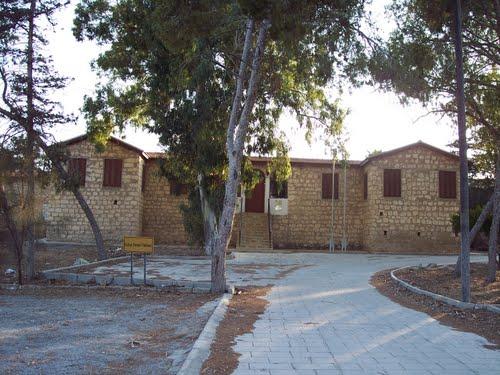
Among the city’s historic and public architectural landmarks are the Venetian Palace, the Namık Kemal Prison and Museum. The building where the poet Namık Kemal was exiled from 1873 to 1876 is now open to visitors as a museum.

The city also contains numerous churches belonging to Latin, Orthodox, and Armenian communities, including St. George Greek Church, Ayios Yuannis Church, St. Francis Monastery, St. Peter and St. Paul Church (now Sinan Paşa Camii), St. Anna Church, Carmelite Church, and the Latin St. George Church. These structures represent diverse examples of Gothic, Byzantine, and medieval Latin architecture.
Among the Ottoman-era tombs in Famagusta, the Yirmisekiz Mehmet Çelebi Türbesi stands out. Located on Surlariçi Naim Efendi Street, this tomb, built with the simplicity characteristic of Ottoman architecture, features a dome and arched openings that distinguish it. It commemorates Yirmisekiz Mehmet Çelebi, a prominent 18th-century Ottoman diplomat, and serves as an important architectural testament to the city’s Ottoman burial culture.
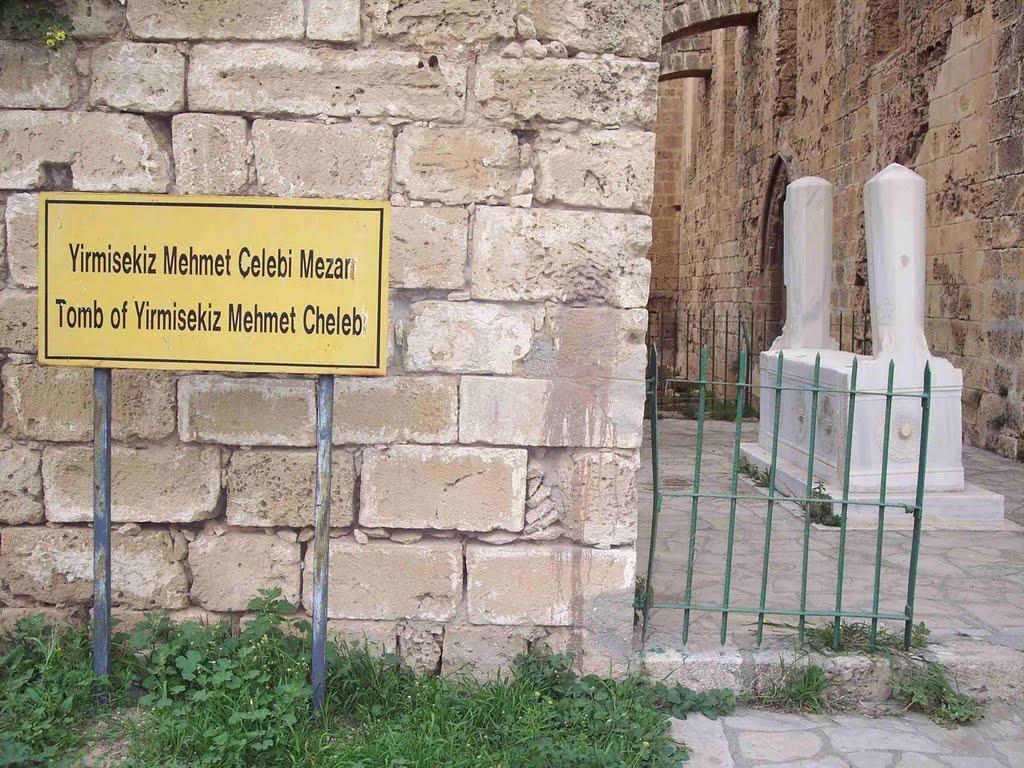
Yirmisekiz Mehmet Çelebi Türbesi
Other Ottoman-era architectural elements include the Kutup Osman Tekke, Cafer Paşa Hamamı, Kertikli Hamam, Mustafa Paşa Camii, Cafer Paşa Çeşmesi, and the Mustafa Zührü Efendi Türbesi.

Additionally, structures such as the Canbulat Türbesi and Museum and the Martyrs’ Memorial hold significant places in Famagusta’s collective memory, both historically and in terms of commemorative culture.
The Gallipoli Martyrs’ Memorial in Famagusta is dedicated to Turkish soldiers captured by the British during World War I and brought to the Famagusta Prisoner-of-War Camp, where they died due to harsh conditions or failed escape attempts. The memorial site contains 33 individual graves and a communal tomb housing 184 remains, totaling 217 martyrs. The inscribed and decorated gravestones, crafted by artisan prisoners, carry unique cultural significance. In commemoration of the martyrs, a monument was erected on 13 October 1980, marking the fifth anniversary of the establishment of the Turkish Federated State of Cyprus (the administrative structure declared by Turkish Cypriots between 1975 and 1983).

Gazimağusa Çanakkale Martyrs' Memorial
During the Ottoman period, social, religious, and architectural structures shaped the city’s character. The Ottomans converted existing churches into mosques, constructed new mosques, madrasas, and fountains, and repaired and reused the city walls. After Cyprus was leased to Britain in 1878, the city came under colonial administration. During this time, Greek and Turkish communities lived in separate areas, with the Suriçi Turkish quarter preserved as such.
Under British rule, planned urban development in the European style was introduced: new neighborhoods, public buildings, and transportation infrastructure were constructed beyond the city walls. Some Ottoman structures fell into neglect or were repurposed contrary to their original function.
With the establishment of the Republic of Cyprus in 1960, Famagusta became a major tourist center; particularly after the decline of the Maraş region’s prominence, it emerged as one of the world’s leading tourism and leisure destinations. Following the 1974 Peace Operation conducted by Türkiye, part of the city was designated as a buffer zone, initiating a process of urban restructuring.
After 1974, the Republic of Türkiye opened a consulate in the city; the Famagusta Consulate began providing diplomatic and consular services to Turkish citizens in the region. The consulate also functions as the official mission representing Türkiye in the Famagusta and İskele areas.
With the declaration of the Turkish Republic of Northern Cyprus in 1983, Famagusta became one of its most important cities, assuming a strategic position as the eastern gateway of the TRNC in political, cultural, and economic terms.
With the founding of Eastern Mediterranean University in 1986, Famagusta transformed into a university town, triggering multifaceted changes in its social, cultural, and economic structure. Today, the city, home to the largest free port in the TRNC, is a major center for education, tourism, and commerce. Its population is recorded at 55,868, but this number increases significantly throughout the year due to university students and staff.
The annual Famagusta Culture, Art and Tourism Festival holds a prominent place in the city’s cultural life. Events are held in various historic venues, including Othello Castle, featuring concerts, theatrical performances, exhibitions, and panels that cater to both local residents and tourists.
Additionally, sites such as the Namık Kemal Prison and Museum, the Canbulat Museum, the Maraş Icon Museum, and the Gallipoli Martyrs’ Memorial serve as functional spaces for both educational and commemorative activities.
Famagusta is one of the rare cities that has successfully managed its development while preserving its historical fabric. With its historical trajectory extending from antiquity through the Ottoman era and the colonial period to the TRNC, Famagusta possesses a multifaceted identity.
Aydoğan, Bedri. “Namık Kemal’ın Magosa Sürgünlüğü.” *Çukurova Üniversitesi Sosyal Bilimler Enstitüsü Dergisi* 12, no. 12 (2003).
Başkent Üniversitesi Kıbrıs Türk Tarihi Araştırmaları Merkezi. “Dönemin Adamları | KKTC İlanı.” Başkent Üniversitesi. Accessed April 8, 2025. https://kitamer.baskent.edu.tr/kw/menu_icerik.php?birim=687&menu_id=25.
Eyyamoğlu, Mustafa, and Nuran Kara Pilehvarian. “Kıbrıs Celvetiliğinde Unutulmuş Bir Mirasın Yeniden Hatırlanışı: Magosa Kutup Osman Efendi Türbe ve Dergâhının İnşa ve İhyası.” *Osmanlı Araştırmaları* 53, no. 53 (December 2018): 321–352. https://doi.org/10.18589/oa.632212.
Gazimağusa Belediyesi. "Kent Tarihi." Accessed April 8, 2025. https://www.gazimagusabelediyesi.org/kent-tarihi/.
Gazimağusa Belediyesi. "Resmî Web Sitesi." Accessed April 8, 2025. https://www.gazimagusabelediyesi.org.
Gazimağusa Belediyesi. "Tarihi Yerler." Accessed April 8, 2025. https://www.gazimagusabelediyesi.org/tarihi-yerler/.
Gazimağusa Kaymakamlığı. "Resmî Web Sitesi." Accessed April 8, 2025. https://gazimagusa.gov.ct.tr.
Gazimağusa Polis Directorate. "Gazimağusa Police Directorate." KKTC Polis Genel Müdürlüğü Resmî Sitesi. Accessed April 8, 2025. https://polis.gov.ct.tr/website/gazimagusa.html.
Gazimağusa Sur İçi Derneği. “Famagusta.” magusasurici.com. Accessed April 8, 2025. https://magusasurici.com/famagusta.
Gazimağusa Türk Consulate General. "İletişim." T.C. Dışişleri Bakanlığı Gazimağusa Başkonsolosluğu Resmî Sitesi. Accessed April 8, 2025. https://gazimagusa-bk.mfa.gov.tr/Mission/Contact.
Mücahitler Derneği. "Gazimağusa Şehitliği." Kıbrıs Türk Mücahitler Derneği. Accessed April 8, 2025. https://mucahit.gov.ct.tr/Sayfa/Sehitlik?SEHITLIK_KOD=12.
Near East University. "Kampüs: Gazimağusa ve Kuzey Kıbrıs." Doğu Akdeniz Üniversitesi. Accessed April 8, 2025. https://www.emu.edu.tr/tr/kampus/kampus-gazimagusa-ve-kuzey-kibris/666.
T.C. Çanakkale Municipality. “Gazimağusa / TRNC.” Çanakkale Belediyesi Resmî Sitesi. Accessed April 8, 2025. https://www.canakkale.bel.tr/tr/sayfa/1581-gazimagusa-kktc.
Çiçek, Kemal. “Magosa.” *Türkiye Diyanet Vakfı İslâm Ansiklopedisi* 27 (2003): 311–313. https://islamansiklopedisi.org.tr/magosa.

No Discussion Added Yet
Start discussion for "Gazimağusa (District)" article
Historical Development
Architectural and Cultural Fabric
Ottoman and British Periods
The Republic of Cyprus and After
Famagusta Today