


This article was automatically translated from the original Turkish version.
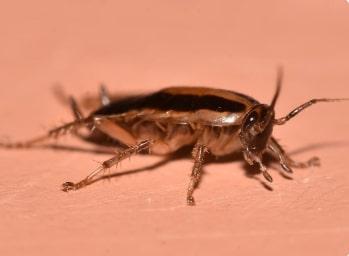
German Cockroach
Type(s) | Cockroach / Germanica | ||||||||
|---|---|---|---|---|---|---|---|---|---|
Color | Light brown | ||||||||
Legs | 6 | ||||||||
Region(s) | Found throughout the United States | ||||||||
Blattella germanica, known as the German cockroach, is one of the most significant indoor pests and has a wide distribution across the globe. This species is commonly found in homes, restaurants, hotels, and other enclosed spaces, and is considered a public health concern due to its potential to trigger hygiene problems and transmit pathogens. Capable of surviving in both tropical and temperate climates, this cockroach is notable for its rapid reproductive capacity.
The German cockroach is recognized by its small size; adult individuals typically measure between 13 and 16 mm in length. Their bodies are usually brown and feature two parallel yellowish stripes on the back. Blattella germanica is nocturnal and prefers to shelter in dark, moist areas during the day.
The life cycle of the German cockroach consists of three stages: egg, nymph, and adult. Females produce a well-developed egg capsule called an ootheca, which contains approximately 30 to 40 eggs and is deposited in hidden locations. The eggs hatch into nymphs within one to two weeks, and the nymphs undergo several molts before reaching adulthood. This species has a high reproductive capacity, enabling it to produce multiple generations per year, which leads to rapid population growth.
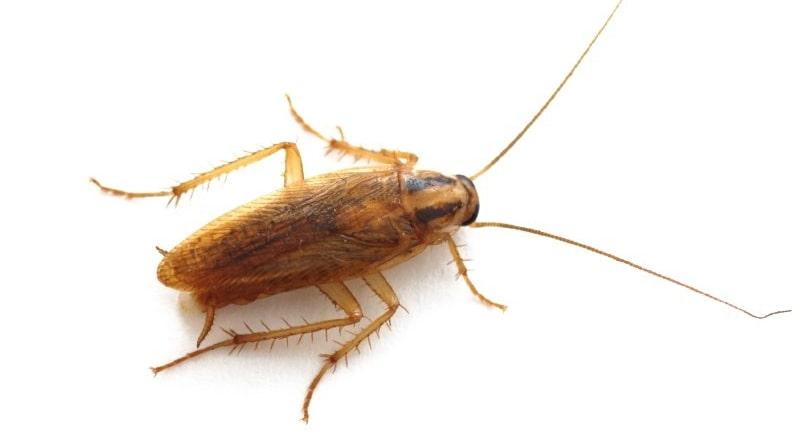
German Cockroach (Blattella germanica)
The German cockroach can serve as a food source for certain predatory organisms within ecosystems, but due to its restriction to human-made environments, it has little potential to disrupt natural ecological balances. Nevertheless, Blattella germanica poses a significant health risk in indoor settings. The pathogens it carries can threaten human health when they come into contact with food supplies. In addition to acting as a physical contaminant, these insects can trigger asthma and allergic reactions.
The pathogens carried by German cockroaches include Salmonella, E. coli, and various viral infections. Moreover, their feces, body parts, and shed skin can pose serious hazards, particularly to asthmatic patients and individuals with allergic sensitivities. Therefore, control efforts against Blattella germanica in residential and commercial environments are not merely about cleanliness but also aim to minimize health risks.
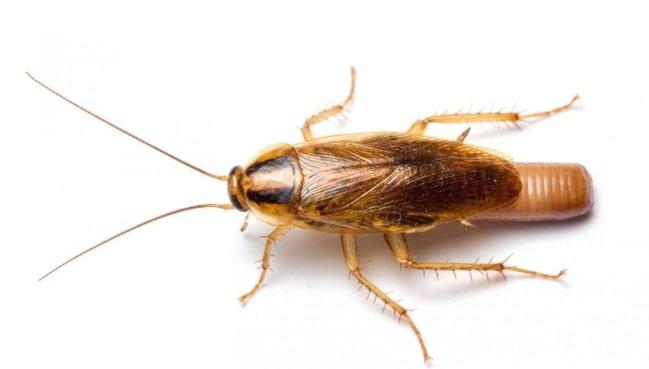
German Cockroach (Blattella germanica)
Various methods are employed to control the German cockroach, generally falling into physical, chemical, and biological categories:
"Alman Hamam Böceği." National Turkey. Accessed March 14, 2025. https://www.nationalturkey.com.tr/tr/bocek-ilaclama/alman-hamam-bocegi.
"Alman Hamam Böceği." Teknik Türk. Accessed March 14, 2025. https://teknikturk.com.tr/hasere-rehberi/alman-hamam-bocegi/2.
"Alman Hamam Böceği." Ziraat İlaçlama. Accessed March 14, 2025. https://www.ziraatilaclama.com/alman-hamam-bocegi/.
"German Cockroach." Australian Museum. Accessed March 14, 2025. https://australian.museum/learn/animals/insects/german-cockroach/.
"German Cockroaches." PestWorld. Accessed March 14, 2025. https://www.pestworld.org/pest-guide/cockroaches/german-cockroaches/.
Wang, C. "Blattella Germanica." Rutgers Cooperative Extension. Accessed March 14, 2025. https://njaes.rutgers.edu/fs1322/.

German Cockroach
Type(s) | Cockroach / Germanica | ||||||||
|---|---|---|---|---|---|---|---|---|---|
Color | Light brown | ||||||||
Legs | 6 | ||||||||
Region(s) | Found throughout the United States | ||||||||
Biological Characteristics and Life Cycle
Ecological Role and Damage
Control Methods