This article was automatically translated from the original Turkish version.
Author(s) | Serkan Karaismailoğlu Mehmet Ali Karaismailoğlu | ||||||||
|---|---|---|---|---|---|---|---|---|---|
Publisher(s) | Ortapia | ||||||||
Number of Pages | 152 | ||||||||
Publication Year | 2024 | ||||||||
Printing Date | August 2024 | ||||||||
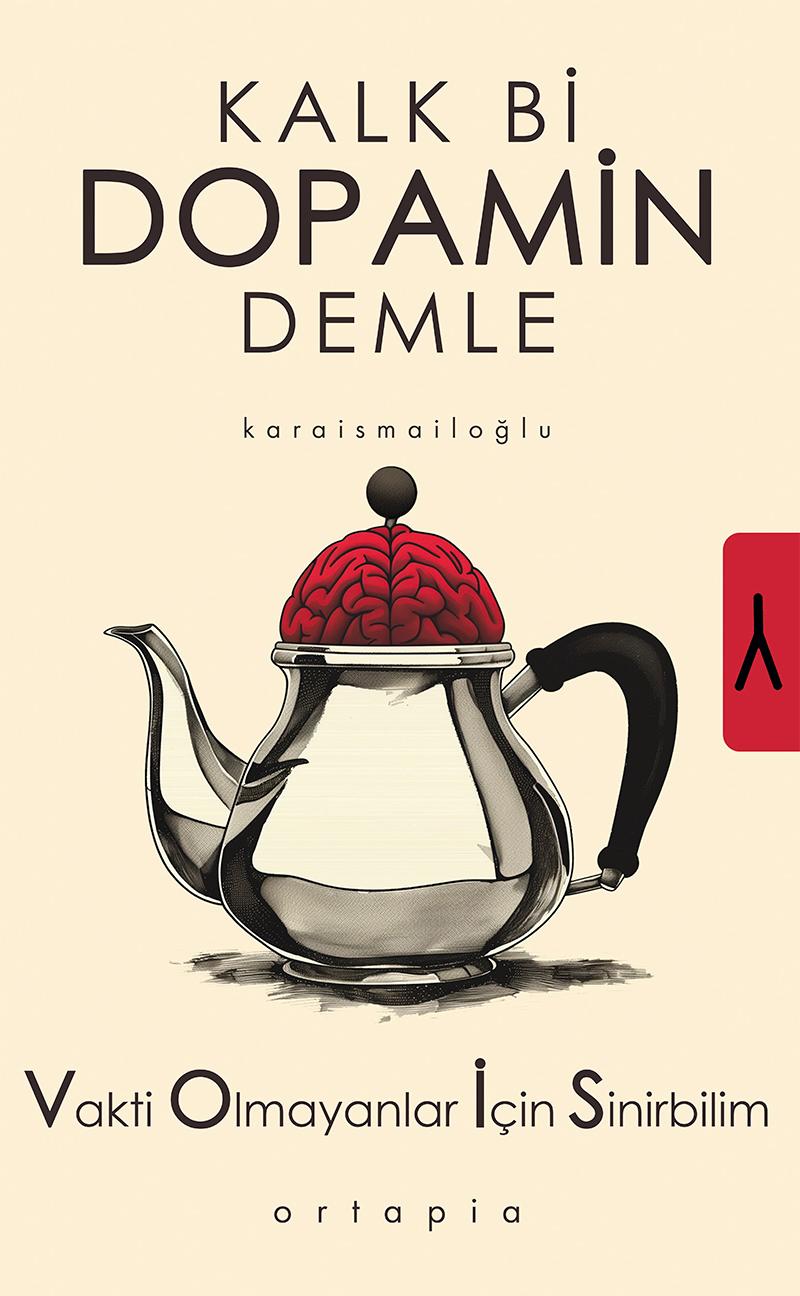
M. Ali Karaismailoğlu and Serkan Karaismailoğlu authored Kalk Bi Dopamin Demle, a popular science book that explains the neurobiological foundations of modern life in simple language. The work aims to elucidate dopamine-centered brain functioning by relating it to phenomena such as motivation, happiness, learning and addiction. Published under the subtitle “Neuroscience for Those Without Time,” the book presents scientific knowledge in an accessible manner, free from dense academic terminology.
The book examines dopamine, the central component of the brain’s reward and motivation system. It emphasizes that dopamine functions not merely as a “happiness hormone” but as a neurochemical mechanism that guides human behavior. The authors illustrate with examples how the constant stimulation characteristic of modern life — particularly social media, fast-consumption culture, and digital habits — disrupts the dopamine system.
The text explores how dopamine is released in different regions of the brain — especially the ventral tegmental area and the nucleus accumbens — and discusses the role of these processes in decision-making, pleasure acquisition, and habit formation. Additionally, the book offers practical recommendations for balancing dopamine levels in daily life; for instance, it describes strategies such as digital detox, physical exercise, quality sleep and interaction with nature.
At the heart of the book is the idea that individuals must become aware of their own dopamine cycles. The authors argue that the relentless pursuit of pleasure creates artificial reward loops in the brain, weakening natural motivation mechanisms. In this context, the book calls for a balance against the digital age's "instant gratification" culture. Drawing on scientific evidence, it examines how dopamine release affects sustainable happiness and productivity.
Furthermore, contemporary psychological issues such as stress, attention, attention fragmentation, burnout syndrome and addiction are explained through the dopamine axis. In this regard, the work is written not only from a biological perspective but also through the lens of behavioral neuroscience.
Karaismailoğlu, M. Ali, and Serkan Karaismailoğlu. *Kalk Bi Dopamin Demle.* İstanbul: Ortapia Yayınları, August 2024. Accessed October 20, 2025. https://shop.elmayayinevi.com/kalk-bi-dopamin-demle-urun789.html.
Karaismailoğlu, M. Ali, and Serkan Karaismailoğlu. Kalk Bi Dopamin Demle. Istanbul: Ortapia Yayınları, August 2024.

Author(s) | Serkan Karaismailoğlu Mehmet Ali Karaismailoğlu | ||||||||
|---|---|---|---|---|---|---|---|---|---|
Publisher(s) | Ortapia | ||||||||
Number of Pages | 152 | ||||||||
Publication Year | 2024 | ||||||||
Printing Date | August 2024 | ||||||||
No Discussion Added Yet
Start discussion for "Get Up and Brew Some Dopamine (Book)" article
Subject and Content
Key Themes