


This article was automatically translated from the original Turkish version.
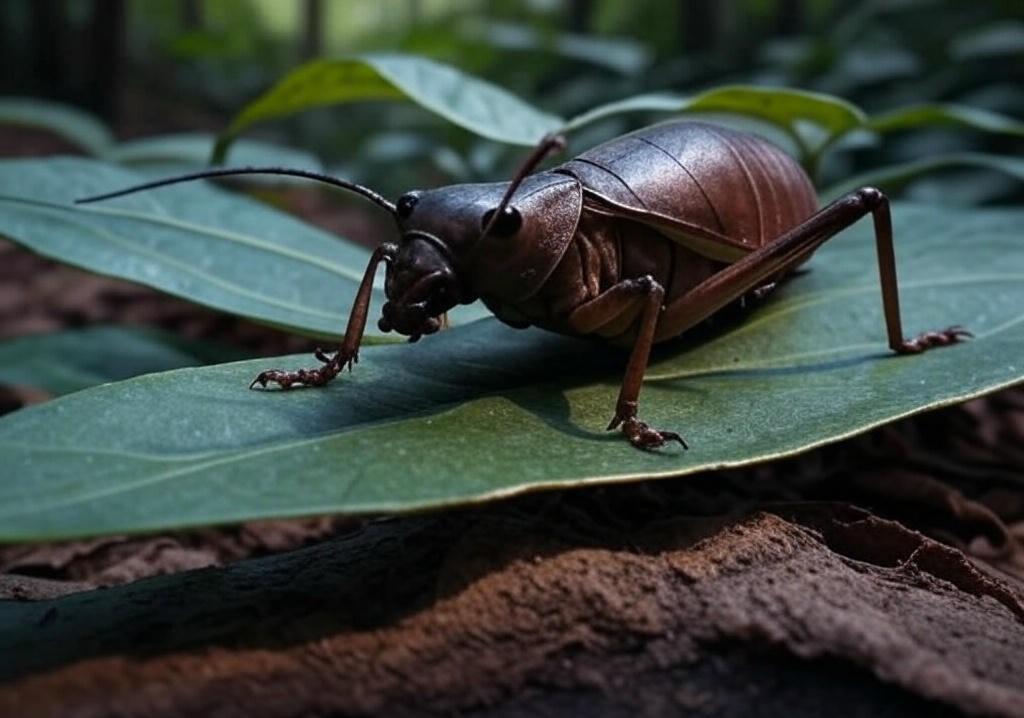
Giant Wētā
Type(s) | Deinacrida | ||||||||
|---|---|---|---|---|---|---|---|---|---|
Size(s) | 10 cm 70 g | ||||||||
Habitat | New Zealand | ||||||||
Status | Threatened | ||||||||
Diet(s) | Plants | ||||||||
Feature(s) | One of the Largest Insect Species | ||||||||
Threats | Habitat Loss, Predators | ||||||||
Deinacrida spp., more commonly known as Giant Weta, is a genus consisting of large insect species endemic to New Zealand. These insects are among the largest in the world, with some species reaching body lengths exceeding 10 cm. Members of the genus Deinacrida are typically nocturnal and inhabit tree hollows, crevices between rocks, or other natural shelters. Unlike most other insects, these species possess large and striking physical features. Their enormous size has made them one of the most recognizable insect groups.
Giant Weta generally live in forested areas and isolated islands of New Zealand. Their most distinctive features are their large, muscular legs and long antennae, which enable them to move effectively through their environment. They typically hide deep within trees and vegetation. Adults are more active at night and feed on plant material, often consuming leaves, fruits, and some soft wood.
The size of Giant Weta is their most distinguishing feature compared to other insects. Their long legs and slender antennae help them interact effectively with their surroundings. While capable of rapid movement over short distances, they are generally slow-moving and cautious. Their hardened exoskeletons provide protection against potential predators. Some species may appear intimidating due to their large size; however, Giant Weta are typically harmless to humans and only defend themselves when threatened.
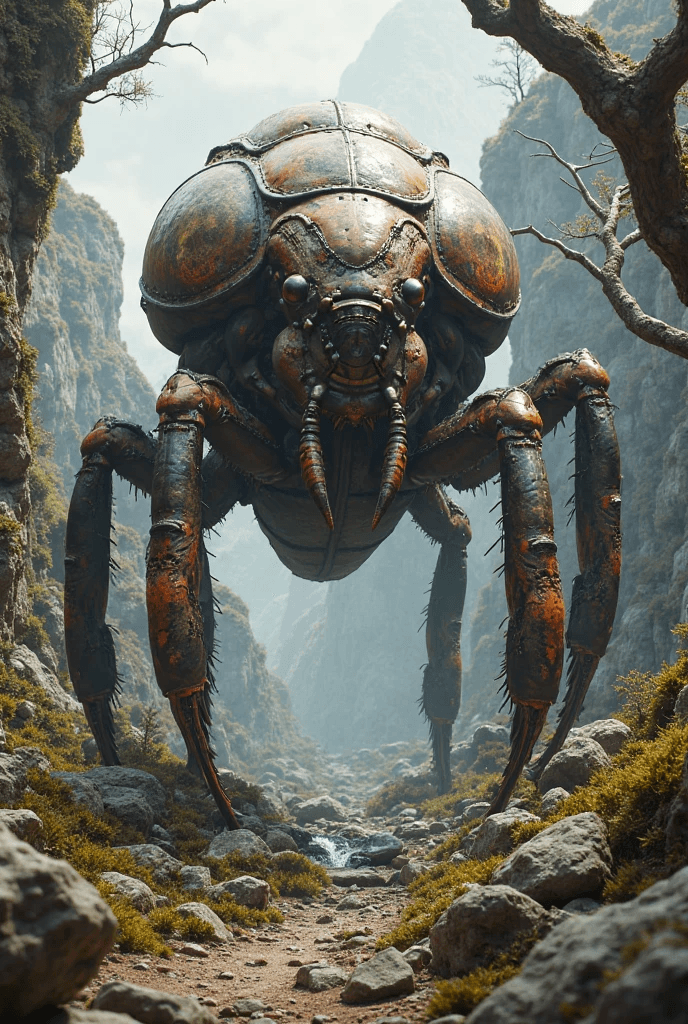
Giant Weta (generated by Artificial Intelligence)
Species of Deinacrida have limited distributions in forested areas of New Zealand’s isolated islands, and most are considered threatened. Habitat loss, expansion of human settlements, agricultural activities, and deforestation have made survival difficult for these species. Additionally, non-native invasive predators such as rats, cats, and dogs pose a significant threat to Giant Weta. These predators consume the eggs and young of Giant Weta, reducing their chances of survival.
The New Zealand government and various conservation organizations are implementing several protection projects to ensure the survival of Giant Weta species. These initiatives include preserving their habitats, controlling predatory animals, and restoring degraded ecosystems. Several Deinacrida species now live in specially protected areas within New Zealand, increasing their chances of survival in the wild.
Giant Weta are long-lived insects, and their reproductive cycles typically occur during the summer months. Female Giant Weta lay their eggs underground, where they develop over several years. Juveniles undergo several molts before reaching adulthood. Both juveniles and adults feed on plant material, but as they grow, they consume more protein and softer foods.
The large size and biological characteristics of Giant Weta have made them an intriguing subject for biologists and entomologists. Research into their behavior, ecological roles, and genetic structure has enabled the development of more effective conservation strategies. Furthermore, a better understanding of the reproductive biology and life cycle of Deinacrida spp. can guide future conservation efforts.
The New Zealand government has launched conservation programs in specific areas to protect these species and initiated monitoring programs to track their populations. Additionally, efforts have been made to increase the populations of certain species, particularly Deinacrida heteracantha and Deinacrida fallai, through the restoration of their natural habitats.
A-Z Animals. "Giant Weta Insect Facts – Deinacrida." A-Z Animals. Accessed May 3, 2025. https://a-z-animals.com/animals/giant-weta/.
Te Papa Collections. "Giant wētā (Deinacrida heteracantha) or wētāpunga." Te Papa Collections. Accessed May 3, 2025. https://collections.tepapa.govt.nz/topic/1356.
Zealandia. "Cook Strait Giant Wētā." *Zealandia*. Accessed May 3, 2025. https://www.visitzealandia.com/About/The-Wildlife/Reptiles-Frogs-Invertebrates/Cook-Strait-Giant-Weta.
iNaturalist NZ. “Giant Wētā (Genus Deinacrida).” *iNaturalist New Zealand*. Accessed May 3, 2025. https://inaturalist.nz/taxa/85240-Deinacrida.

Giant Wētā
Type(s) | Deinacrida | ||||||||
|---|---|---|---|---|---|---|---|---|---|
Size(s) | 10 cm 70 g | ||||||||
Habitat | New Zealand | ||||||||
Status | Threatened | ||||||||
Diet(s) | Plants | ||||||||
Feature(s) | One of the Largest Insect Species | ||||||||
Threats | Habitat Loss, Predators | ||||||||
No Discussion Added Yet
Start discussion for "Giant Weta (Deinacrida spp.)" article
Physical Characteristics and Behavior
Conservation Status and Threats
Reproduction and Breeding
Scientific Research and Conservation Efforts