


This article was automatically translated from the original Turkish version.
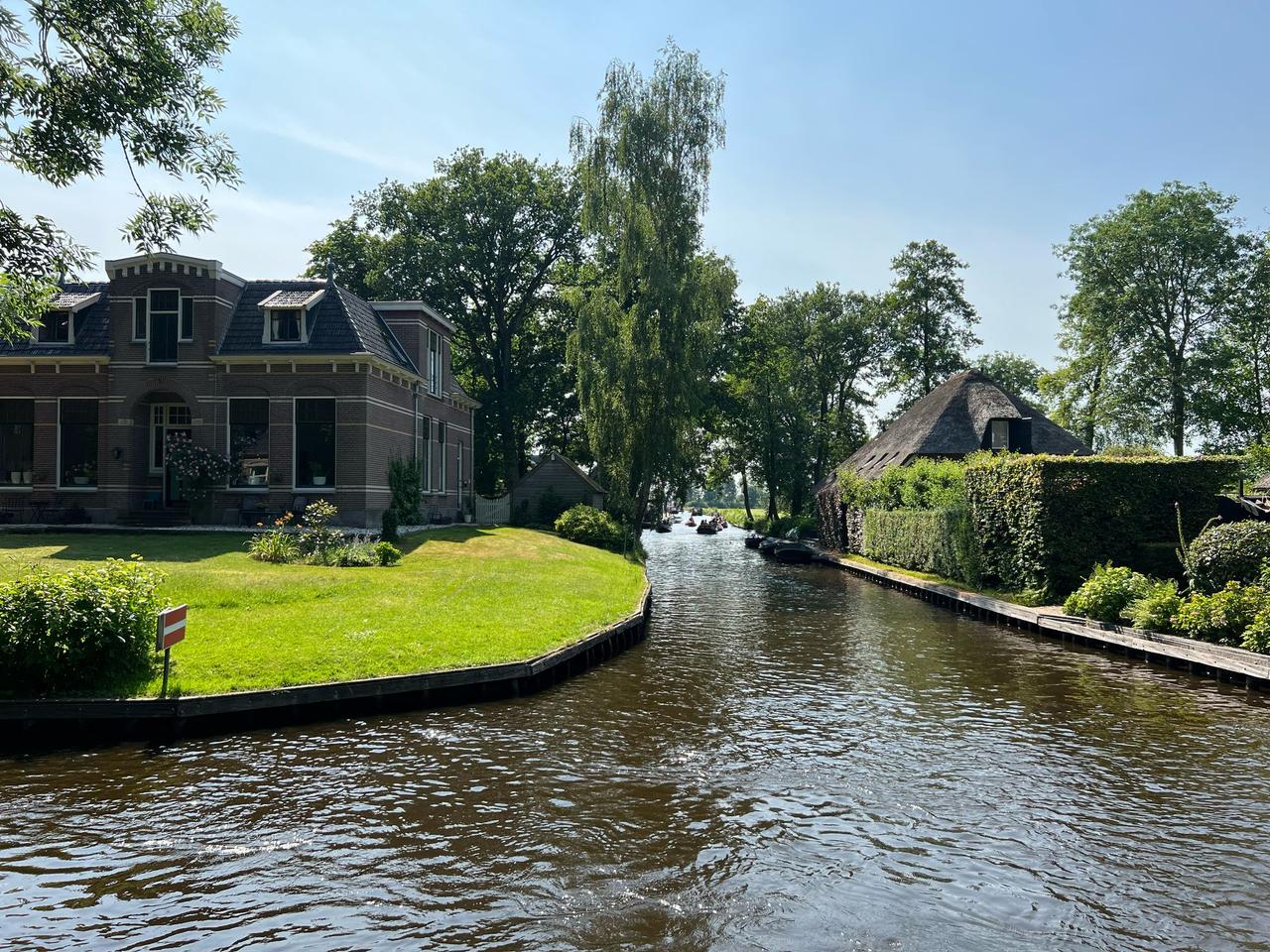
Giethoorn is a village in the Overijssel province of Netherlands, known for its network of water canals and famous waterways. Often called “the Venice of the Netherlands,” this village is a settlement where motor vehicle traffic is absent and transportation is provided entirely by boats.
The history of Giethoorn dates back to 1230. The first settlers are believed to have been refugees and farmers from the Mediterranean region. In the 13th century, the area was discovered as a marshland, and the earliest inhabitants extracted peat— a type of sedimentary rock formed by the decomposition of undisturbed organic material rich in organic and sub is not possible to provide a translation for "madde" without additional context, as the word has multiple meanings in Turkish depending on usage. Common translations include:- **substance** (in chemistry or physics)- **article** (in legal or legislative contexts)- **item** (in lists or enumerations)- **matter** (in philosophical or general contexts)Please provide the full sentence or context for an accurate translation.—for fuel.
When the settlers arrived in the marshland, they discovered numerous wild goat horns (Gietehorens) on the surface. As a result, the village retained the name “Giethoorn” (Goat Horn).
In this village with extensive marshlands, settlers engaged in peat mining as an economic activity. The excavations made to extract peat gradually filled with water and formed canals. Over time, these waterways became the defining feature of Giethoorn. These water routes, now the symbol of Giethoorn, are in fact man-made.
In the late 19th century, industrialization accelerated urbanization across the Netherlands, but Giethoorn largely preserved its traditional character. While other regions built roads with advancing technology, Giethoorn maintained its waterways and wood footbridges. In the early 20th century, the village became popular among artists and writers.
The village gained sudden fame when Bert Haanstra’s film “Fanfare” was shot in Giethoorn in 1958. From the 1980s onward, Giethoorn became one of the Netherlands’ leading tourist gravity destinations. Today, it has become a popular destination for tourists, especially those from Asia (China, Japan, South Korea).
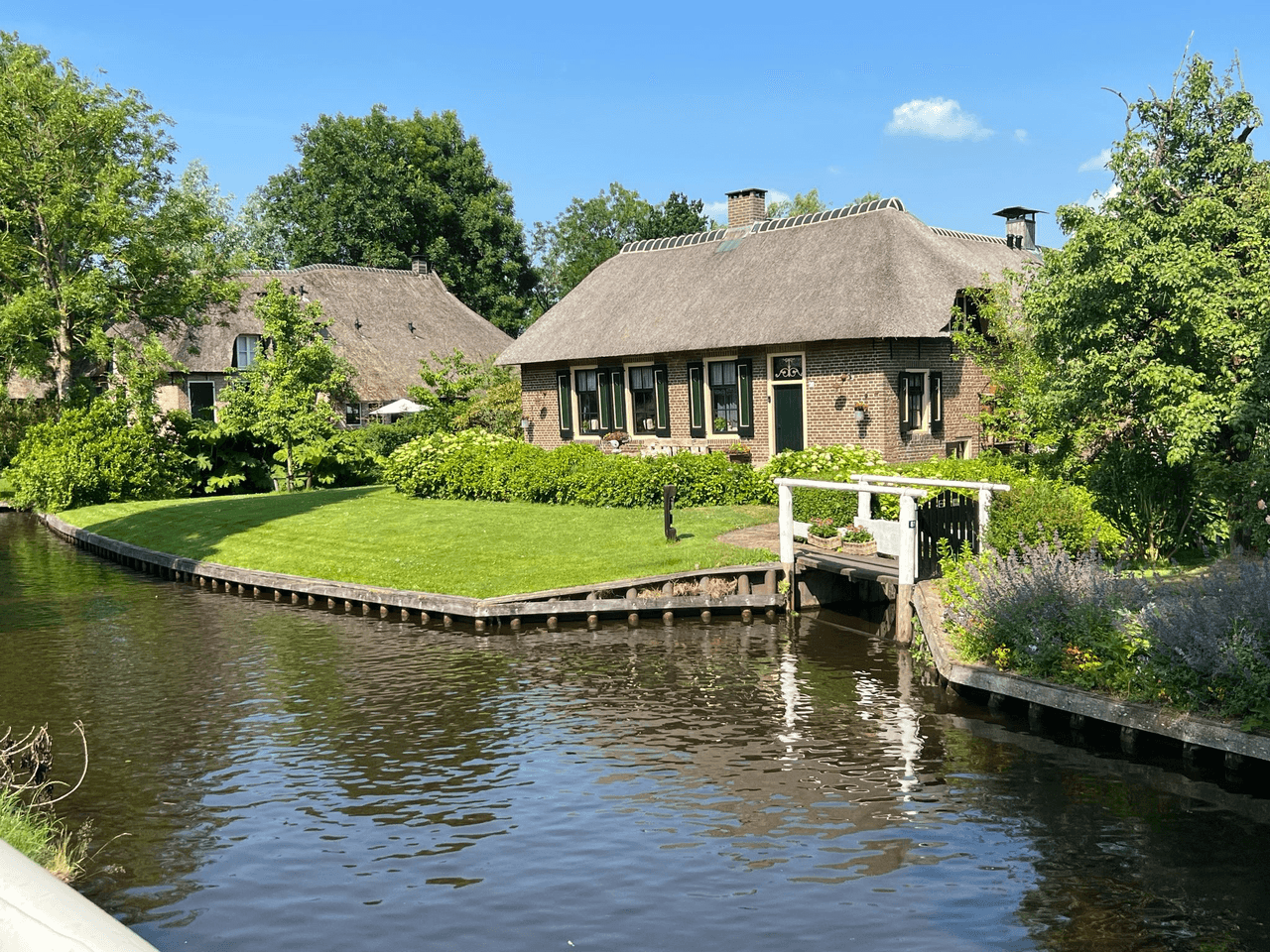
Giethoorn, 2023 (Photo: Author’s lens)
Although the village has largely preserved its traditional way of life, the growth of tourism has introduced new elements such as restaurants, accommodations, and electric boats like modern. Giethoorn, noted for its car-free lifestyle, eco-friendly transportation methods, and natural beauty, is regarded as a model of sustainable tourism. There is no road in the center of the village. Therefore, there is no motor vehicle traffic. Visitors and residents park their cars in designated parking areas outside the village. Tourists can explore Giethoorn on foot, by bicycle, or by renting whisper boats. Approximately one million people from around the world visit Giethoorn each year.
Gezimanya. "Giethoorn." Gezimanya Village Web Sitesi. Accessed March 16, 2025. https://gezimanya.com/giethoorn
Giethoorn Village. "Giethoorn in the Netherlands." Giethoorn Village Web Sitesi. Accessed March 16, 2025. https://giethoornvillage.com/about-giethoorn/
Giethoorn. "A Day in Giethoorn." Gezimanya Giethoorn Web Sitesi. Accessed March 16, 2025. https://giethoorn.com/en/a-day-in-giethoorn-2/
Haanstra, Bert. Fanfare (film), 1958.

The History of Giethoorn
Founding and First Settlers (13th Century)
Peat Mining and the Formation of Canals (14th–18th Century)
The Industrial Revolution and Change (19th–20th Century)
Rise of Tourism (From the 1950s to Present)
Giethoorn in the Modern Era
Features of Giethoorn