


This article was automatically translated from the original Turkish version.
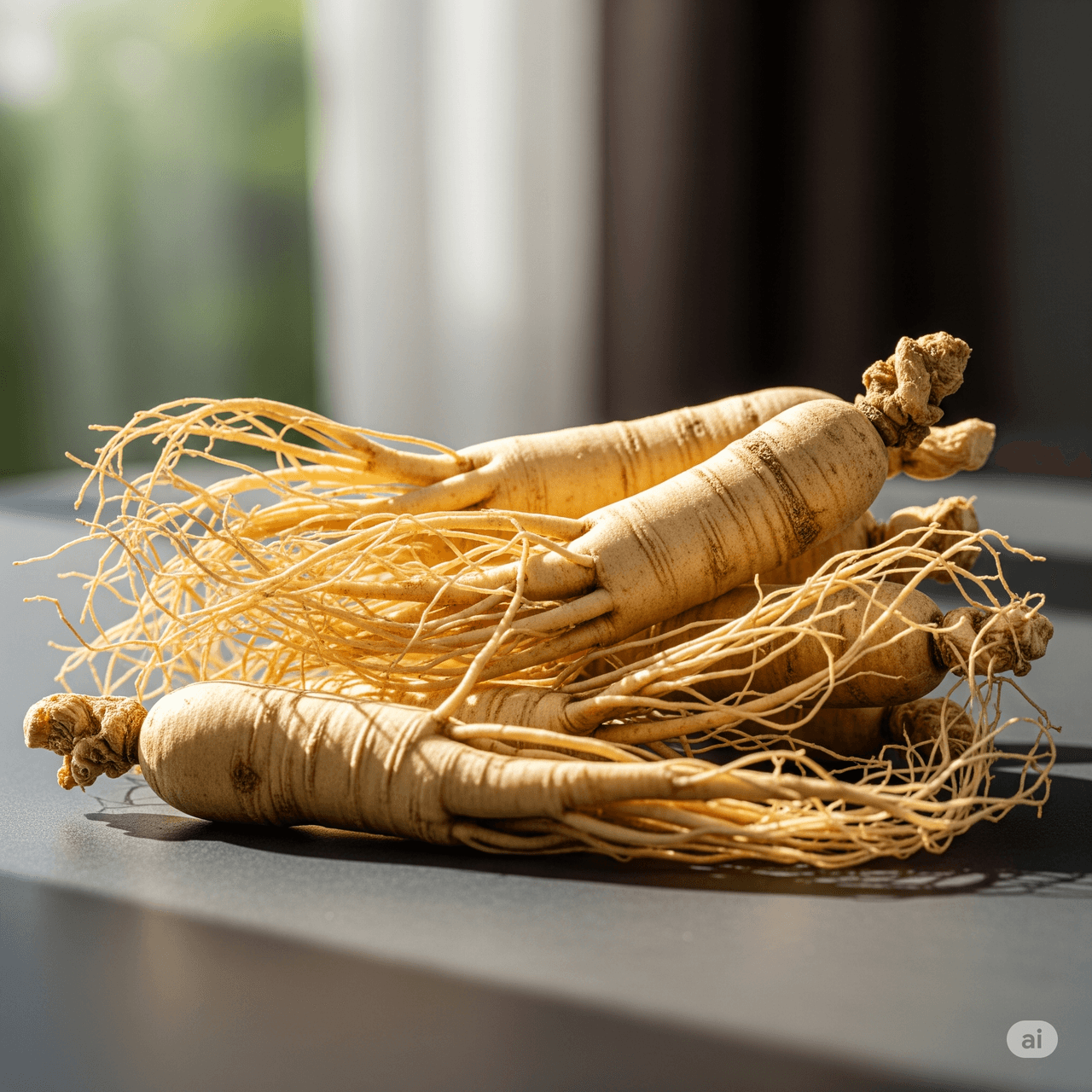
Common Name | Ginseng | ||||||||
|---|---|---|---|---|---|---|---|---|---|
Scientific Name(s) | Panax spp. | ||||||||
Family | Araliaceae | ||||||||
Natural Distribution | East Asia, North America | ||||||||
Height(s) | 30-60 cm | ||||||||
Leaf Characteristics | Compound, 3-7 oval-leaved | ||||||||
Habitat | Forest understory shade moist soils | ||||||||
Traditional Use | Energy booster, stress reducer, immune enhancer | ||||||||
Conservation Status | Under protection | ||||||||
Economic Role | Medicinal plant with high commercial value | ||||||||
Ginseng is a group of perennial plants belonging to the genus Panax, whose roots are used for medicinal purposes. It generally includes species native to East Asia and North America. Throughout history, ginseng has been widely used in traditional medicine, particularly noted for the adaptogenic properties of its roots—that is, their ability to enhance the body’s resistance. Modern scientific research has focused extensively on the chemical composition, pharmacological effects, and biological activities of ginseng. Today, ginseng is widely utilized in both traditional and complementary medical practices, as well as in the fields of dietary supplements and cosmetics.
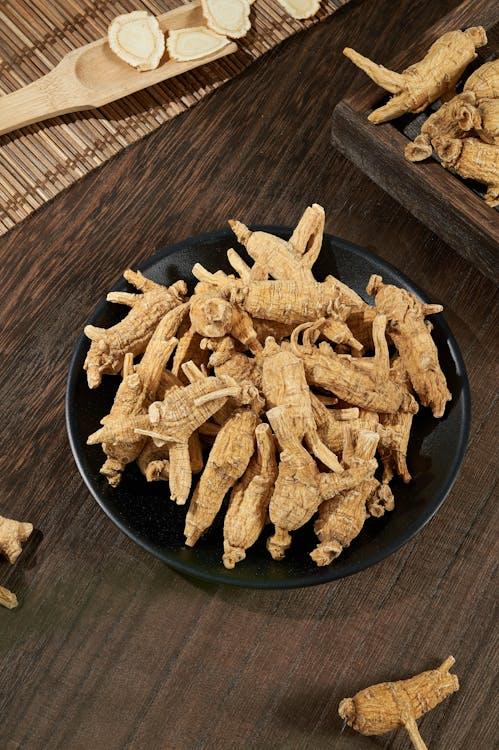
Ginseng (Ecter, Pexels)
Ginseng plants are typically herbaceous perennials ranging in height from 30 to 60 cm. The most distinctive feature of the plant is the root’s resemblance to the human form, which has granted it symbolic significance since ancient times. The leaves are usually compound, consisting of three to seven oval-shaped leaflets. The flowers are small, greenish-white, and arranged in an umbel-like inflorescence. The fruits turn red when ripe. As the root grows and ages, it becomes branched and may undergo color changes.
The most commonly known ginseng species include Panax ginseng (Asian ginseng), Panax quinquefolius (American ginseng), and Panax notoginseng. Panax ginseng is primarily cultivated in Korea, China, and eastern regions of Russia, while Panax quinquefolius occurs naturally in specific areas of North America. Panax notoginseng is mainly grown in southwestern China. These species have adapted to different climatic and soil conditions and typically thrive in shaded, moist forest understory environments. The cultivation period for ginseng generally ranges from four to six years, with longer growth periods preferred to enhance root quality and active compound content.
The primary compounds responsible for ginseng’s pharmacological activities are ginsenosides. Ginsenosides are triterpenoid saponin glycosides that constitute approximately 2–3% of the plant’s chemical composition. These compounds vary depending on the species and growing conditions. Other important constituents found in ginseng roots include polyacetylenes, polyphenols, polysaccharides, peptides, vitamins, and amino acids. Ginsenosides are classified into two main groups based on their chemical structure: protopanaxadiols and protopanaxatriols. Their physiological effects are primarily associated with immune system modulation, anti-inflammatory activity, antioxidant protection, blood glucose regulation, and support of central nervous system functions.
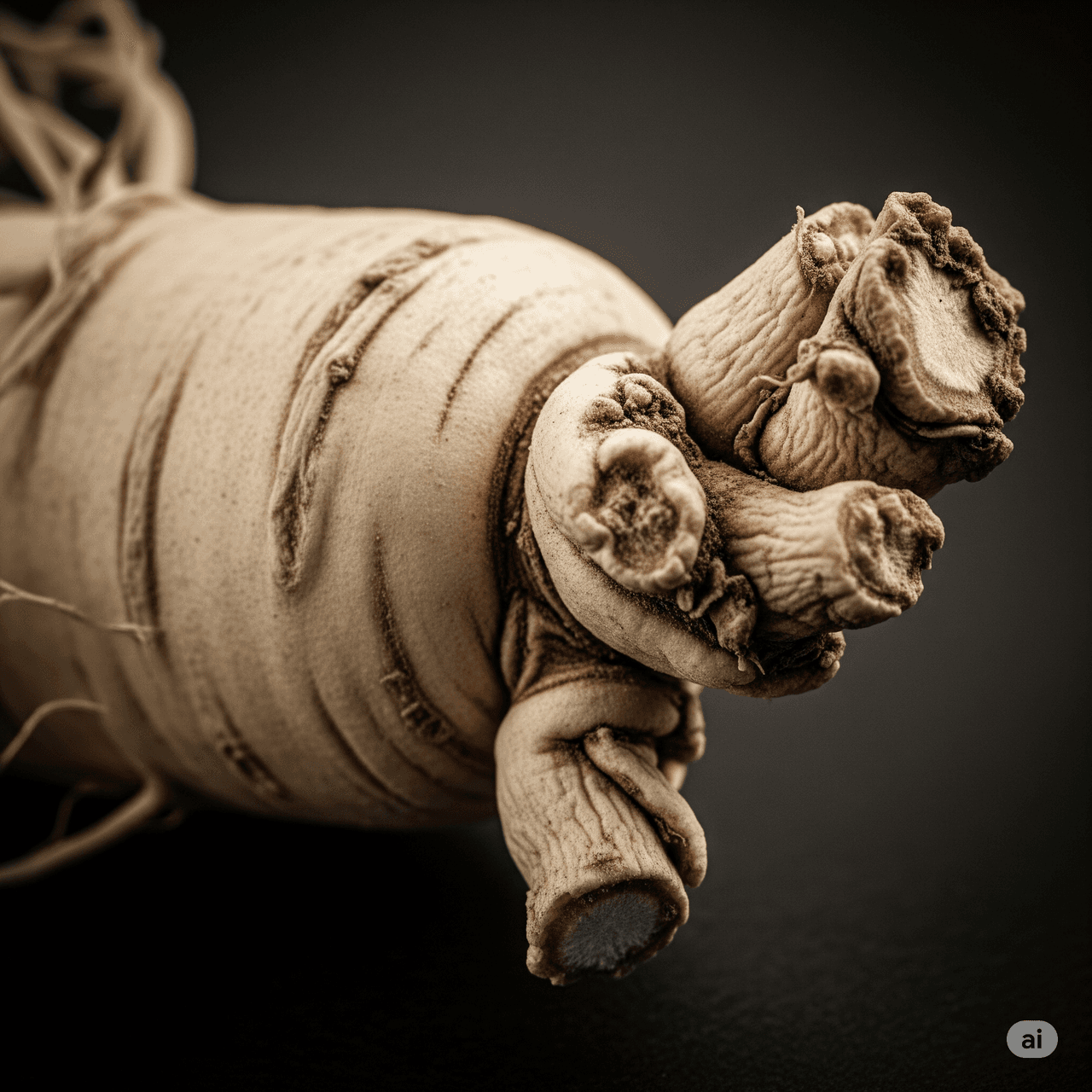
Ginseng (Generated by Artificial Intelligence)
Ginseng has been regarded for thousands of years in Asian cultures as a health tonic. In traditional Chinese medicine, it was used to enhance vital energy and promote longevity. Similar traditional uses are found in Korea and Japan. Indigenous peoples of North America historically used Panax quinquefolius to treat various ailments. Ginseng has held significant both medicinal and ritualistic importance. In modern times, its effects have been studied using scientific methods, leading to the investigation of traditional knowledge through empirical evidence.
Ginseng cultivation requires conditions as close as possible to its natural habitat. Shade from forest canopies, moist soil structure, and well-drained soils are essential requirements. When grown from seed, ginseng exhibits very slow growth during the first few years, and producers provide careful cultivation due to the plant’s delicate nature. Harvesting typically occurs when the roots reach four to six years of age. After harvest, the roots are dried and processed into commercial products.
Ginseng is recognized globally as a valuable medicinal plant with high commercial value. Cultivation is especially widespread in East Asian countries and serves as an important source of export revenue. Its use is increasing in the pharmaceutical and cosmetic industries, and it has established a strong position in the dietary supplement market. Standardization of bioactive compounds and quality control are critical for ensuring the efficacy and safety of ginseng products.
Attele, A. S., Wu, J. A., & Yuan, C. "Ginseng Pharmacology: Multiple Constituents And Multiple Actions." *Biochemical Pharmacology*, 58 (11) (1999): 1685–1693. https://doi.org/10.1016/s0006-2952(99)00212-9
Ecter. “Ginseng JPG.” Pexels. Accessed May 26, 2025. https://www.pexels.com/photo/full-plate-of-ginger-roots-16122465/
Kim, D. Chemical Diversity of Panax ginseng, Panax Quinquifolium And Panax Notoginseng. *Journal of Ginseng Research*, 36, no. 1 (2012): 1–15. https://doi.org/10.5142/jgr.2012.36.1.1

Common Name | Ginseng | ||||||||
|---|---|---|---|---|---|---|---|---|---|
Scientific Name(s) | Panax spp. | ||||||||
Family | Araliaceae | ||||||||
Natural Distribution | East Asia, North America | ||||||||
Height(s) | 30-60 cm | ||||||||
Leaf Characteristics | Compound, 3-7 oval-leaved | ||||||||
Habitat | Forest understory shade moist soils | ||||||||
Traditional Use | Energy booster, stress reducer, immune enhancer | ||||||||
Conservation Status | Under protection | ||||||||
Economic Role | Medicinal plant with high commercial value | ||||||||
Morphological Characteristics
Species and Growing Regions
Biochemical Structure and Active Compounds
Historical and Cultural Use
Cultivation and Harvesting Techniques
Economic and Industrial Significance