

This article was automatically translated from the original Turkish version.
+2 More
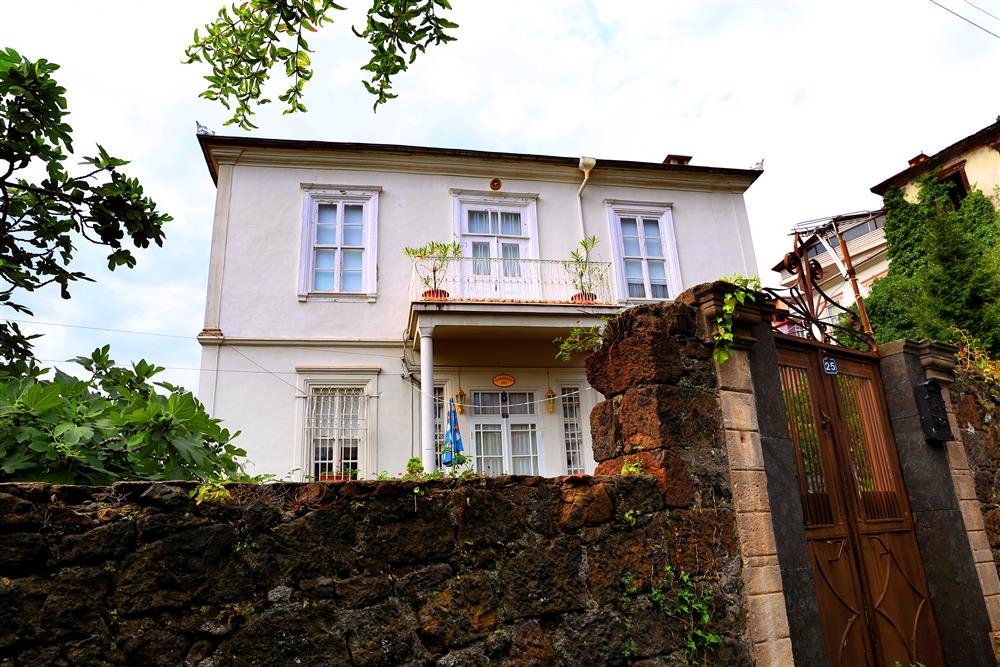
Zeytinlik Neighborhood, located in the city center of Giresun, is one of the rare settlements that has largely preserved its urban historical fabric. Situated on the eastern slope of Giresun Castle in the Eastern Black Sea region, this neighborhood was officially designated as a Third-Degree Urban Conservation Area by decision dated 17 May 1991. This area, forming the historical core of Giresun, has developed a unique residential fabric influenced by both its geographical location and its cultural heritage.
The settlement features residential typologies resulting from the fusion of traditional Turkish and Black Sea housing architecture with construction techniques employed by the Greek communities who densely inhabited the region during the 19th century.
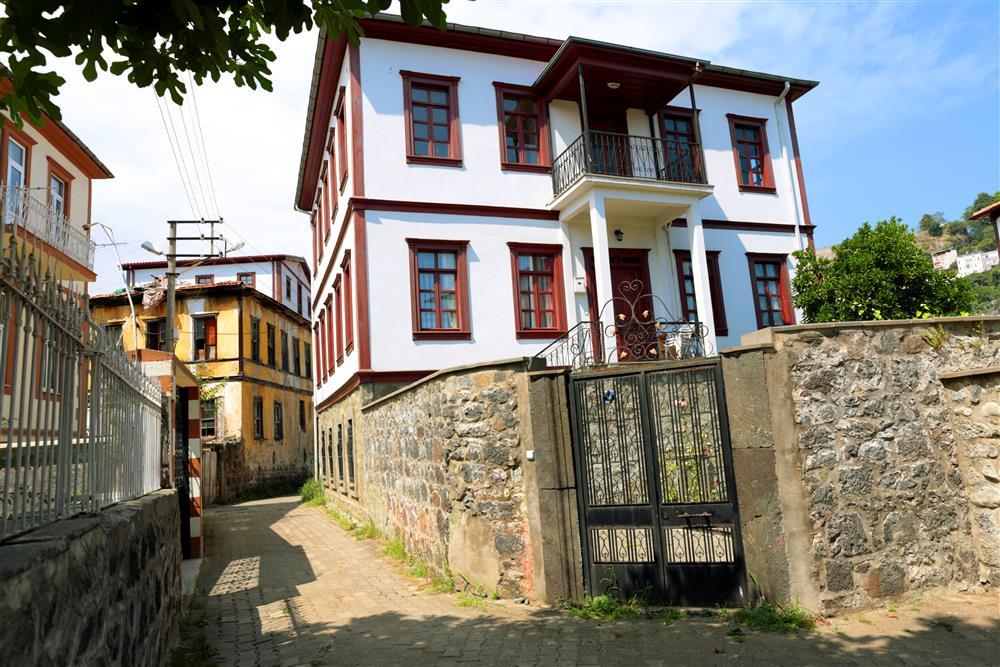
Zeytinlik Houses (Giresun Provincial Directorate of Culture and Tourism)
The history of Zeytinlik Neighborhood extends back to the Bronze Age. This area, known in antiquity as Kerasos or occasionally Kerasus (Giresun), contains traces of Hittite, Phrygian, Persian, Macedonian, Roman, and Byzantine periods. After Giresun was incorporated into Ottoman territories in 1461, it developed into a cosmopolitan structure over subsequent centuries, with Greek, Armenian, and Muslim communities living side by side. Particularly during the 19th century, this neighborhood, known as Gogora (present-day Zeytinlik), became a densely populated settlement dominated by the Greek community, whose activities included craftsmanship, maritime trade, and horticulture. After the population exchange, migrants from Thessaloniki were resettled in the neighborhood, and the existing building stock was largely preserved and continued in use.
Traditional houses in Zeytinlik Neighborhood are generally two-story structures, typically composed of a basement plus ground floor plus first floor, or ground floor plus first floor. These houses are positioned to adapt to the neighborhood’s sloping topography. Entrances are mostly provided from garden level, and living areas are typically situated at this same level. In plan organization, the living room, guest room, kitchen, and wet areas are located on the ground floor, while bedrooms are placed on the upper floor. Access between floors is achieved via wooden staircases located within the interior space.
House plans are divided into two main types: central sofa plans and corner sofa plans. In central sofa plans, a sofa placed at the center of the building provides symmetrical access to all rooms. The staircase is usually located within this central sofa and functions as the organizing element of the plan. In corner sofa plans, the sofa is positioned at a corner of the building, and the staircase is located near the entrance; rooms are arranged around this sofa.
In most houses, interior layouts were designed with functionality in mind, creating spatial transitions suited to daily life. Hall connections, built-in cabinets, niches, and spatial arrangements shaped by usage practices are among the primary elements reflecting the architectural and socio-cultural identity of these dwellings.

Visual Representing the Interior Space of Zeytinlik Houses (Generated by Artificial Intelligence)
The construction of Zeytinlik houses commonly employed a “semi-masonry” system. Lower floors were built using stone wall techniques, while upper floors were constructed with timber frame systems. Some houses also feature entirely stone (masonry) construction. Rubble or cut stone is used in lower levels, while upper levels are plastered and clad with wood.
Gardens constitute an essential component of the houses and are typically separated from the street by high stone walls. These walls provide privacy and define the streetscape. Courtyard and garden arrangements are among the elements that diversify the functional areas of the dwelling and enhance living quality.

Zeytinlik Houses (Türkiye Culture Portal)
The facades of the houses exhibit variety: flat facades without projections, projecting facades, balconied facades, and loggia facades are all present. Key defining elements of the facades include projections, balconies, wrought iron window railings, eave decorations, load-bearing wooden columns, and large wooden doors. Entrances are generally accessed from the garden and are covered by a balcony above. Projections are supported by columns, providing both aesthetic value and spatial expansion.
Functional solutions and simplicity characterize the interior spaces. Built-in wall cabinets, niches, and the “Rum stove”—a specialized heating system—are the principal interior architectural features. The Rum stove is embedded within the wall so that it can heat not only the room in which it is located but also adjacent spaces. Ceiling decorations are simple; in some houses, traditional Black Sea wooden ceiling craftsmanship can be observed.
On 17 May 1991, Zeytinlik Neighborhood in Giresun was officially designated as a Third-Degree Urban Conservation Area due to its preservation of traditional civil architectural examples. This designation was implemented to safeguard the neighborhood’s original residential fabric, historical background, and cultural diversity. The conservation process began in 1989 with the preparation of the first protective urban plan and was revised in 1997. However, during this period, the opening of new roads and granting of construction permits posed partial threats to the historical fabric.
Within the conservation framework, more than thirty buildings in the neighborhood have been restored and reintroduced to use through the contributions of public institutions, local administrations, and civil initiatives. In these restorations, the original materials and plan characteristics of the buildings were preserved, and interventions were carried out in harmony with traditional architecture. The majority of the houses are still used as residences, while some buildings have been repurposed for cultural and tourism functions. Thus, the neighborhood continues to exist as a living historical fabric and serves as an exemplary urban area in terms of sustainable cultural heritage preservation.

Aerial View of Zeytinlik Neighborhood and Houses (Anadolu Agency)
The Giresun Museum is located in the Zeytinlik area, formerly known as Gogora Neighborhood. The building is referred to in early sources as the Church of Saint Nicholas. This approximately 250-year-old Orthodox church, dating from the mid-19th century, was constructed by the Greek community residing in the region. The structure served as a church until 1924, after which it was abandoned and remained vacant until 1948. During this period of vacancy, the building suffered extensive damage and was partially repaired before being used as a prison from 1948 to 1967. Damage continued during its subsequent vacancy from 1967 to 1982, bringing it close to collapse. Between 1982 and 1988, the Ministry of Culture and Tourism undertook restoration, and the church was opened as a museum in 1988.
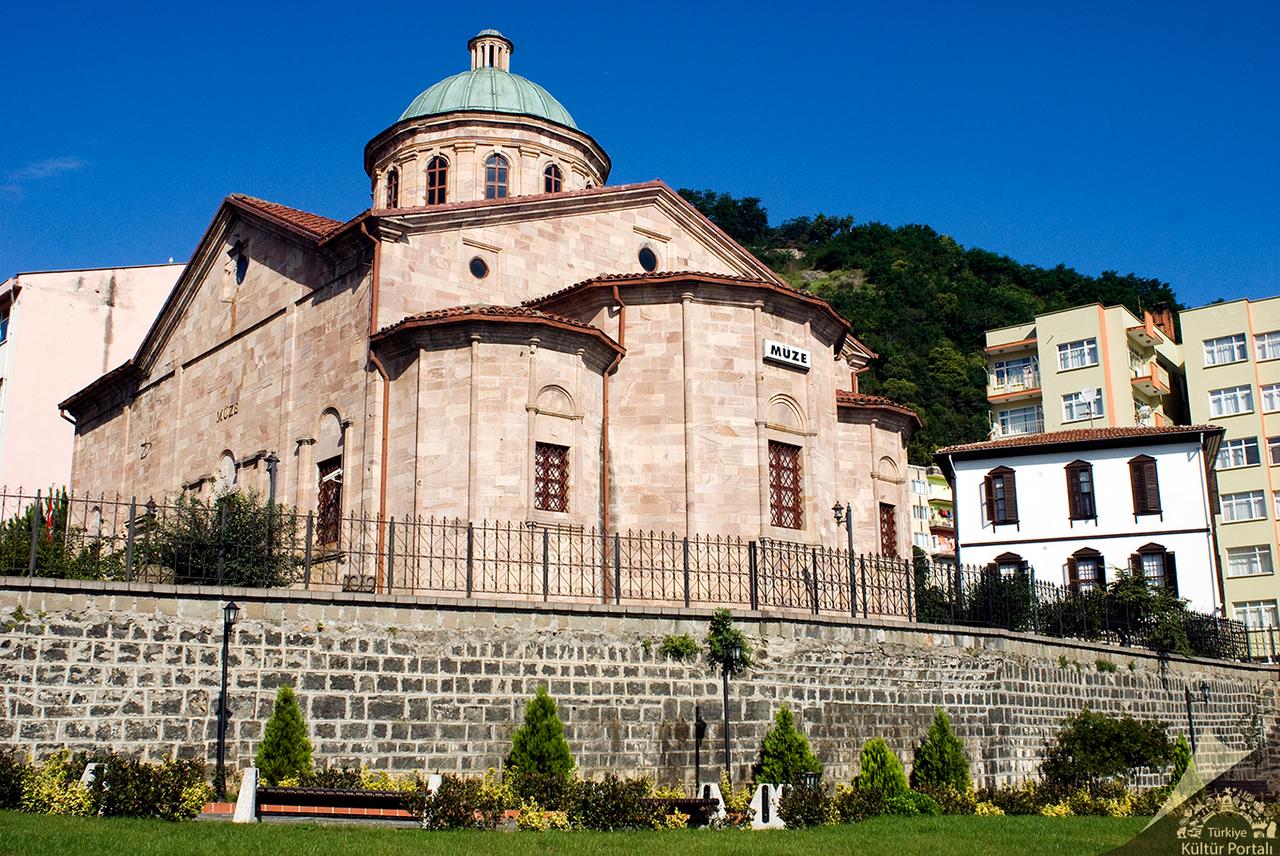
Gogora Greek Church (Currently Giresun Museum) (Türkiye Culture Portal)
The Catholic Church, located in Çınarlar Neighborhood of Giresun Province, was constructed between 1850 and 1900. The church is situated within a garden enclosed by cut stone walls. It features a rectangular plan with a triangular pediment on its main facade and distinctive architectural elements including stone corner pilasters at its corners. The northern facade is particularly ornate, with a pointed arch entrance at its center. The double-leaf wooden door is among the finest examples of 19th-century doors in Giresun. On the eastern facade, a second entrance leads to a square-section bell tower. The interior has retained its original form, although the gallery was later renovated in accordance with its original design. The mosaic tile floor covering the naos retains its originality, with highly decorative vegetal and geometric patterns.
The facade arrangement, interior floor tiling, window forms, and ornamental ceiling make this church one of the representative examples of non-Muslim buildings in Giresun. Since 1967, the church building has been used as a children’s library. In 2012, under the Ministry of Culture and Tourism’s Improvement Project for Children’s Libraries, the building underwent renovation and restoration, with all equipment updated to suit children’s needs.

Catholic Church (Currently Children’s Library) (Türkiye Culture Portal)
According to written sources, the building was constructed in 1322 AH (1906 CE) by the Greek Orthodox Community as a boys’ school. The structure was used as a Gendarmerie Cadet School until 1940, then as an Artillery Battalion until 1947, and subsequently as a Commercial School. Constructed using a load-bearing masonry system, the building employs cut stone as its primary material. Except for the ground floor, all other floors are painted over plaster. The central section of the building consists of a basement, a ground floor, and two standard floors.
The side sections each consist of a basement, a ground floor, and one standard floor. The ground floor features a southern entrance. Access to the entrance foyer, which contains four columns, is via a single-flight stone staircase. Directly above the entrance foyer, a bay window extends into the upper floors. All facades, except for the three round-arched window openings on the central section’s second floor, feature rectangular window openings. Entrances to the side sections are located on the eastern and western facades. The roof is a broken-pitch type, clad with traditional Turkish clay tiles.

Former Commercial High School (Giresun Culture and Tourism Provincial Directorate)

No Discussion Added Yet
Start discussion for "Giresun Zeytinlik Neighborhood and Houses" article
Historical and Urban Development
Architectural Features
Construction Techniques and Material Use
Facades and Exterior Elements
Interior Layouts and Heating Elements
Conservation Status
Monumental Structures in Zeytinlik Neighborhood
Giresun Museum
Catholic Church
Former Commercial High School