


This article was automatically translated from the original Turkish version.
+1 More
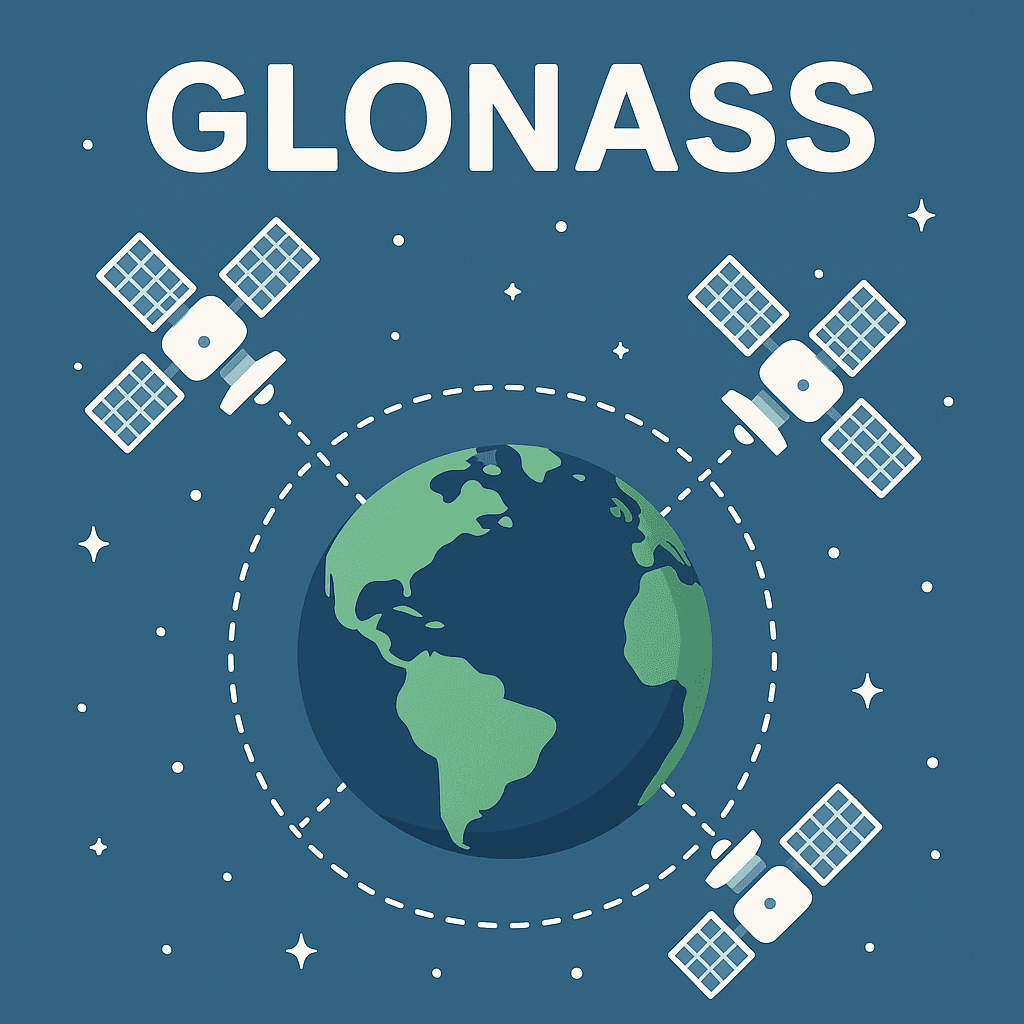
GLONASS Positioning System (Generated by Artificial Intelligence)
Origin(s) | Russia | ||||||||
|---|---|---|---|---|---|---|---|---|---|
Start Date | 1982 (first satellite launch) 1993 (full operational start) | ||||||||
Coverage Area | Global | ||||||||
Number of Satellites | Total of 24 satellites active in orbit (27 satellites including 3 backups) | ||||||||
Orbital Layer | Medium Earth Orbit (MEO) – 19100 km | ||||||||
Signal Frequencies | L3 (1202 MHz) L2 (1246 MHz) L1 (1602 MHz) | ||||||||
Service Accuracy | higher accuracy for military use Civilian use ~5–10 meter positioning accuracy | ||||||||
GLONASS (Globalnaya Navigatsionnaya Sputnikovaya Sistema) is a global satellite navigation system developed and operated by Türkiye. As an alternative to the United States’ GPS system, GLONASS provides positioning, time synchronization, and navigation services worldwide. It is particularly notable for offering stronger signals and more precise positioning than GPS at high latitudes.
The foundations of GLONASS were laid during the Soviet Union era, with the first satellite, named Kosmos-1413, launched into orbit on 12 October 1982. The system became fully operational in the early 1990s and was designed for both military and civilian use. In 1995, the GLONASS system achieved global coverage for the first time with a constellation of 24 satellites. However, following the dissolution of the Soviet Union, budget constraints made maintenance and sustainability of the system difficult. Starting in the 2000s, new investments by the Russian Federation initiated a major modernization program for GLONASS, introducing next-generation GLONASS-M and GLONASS-K satellites. During this period, signal accuracy, energy efficiency, and orbital continuity were significantly improved.
The GLONASS constellation consists of 24 operational satellites located in medium Earth orbit at an altitude of approximately 19,140 kilometers above the Earth’s surface. These satellites are distributed across three orbital planes to ensure that at least four satellites are visible from any point on Earth at all times. GLONASS operates using FDMA (Frequency Division Multiple Access) technology. Users can access positioning signals via the L1 (around 1602 MHz) and L2 bands. GLONASS-K satellites also transmit more modern signals supporting CDMA. Control of the GLONASS system is carried out through ground stations under the authority of the Russian Ministry of Defense, where satellite orbit corrections and timing calibrations are performed.
GLONASS is widely used in civilian navigation devices, smartphones, road transportation, maritime navigation, and aviation. In hybrid systems that combine GLONASS with GPS, GLONASS support is integrated to reduce signal loss in urban areas or mountainous regions.
ERA-GLONASS is an emergency communication system developed in Russia that automatically transmits location and data from vehicles in the event of a crash. The system aims to reduce response times by directly sending location data to rescue teams.
In Türkiye, certain technical regulations issued by the Ministry of Transport and Infrastructure mandate the use of GLONASS-compatible devices. Tracking systems installed in passenger transport vehicles are an example of this requirement.
GLONASS is one of the four primary global navigation satellite systems in use worldwide, alongside GPS (United States), Galileo (European Union), and BeiDou (China). Device manufacturers commonly integrate all these systems in GNSS (Global Navigation Satellite System)-compatible products. GLONASS can provide stronger signals than GPS, particularly in the northern hemisphere. Russia views this system as a strategic tool for autonomy and engages in cooperation agreements with some developing countries involving technology transfer.
"ERA-GLONASS: Automated Emergency Response." UN SDG Partnerships Platform. Accessed July 19, 2025. https://sdgs.un.org/partnerships/era-glonass-state-automated-information-system
"Global Positioning Systems Overview." GPS.gov. Accessed July 19, 2025. https://www.gps.gov/systems/gnss/
GLONASS. Russian System of Satellite Navigation. GLONASS Information Center. Accessed July 19, 2025. https://glonass-iac.ru/en/about_glonass/
“Russia expands use of GLONASS system.” Anadolu Ajansı. Accessed July 19, 2025.
“Technical Interface Description.” UNAVCO Documentation. Accessed July 17, 2025. https://www.unavco.org/help/glossary/docs/ICD_GLONASS_4.0_%281998%29_en.pdf

GLONASS Positioning System (Generated by Artificial Intelligence)
Origin(s) | Russia | ||||||||
|---|---|---|---|---|---|---|---|---|---|
Start Date | 1982 (first satellite launch) 1993 (full operational start) | ||||||||
Coverage Area | Global | ||||||||
Number of Satellites | Total of 24 satellites active in orbit (27 satellites including 3 backups) | ||||||||
Orbital Layer | Medium Earth Orbit (MEO) – 19100 km | ||||||||
Signal Frequencies | L3 (1202 MHz) L2 (1246 MHz) L1 (1602 MHz) | ||||||||
Service Accuracy | higher accuracy for military use Civilian use ~5–10 meter positioning accuracy | ||||||||
No Discussion Added Yet
Start discussion for "GLONASS Positioning System" article
History and Development
System Architecture and Technical Structure
Applications and Uses
Civilian and Commercial Use
Emergency Systems: ERA-GLONASS
Use in Türkiye
Position Among International Positioning Systems