


This article was automatically translated from the original Turkish version.
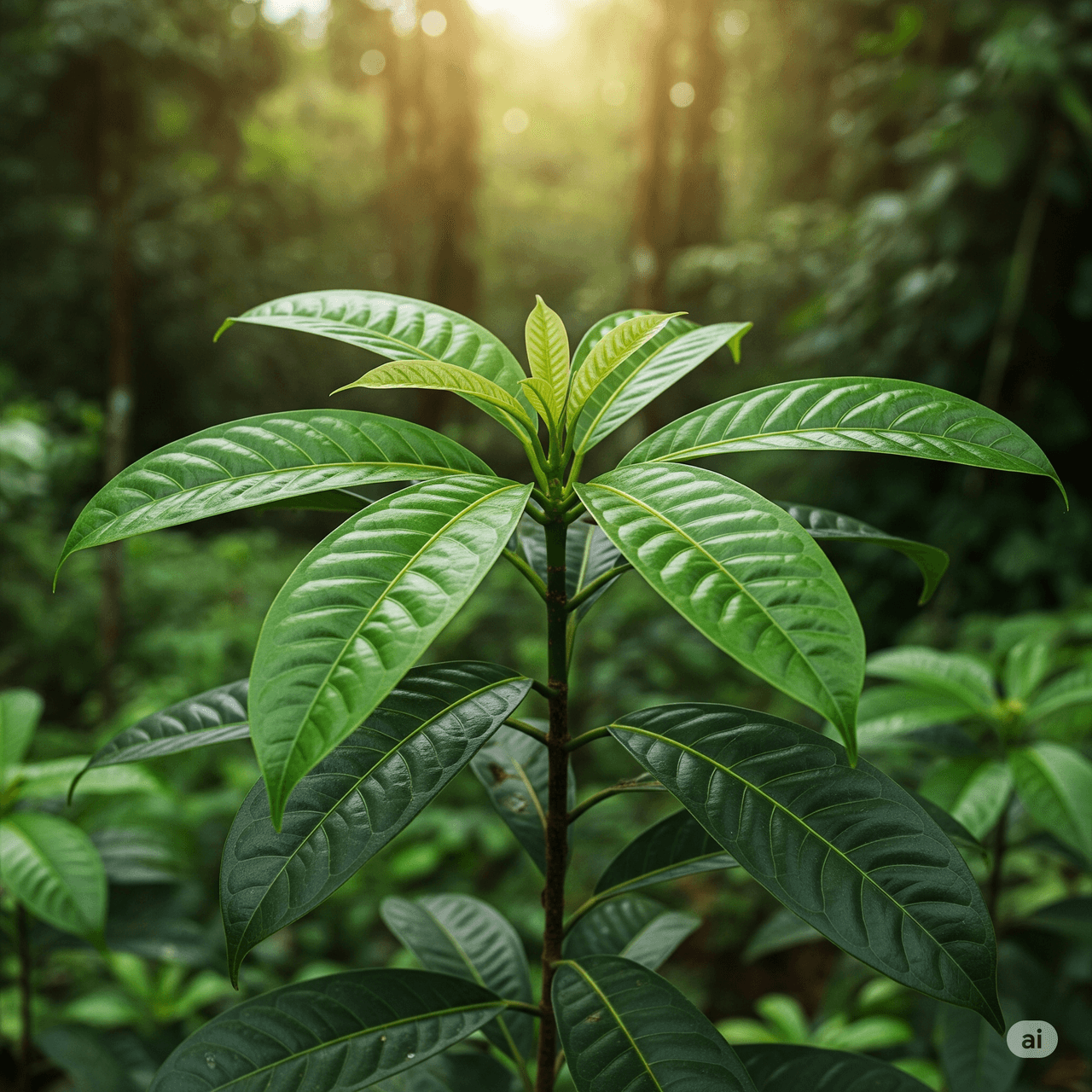
Type Name | Gnetum gnemon | ||||||||
|---|---|---|---|---|---|---|---|---|---|
Family | Gnetaceae | ||||||||
Natural Distribution | Tropical and subtropical regions | ||||||||
Plant Type | Woody vine | ||||||||
Size(s) | Variable usually growing in a vine-like form | ||||||||
Leaf Characteristics | Simple, alternate, oval | ||||||||
Reproduction(s) | Double fertilization mechanism | ||||||||
Chemical Content | Stilbenoids, antioxidant proteins | ||||||||
Gnetum gnemon is a gymnosperm species belonging to the phylum Gnetophyta and typically grows in tropical and subtropical regions. The plant’s morphological, physiological, and biochemical properties provide significant data for evolutionary biology and plant development research. Gnetum gnemon exhibits structural and reproductive characteristics distinct from other gymnosperms and is therefore regarded as a key model for understanding the evolution of plants and the origin of flowering plants (angiosperms). Additionally, various bioactive compounds found in its seeds hold importance in pharmacological and nutritional sciences.
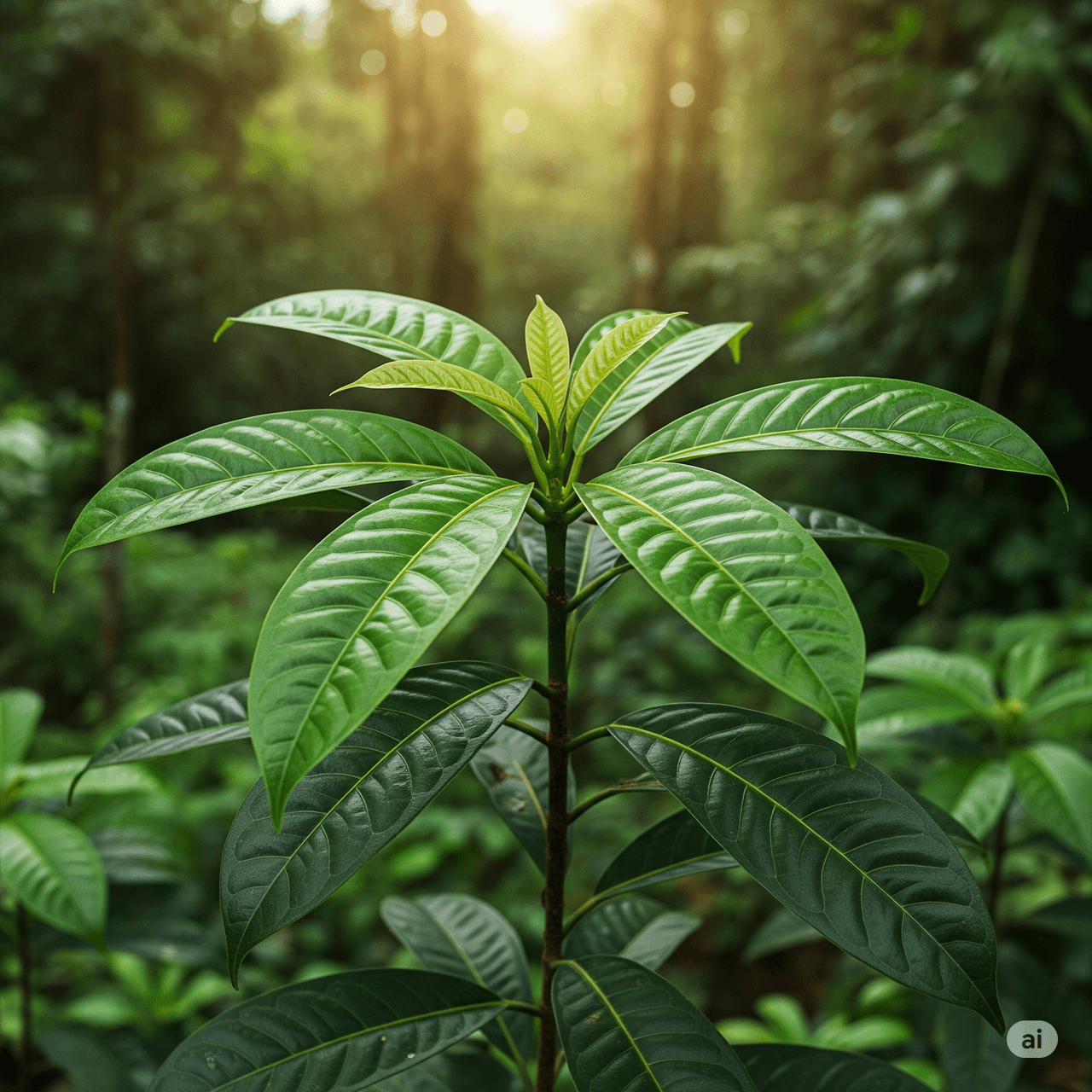
Gnetum gnemon (Generated by Artificial Intelligence)
Gnetum gnemon is a woody plant that typically grows in a vine-like form. Its leaves are simple, oppositely arranged, and generally broadly oval in shape. The stem is woody and rigid, showing adaptation to tropical climates. The venation pattern of the leaves resembles that of angiosperms, differing from other gymnosperms. The floral-like organs of Gnetum gnemon have been extensively studied for their structural differences in male and female reproductive parts. These structures are believed to provide important evolutionary clues regarding the origin of flowering plants.
The reproductive system of Gnetum gnemon reveals its status as an evolutionarily significant transitional form. Gnetum gnemon possesses a double fertilization mechanism, a rare reproductive strategy among plants that closely resembles the reproductive processes observed in angiosperms. Cellular-level studies have demonstrated complex interactions between the cell cycle and sexual reproduction during fertilization. This plays a critical role in embryonic development and reproductive success. The morphology of reproductive organs and patterns of cell division contribute to a better understanding of the plant’s genetic structure and evolutionary origins.
The seeds and leaves of Gnetum gnemon are rich in various phytochemical constituents, including phenolic compounds with antioxidant activity, particularly stilbenoids. The isolation of stilbenoid derivatives has formed the basis for determining the plant’s pharmacological potential. Furthermore, seeds rich in protein fractions have been found to exhibit antioxidant properties. These compounds demonstrate protective effects against oxidative stress and support the nutritional value and potential health applications of the plant.
Gnetum gnemon has been identified as an important natural anti-quorum sensing agent. This property contributes to the prevention of infections by disrupting bacterial cell-to-cell communication systems. The plant’s antioxidant capacity is linked to its ability to combat free radicals and may offer protective effects against chronic diseases. Additionally, the biological activity of stilbenoids present in Gnetum gnemon reveals potential anticancer and anti-inflammatory properties. Consequently, its use in pharmaceutical product development is under investigation.
Gnetum gnemon occupies a unique evolutionary position among gymnosperms. The study of its floral-like structures and reproductive traits provides critical insights into the origins of angiosperms. In particular, molecular interactions of floral homeotic proteins play a significant role in phylogenetic analyses of Gnetum gnemon. These molecular studies offer insights into the functions of genes associated with the “floral quartet” model, enabling the testing of hypotheses regarding plant evolution. Thus, Gnetum gnemon is an important model organism in evolutionary biology at both morphological and molecular levels.
Gnetum gnemon constitutes an important component of biological diversity in the ecosystems where it grows. In tropical forests, both its leaves and seeds are used as food sources by local communities. Its bioactive compounds are also employed in traditional medicine for various purposes. Economically, Gnetum gnemon is part of regional agricultural and forest product markets. Sustainable use and biotechnological applications represent areas that could enhance the future value of this plant.
Gnetum gnemon is a gymnosperm species that enables multidisciplinary research in botany, biochemistry, pharmacology, and evolutionary biology. Its morphological features, reproductive biology, chemical composition, and biological activities make it a focal point of scientific investigation. Moreover, its evolutionary position contributes to the understanding of key concepts in plant science. This plant is regarded as a valuable resource for both fundamental and applied research.
Carmichael, J. S., & Friedman, W. E. (1995). Double Fertilization in Gnetum gnemon: The Relationship between the Cell Cycle and Sexual Reproduction. *The Plant Cell*, 1975–1988. https://doi.org/10.1105/tpc.7.12.1975
Iliya, I., Ali, Z., Tanaka, T., Iinuma, M., Furusawa, M., Nakaya, K., Murata, J., Darnaedi, D., Matsuura, N., & Ubukata, M. (2003). Stilbene derivatives from Gnetum gnemon Linn. *Phytochemistry*, *62*(4), 601–606. https://doi.org/10.1016/s0031-9422(02)00670-2
Kato, E., Tokunaga, Y., & Sakan, F. (2009). Stilbenoids Isolated from the Seeds of Melinjo (Gnetum gnemon L.) and Their Biological Activity. *Journal of Agricultural and Food Chemistry*, *57*(6), 2544–2549. https://doi.org/10.1021/jf803077p
Siswoyo, T. A., Mardiana, E., Lee, K. O., & Hoshokawa, K. (2011). Isolation and Characterization of Antioxidant Protein Fractions from Melinjo (Gnetum gnemon) Seeds. *Journal of Agricultural and Food Chemistry*, *59*(10), 5648–5656. https://doi.org/10.1021/jf2000647
Tan, L., Yin, W., & Chan, K. (2013). Piper nigrum, Piper betle and Gnetum gnemon—Natural Food Source with Anti-Quorum Sensing Properties. *Sensors*, *13*(3), 3975–3985. https://doi.org/10.3390/s130303975
Wang, Y., Melzer, R., & Theißen, G. (2010). Molecular interactions of orthologues of floral homeotic proteins from the gymnosperm Gnetum gnemon provide a clue to the evolutionary origin of ‘floral quartets.’ *The Plant Journal*, *64*(2), 177–190. https://doi.org/10.1111/j.1365-313x.2010.04325.x

Type Name | Gnetum gnemon | ||||||||
|---|---|---|---|---|---|---|---|---|---|
Family | Gnetaceae | ||||||||
Natural Distribution | Tropical and subtropical regions | ||||||||
Plant Type | Woody vine | ||||||||
Size(s) | Variable usually growing in a vine-like form | ||||||||
Leaf Characteristics | Simple, alternate, oval | ||||||||
Reproduction(s) | Double fertilization mechanism | ||||||||
Chemical Content | Stilbenoids, antioxidant proteins | ||||||||
Botanical and Morphological Characteristics
Reproductive Biology and Cellular Mechanisms
Chemical Composition and Bioactive Compounds
Pharmacological and Biological Activities
Evolutive Significance and Phylogenetic Position
Ecological and Economic Value