


This article was automatically translated from the original Turkish version.
+1 More
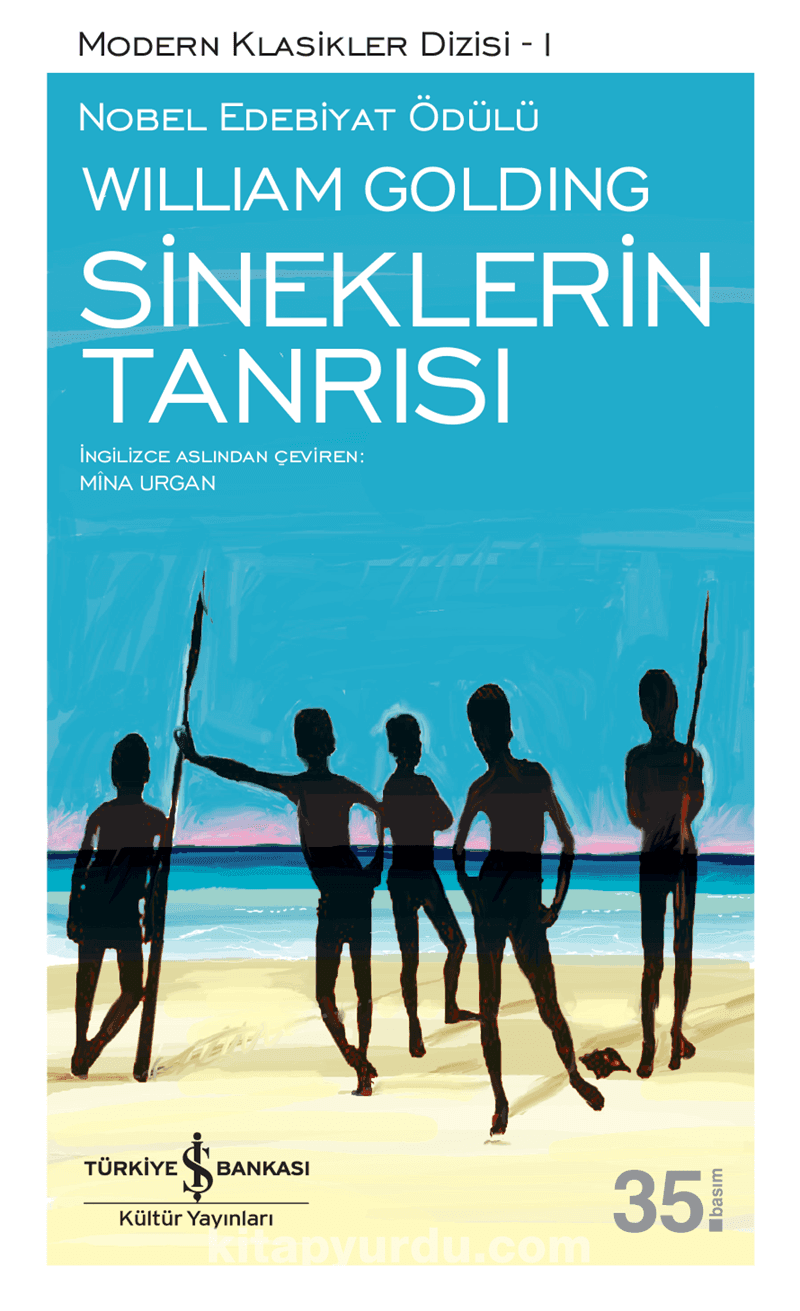
God of Flies
Original Name(s) | Lord of the Flies | ||||||||
|---|---|---|---|---|---|---|---|---|---|
Author(s) | William Golding | ||||||||
Type(s) | Novel Dystopia Allegory | ||||||||
Language(s) | English | ||||||||
Publisher(s) | İş Bankası Kültür Yayınları | ||||||||
Translator(s) | Mina Urgan | ||||||||
Lord of the Flies (English: Lord of the Flies) is an allegorical novel written by British author William Golding and first published in 1954. It explores universal questions about human nature through the struggle for survival of a group of British boys who are evacuated by air during World War II to escape the effects of nuclear bombs and end up stranded on a deserted island without adult supervision. The novel emphasizes the collapse of civilization the unleashing of primal instincts and the inherent evil believed to exist within human nature.
A group of British schoolboys, stranded on a deserted island after a plane crash, initially attempt to establish order through elections and rules. Over time this order disintegrates and the boys split into two factions: one led by Ralph representing civilization and order and the other led by Jack embracing a primitive lifestyle centered on hunting and instinctual drives. As events progress acts of murder violence and ritualistic behavior increase forcing the boys to confront the darkness within themselves.
The novel questions the evil within the individual and the role of social structures in suppressing it. Golding argues that human nature is fundamentally aggressive and destructive. The figure of the "beast" throughout the novel is interpreted not as an external entity but as a reflection of the childrens inner fear and evil.
Some characters can be interpreted through a psychoanalytic lens:
The following symbols in Lord of the Flies represent abstract concepts through concrete objects deepening the novels allegorical structure and conveying powerful messages about human nature social order and the fragility of civilization:
The following characters assume symbolic roles in the novel representing different aspects of human nature. Each stands out through unique qualities that contribute to the thematic structure of the work:
Golding’s narrative is rich in metaphor. His descriptions are particularly vivid in capturing the atmosphere of nature and the environment. Dialogues deepen character traits. Additionally the novel includes brief flashbacks reminiscent of cinematic technique.
William Golding (1911–1993) was a British teacher and writer who served in World War II. His wartime experiences reinforced his pessimistic view of human nature. He is also known for other works such as The Inheritors Pincher Martin The Spire and Darkness Visible. He was awarded the Nobel Prize in Literature in 1983.
Egeli, Yakup. *William Golding’s Lord of the Flies: A Critical Analysis*. Undergraduate thesis, Near East University, 1999. https://docs.neu.edu.tr/library/1578484790.pdf.
Golding, William. Sineklerin Tanrısı. Çev. Mina Urgan. İstanbul: Türkiye İş Bankası Kültür Yayınları, 2021

God of Flies
Original Name(s) | Lord of the Flies | ||||||||
|---|---|---|---|---|---|---|---|---|---|
Author(s) | William Golding | ||||||||
Type(s) | Novel Dystopia Allegory | ||||||||
Language(s) | English | ||||||||
Publisher(s) | İş Bankası Kültür Yayınları | ||||||||
Translator(s) | Mina Urgan | ||||||||
No Discussion Added Yet
Start discussion for "God of Flies (Book)" article
Plot Summary
Symbols Characters and Structure
About the Author