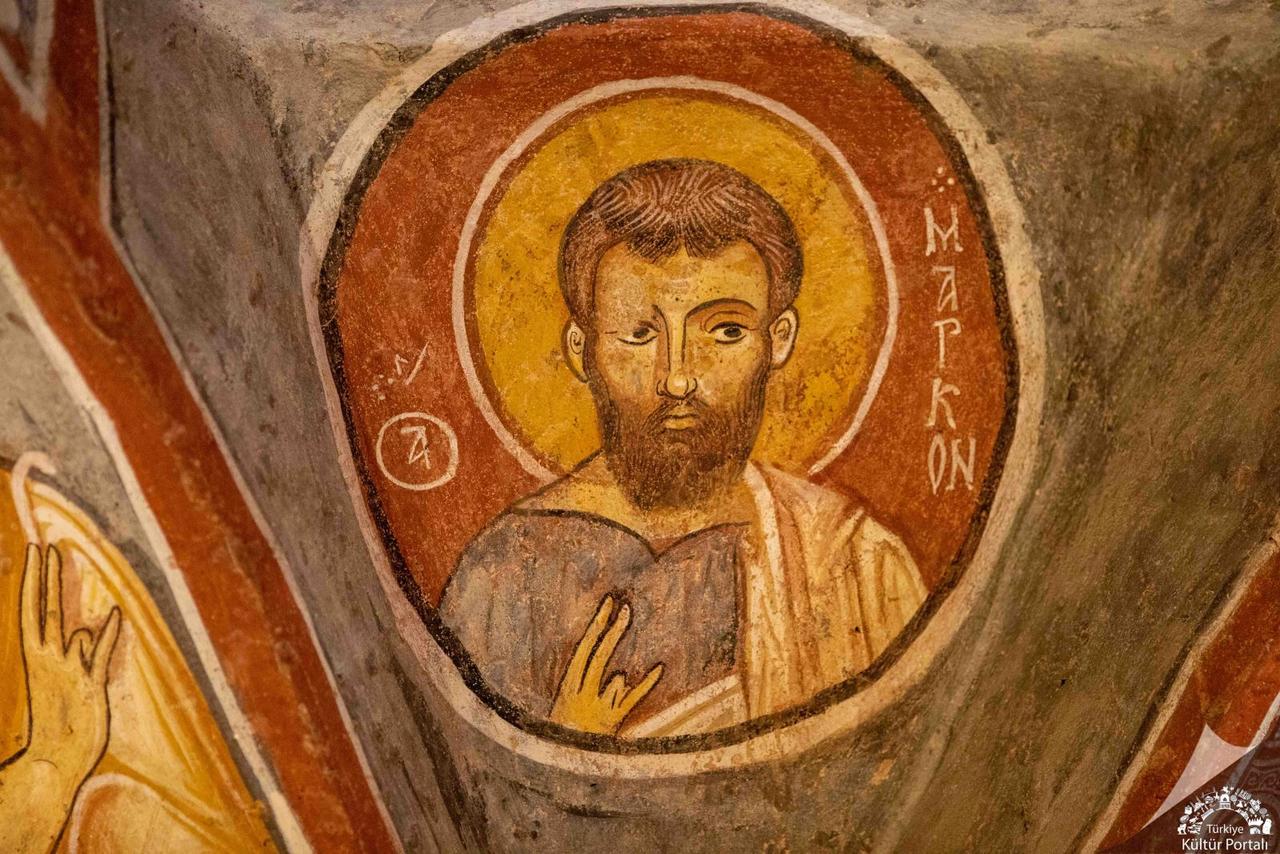


This article was automatically translated from the original Turkish version.
+2 More
Location | Nevşehir Türkiye Göreme | ||||||||
|---|---|---|---|---|---|---|---|---|---|
Feature | Rock-cut church monastery and living spaces | ||||||||
Affiliated Institution | Ministry of Culture and Tourism of the Republic of Türkiye | ||||||||
Prominent Structures | Buckle Church Dark Church Apple Church Snake Church | ||||||||
Type | Open-air museum / Archaeological site | ||||||||
Period | 4th–13th centuries | ||||||||
Göreme Open Air Museum is a historical open-air museum located within the boundaries of Nevşehir in Türkiye’s Central Anatolia Region, reflecting the rock-carved architecture of the Cappadocia region. The site consists primarily of rock-carved churches, chapels, monasteries, refectories and living spaces used extensively from the Late Antiquity through the Middle Ages. Göreme Open Air Museum constitutes a cultural landscape that integrates natural geological formations with human-made structures and is inscribed on the UNESCO World Heritage List.
Göreme Open Air Museum is situated in the immediate vicinity of the Göreme settlement, which is administratively part of Nevşehir city center. The museum area lies within valleys characterized by dense tuff rock formations, encompassing architectural units carved directly into these geological structures. Within the site’s boundaries, rock-carved spaces serve various functions, organized according to religious, educational and daily life purposes.
When considered as a whole, the museum area presents an example of the long-term co-evolution of the natural environment and human settlement. The physical properties of the rock formations played a decisive role in the planning and spatial organization of the structures.
The historical development of Göreme Open Air Museum extends back to the 4th century CE. During this period, the Cappadocia region became a major center in the spread of Christianity. It is documented that monastic life in the region was institutionalized alongside the activities of Bishop Saint Basil of Kayseri. The rock-carved structures established in Göreme and its surroundings were used over a long period for religious education, worship and ascetic seclusion.
Monastic life continued intermittently and with varying intensity until the 13th century CE. During this time, structures dating to different periods were constructed and existing spaces were reconfigured in various ways. In this respect, the site represents a tangible example of the early Christian monastic system in Cappadocia.
The architectural elements within Göreme Open Air Museum are largely created using the rock-carving technique. The site includes churches, chapels, monastic cells, refectories and communal areas. Churches generally follow a single-nave floor plan, although various plan types from different periods are also present.
The structures in the region were carved from the soft tuff rock, a technique that facilitated construction and enabled functional organization of interior spaces. Corridors, staircases and connecting areas that link the spaces are notable features.
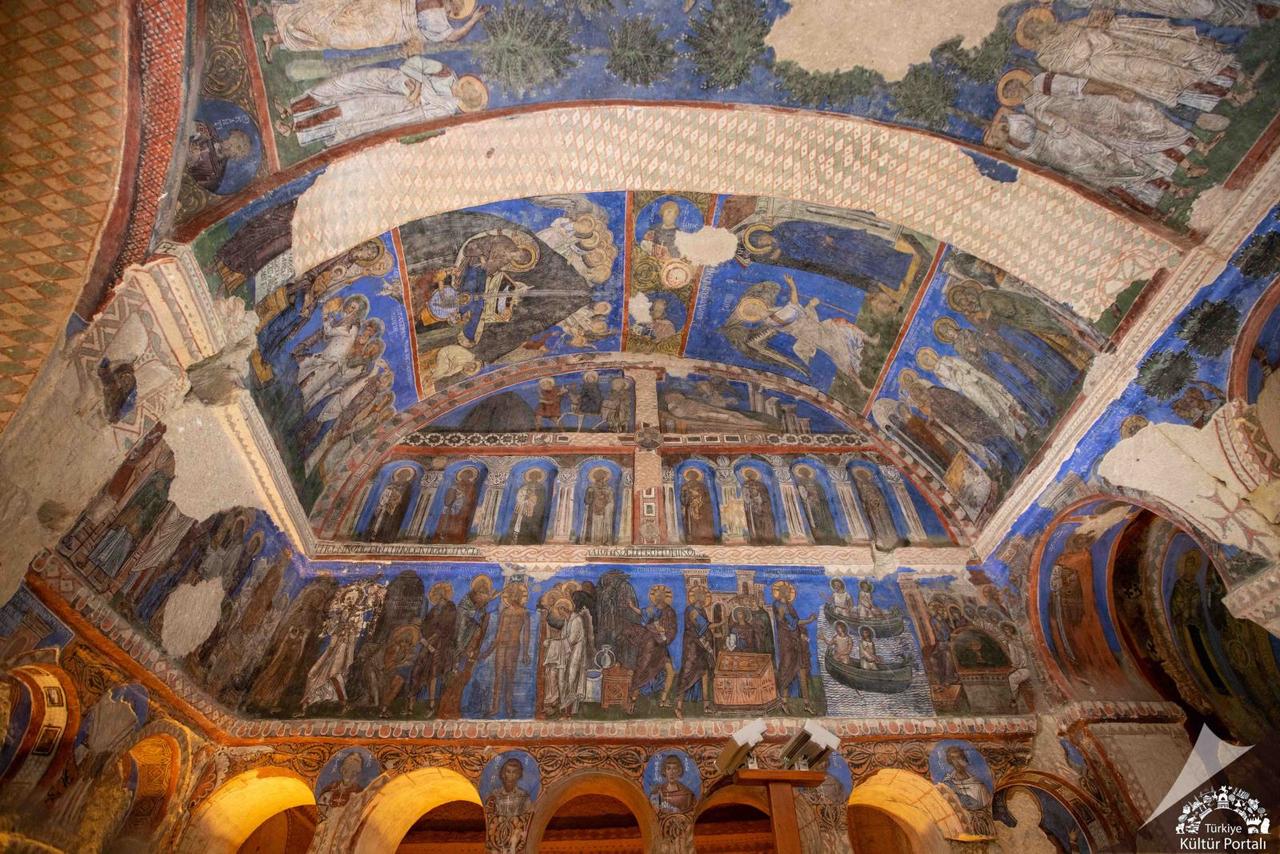
Göreme Open Air Museum Painting technique (Culture Portal)
The churches within the museum area served not only as places of worship but also as centers for education and instruction. Their interiors contain liturgical elements such as apses, naos and side chambers. Some churches are directly connected to monastic complexes.
A significant portion of the rock-carved churches in Göreme Open Air Museum feature wall paintings. These paintings reflect various techniques applied across different periods. Early examples exhibit limited color palettes and symbolic narratives, while later periods show widespread figurative compositions depicting scenes from the Bible. The paintings illustrate episodes from the life of Jesus Christ, his miracles and biblical narratives. They fulfilled the function of visually conveying the religious teachings of the time. The methods of execution and iconographic arrangements provide insights into the artistic sensibilities of the period.
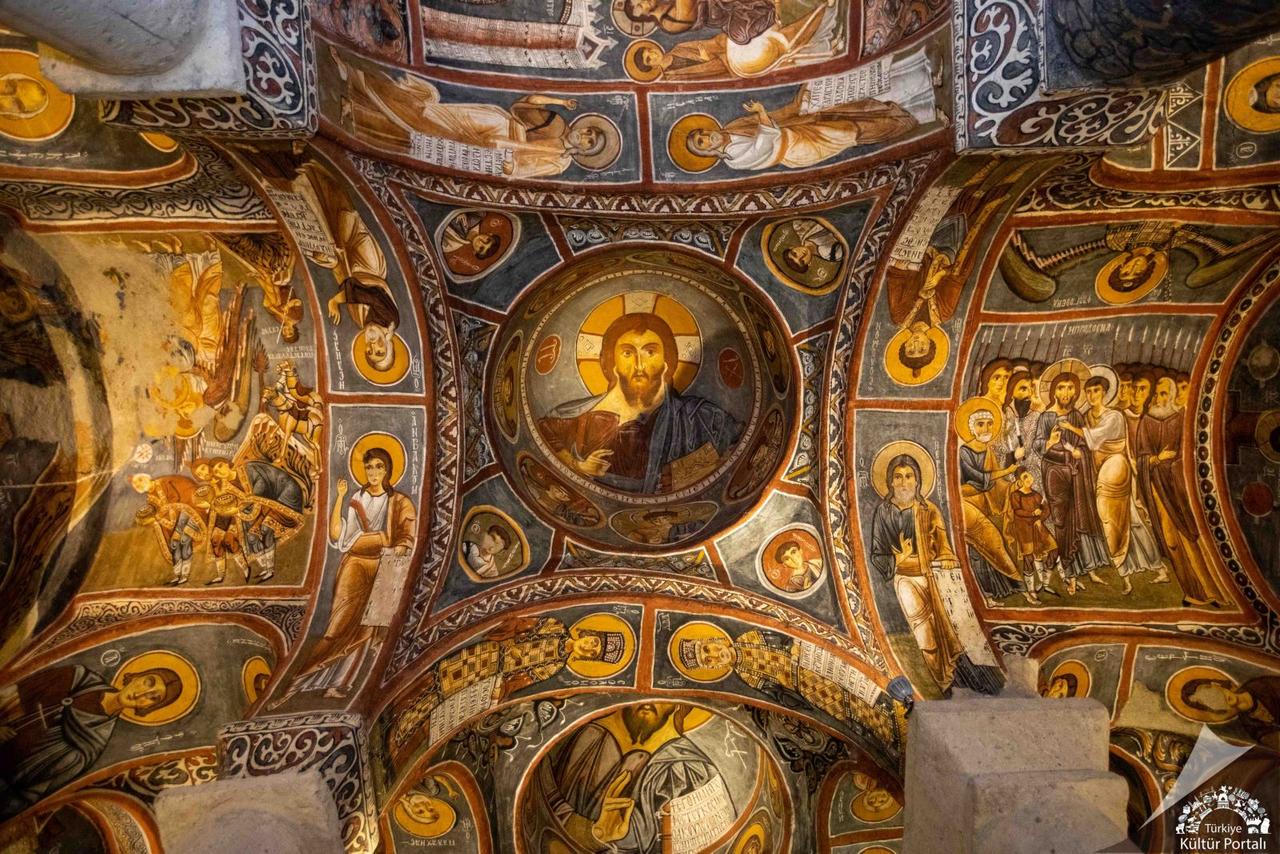
Göreme Open Air Museum Painting technique (Culture Portal)
The principal structures within the boundaries of Göreme Open Air Museum, as highlighted in historical sources, are as follows:
These structures demonstrate the diversity of the museum site through their distinct architectural plans, decorative styles and functional purposes.
Göreme Open Air Museum was inscribed on the UNESCO World Heritage List in 1985 under the name “Göreme National Park and the Rock Sites of Cappadocia”. This designation aims to ensure international protection of the site due to both its natural geological features and its cultural and historical values. The UNESCO status provides an important framework for the conservation, management and transmission of the site to future generations.
The museum area is protected under the status of an archaeological site under the authority of the Ministry of Culture and Tourism. Various measures are implemented to preserve the structures and wall paintings, and visitor circulation is directed along designated routes. Conservation efforts aim to maintain the historical and cultural integrity of the site.
Today, Göreme Open Air Museum is open to the public as a cultural heritage site. It is used for both scientific research and cultural tourism activities. Visitor arrangements are determined in accordance with the physical structure of the museum area and its conservation requirements.
Hakman, Meral. *Göreme Açık Hava Müzesi*. Türkiye Turizm Ansiklopedisi. Accessed January 19, 2026.https://turkiyeturizmansiklopedisi.com/goreme-acik-hava-muzesi
Müsteşarlık / Kültür ve Turizm Bakanlığı. "Göreme Açık Hava Müzesi Örenyeri." Accessed January 19, 2026.https://muze.gov.tr/muze-detay?SectionId=GRM01&DistId=GRM
Turkish Museums Blog. "Türkiye’nin UNESCO Alanları: Göreme Açık Hava Müzesi ve Kapadokya." Accessed January 19, 2026.https://www.turkishmuseums.com/blog/detail/turkiye-nin-unesco-alanlari-goreme-acik-hava-muzesi-ve-kapadokya/10110/1
Turkish Museums. "Nevşehir Göreme Örenyeri." Accessed January 19, 2026.https://www.turkishmuseums.com/museum/detail/2205-nevsehir-goreme-orenyeri/2205/1
Türkiye Kültür Portalı. "Göreme Açık Hava Müzesi." Accessed January 19, 2026.https://www.kulturportali.gov.tr/turkiye/nevsehir/gezilecekyer/goreme-acik-hava-muzes
UNESCO World Heritage Centre. *Göreme National Park and the Rock Sites of Cappadocia*. Accessed January 19, 2026.https://whc.unesco.org/en/list/357/

Location | Nevşehir Türkiye Göreme | ||||||||
|---|---|---|---|---|---|---|---|---|---|
Feature | Rock-cut church monastery and living spaces | ||||||||
Affiliated Institution | Ministry of Culture and Tourism of the Republic of Türkiye | ||||||||
Prominent Structures | Buckle Church Dark Church Apple Church Snake Church | ||||||||
Type | Open-air museum / Archaeological site | ||||||||
Period | 4th–13th centuries | ||||||||
No Discussion Added Yet
Start discussion for "Göreme Open-Air Museum" article
Geographical Location and General Structure of the Site
Historical Development
Architectural Features
Rock-Carving Construction Technique
Churches and Spatial Organization
Wall Paintings and Decorative Programs
Major Structures
UNESCO World Heritage Status
Conservation and Management
Visit and Use