


This article was automatically translated from the original Turkish version.
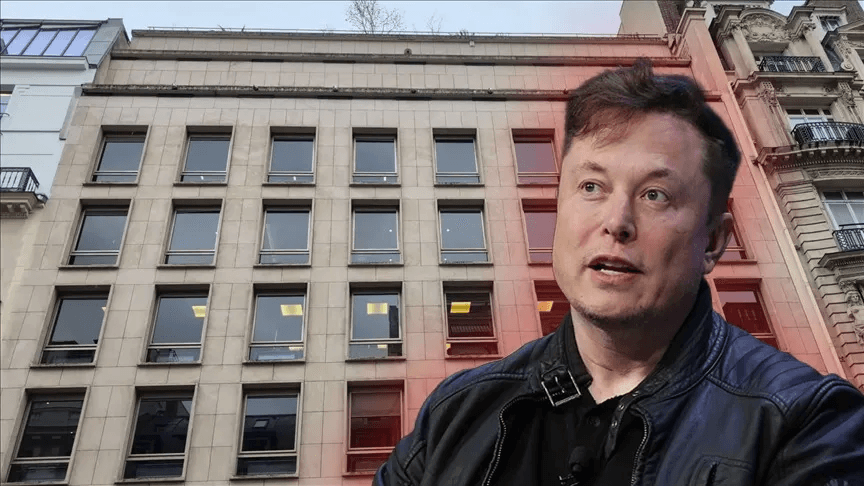
Elon Musk (Anadolu Ajansı)
On the morning of February 3, the French National Financial and Tax Crime Unit (OCLCIFF) and its cybercrime division OCLCTIC conducted a coordinated operation at the Paris headquarters of the social media platform X (formerly Twitter). As part of an investigation led by the Paris Public Prosecutor’s Office into allegations of aggravated cyberharassment, distribution of non-consensual pornography, and negligence in combating hate speech, computers servers and digital materials at the office were seized. The operation was carried out in coordination with the European Commission, which suspects X of violating its moderation obligations under the Digital Services Act (DSA).
The company’s Director of European Public Policy and two senior executives were summoned for questioning not as witnesses but as suspects. Elon Musk characterized the operation as political pressure directed at him personally and at the platform’s understanding of freedom of expression, accusing Europe of undermining this principle. In response, the French Minister of Justice defended the operation stating “The virtual world is not outside the rule of law companies must comply with French legislation.”
This police operation highlights a new phase in the long-standing conflict between Europe and Silicon Valley. Recent developments suggest that this debate has taken on a new dimension beyond the softer sanctions of diplomatic pressure and fines applied in the past. The events in Paris can be seen as one example of the tension between traditional state authority and the global reach of technology corporations. Through this operation France has demonstrated its concrete intent to implement its digital sovereignty policy.
The message from the French judiciary is simple: The digital world may be global but it must be subject to the laws of the country in which it physically operates. This argument long debated in the media regarding the transnational nature of the digital realm now appears to be undergoing renewed evaluation in the context of states asserting direct legal jurisdiction. Musk’s arguments on freedom of expression and France’s justifications based on public order and user safety are creating a new field of debate.
This development reveals that states’ mechanisms for regulating digital platforms have become more functional. Recent events have made it clear that merely establishing a regulatory framework is no longer sufficient; criminal investigations and physical interventions may also be necessary. These steps indicate that the global and integrated structure of the internet is increasingly confronting national regulation and oversight. The process unfolding in Paris may serve as a precedent for other European capitals.
European Commission's Decision on TikTok (Anadolu Ajansı)
The European Commission has released preliminary findings from its official investigation into TikTok the platform owned by the China-based company ByteDance. The Commission concluded that TikTok’s user interface and algorithmic design fail to adequately meet the risk mitigation obligations under Articles 34 and 35 of the Digital Services Act (DSA). The report noted that TikTok employs addictive design patterns such as infinite scroll and autoplay which may negatively affect the attention and decision-making processes of young users.
The Commission emphasized that these design elements may continuously steer users toward similar content potentially increasing their exposure to harmful or radical material. It also highlighted concerns that prolonged screen time could have adverse effects on physical and mental health. European Commissioner for the Internal Market Thierry Breton stated that protecting young users is a priority and granted the company three months to revise its design. He warned that if no action is taken within this period TikTok could face fines of up to six percent of its global turnover and additional sanctions across the EU. TikTok’s management rejected the allegations asserting that protective tools such as screen time breaks and parental controls are already in place.
This decision represents a significant step in understanding the extent of state regulatory power. For the first time states are intervening not only in online content moderation practices but also in how content is presented and how user interfaces are designed. The debate centers on whether the internet’s fundamental business model — which monetizes user engagement and attention — can be regulated by governments. The Commission is evaluating the impact of interface features based on reward systems from a risk perspective.
Thus this situation demonstrates that states are increasingly considering digital platforms not only in terms of information security or content control but also regarding the health and cognitive well-being of their users. Just as regulations on tobacco and similar products became more restrictive in the 20th century digital platform design is now being treated with comparable constraints. Of course the greatest tension lies between the platform’s profit strategy which requires users to remain online as long as possible and government interventions aimed at limiting this predetermined duration.
In China under local regulations the similar platform Douyin controls time allocation for users and implements additional content controls for children. This moves the issue beyond consumer law into the broader arena of geopolitical competition surrounding digital regulation. The economic social and geopolitical context of algorithmic control over human behavior has now been elevated to the global political agenda.
İspanya (Anadolu Ajansı)
The Spanish government’s proposed bill “Protecting Children in the Digital Environment” which seeks to ban social media use for those under 16 without parental consent and impose age verification requirements on platforms has sparked intense debate in the country. The most striking aspect of the process was not the opposition parties’ response but the reaction from Telegram one of the platforms directly affected by the bill. Telegram’s founder Pavel Durov used the app’s system notification infrastructure to send a direct message to approximately 12 million active users in Spain.
In the message users were urged to publicly oppose the bill and join a petition campaign arguing that it would restrict digital freedoms and narrow the space for expression. Following the notification protests were organized in Madrid and Barcelona. The Spanish Prime Minister and government spokesperson condemned the move as external interference in the democratic process accusing a foreign-based company of attempting to influence legislation. The public prosecutor then launched an investigation against Telegram for allegedly inciting public unrest.
The conflict between Spain and Telegram illustrates how digital platforms have gained significant political importance. At this point it is clear that Telegram is not merely a neutral infrastructure facilitating political discourse but has taken a clear political stance regarding the legislative process. From this we can argue that social media platforms have reached a new level of influence over the public sphere compared to traditional actors.
This example introduces a new dimension to the debate on how platforms influence political processes. Their ability to disseminate information more effectively faster and simultaneously to millions of users gives them a significant advantage over traditional media in political propaganda. As seen in messaging platforms the limited scope of controlling content flow presents new regulatory challenges for states.
The Spanish case demonstrates that stricter regulation of digital platforms is not only conceivable but also applicable in liberal democracies not just authoritarian regimes. How the government responds to this process may serve as a precedent across Europe regarding the role of platforms in political processes. In the coming period steps are likely to be taken to more clearly define the boundaries between the operational scope of digital platforms and national legal systems. These developments show that the digital domain is increasingly becoming the center of debates over regulation and sovereignty.
France’s Operation X and the Debate on Digital Sovereignty
The European Commission’s Investigation into TikTok and the Regulation of Digital Design
Spain and Telegram: The Platform as a Political Weapon
