

This article was automatically translated from the original Turkish version.
Green Tree Python (Morelia viridis) is a snake species belonging to the Pythonidae family and exhibits highly arboreal characteristics. Previously classified as Chondropython viridis, this species has been reclassified into the genus Morelia due to morphological and genetic similarities. Its natural distribution encompasses the entire island of New Guinea excluding the Bismarck Archipelago, surrounding islands, and the Cape York Peninsula in Queensland, Australia. Molecular phylogenetic studies have confirmed the existence of two genetically distinct main lineages: one in the northern region and another in the southern region including Australian populations, separated by the central mountain ranges of New Guinea. These snakes inhabit tropical rainforests secondary forests and regrowth areas up to an elevation of 2000 meters above sea level.
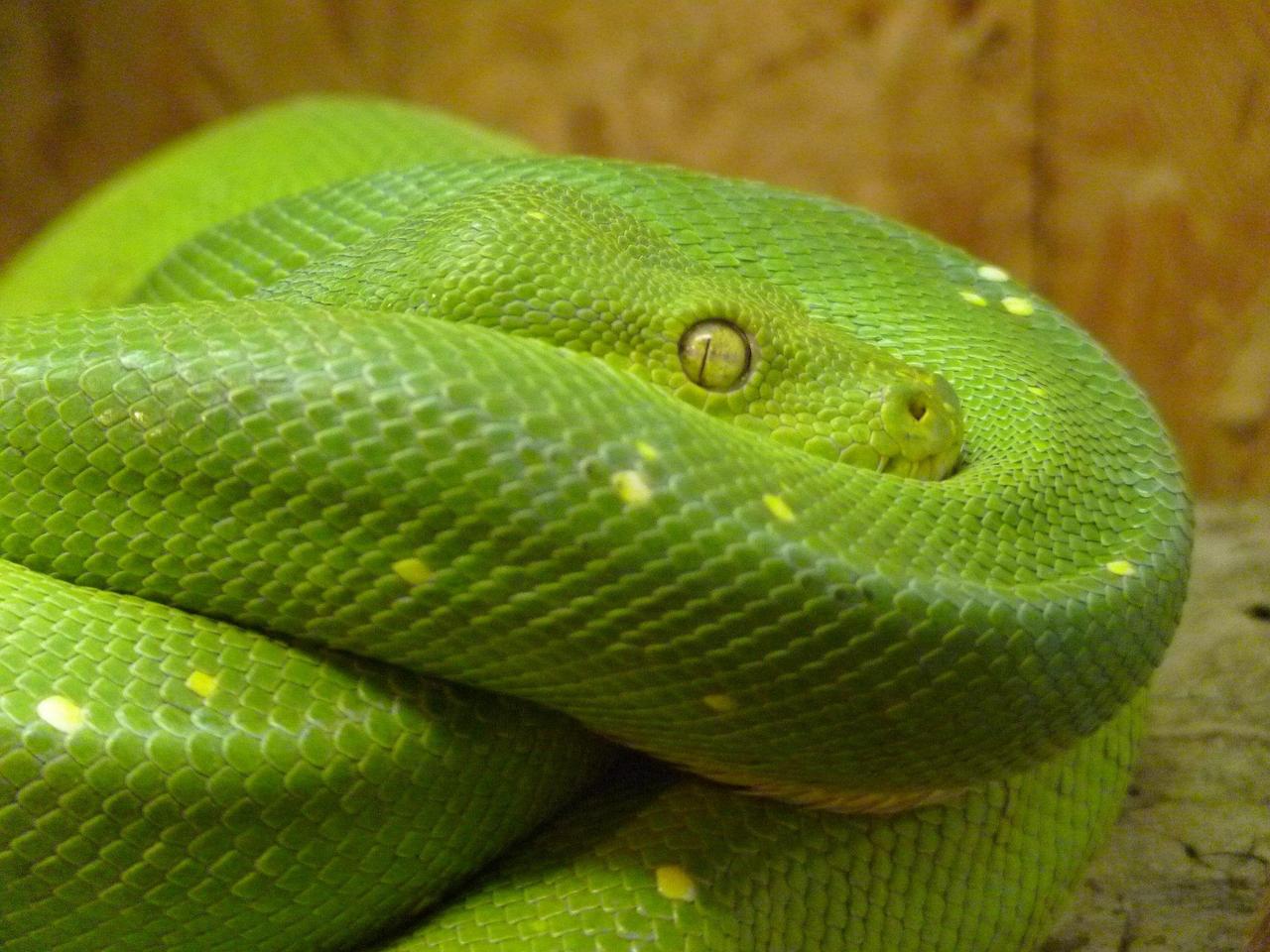
Adult Green Tree Pythons typically reach an average length of 1.5 meters with the longest recorded specimen measuring 2.2 meters. Head scales are irregular and small; heat-sensing labial pits are present only on the upper labial scales. The most distinctive biological feature of the species is a process known as ontogenetic color change (OCC). Hatchlings are born in bright yellow or brick-red colors but rapidly develop the characteristic bright green coloration of adults at approximately one year of age and a length of 53–59 cm. This color change is generally not associated with a molt and is considered an adaptive strategy that parallels habitat transition. In adults a discontinuous or continuous line composed of white or yellow scales is typically present along the dorsal region while ventral scales are mostly yellow or dirty white in tone.【1】
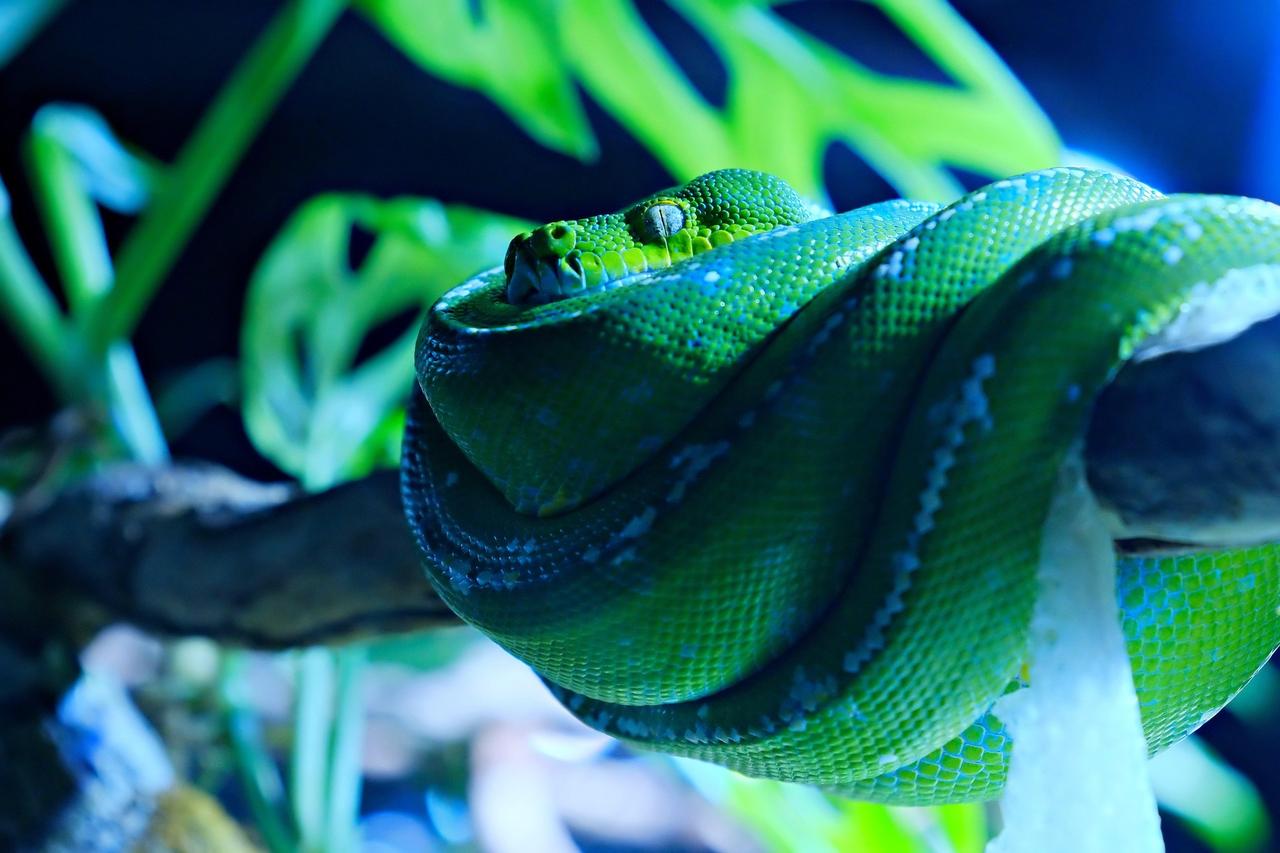
Green Tree Python (Pixabay)
The spatial use of Green Tree Pythons shows marked differences according to age and sex. Adult females possess a fixed and defined home range averaging 6.21 hectares while no fixed home range has been identified for adult males or juveniles. Males adopt a roaming strategy over large areas especially during the breeding season to maximize opportunities for finding potential mates.
Juveniles are generally in a dispersal phase from their birth sites. Females exhibit higher daily movement frequency than males but both sexes remain relatively inactive from April through October until the next breeding season. In terms of habitat use juveniles prefer forest clearings and edges where sunlight penetrates while adults are found in the closed-canopy structure of dense forests.
The Green Tree Python occupies a mandatory ambush predator niche in its feeding hierarchy. Its hunting strategy relies on prolonged waiting at a suitable location rather than actively searching for prey. During an attack the anterior portion of the body is coiled in an accordion-like posture hanging downward from a branch while at rest the body forms a tightly coiled spiral around a horizontal branch. The diet exhibits ontogenetic shifts: juveniles primarily feed on small diurnal lizards and invertebrates while adults target nocturnal rodents and birds. Tail-luring behavior in which the tip of the tail is used to attract prey has been observed in juveniles.
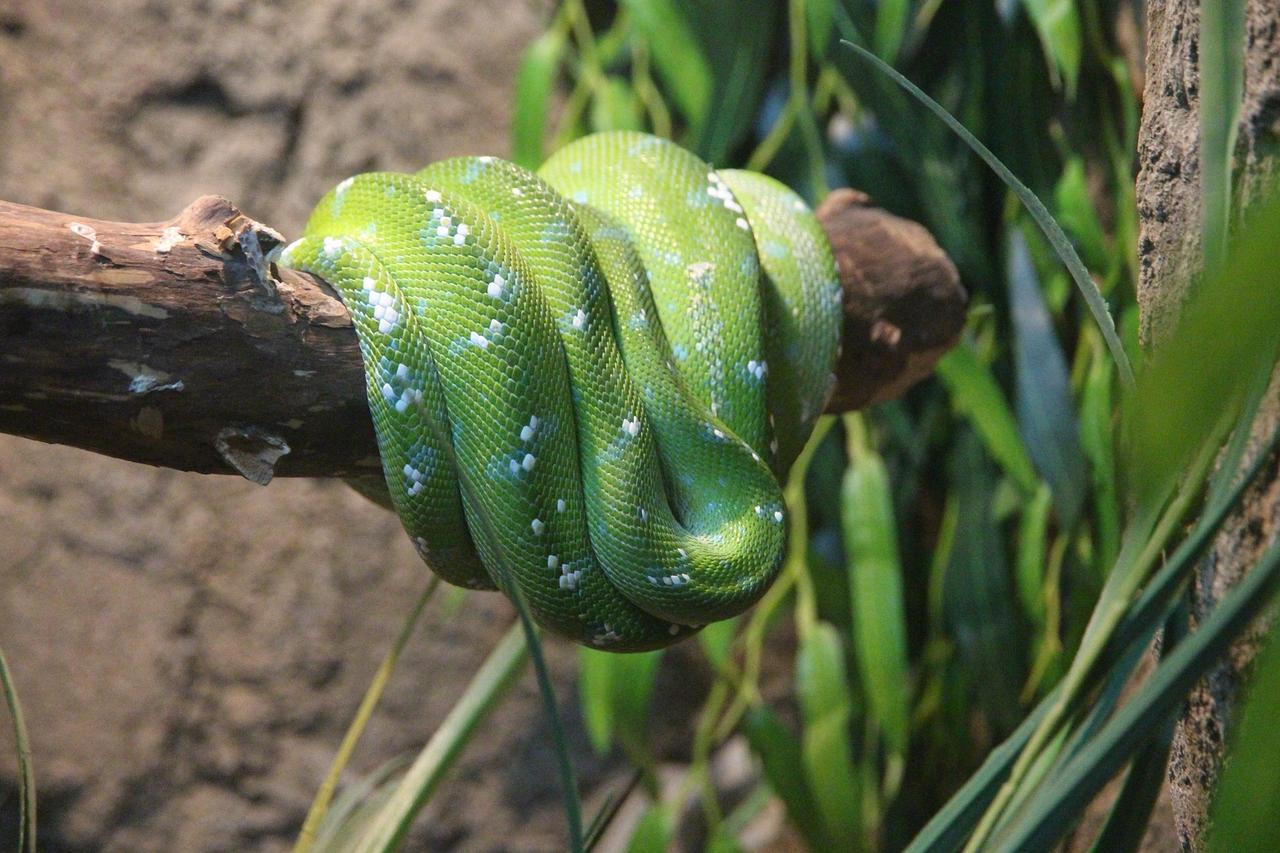
Green Tree Python (Pixabay)
The reproductive cycle is highly seasonal. In the Australian population egg-laying is estimated to occur in October with an incubation period of approximately 50 days and hatchlings emerging from eggs at the end of November or beginning of December coinciding with the onset of the wet season. Females maintain incubation temperatures between 29 and 31 °C by coiling around the egg clutch and generating metabolic heat through muscular contractions. Hatchlings measure approximately 30.5 cm in length. Sexual maturity is reached at approximately 2.4 years in males and 3.6 years in females. The lifespan in the wild is estimated to be at least 15 years with some individuals reaching up to 19 years while captive individuals have been recorded to live over 20 years.【2】
The Green Tree Python faces intense demand in the pet trade due to its aesthetic appearance. Although captive breeding occurs in Indonesia for commercial export illegal collection from wild populations continues to exert pressure on the species. As a result the species is listed on Appendix II of the Convention on International Trade in Endangered Species of Wild Fauna and Flora (CITES). Habitat destruction deforestation and agricultural activities represent other significant threats. In New Guinea local populations also hunt the species for food.
Hillman, M. "Morelia viridis." *Animal Diversity Web*. 2010. Accessed March 27, 2026. https://animaldiversity.org/accounts/Morelia_viridis/
Pixabay. "yeşil ağaç pitonu morelia viridis." Pixabay. Accessed March 27, 2026. https://pixabay.com/tr/photos/ye%c5%9fil-a%c4%9fa%c3%a7-pitonu-morelia-viridis-8344/
Pixabay. "yeşil ağaç pitonu astar piton." Pixabay. Accessed March 27, 2026. https://pixabay.com/tr/photos/ye%c5%9fil-a%c4%9fa%c3%a7-pitonu-astar-piton-226553/
Pixabay. "yeşil ağaç pitonu sürüngen." Accessed March 27, 2026. https://pixabay.com/tr/photos/ye%c5%9fil-a%c4%9fa%c3%a7-pitonu-s%c3%bcr%c3%bcngen-9014193/
Pixabay. "yeşil piton morelia viridis piton." Pixabay. Accessed March 27, 2026. https://pixabay.com/tr/photos/ye%c5%9fil-piton-morelia-viridis-piton-1823051/
Rawlings, Lesley H., and Stephen C. Donnellan. "Phylogeographic Analysis of the Green Python, *Morelia viridis*, Reveals Cryptic Diversity." *Molecular Phylogenetics and Evolution* 27, no. 1 (2003): 36–44. Accessed March 27, 2026. https://doi.org/10.1016/S1055-7903(02)00396-2
Wilson, D., R. Heinsohn, and J. Wood. "Life-history Traits and Ontogenetic Colour Change in an Arboreal Tropical Python, *Morelia viridis*." *Journal of Zoology* 270, no. 11 (2006): 399–407. https://doi.org/10.1111/j.1469-7998.2006.00190.x
Wilson, David. "Foraging Ecology and Diet of an Ambush Predator: the Green Python (Morelia viridis)." Accessed March 27, 2026. https://www.academia.edu/9633630/Foraging_ecology_and_diet_of_an_ambush_predator_the_green_python_Morelia_viridis_
[1]
M. Hillman, "Morelia viridis," Animal Diversity Web, 2010, access date: 27 March 2026, https://animaldiversity.org/accounts/Morelia_viridis/
[2]
M. Hillman, "Morelia viridis," Animal Diversity Web, 2010, access date: 27 March 2026, https://animaldiversity.org/accounts/Morelia_viridis/

No Discussion Added Yet
Start discussion for "Green Tree Python (Morelia viridis)" article
Morphological Characteristics and Ontogenetic Color Change
Spatial Ecology and Movement Patterns
Feeding Ecology and Hunting Strategies
Reproductive Biology and Life Cycle
Conservation Status and Human Interactions