


This article was automatically translated from the original Turkish version.
+2 More
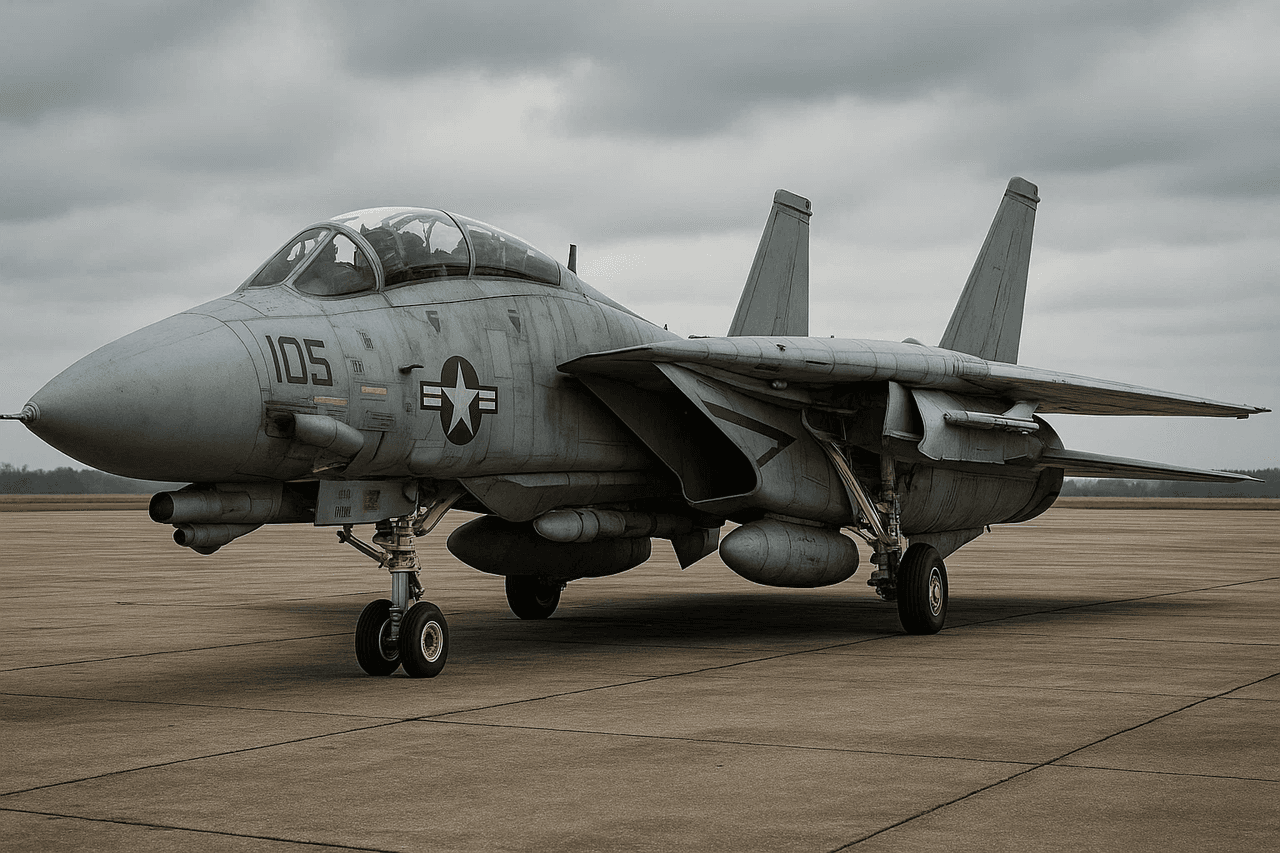
Grumman F-14 Tomcat
Producer(s) | Grumman Aircraft Corporation | ||||||||
|---|---|---|---|---|---|---|---|---|---|
First Flight(s) | 21 December 1970 | ||||||||
Entry into Service | September 1974 | ||||||||
Aircraft Type(s) | Twin-engine variable-sweep-wing two-seat air superiority fighter and multirole combat aircraft | ||||||||
Models | F-14A, F-14B (formerly F-14A+), F-14D Super Tomcat | ||||||||
Final Use | 2006 | ||||||||
Grumman F-14 Tomcat is a twin-engine, supersonic, variable-sweep wing interceptor and fighter aircraft developed by Grumman Aerospace Corporation for the United States Navy during the Cold War. Noted for its high maneuverability, long range, and powerful radar, the F-14 assumed the role of protecting carrier fleets against threats arriving from long distances, particularly due to its ability to carry AIM-54 Phoenix missiles. Entering service in 1974, the Tomcat remained one of the primary aircraft of the United States Navy until its retirement in 2006.

Grumman F-14 Tomcat Generated by Artificial Intelligence
The development of the F-14 began in the late 1960s following the United States Navy’s withdrawal from the F-111B program. The Navy required a high-performance interceptor capable of defending carrier fleets against long-range Soviet bombers. Grumman responded by designing the F-14 with variable-sweep wings, a powerful radar system, and the capacity to carry long-range missiles.
F-14 Tomcat (YouTube)
The most distinctive feature of the F-14 Tomcat is its variable-sweep wings. These wings allow the aircraft to maintain optimal performance across different speeds and altitudes. At low speeds during takeoff and landing, the wings are fully extended; at high speeds and during supersonic flight, they sweep backward. Equipped with the powerful AN/AWG-9 radar, the F-14 can detect targets over 200 kilometers away and carry AIM-54 Phoenix missiles capable of engaging up to six targets simultaneously.

Grumman F-14 Tomcat Generated by Artificial Intelligence
The F-14 Tomcat was primarily employed in fleet defense missions. Its long-range missiles enabled it to protect carrier groups from enemy aircraft and cruise missiles approaching from great distances. It was also used in air-to-air combat, ground attack, and reconnaissance roles.
The United States Navy retired the F-14 Tomcat in 2006, with the F/A-18E/F Super Hornet replacing it. However, the Tomcat’s speed, range, and powerful armament have secured its status as an iconic aircraft in aviation history.
Airforce Technology. "F-14 Tomcat Fighter Aircraft." Accessed May 10, 2025. https://www.airforce-technology.com/projects/f14/.
History.navy.mil. "F-14 Tomcat." Accessed May 10, 2025. https://www.history.navy.mil/content/history/museums/nnam/explore/collections/aircraft/f/f-14a-tomcat.html.
Muharebe Tarihi. "Grumman F-14 Tomcat." Accessed May 10, 2025. https://www.muharebetarihi.com/grumman-f-14-tomcat/.
National Air and Space Museum. "Grumman F-14D(R) Tomcat." Accessed May 10, 2025. https://airandspace.si.edu/collection-objects/grumman-f-14dr-tomcat/nasm_A20040156000.
Naval History and Heritage Command. "F-14 Tomcat." Accessed May 10, 2025. https://www.history.navy.mil/research/histories/naval-aviation-history/naval-aircraft/current-aircraft-inventory/f-14-tomcat.html
USS Midway Museum. "Grumman F-14A Tomcat." Accessed May 10, 2025. https://www.midway.org/visit/aircraft-gallery/f-14-tomcat.
YouTube. "F-14 Tomcat - Anytime Baby!" Accessed May 10, 2025. https://www.youtube.com/watch?v=zvSPjHZejPw

Grumman F-14 Tomcat
Producer(s) | Grumman Aircraft Corporation | ||||||||
|---|---|---|---|---|---|---|---|---|---|
First Flight(s) | 21 December 1970 | ||||||||
Entry into Service | September 1974 | ||||||||
Aircraft Type(s) | Twin-engine variable-sweep-wing two-seat air superiority fighter and multirole combat aircraft | ||||||||
Models | F-14A, F-14B (formerly F-14A+), F-14D Super Tomcat | ||||||||
Final Use | 2006 | ||||||||
No Discussion Added Yet
Start discussion for "Grumman F-14 Tomcat" article
Development Process
Design Features
Technical Specifications
Operational Roles
Retirement