


This article was automatically translated from the original Turkish version.
+2 More
Güdül (District)
Province(s) | Ankara | ||||||||
|---|---|---|---|---|---|---|---|---|---|
Geographic Region | Central Anatolia | ||||||||
Population | 8.521 | ||||||||
District Governor | Barış AYTÜRK | ||||||||
Mayor(s) | Mehmet DOĞANAY | ||||||||
Güdül is a district located in the Central Anatolia Region of Türkiye and is subordinate to the province of Ankara. Situated approximately 90 kilometers from the provincial center, the district lies in the northwestern part of Ankara. It borders Ayaş to the east, Beypazarı to the west, Kızılcahamam to the north, and Polatlı to the south. With an area of approximately 540 km², Güdül is among the smallest districts in Ankara in terms of population.

Ankara, Güdül - General View (Güdül Municipality)
Güdül and its surroundings have been inhabited by various civilizations throughout history. Archaeological findings indicate that settlement in the region dates back to the Neolithic Age. Rock carvings and caves around the Kirmir Valley contain evidence of early human habitation. The Phrygians, Galatians, Romans and Byzantines were the main civilizations to establish dominance in the area. Roman-era tombs and cisterns demonstrate that Güdül was an important settlement during this period. Following the Byzantine era, the region came under the control of the Seljuk Sultanate of Anatolia and later the Ottoman Empire. During the Ottoman period, it was recorded as a subdistrict within the Ankara Sanjak.
In 1926, with the establishment of the Republic, Güdül attained district status. Population decline has been observed due to migration, yet the district has continued to preserve its historical and cultural heritage.
Güdül features a rugged and mountainous topography. The district is characterized by dense forested and steppe areas. The Kirmir Creek, which flows through the district, is a tributary of the Sakarya River and together with its valley forms a significant natural landscape. The Kirmir Valley is of particular value due to its geological features, including caves, rock formations and fossil beds. Natural hollows around the valley contain traces of ancient settlements and rock tombs.

Ankara, Güdül - Kirmir Creek (Güdül Subdistrict Office)
The district experiences a continental climate typical of the Central Anatolia Region. Summers are hot and dry, while winters are cold and snowy. Precipitation increases during spring and autumn. These climatic conditions provide a suitable environment for cereal cultivation and fruit farming.
According to data from the Güdül Subprovince, the district’s population is 8,521. Since the 1950s, the population has declined due to migration to large cities. The district comprises 31 neighborhoods. Approximately 20 villages are located outside the district center, and the majority of these settlements have a high proportion of elderly residents.

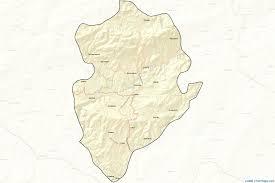
Ankara, Güdül Map (Ankara Governorship)
The district’s economy is largely based on agriculture and animal husbandry. Crops such as wheat, barley, chickpeas and lentils are cultivated, along with fruits including apples, pears and grapes. The local specialty, Güdül apple, is in demand in regional markets. Small-scale animal husbandry, particularly sheep and goat farming, plays a significant role in the local economy.
In recent years, interest in natural and organic products has increased. Local production items such as honey, grape molasses, village bread and homemade tomato paste contribute significantly to the district’s economy.
Güdül offers various opportunities for nature tourism, hiking trails and cultural excursions. Natural beauties along the Kirmir Valley, hiking routes, Güdül Caves, Roman-era rock tombs and traditional houses with distinctive architectural features hold tourist significance. Local festivals and fairs held in the district are part of its cultural calendar.
Located approximately one kilometer from the district center, the Inönü Caves are situated on the slopes of the Kirmir Valley. These caves, carved into soft rock formations with multiple chambers, resemble the rock dwellings found in the Cappadocia region.

Ankara, Güdül - Inönü Caves (Güdül Municipality)
Various elements of traditional Anatolian culture are preserved in Güdül. Handicrafts, folk dances, traditional wedding customs and regional dishes form part of its cultural heritage.
The district’s culinary culture is shaped by dishes typical of the Central Anatolia Region. Tarhana soup, lentils with meat, keşkek, tandır kebab and village bread are commonly consumed. Additionally, mulberry molasses, walnut-stuffed sausage, erişte pasta and dried legumes are consumed daily and also sold in local markets.
Ankara Valiliği. "Güdül İlçesi Tanıtımı." Accessed May 9, 2025. http://www.ankara.gov.tr/gudul
Güdül Belediyesi. "Tarihi Yerler – İnönü Mağaraları." Accessed May 9, 2025. https://www.gudul.bel.tr/HOME/INDEX/GUDUL/TARIHI-YERLER/60
Güdül Belediyesi. *Güdül’ün Tarihi*. Accessed May 9, 2025. https://www.gudul.bel.tr/HOME/INDEX/GUDUL/TARIHI
Güdül Kaymakamlığı. *Tarihçe*. Accessed May 9, 2025. http://www.gudul.gov.tr/tarihcee
Güdül Kaymakamlığı. *İnönü Mağaraları*. Accessed May 9, 2025. http://www.gudul.gov.tr/inonu-magaralari
T.C. Ministry of Culture and Tourism,Ankara İl Directorate of Culture and Tourism. *Güdül*. Accessed May 9, 2025. https://ankara.ktb.gov.tr/TR-152770/gudul.html

Güdül (District)
Province(s) | Ankara | ||||||||
|---|---|---|---|---|---|---|---|---|---|
Geographic Region | Central Anatolia | ||||||||
Population | 8.521 | ||||||||
District Governor | Barış AYTÜRK | ||||||||
Mayor(s) | Mehmet DOĞANAY | ||||||||
History
Geography and Climate
Population and Demographic Structure
Economy
Tourism, Culture and Cuisine