

 Recently Added:

This article was automatically translated from the original Turkish version.
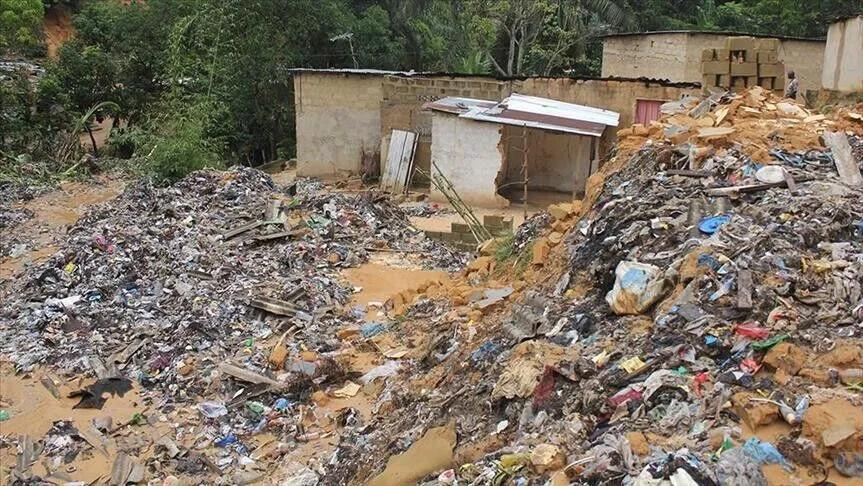
2026 Conakry Landfill Landslide is a landslide that occurred on 23 August 2026 at a large open-air waste disposal site in Conakry, the capital of Guinea, resulting in the deaths of at least 30 people. The landslide, triggered by heavy rainfall, affected residential areas surrounding the landfill, burying numerous homes and makeshift structures under debris. Search and rescue operations were launched immediately after the incident.
The landslide occurred in the early hours of 23 August at the Dar Es Salam waste disposal site in Conakry. According to official statements, heavy rainfall that began around 02:00 in the area caused a massive pile of waste to slide.
The mass of garbage and soil from the site, one of Conakry’s largest open-air waste disposal areas, collapsed onto nearby temporary shelters and homes. Eyewitnesses reported that the landslide was large enough to completely bury some structures.
The Guinean government announced that at least 30 people lost their lives in the disaster. According to reports from the Anadolu Agency, at least 22 people were injured, with six in serious condition and 16 with minor injuries.
Authorities stated that search and rescue operations continued due to the possibility of other individuals being trapped under the debris. Families living in the area were reported to be closely monitoring the efforts to locate their missing relatives.
Following the disaster, search and rescue teams and heavy machinery were deployed to the area. Teams used excavators and other heavy equipment to reach people buried beneath the debris and waste piles.
Guinea’s Prime Minister Amadou Oury Bah visited the disaster zone on 23 August to assess the damage and ongoing response efforts. The government urged residents to remain calm, act in solidarity, and follow the instructions of rescue teams and authorities.
The landslide occurred during a period when preparations were underway to close the Dar Es Salam waste disposal site for safety reasons. According to officials, the site posed significant risks, particularly during the rainy season, and its closure along with the relocation of waste to another location had been planned.
Lieutenant Colonel Baldé Mamadou Bailo of the military engineering unit responsible for sanitation and cleanliness stated that the closure of the open-air landfill had been planned. Authorities indicated that evacuation notices had previously been issued to residents of the area, and some individuals had left, but many continued to live nearby at the time of the disaster.
Following the landslide, the government announced that families continuing to live around the waste disposal site would be relocated to other areas. The proximity of unplanned and temporary structures to the landfill was identified as one of the factors that intensified the impact of the disaster.
Guinea’s Minister of Regional Administration and Decentralization, Dienabou Touré, stated at the site that measures would be taken to relocate families still remaining in the area.
The disaster at Dar Es Salam has brought renewed attention to issues related to waste management and rapid urbanization in Conakry. The accumulation of large volumes of waste in open areas, coupled with residential settlements surrounding these sites, significantly increases the risk of landslides and similar disasters during periods of heavy rainfall.
Guinea is one of the world’s largest holders of bauxite reserves and also possesses significant natural resources including iron ore, gold, and diamonds. Nevertheless, poverty remains a major socioeconomic challenge in the country. According to World Bank data, 43.7 percent of the population lives below the national poverty line.
In the aftermath of the Conakry landslide, efforts have focused on locating individuals potentially trapped under debris, treating the injured, and evacuating families living in high-risk areas. The government has also announced that work will continue to close the landfill and relocate nearby settlements to safer locations.
Anadolu Agency. "30 killed in landslide at Guinea’s Conakry waste dump after heavy rain." Accessed August 24, 2026.
CNN. "A landslide at a landfill in the capital of Guinea kills 30 people, officials say." Accessed August 24, 2026.
France 24. "Guinea searches for survivors after landfill landslides kill 30." Accessed August 24, 2026.
Reuters. "Landslide at Guinea landfill kills 30, government says." Accessed August 24, 2026.

Following heavy rainfall, a landslide at the Dar Es Salam waste disposal site in Conakry, the capital of Guinea, killed at least 30 people and injured 22 others.
No Discussion Added Yet
Start discussion for "Guinea Conakry Landfill Landslide (August 2026)" article
August 24, 2026
Cause of the Landslide
August 24, 2026
Casualties and Injuries
August 24, 2026
Search and Rescue Operations
August 24, 2026
Plan to Close the Landfill
August 24, 2026
Evacuation of Settlements in the Area
August 24, 2026
Waste Management and Socioeconomic Conditions in Conakry