


This article was automatically translated from the original Turkish version.
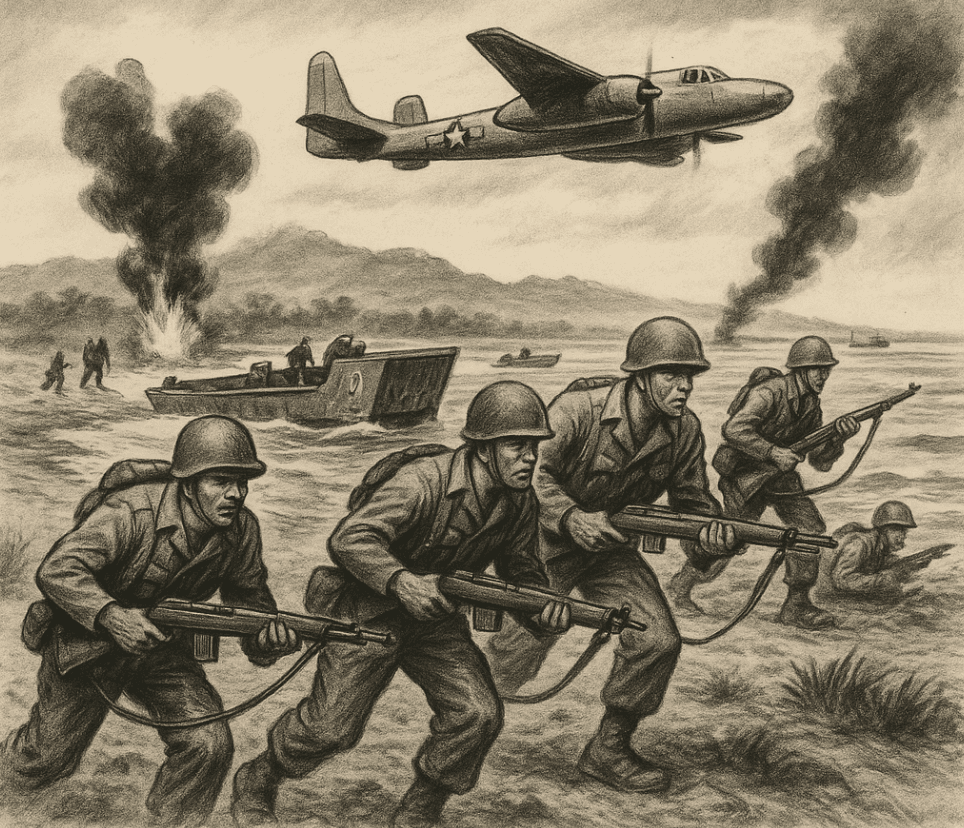
Gulf of Pork Operations
History | 17–19 April 1961 | ||||||||
|---|---|---|---|---|---|---|---|---|---|
Place(s) | Bay of Pigs (Bahía de Cochinos) southern coast of Cuba | ||||||||
Purpose(s) | to overthrow the communist regime led by Fidel Castro and establish a pro-US government | ||||||||
Planner | CIA (Central Intelligence Agency of the United States) | ||||||||
Forces | 000 soldiers) against the Cuban Armed Forces (approximately 20 400 Cuban exiles supported by the United States a force of 1 | ||||||||
Bay of Pigs Invasion is a failed military operation carried out by approximately 1,400 Cuban exiles trained and financed by the United States Central Intelligence Agency (CIA) on April 17, 1961. The primary objective of the operation was to overthrow the communist regime led by Fidel Castro and establish a pro-USA government.

U.S. President J.F. Kennedy and Cuban Head of State Fidel Castro (Source: Generated by Visual AI)
Fidel Castro’s rise to power in 1959 after overthrowing the Fulgencio Batista regime caused a major rupture in Cuba’s relations with the United States. Castro’s government seized U.S.-owned economic assets, adopted anti-American rhetoric, and established close ties with the Soviet Union, fueling concerns in Washington that Cuba was falling under Soviet influence.
In this context, President Dwight D. Eisenhower issued a directive to the CIA in March 1960 to form an invasion force composed of Cuban exiles. The plan was revised and implemented after John F. Kennedy was elected president.

Political Map of Cuba (SNL)
The invasion began when Brigade 2506, a force of exiles trained by the CIA in Guatemala, landed on the southern coast of Cuba at the Bay of Pigs. The operation’s success depended on the assumption that the Cuban population would join the rebels and trigger a widespread anti-Castro uprising. However, this expectation did not materialize. The Castro regime had been aware of the plans days before the invasion and was prepared to confront the landing forces both on land and in the air.
The first air strike was conducted on April 15 but failed to destroy most of the intended targets. The B-26 bombers, manufactured in the United States and painted to resemble Cuban aircraft, did not maintain the secrecy of the attack as intended. The Kennedy administration canceled the planned second air strike. The invasion, which began on April 17, progressed slowly due to lack of popular support, poor weather conditions, and insufficient ammunition. On the morning of April 19, delayed air support proved inadequate and the invasion failed. Approximately 100 people were killed and 1,200 were captured.
The failure of the operation dealt a serious blow to U.S. foreign policy and the public perception of the Kennedy administration. President Kennedy assumed responsibility before the public but also criticized the media and intelligence leaks in an effort to shift attention elsewhere. Privately, Kennedy personally followed up on the release of the captured fighters. By the end of 1962, the prisoners were returned to the United States in exchange for $53 million worth of medicine and baby formula. The operation’s failure pushed Cuba closer to the Soviet Union and laid the groundwork for the 1962 Cuban Missile Crisis.
Nevertheless, the Kennedy administration launched a new covert operation called Operation Mongoose to overthrow the Castro regime in Cuba. Although this program included sabotage, propaganda, and possible assassination attempts, it failed to achieve its objectives.
For the Cuban people and especially the Cuban exile community in Miami, the operation is not seen as a failure but as a symbol of anti-communist resistance and sacrifice. The captured fighters emphasized in their letters their pride and sense of duty. This narrative of heroism was interpreted differently in U.S. popular culture, where the failure was portrayed in cinema as a consequence of intergovernmental errors in the nuclear age and as a commentary on intelligence security.
"Bay of Pigs Invasion." HISTORY.com. Date Published: November 13, 2009. Updated: January 31, 2025. https://www.history.com/this-day-in-history/april-17/the-bay-of-pigs-invasion-begins.
BBC Türkçe. “Domuzlar Körfezi Çıkarması: Mükemmel Fiyasko.” April 15, 2011. https://www.bbc.com/turkce/haberler/2011/04/110414_bay_of_pigs.
John F. Kennedy Presidential Library and Museum. "The Bay of Pigs." Accessed [date]. https://www.jfklibrary.org/learn/about-jfk/jfk-in-history/the-bay-of-pigs.
Office of the Historian, U.S. Department of State. “The Bay of Pigs Invasion and Its Aftermath, April 1961–October 1962.” *Milestones in the History of U.S. Foreign Relations*. https://history.state.gov/milestones/1961-1968/bay-of-pigs.
Shields, Ellie J. “Framing Failure: The Bay of Pigs Invasion Fifty Years Apart.” *The Alexandrian* 13, no. 1 (2024). https://www.jfklibrary.org/asset-viewer/archives/RFKAG/217/RFKAG-217-002.


Gulf of Pork Operations
History | 17–19 April 1961 | ||||||||
|---|---|---|---|---|---|---|---|---|---|
Place(s) | Bay of Pigs (Bahía de Cochinos) southern coast of Cuba | ||||||||
Purpose(s) | to overthrow the communist regime led by Fidel Castro and establish a pro-US government | ||||||||
Planner | CIA (Central Intelligence Agency of the United States) | ||||||||
Forces | 000 soldiers) against the Cuban Armed Forces (approximately 20 400 Cuban exiles supported by the United States a force of 1 | ||||||||
No Discussion Added Yet
Start discussion for "Gulf of Pork Operations" article
Background and Planning Process
Course of the Operation
Consequences and Repercussions
Legacy and Cultural Impact