


This article was automatically translated from the original Turkish version.
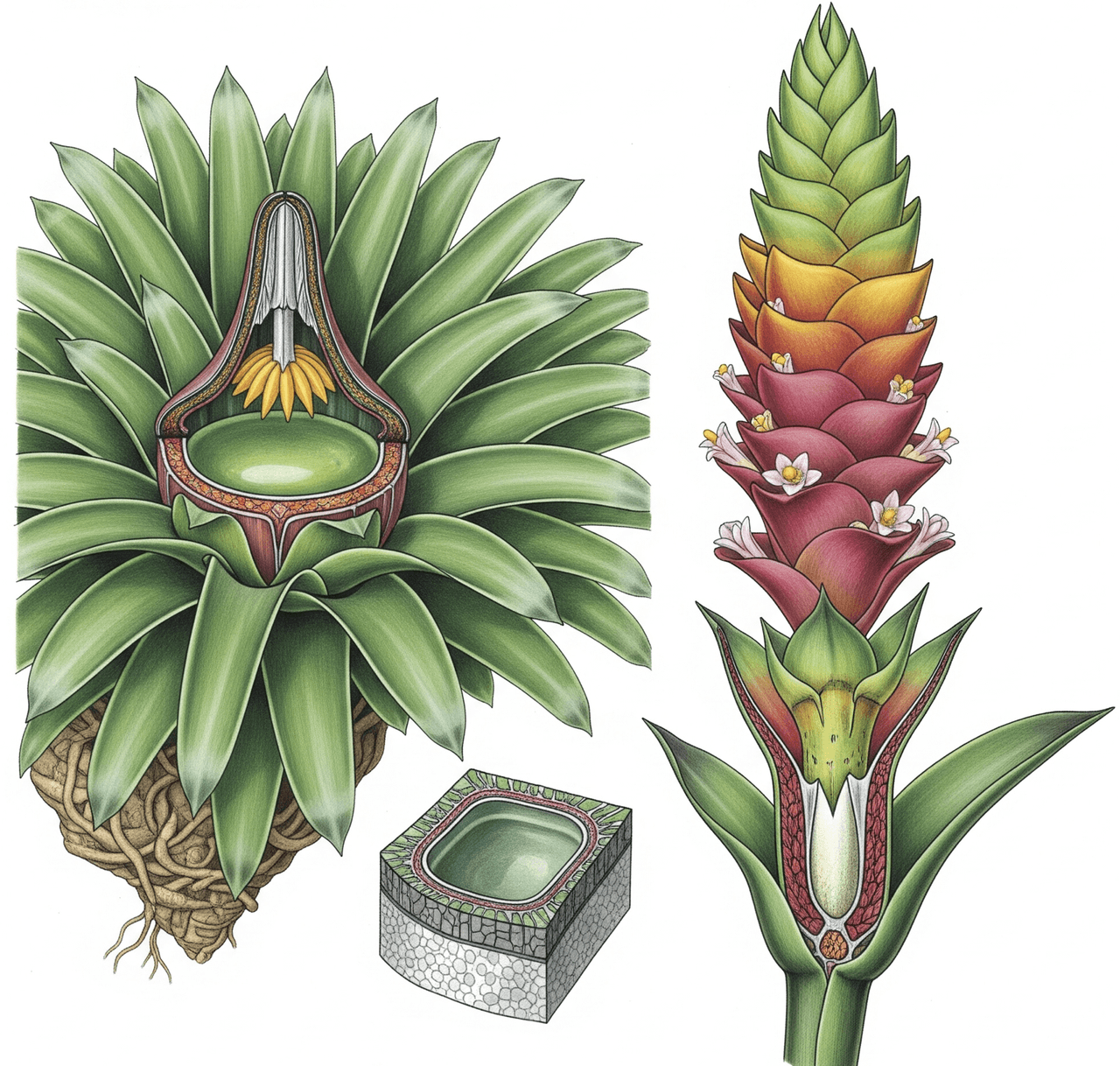
Guzmania is a genus of plants in the Bromeliaceae family, widely distributed in tropical regions and typically adopting an epiphytic lifestyle. This genus is particularly noted for its colorful bracts and striking appearance. Guzmania species can be found in their natural habitats growing on trees or in moist forest floors. These plants have developed specialized adaptations for absorbing water and nutrients. The morphological features, ecological adaptations, and physiological mechanisms of Guzmania have been the focus of scientific research.
Guzmania species are evergreen plants characterized by rosette-shaped leaves. The leaves are typically green, though in some species they may exhibit red, yellow, or orange hues. The bracts are usually brightly colored and long-lasting, enhancing the plant’s aesthetic value. The flowers of Guzmania are generally tubular in structure, and the flowering period varies among species.
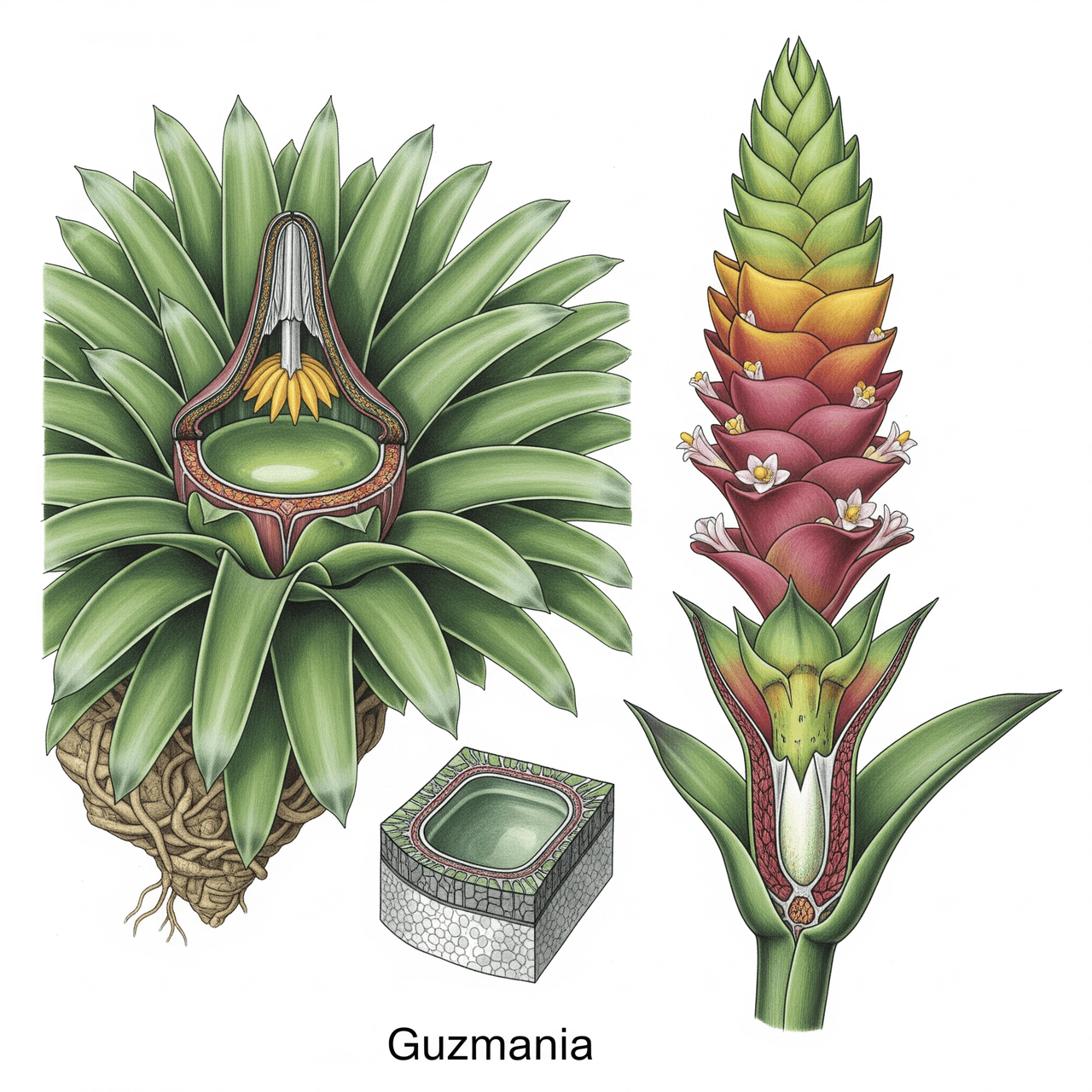
Guzmania Plant Structure (Generated by artificial intelligence)
The genus Guzmania belongs to the subfamily Tillandsioideae within the Bromeliaceae family. This genus comprises approximately 200 species and is especially common in the tropical regions of Central and South America. Guzmania species typically adopt an epiphytic lifestyle, growing on the branches of trees and other plants. This adaptation enables them to survive in environments where water and nutrients are limited.
Guzmania species have developed specialized structures for absorbing water and nutrients. Absorptive trichomes located at the base of the leaves facilitate the uptake of water and dissolved nutrients. Additionally, the rosette arrangement of the leaves allows rainwater to be collected and stored. These water reservoirs also serve as microhabitats for microorganisms and small animals, contributing to the plant’s nutrient cycling.
Some species, such as Guzmania monostachia, can switch to Crassulacean Acid Metabolism (CAM) photosynthesis under stress conditions like water scarcity. This adaptation helps the plant reduce water loss while maintaining photosynthetic efficiency. CAM photosynthesis is characterized by stomatal opening at night to take in CO₂, thereby minimizing water loss during daylight hours.
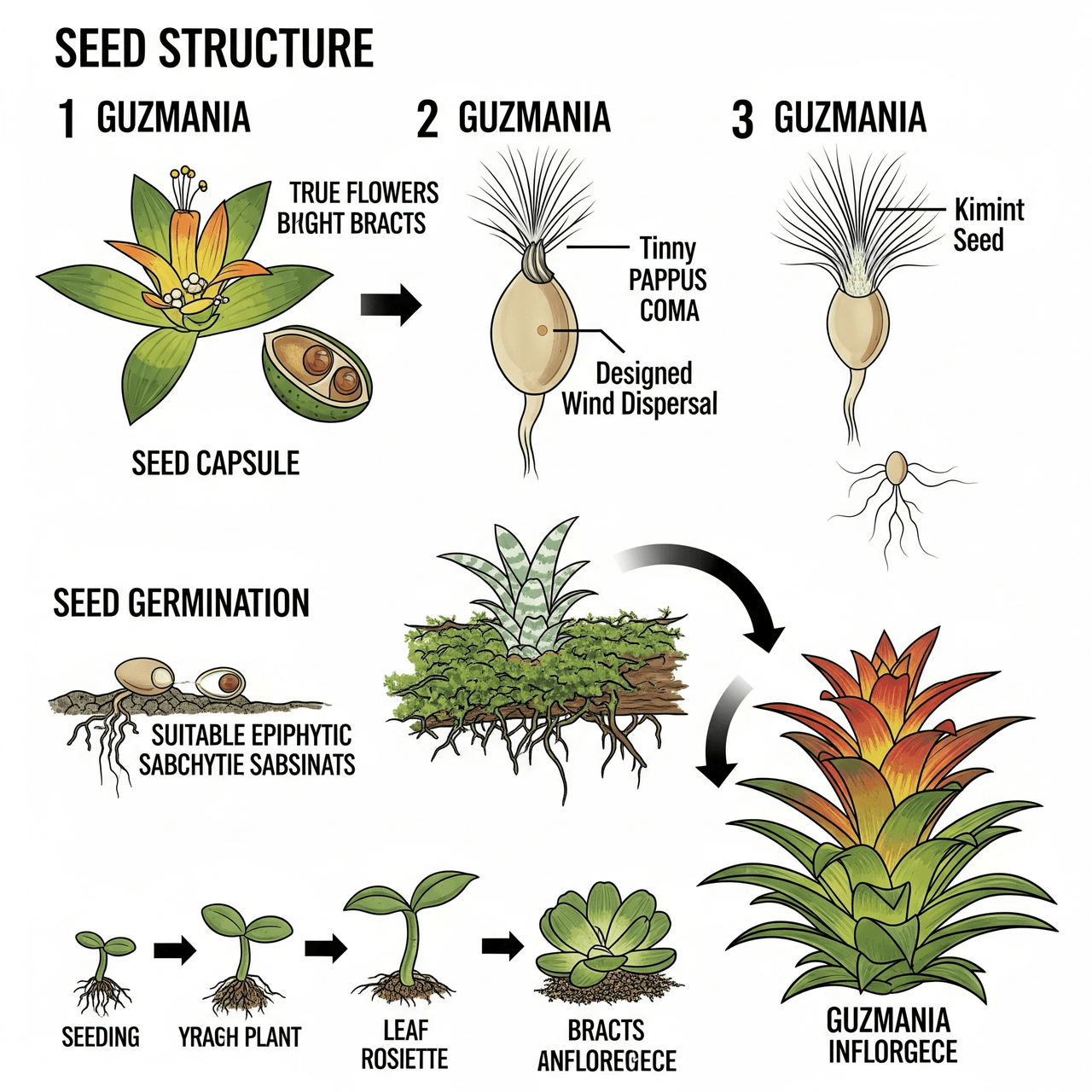
Seed structure and growth process of Guzmania (Generated by artificial intelligence)
Micropropagation techniques are employed for the commercial production and conservation of Guzmania species. These methods enable the laboratory-based multiplication of plants, aiding in the preservation of rare or threatened species. Micropropagation is also used to produce disease-free plant material.
Protecting the natural habitats of Guzmania species is critical for their long-term survival. Threats such as habitat destruction, climate change, and illegal collection can negatively impact Guzmania populations. Therefore, strategies such as establishing protected areas, developing sustainable harvesting methods, and raising public awareness are essential for their conservation.

Morphological Characteristics and Taxonomic Position
Structural Features
Taxonomic Classification
Ecological Adaptations and Physiological Mechanisms
Water and Nutrient Uptake
Photosynthetic Adaptations
Biotechnological Applications and Conservation Strategies
Micropropagation Techniques
Conservation Strategies