


This article was automatically translated from the original Turkish version.
Hackathon is a term derived from the combination of "hack" (creative programming) and "marathon" (long-duration competition). It typically refers to intensive collaborative and creativity-focused events where software developers, designers, product managers, and other related professionals come together to develop innovative solutions within a specific time frame, usually 24 to 48 hours. These events aim to have participants work on a defined problem, build prototypes, and present these prototypes to a jury. Hackathons contribute to the development of individual skills while also encouraging teamwork and rapid problem-solving abilities.
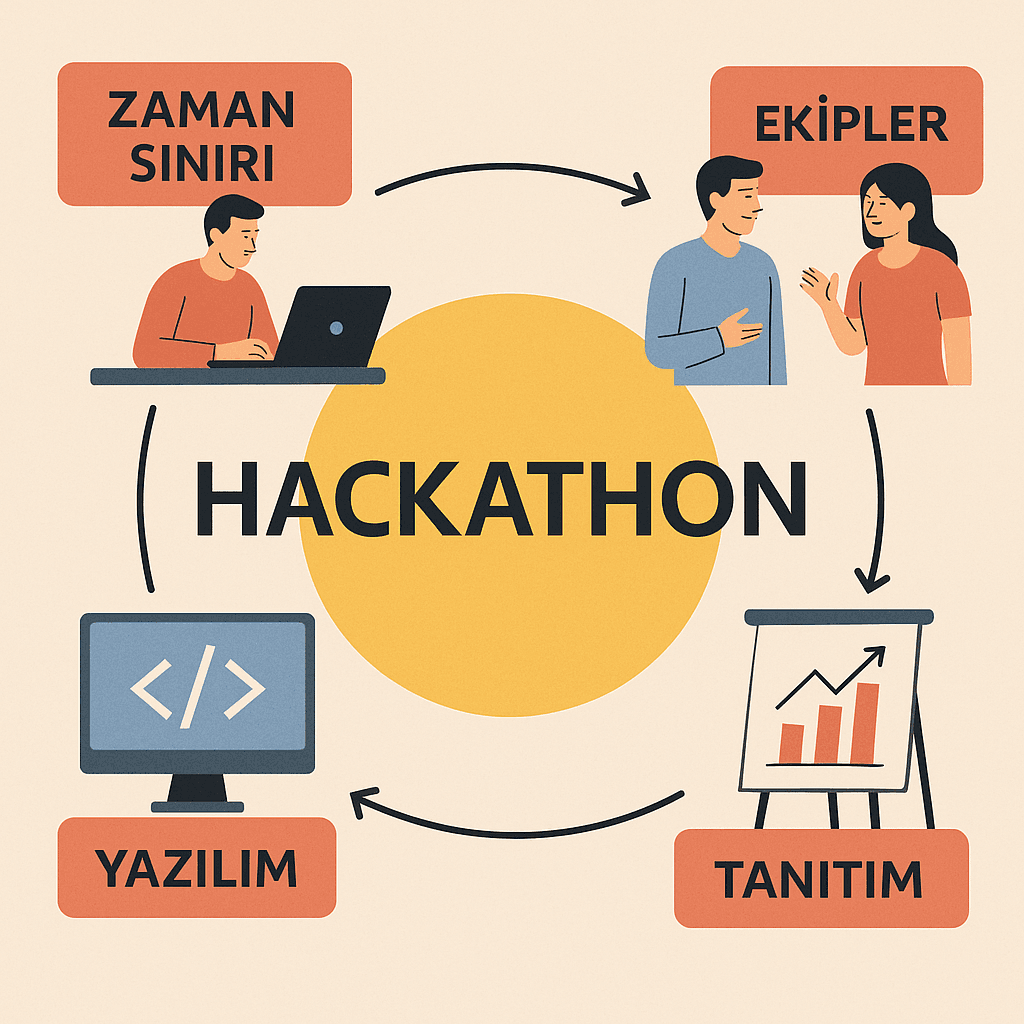
Flow of the Hackathon Process (Generated by artificial intelligence.)
These are events where participants develop projects without any topic restrictions. Such hackathons encourage innovation and allow participants to create projects based on their personal interests.
These are hackathons focused on a specific theme or industry. For example, hackathons organized in areas such as health technology, education, or the environment aim to find solutions to particular challenges.
These are events organized by companies among their own employees to promote internal innovation and collaboration. Such hackathons help generate new product ideas and uncover employees’ talents.
These are hackathons organized specifically for university or high school students. Such events enable students to gain practical experience and guide their career paths.
These are hackathons designed to find solutions to societal problems. They may focus on issues such as disaster management or improving the lives of people with disabilities.
The event begins with a presentation by the organizers outlining their objectives and rules. Participants typically register to work either individually or in teams.
Within the designated time frame, participants develop their ideas, build prototypes, and strive to complete their projects. During this phase, they may receive support from mentors.
At the end of the event, teams present their projects to a jury. The jury evaluates the projects based on predefined criteria and selects the winners.
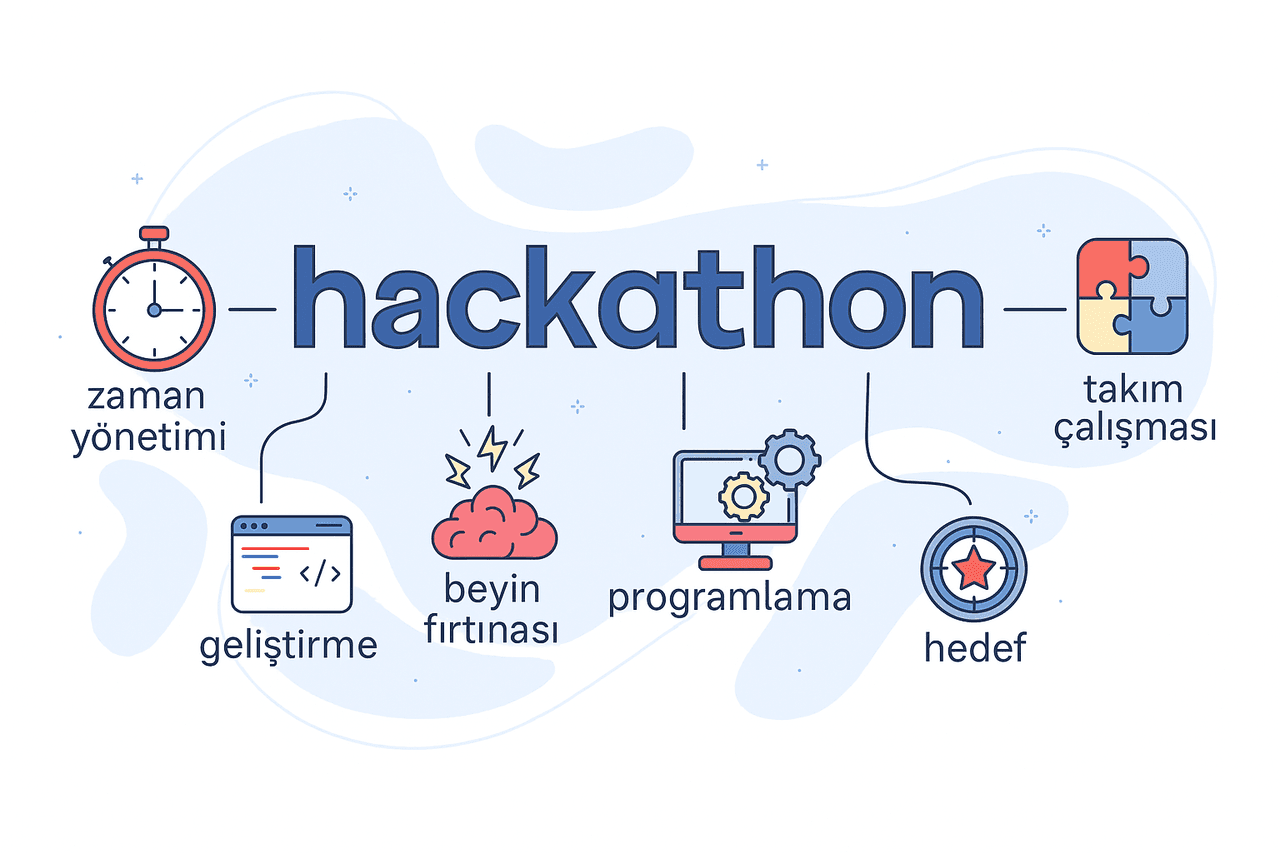
Hackathon visual (Generated by artificial intelligence.)
Karakavuz, Harun. “Bir İnovasyon Aracı Olarak Hackathon: Havacılık Sektöründen Örnekler.” ResearchGate. Accessed May 2025. Accessed Adresi.
Kocaeli Valiliği. "Türkiye Açık Kaynak Platformu + Bilişim Vadisi - Türkçe Dil İşleme Konulu Ödüllü Hackathon." Kocaeli Valiliği Resmi Web Sitesi. Accessed May 2025. Accessed Adresi.
McKinsey & Company. “Demystifying the Hackathon.” McKinsey. Accessed May 2025. Accessed Adresi.
Milliyet. "Hackathon Nedir, Neden Yapılır? Hackathon Yarışmaları Neden Düzenlenir?" Milliyet Teknoloji. Accessed May 2025. Accessed Adresi.

Types of Hackathons
General Hackathons
Thematic Hackathons
Internal Hackathons
Student Hackathons
Social Responsibility Hackathons
The Hackathon Process
Start
Project Development
Presentation and Evaluation
Benefits of Hackathons