
This article was automatically translated from the original Turkish version.
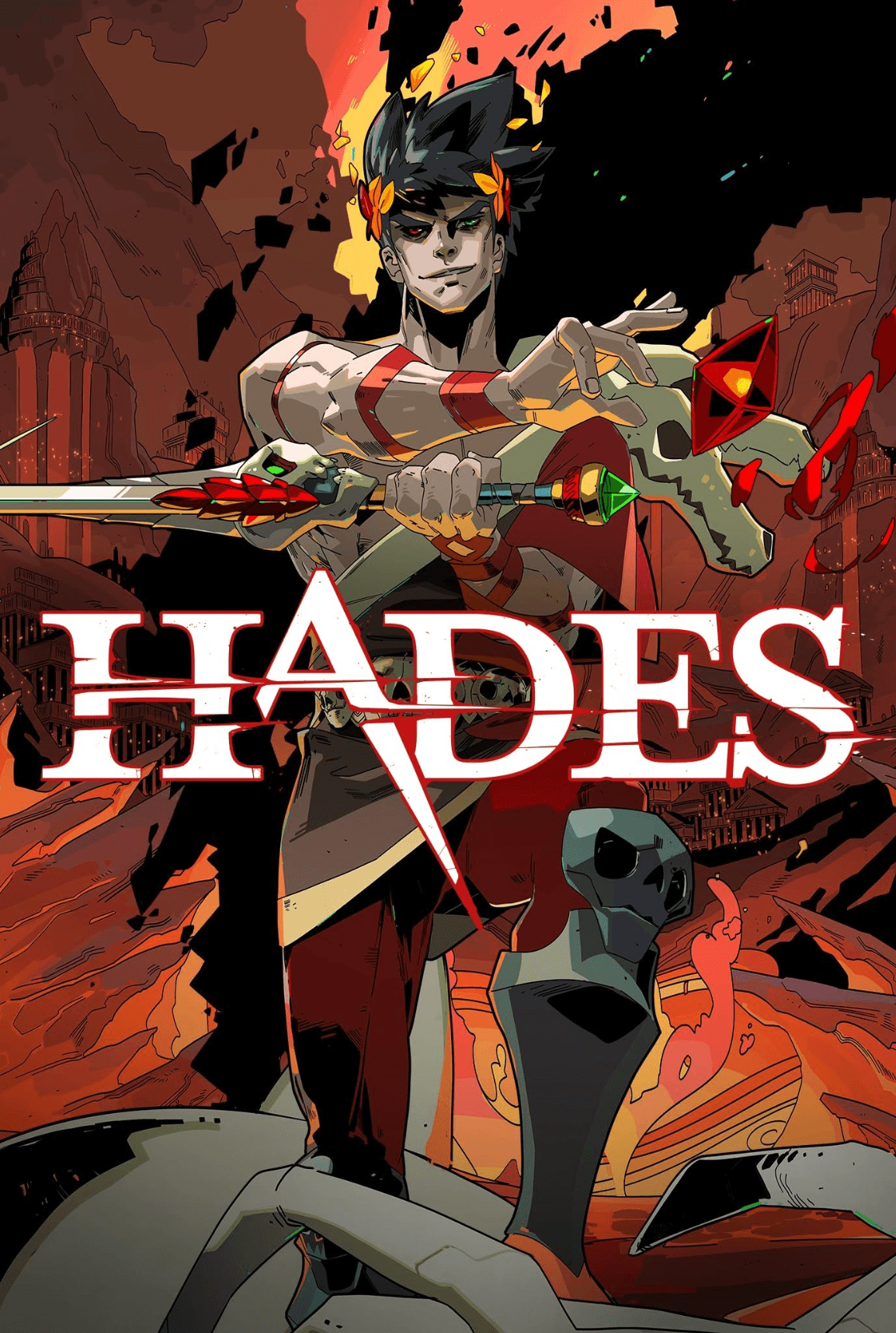
Drawn from ancient Greek mythology, Hades is an action-roguelike game developed by Supergiant Games and released on 17 September 2020. The game is built on a structure in which the cycle of death is woven into the narrative, character relationships shape progression, and each attempt adds a new layer to the story. In this way, it embraces a cyclical framework both mythologically and structurally.
The experience gained from Supergiant Games’ previous titles—Bastion, Transistor, and Pyre—is applied more maturely in this title. Hades presents a game design in which repeated failures advance the narrative and every death gains meaning.
Hades - Official Trailer (IGN)
At the center of the game is Zagreus, the son of Hades. Born in the Underworld ruled by his father, Zagreus is consumed by a desire to escape. This longing merges with his wish to find his mother, Persephone, who resides on the surface. However, the Underworld is constructed as a complex labyrinth that permits no soul to leave. Each of Zagreus’s failed attempts returns him to Hades’s palace.
This structure creates a cycle reminiscent of the myth of Sisyphus. Each new attempt offers a slightly better chance to see further than the last, transforming the act of death from punishment into a tool for learning.
Zagreus’s character embodies youthful rebellion. His conflict with his father forms a microcosm reflecting the hierarchical order among the gods. In the game, Zeus, Athena, Ares, Dionysus, and other deities engage with this familial tension from different perspectives. Every advance Zagreus makes coincides with the favor of one god or the wrath of another. Thus, the shifting relationships of Greek mythology are integrated into gameplay.
The narrative extends beyond Zagreus’s escape attempt to encompass the stories of other figures living in the Underworld. The efforts of Achilles and Patroclus to reunite, Orpheus’s separation from Eurydice, and Sisyphus’s reconciliation with his fate form side narratives that orbit the main story. These tales revive the tragic tone of ancient myths within a modern context.

Hades (Supergiant Games)
Hades is an action game played from an isometric camera perspective. In each new “run,” or escape attempt, the player battles enemies in procedurally generated rooms. At the end of each room, the player is offered a specific reward: resources, currency, or divine boons known as “boons.” These rewards enable the player to acquire a different combination of powers in each run.
Zagreus’s weapons are called “Infernal Arms.” There are six primary weapons: Stygian Blade, Heart-Seeking Bow, Shield of Chaos, Eternal Spear, Twin Fists, and Adamant Rail. Each represents a distinct combat style. The sword focuses on rapid close-range attacks, while the spear offers a longer-range and more controlled approach. The bow allows the player to neutralize enemies from a distance, and the shield functions as both a defensive and offensive tool.
Each weapon has multiple variants that can fundamentally alter the player’s combat style according to preference. For instance, one variant of the shield allows the player to bounce enemies off surfaces, while another enhances close-range attacks. This system significantly increases replayability.
Zagreus also has four core actions: basic attack, special attack, “dash,” and “cast.” The dash enables the player to evade attacks swiftly. The cast involves hurling a red stone that deals additional damage to enemies. The stone cannot be reused until it is retrieved after embedding itself in an enemy. This mechanic enforces a risk-reward balance in every encounter.

Hades (Supergiant Games)
In each new room, the player is presented with boons offered by different gods. In this “boon” system, each deity provides advantages tied to specific traits.
Zeus delivers chain lightning attacks, Athena creates defensive deflecting effects, Ares inflicts enemies with a delayed “doom” status that deals lethal damage over time, and Dionysus grants poison-based attacks. Poseidon’s powers enable area control by pushing enemies.
Sometimes, encounters called “Trial of the Gods” occur between two deities. When the player chooses the aid of one god, the other temporarily becomes an enemy. This situation offers the player the chance to gain two boons simultaneously but results in a challenging battle. This tension between the gods directly translates mythological dynamics into gameplay.
In certain cases, the powers of two gods combine to form special “Duo Boons.” For example, when Ares’s “Curse of Agony” ability merges with Athena’s “Divine Dash,” it creates a combined power called “Merciful End.” Such combinations produce varied outcomes in each run and deepen strategic planning.

Hades (Supergiant Games)
The most distinctive structural element of Hades is the integration of death into the game’s core cycle. Every death of Zagreus advances the story. With each return, the player hears new dialogue, acquires new items, and deepens relationships within the Underworld. Thus, failure becomes a form of narrative progression rather than punishment.
After death, Zagreus returns to the House of Hades, where he interacts with his father, the gods, and the servants. Hades dismisses his son’s failures, Hypnos makes sarcastic remarks, and Nyx offers guidance. These scenes reveal the nature of the characters while also providing the player with opportunities to rest, upgrade, and plan strategy.
This system creates a structure in which each cycle holds narrative significance, unlike classical roguelikes. Supergiant Games treats the concept of death not merely as a mechanical feature but as a thematic expression.
The relationships Zagreus forms with the characters he meets on his journey form the emotional backbone of the game. Figures such as Achilles, Orpheus, Eurydice, Patroclus, Sisyphus, and even Cerberus offer distinct emotional dynamics.
As the player strengthens bonds with these characters, new items and narrative pathways open. This system sustains the player’s curiosity and transforms the world into a living space.
Some side stories reference ancient tragedies. The separation between Orpheus and Eurydice reinterprets the classic theme of love and loss. The bond between Achilles and Patroclus highlights feelings of heroism and regret. These dialogues are not mere background elements but direct narrative tools that influence the game’s progression.
Art direction is one of the key elements defining the game’s atmosphere. Under the leadership of Jen Zee, the design team shaped characters through a fusion of classical sculptural aesthetics and modern illustration techniques.
Each god and character is designed with a unique color palette: Hades is rendered in dark red and black tones to represent authority, while Zagreus reflects youth and dynamism through green and gold hues. The different layers of the Underworld are similarly distinguished by visual themes: Tartarus is depicted with grim stone textures, Asphodel with lava lakes, and Elysium with bright natural tones.
According to Guardian, character designs are crafted to reflect the body aesthetics of ancient art. This approach supports the game’s mythological themes not only narratively but visually as well. Each character’s physical appearance is conceived as an extension of their personality.
The game’s music was composed by Darren Korb. As in his previous work on Bastion and Transistor, the music of Hades is woven into the atmospheric storytelling. The tracks blend classical and modern elements into a style describable as “Rock n’ Lute.”
Songs performed by Orpheus appear “diegetically” within the game; that is, the music is not merely background but becomes part of the narrative itself. In this way, music functions as a vehicle for conveying characters’ emotions.
During combat scenes, fast-paced guitar and percussion dominate, while scenes in the House of Hades favor softer, melancholic tones. These musical transitions play a crucial role in establishing the emotional rhythm.
Hades is structured to accommodate players of varying experience levels. The “God Mode” option increases the player’s defense after each failure, broadening the game’s accessibility.
In contrast, the “Pact of Punishment” system presents more challenging conditions for experienced players. This system increases enemy numbers, diversifies boss battles, and introduces specific restrictions. This balance preserves the game’s replayability.
Progression in the game depends not only on mechanical enhancement but also on the development of relationships and narrative. This blurs the boundary between gameplay and storytelling. Each “run” is treated as both a technical and emotional advancement.
The game has been released on PC, Nintendo Switch, PlayStation 4–5, Xbox One–Series X/S, and iOS. The Switch version is optimized for portable play, though readability of text is limited due to the smaller screen size.
Newer console versions run at 4K resolution and 60 FPS, presenting visual details with greater clarity. These versions also reduce loading times and accelerate transitions.
Cross-save functionality is available between PC and Switch but not on other platforms.
Hades received universal acclaim from critics. According to Metacritic, its average score is 93 and it is categorized as “Universal Acclaim.”
IGN highlighted the game’s structure, which integrates the cycle of death into the narrative. Eurogamer drew attention to the richness of its atmosphere and dynamic combat. GameSpot emphasized the seamless fusion of narrative and gameplay, while Guardian noted that the character designs successfully revive mythological aesthetics.
Nintendo World Report stated that the game serves as an accessible entry point for newcomers to the genre, and Rock Paper Shotgun observed that the structure matured significantly through updates following its early access phase.
Hades blends the themes of death, rebellion, and identity search with the narrative forms of Greek mythology. Each failure adds a new layer to the story, transforming the cyclical structure into a vehicle for dramatic progression.
The game unites the random nature of the roguelike genre with a powerful dramatic cohesion. Visual aesthetics, music, and character interactions have become mutually reinforcing elements.
Different from Supergiant Games’ previous titles, Hades merges technical mastery with narrative depth, establishing it as a benchmark in contemporary game design.

Hades (Supergiant Games)

Plot and Thematic Framework
Gameplay Structure
Divine Boons and Combinations
Death and Cyclical Narrative
Relationships and Narrative Depth
Art Direction and Visual Atmosphere
Music and Sound Design
Difficulty System and Progression
Technical Features and Platform Performance
Critical Reception
Place in the Gaming Landscape