This article was automatically translated from the original Turkish version.
Scientific Name(s) | Charadrius hiaticula | ||||||||
|---|---|---|---|---|---|---|---|---|---|
Kingdom(s) | Animalia | ||||||||
Phylum | Chordata | ||||||||
Class | Aves | ||||||||
Order | Charadriiformes | ||||||||
Family | Charadriidae | ||||||||
Conservation Status | LC – Least Concern (IUCN) | ||||||||
Ringed Plover is a small bird species belonging to the family Charadriidae. It was first described by Carl Linnaeus in 1758.
Three subspecies are recognized:
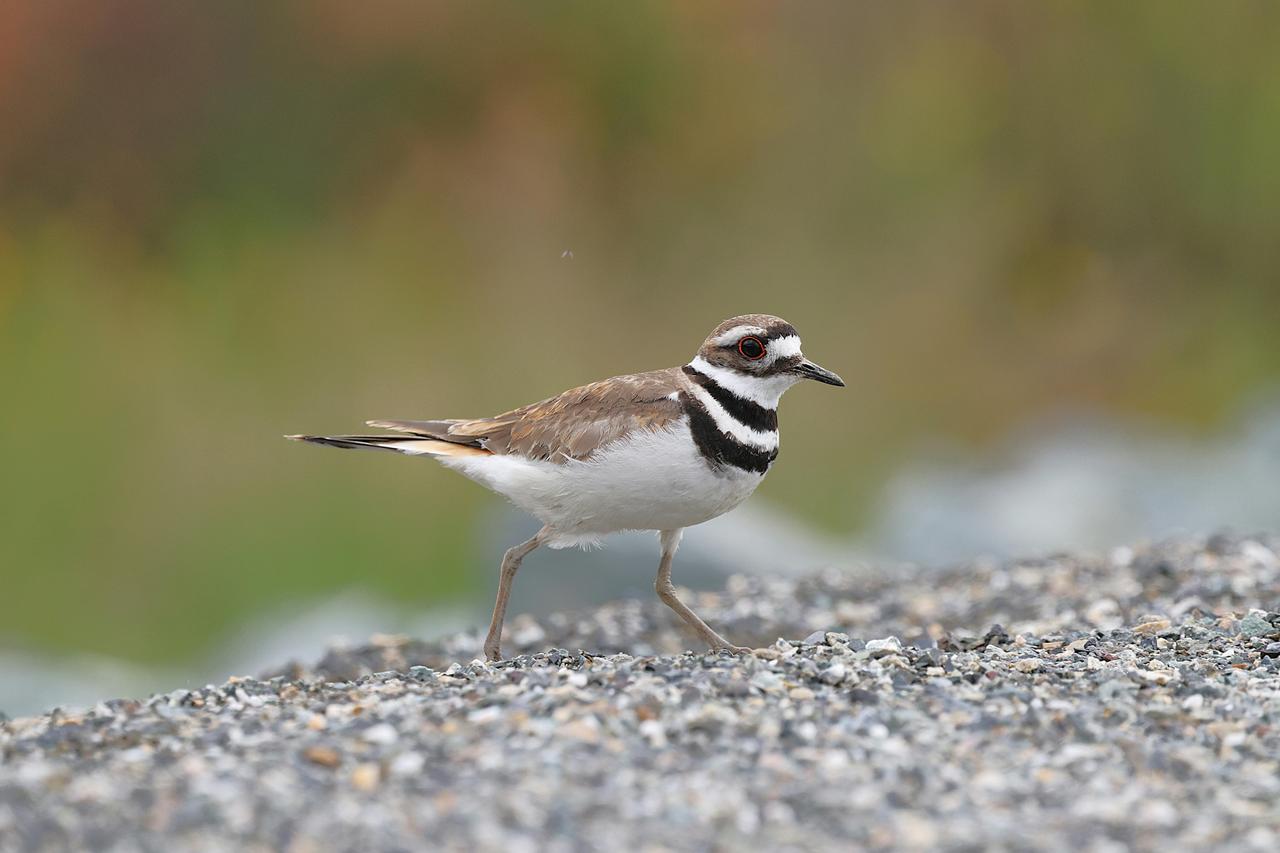
The Ringed Plover measures 17–19.5 cm in length and has a wingspan of 35–41 cm. It has a grey-brown back and wings, a white belly, and a distinctive black breast band. The head features a brown hood, a white forehead, a black mask around the eyes, and an orange-based black-tipped bill. The legs are bright orange.
Young individuals are paler than adults; their breast band is not fully developed, the bill is dark in color, and the legs are yellowish-grey. Although it resembles the Little Ringed Plover (Charadrius dubius), it can be distinguished by the absence of a yellow eye ring, its more vividly orange legs, and its distinct head pattern.

Ringed Plover (Pexels)
The Ringed Plover breeds in northern regions of Eurasia and Arctic northeastern Canada. During migration, it spreads along the coasts of Europe, Africa, and South Asia. In Türkiye, it is observed during migration periods and in summer along the shores of lakes, rivers, and coastal areas. It prefers habitats such as sandy or stony beaches, tundras, lake margins, and river deltas. It builds its nest directly on the ground in open areas.
According to the International Union for Conservation of Nature (IUCN) criteria, the Ringed Plover is classified as “Least Concern” (LC).
Ornito. "Halkalı Cılıbıt (Charadrius hiaticula)." Ornito.org. Accessed August 16, 2025. https://ornito.org/Bird/Detail/196
Pexels. “Kildeer Sahil Kuşu Kayalık Zeminde Duruyor JPG.” Accessed August 22, 2025. https://www.pexels.com/tr-tr/fotograf/kildeer-sahil-kusu-kayalik-zeminde-duruyor-32783829/
Pexels. “Çakır kuşu JPG.” Pexels. Accessed August 16, 2025. https://www.pexels.com/tr-tr/fotograf/cakir-kusu-32783830/
İzmir Kuş Cenneti. "Halkalı cılıbıt." T.C. İzmir Kuş Cennetini Koruma ve Geliştirme Birliği. Accessed August 16, 2025. https://izmirkuscenneti.gov.tr/2022/12/05/halkali-cilibit/

Scientific Name(s) | Charadrius hiaticula | ||||||||
|---|---|---|---|---|---|---|---|---|---|
Kingdom(s) | Animalia | ||||||||
Phylum | Chordata | ||||||||
Class | Aves | ||||||||
Order | Charadriiformes | ||||||||
Family | Charadriidae | ||||||||
Conservation Status | LC – Least Concern (IUCN) | ||||||||
No Discussion Added Yet
Start discussion for "Halkalı Cılıbıt (Charadrius hiaticula)" article
Subspecies
Physical Characteristics
Distribution and Habitat
Conservation Status