


This article was automatically translated from the original Turkish version.
Assassination of Hamaney (2026) is the killing of Ayatollah Ali Hamaney, the Religious Leader of , during military strikes launched by the United States and Israel against on 28 February 2026.
On 28 February 2026, Israel announced it had launched a “preventive strike” against , while on the same day, U.S. President Donald Trump declared that a “major operation” had been conducted against . Trump stated that high-ranking Iranian figures had been targeted in the strikes, and on 1 March 2026, he announced that Ayatollah Ali Hamaney had been killed.
On the same day, Iranian state television confirmed the death of Ayatollah Ali Hamaney, using the phrase “The leader of the Islamic Revolution of has attained martyrdom.” Following Hamaney’s death, the Iranian government declared 40 days of national mourning and a 7-day official holiday.
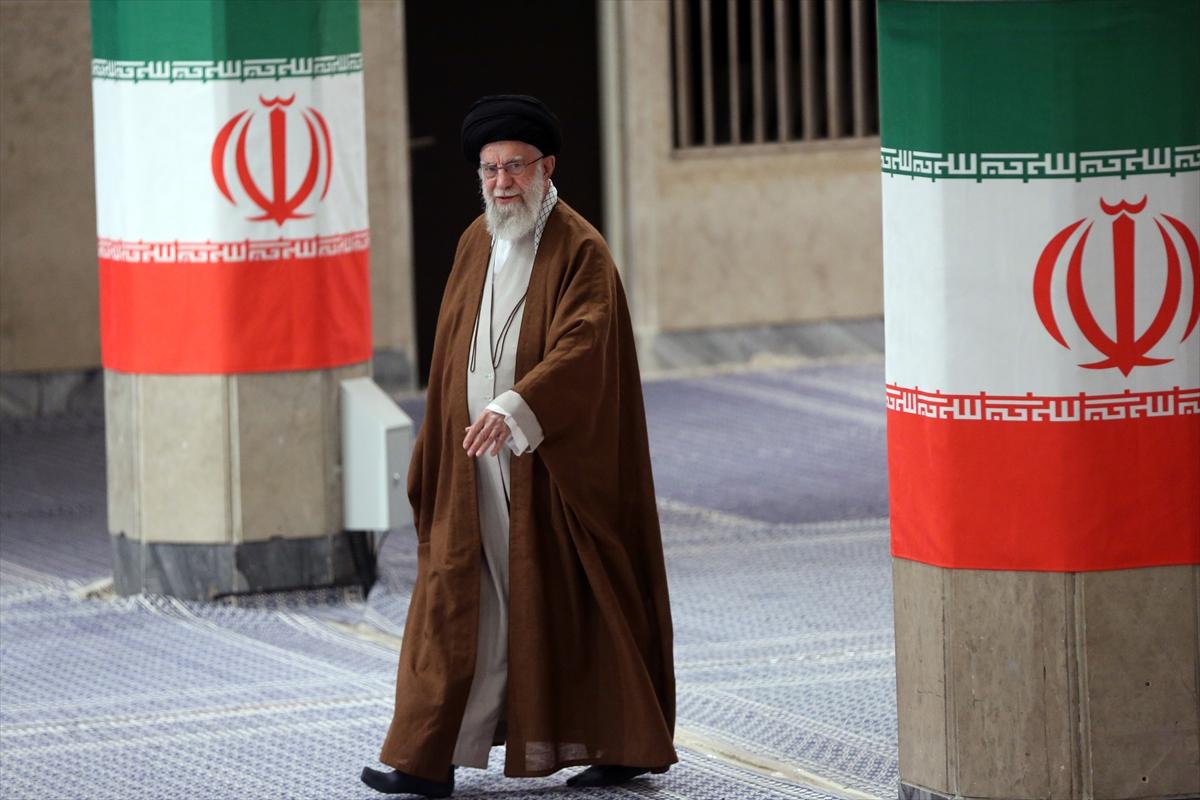
Iranian leader Ayatollah Ali Hamaney, 10 May 2024 - (Anadolu Ajansı)
Ayatollah Ali Hamaney was born on 19 April 1939 in Mashhad. He received religious education in Mashhad and Qom. In 1962, he joined the movement launched by Ayatollah Khomeini against the Shah in Qom. During this period, he was arrested and exiled on several occasions.
In 1978, he was among the founders of the Islamic Republican Party. After the revolution, in July 1979, he assumed the position of Deputy Minister of Defense of the Islamic Republic of . In November 1979, he was appointed commander of the Islamic Revolutionary Guard Corps and also named Imam of Friday Prayer in Tehran. In 1980, he was appointed by Imam Khomeini as a representative to the Supreme Defense Council of , and was elected as a member of the Iranian Parliament representing Tehran that same year.
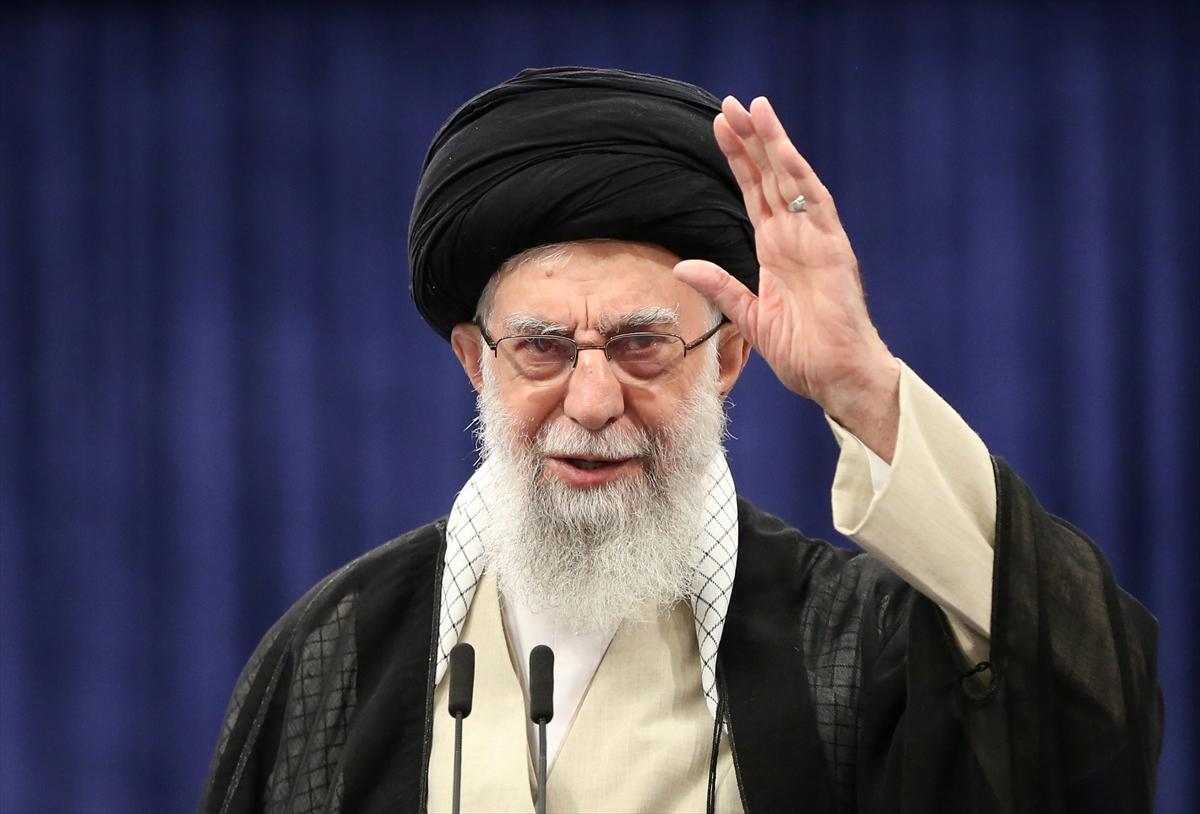
Iranian leader Ayatollah Ali Hamaney, 28 June 2024 - (Anadolu Ajansı)
On 27 June 1981, he was seriously injured in a bombing attack claimed by the People’s Mujahedin of Iran at the Abu Zarr Mosque in Tehran. In the elections held in October 1981, he was elected as the third President of the country after the revolution, and won re-election in 1985 to serve a second term as president.
Following Khomeini’s death, he was elected in 1989 by the Assembly of Experts as the country’s highest authority, the Leader (Supreme Guide). In , the position of Leader holds the ultimate authority over domestic and foreign policy matters within the constitutional framework.
On 28 February 2026, simultaneous military strikes were launched against by Israel and the United States. The Israeli Ministry of Defense announced it had initiated a “preventive strike” against . U.S. President Donald Trump also declared that a “major operation” had been launched against .
The attacks were carried out in the early morning hours. Targets included the capital Tehran, as well as Isfahan, Kerman, Qom, Tabriz, Shiraz, Bushehr, Kermanshah, and Ilam.
The Israeli military stated that simultaneous attacks targeted high-ranking political and military officials in Tehran. It was reported that during the strikes, which occurred while negotiations between Iran and the United States were ongoing, military and political targets within were hit.
Following the attacks, Israel and Iran closed their airspace. Israel declared a state of emergency, sirens sounded, and the public was warned to seek shelter.
The Iranian military announced it had launched a counterattack against Israel using dozens of ballistic missiles and unmanned aerial vehicles. Iranian missile strikes targeted U.S. bases in Bahrain, the United Arab Emirates, Kuwait, Qatar, and Jordan. It was reported that the U.S. naval base in Bahrain had been struck.
Following the attacks, conflicting reports emerged regarding the condition of Iranian leader Ayatollah Ali Hamaney. Israeli media published reports suggesting Hamaney had been targeted and possibly killed.
On 28 February 2026, it was claimed that Iranian leader Ayatollah Ali Hamaney was targeted during Israel’s first strikes against . Israeli television channel 12 reported that an assassination attempt had been made against Hamaney.
The same report indicated that Iranian President Masoud Pezeshkian was also among the targets of the assassination attempt. Iranian Vice President Mohammad Javad Kaempenah stated that the attempt against the president had failed and that Pezeshkian’s condition was good.
Israeli media also alleged that Ali Shamkhani, Hamaney’s advisor and head of Iran’s nuclear program, had been targeted. It was reported that the Tel Aviv administration believed the assassination attempt had succeeded.
Another report published on 28 February 2026 claimed that Israeli security officials believed the assassination attempt against Iranian leader Hamaney had been successful. A senior Israeli official speaking to Channel 12 said: “If Hamaney appears on live television to make a statement, we’ll be so shocked we’ll swallow our tongues. According to our assessments, he is no longer among us, but we are awaiting final confirmation.”
On 28 February 2026, Iranian Foreign Minister Abbas Araghchi, when asked whether Hamaney and President Pezeshkian were alive, replied: “Yes, as far as I know, they are alive.”
On the same day, newly released satellite images from the United States showed many buildings destroyed at the residence of Iranian religious leader Ayatollah Ali Hamaney in Tehran. The satellite images, verified by the Washington Post, showed damaged and collapsed buildings at the complex, along with plumes of smoke rising from the surrounding area. It was reported that the images were captured and released by the satellite company Airbus Defence and Space.
In reports published by Israeli media on 28 February 2026, it was claimed that at the start of the U.S.-Israel attacks, 30 bombs were dropped on the residence of Iranian leader Ayatollah Ali Hamaney. The reports alleged that the attack was carried out by Israel, not the United States.
The reports suggested that Hamaney was highly likely to have been killed in the attack. It was also claimed that his military secretary and several family members had been killed.
On 28 February 2026, Israel’s Channel 12 television claimed that photos of Iranian leader Ali Hamaney’s funeral were shown to Israeli Prime Minister Benjamin Netanyahu.
It was alleged that Hamaney’s body had been recovered from the rubble and had sustained shrapnel wounds. The photos were reportedly presented to Netanyahu and security officials.
In an evening statement, Netanyahu claimed there were numerous indications that Iranian leader Hamaney was no longer alive and argued that several key figures in the regime had been killed during the attacks.
On 28 February 2026, U.S. President Donald Trump, in an interview with NBC News, stated that numerous Iranian leaders had been killed in the strikes against . Regarding claims that Iranian leader Ali Hamaney had been killed, Trump said: “We believe this report to be true.”
Trump asserted that many individuals within Iran’s decision-making apparatus had been eliminated. When asked who would succeed the Iranian leadership, Trump replied: “I don’t know, but at some point they’ll call me and ask who they should choose. I’m joking when I say this.”
Trump described the strikes against as a “success,” saying: “We inflicted massive damage. It will take them years to rebuild.”
On 1 March 2026, U.S. President Donald Trump announced the death of Iranian leader Ayatollah Ali Hamaney. In a post on his Truth Social account, he wrote:
"Hamaney, one of the worst people in history, is dead. This is justice not only for the Iranian people, but for countless individuals across the world killed or maimed by Hamaney and his bloodthirsty gang. He could not escape our intelligence and our highly advanced tracking systems, and with close cooperation from Israel, neither he nor any of the other leaders killed alongside him will ever be able to do anything again. This is the one and greatest opportunity for the Iranian people to reclaim their country. We hear that many within the IRGC, military, and other security and police forces no longer wish to fight and are seeking immunity from us. As I said last night, “Now they can seek immunity, but later they will only receive death!” We hope the IRGC and police will peacefully unite with patriotic Iranians and work together as one unit to restore their country to the greatness it deserves. This process must begin soon; for not only has Hamaney been killed, but the country itself has been largely destroyed or even erased in a single day. However, heavy and precise bombardment will continue nonstop for the week or as long as necessary to achieve peace in the MIDDLE EAST AND EVEN THE ENTIRE WORLD!
Thank you for your attention to this matter.
PRESIDENT DONALD J. TRUMP"
On 1 March 2026, Iranian state television announced that Iranian leader Ayatollah Ali Hamaney had been killed in the U.S.-Israel attack. On air, it used the phrase: “The leader of the Islamic Revolution of has attained martyrdom.” In response to Hamaney’s death, the Iranian government declared 40 days of national mourning and a 7-day official holiday.
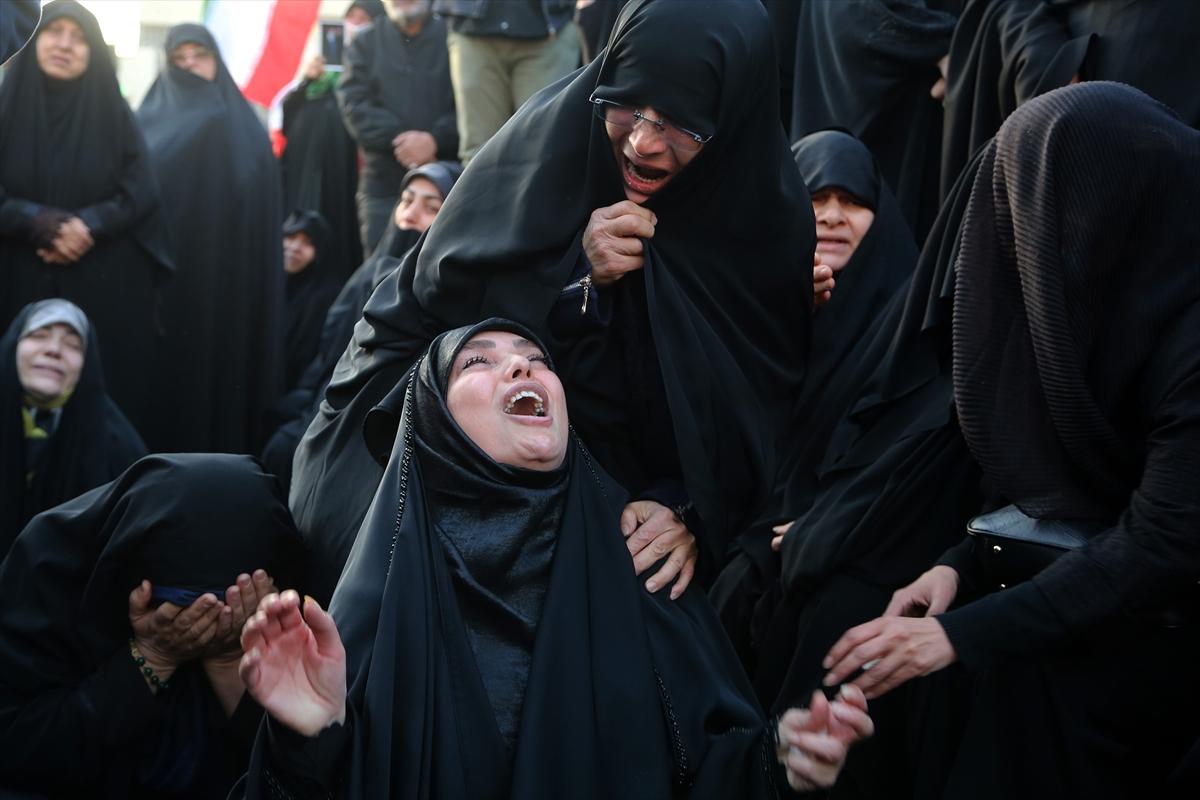
Protests in Iran following Hamaney’s death, 1 March 2026 - (Anadolu Ajansı)
On 1 March 2026, Fars News Agency, close to the Islamic Revolutionary Guard Corps, reported based on a source within Hamaney’s office that some of Hamaney’s family members had been killed in the U.S.-Israel strikes.
The report stated that during the attack on the area housing Hamaney’s residence and office, his daughter, son-in-law, grandson, and one of his daughters-in-law were killed.
On 2 March 2026, semi-official Tasnim News Agency, known for its close ties to the Islamic Revolutionary Guard Corps, broadcast footage from an Iranian state television program to announce that Hamaney’s wife, who had been receiving intensive care in a hospital, had also died.
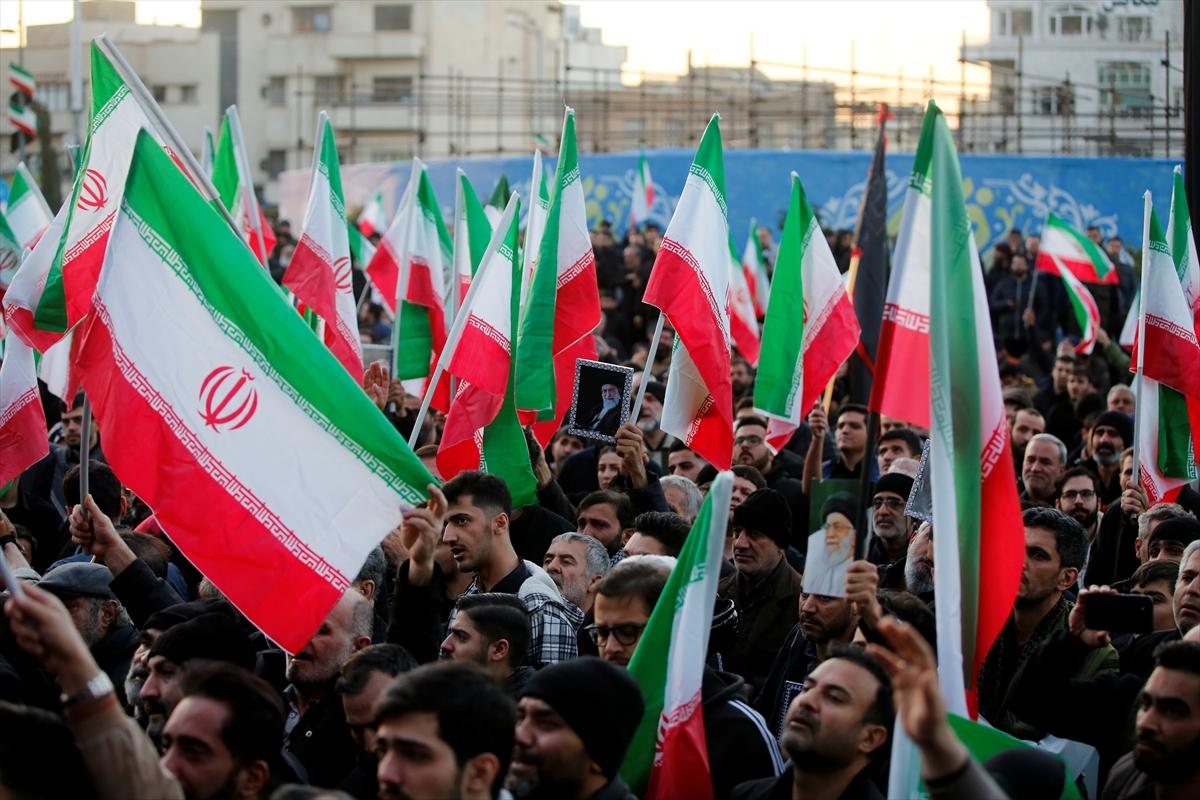
Protests in Iran following Hamaney’s death, 1 March 2026 - (Anadolu Ajansı)
Prior to the operation on 28 February 2026, U.S. and Israeli intelligence agencies closely monitored Iranian leader Ayatollah Ali Hamaney for months. According to a CNN report based on five knowledgeable officials, including from the U.S. Central Intelligence Agency (CIA), U.S. and Israeli intelligence units tracked Hamaney’s daily routines, contacts, communication methods, and potential evacuation points in the event of an attack.
Officials stated that intelligence units monitored not only Hamaney but also Iran’s top political and military officials. It was reported that since these individuals rarely gathered in the same place, the timing of the operation was carefully awaited.
According to intelligence assessments, during the surveillance period, it was determined that Hamaney felt safer during daytime hours and relaxed his security protocols during this time. Therefore, the attack, originally planned for nighttime, was shifted to the early morning hours.
Intelligence sources indicated that the Saturday morning meeting planned by senior Iranian officials at the leadership complex in Tehran, which housed the leader’s office, the presidency, and national security units, was assessed as an “opportunity.”
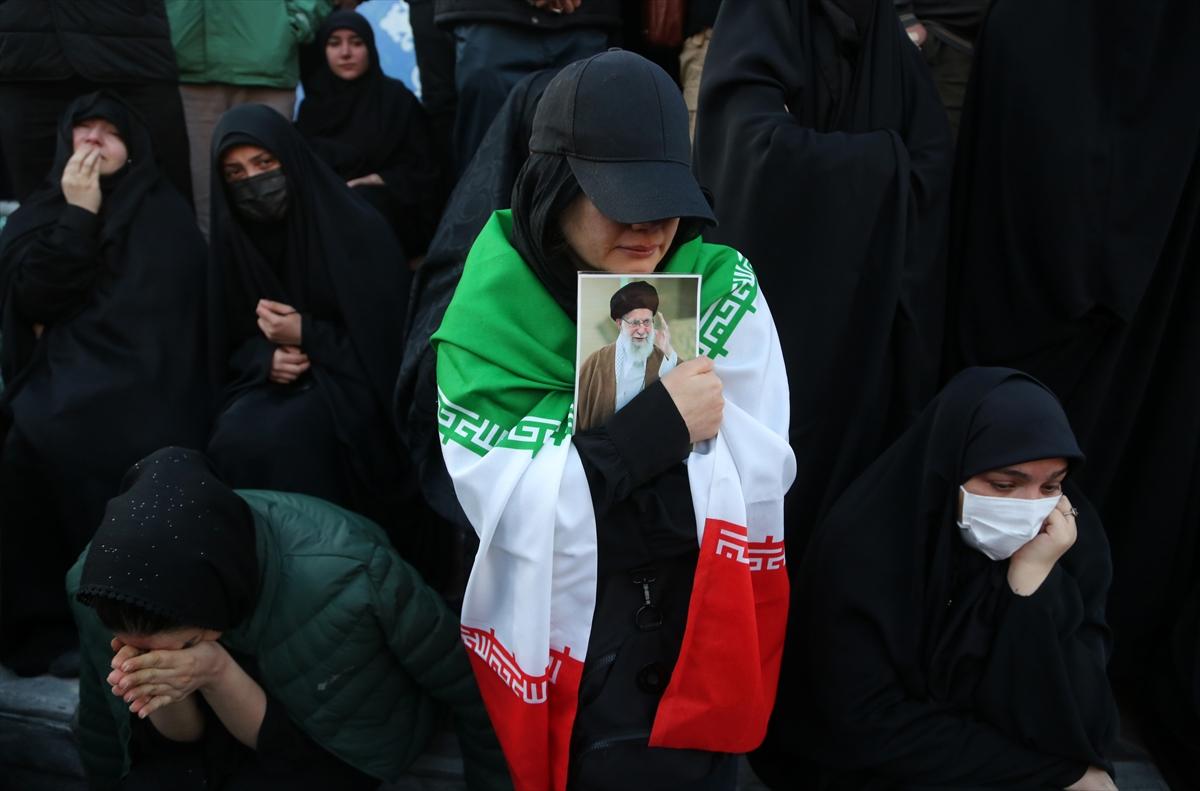
Protests in Iran following Hamaney’s death, 1 March 2026 - (Anadolu Ajansı)
According to security sources, the preparation phase of the operation gained momentum after Israeli Prime Minister Benjamin Netanyahu visited U.S. President Donald Trump at his Mar-a-Lago estate in Florida in December 2025. It was reported that during the meeting, Netanyahu shared intelligence indicating that Iran was advancing its ballistic missile program and attempting to revive its nuclear capabilities. It was also reported that Trump pledged support for Israeli military strikes targeting Iran’s missile facilities.
Following Iranian state television’s announcement on 1 March 2026 that Ayatollah Ali Hamaney had been killed in the U.S.-Israel attack, demonstrations were held in many regions of the country.
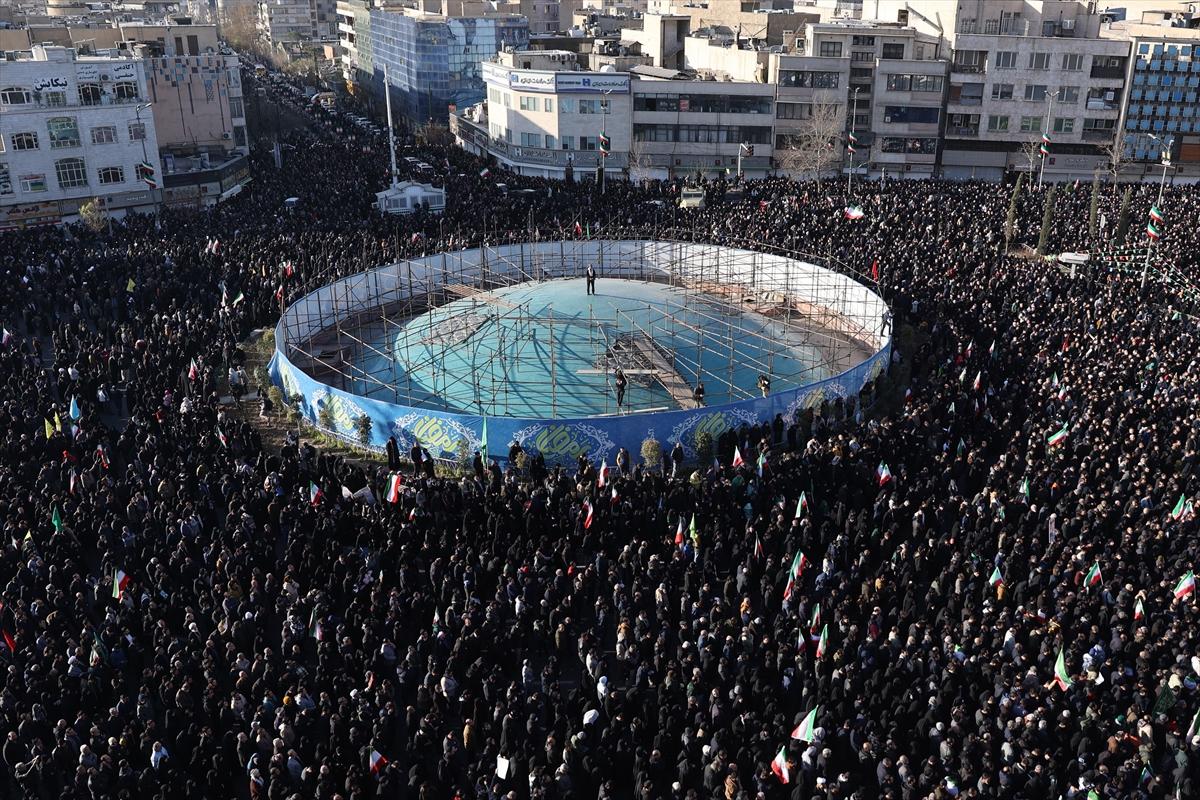
Protests in Iran following Hamaney’s death, 1 March 2026 - (Anadolu Ajansı)
According to Iranian media, crowds in various cities took to the streets carrying Iranian flags. In the capital Tehran, large crowds gathered at Revolution Square, chanting anti-U.S. and anti-Israel slogans while holding Iranian flags and posters of Hamaney. In Qom, hundreds gathered at the shrine of Fatima Masumeh to protest against the U.S. and Israel.
In Mashhad, black flags were raised over the dome of the Imam Reza Shrine. It was reported that Iranians visiting the shrine wept over Hamaney’s death. Memorials and mourning gatherings were held in many cities across the country.
Following Hamaney’s death, 40 days of national mourning were declared throughout . In this context, the flag of the Islamic Republic of in Istanbul was lowered to half-mast.
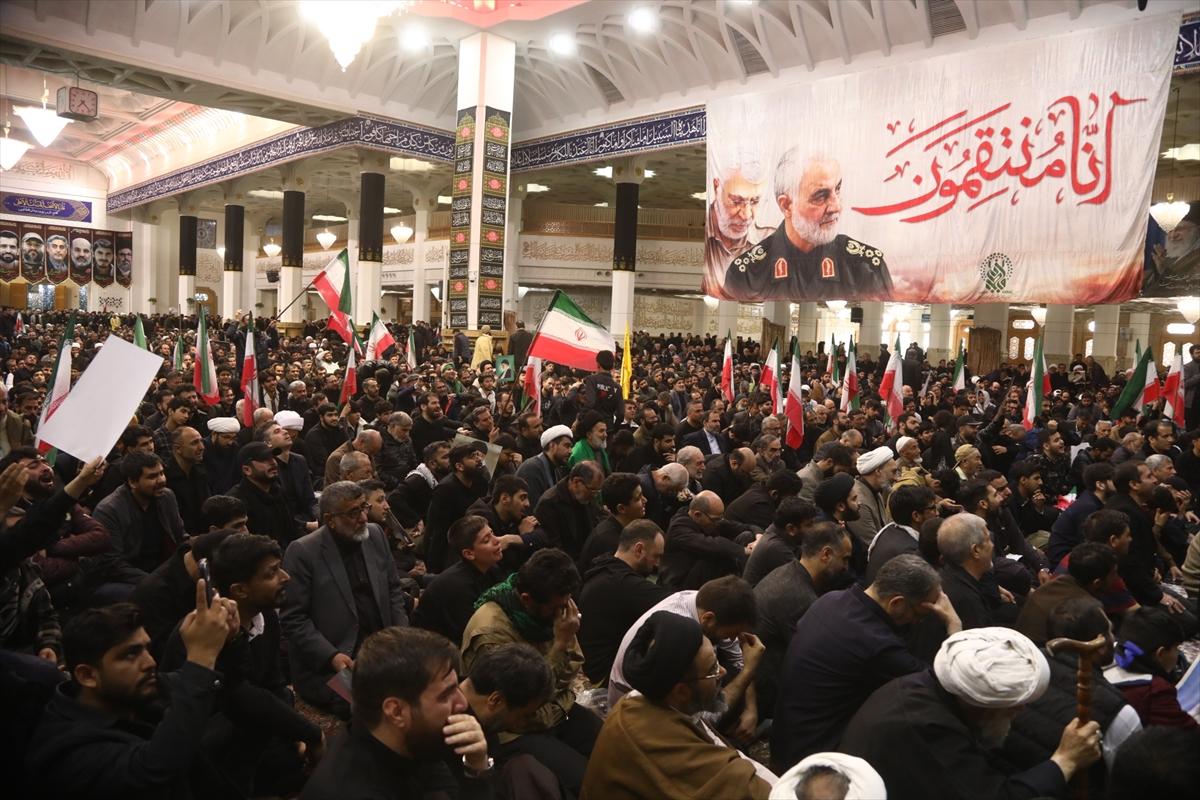
Protests in Iran following Hamaney’s death, 1 March 2026 - (Anadolu Ajansı)
Following Hamaney’s death, Iran’s constitutional succession mechanism was activated. In , the authority to appoint a new leader, who holds the highest state office of “Vali-e Faqih,” rests with the Assembly of Experts.
The Assembly of Experts (Majles-e Khobregan) is the constitutional body responsible for selecting and overseeing the country’s new leader. Following Hamaney’s death in the joint U.S.-Israel air strike, the process to appoint a new leader began.
According to Article 111 of the Iranian Constitution, in the event of the leader’s death, resignation, or removal from office, the leadership duties are temporarily assumed by a council of three individuals. The council includes President Masoud Pezeshkian, Head of the Judiciary Gholam-Hossein Mohseni-Ejei, and a religious figure selected by the Guardian Council. Ayatollah Ali Riahi was designated for this role. The interim Leadership Council collectively performs the duties of the Vali-e Faqih until a new leader is elected.
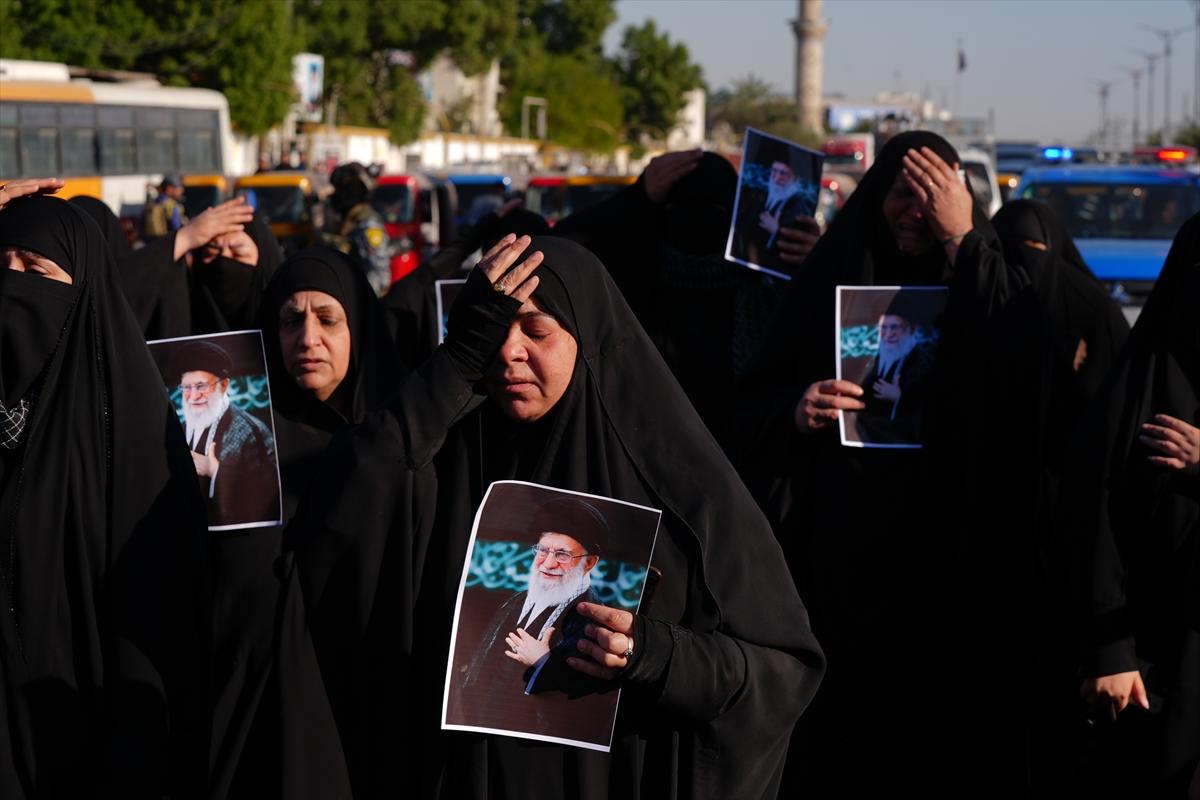
Protests in Iran following Hamaney’s death, 1 March 2026 - (Anadolu Ajansı)
On 1 March 2026, the Islamic Revolutionary Guard Corps issued a statement following Hamaney’s death. The statement announced that a retaliatory strike against Israel and U.S. bases in the region would be launched “in the near future.”
Following the announcement that Iranian leader Ayatollah Ali Hamaney had been killed in the U.S.-Israel attack, demonstrations were held across Pakistan.
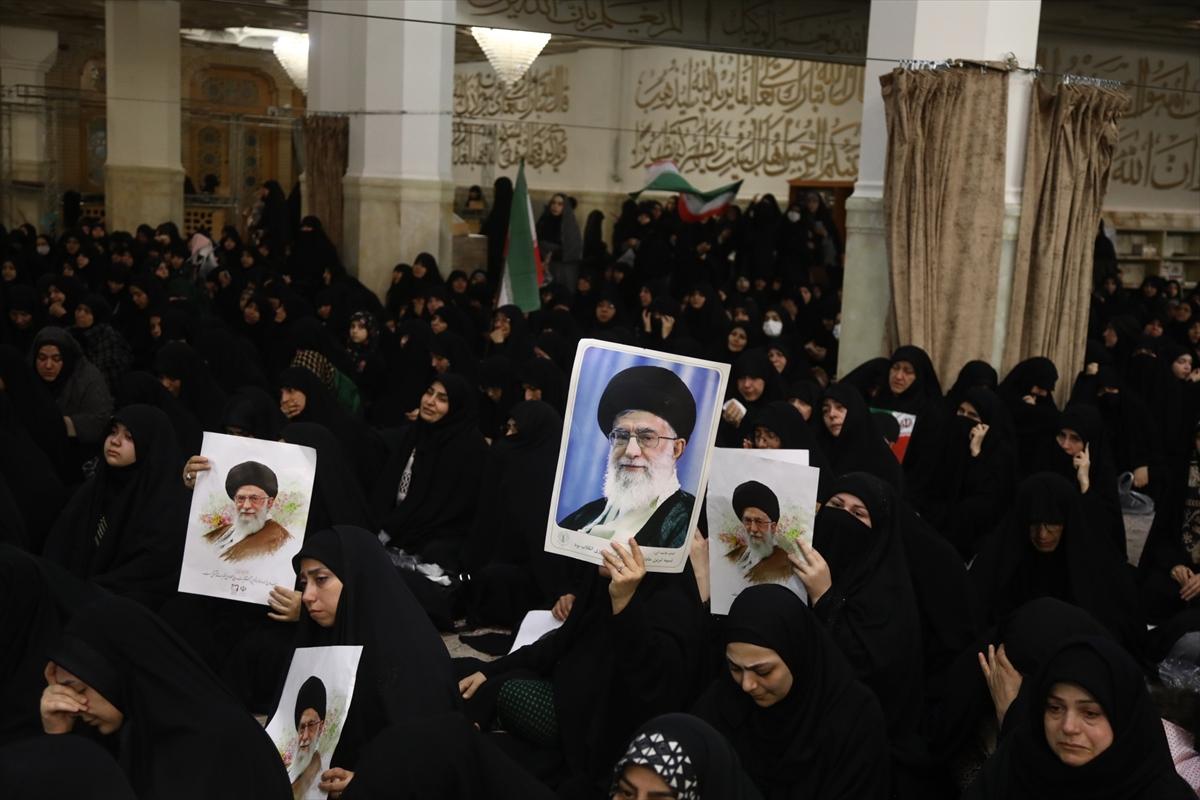
Protests in Iran following Hamaney’s death, 1 March 2026 - (Anadolu Ajansı)
In addition to the capital Islamabad, demonstrations protesting the U.S. and Israeli attacks on were held in Karachi, Lahore, Peshawar, and Quetta. It was reported that anti-U.S. and anti-Israel slogans were chanted during the protests.
Protests were also held in the northern region of Gilgit-Baltistan. According to a report citing Dawn newspaper, protests in the region intensified following Hamaney’s killing.
In Karachi, security forces intervened as protesters attempted to enter the U.S. Consulate, resulting in 10 deaths and 32 injuries. During protests in Islamabad, clashes between demonstrators and police resulted in at least two deaths and over 30 injuries. In Gilgit-Baltistan, protests targeting United Nations (UN) offices resulted in 12 deaths and over 80 injuries.
In Skardu, Gilgit-Baltistan, a curfew was imposed due to the protests. The Gilgit-Baltistan police announced that the curfew would last for three days.
It was reported that protesters attacked UN offices in the region, setting fire to a school and a police station. It was also reported that shops, markets, and commercial centers remained closed and commercial activities were suspended.
Authorities reported that military units had been deployed in Skardu and Gilgit. All foreign tourists in the region were evacuated to safe areas, and some roads were closed to traffic for security reasons.
Following the attempt to enter the U.S. Consulate in Karachi, it was reported that security measures were heightened at U.S. diplomatic missions. It was stated that some activities at U.S. diplomatic missions in Pakistan were restricted and movement restrictions were imposed on personnel. The U.S. Consulate in Peshawar was temporarily suspended, and some visa appointments were canceled.
On 1 March 2026, a group of demonstrators in the Iraqi capital Baghdad gathered in front of the Green Zone, where the U.S. Embassy is located, to protest the killing of Iranian leader Ayatollah Ali Hamaney.
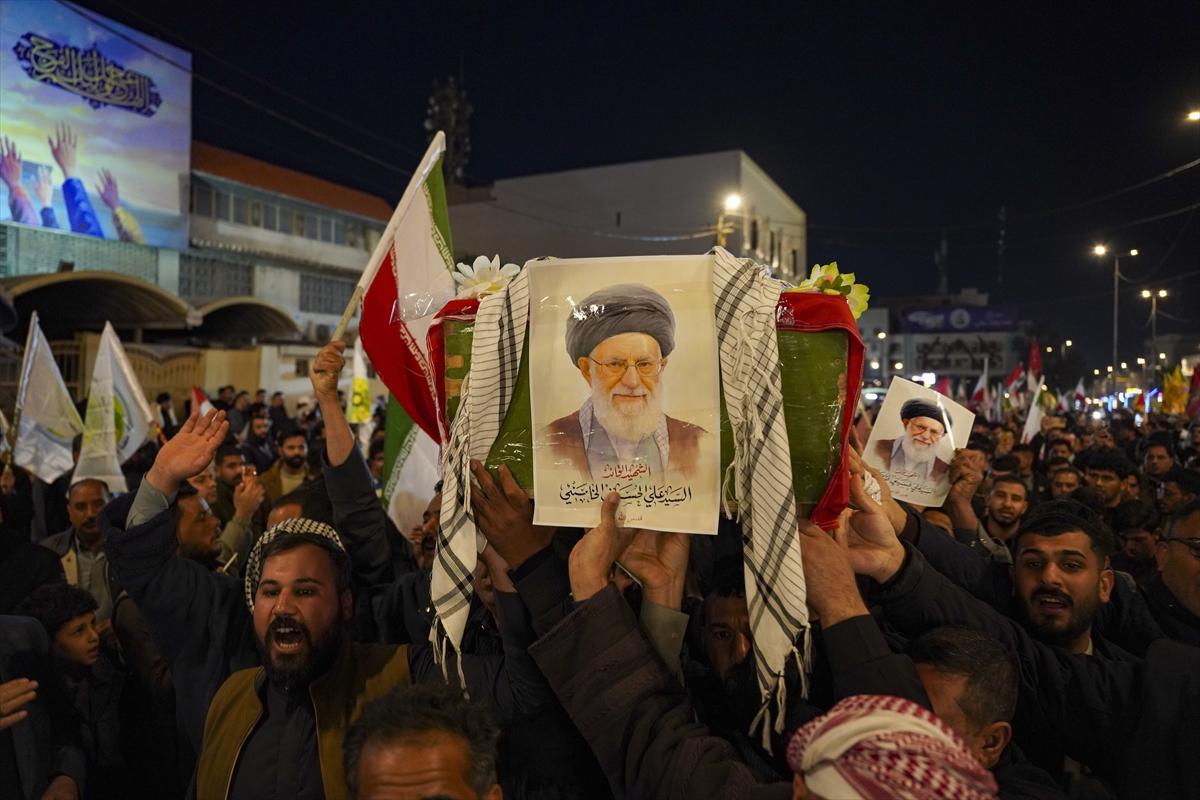
Protests in Iraq following Hamaney’s death, 1 March 2026 - (Anadolu Ajansı)
The demonstrators, chanting anti-U.S. slogans, attempted to enter the closed Green Zone. Iraqi security forces used sound bombs and tear gas to disperse the protesters.
Intensive security measures were reported in the Green Zone, which houses government buildings, particularly around the U.S. Embassy.
Protests were also held in the Iraqi cities of Najaf and Basra.
On 1 March, thousands of people gathered in southern Beirut, the capital of Lebanon, to protest the death of Iranian leader Ayatollah Ali Hamaney in the U.S.-Israel attacks.
The protesters carried portraits of Ayatollah Ruhollah Khomeini and flags of and Hezbollah. The crowd chanted anti-Israel and anti-U.S. slogans.
On 1 March 2026, in Indian-administered Jammu and Kashmir, protests were held in response to the killing of Iranian leader Ayatollah Ali Hamaney in the U.S.-Israel attacks.
According to Indian media reports, large numbers of people took to the streets in Srinagar, Budgam, and Bandipora to protest against the U.S. and Israeli attacks on .
In Srinagar, demonstrators carried black flags and photographs of Hamaney while chanting anti-U.S. and anti-Israel slogans. The protesters described Hamaney’s death as a “historic tragedy” and “martyrdom.”
Jammu and Kashmir Chief Minister Omar Abdullah, in a social media statement, said he was following developments in and reports of Hamaney’s killing “with deep concern.” Abdullah appealed to the people of the region for calm and restraint, urging all communities to preserve peace and avoid actions that would escalate tensions.
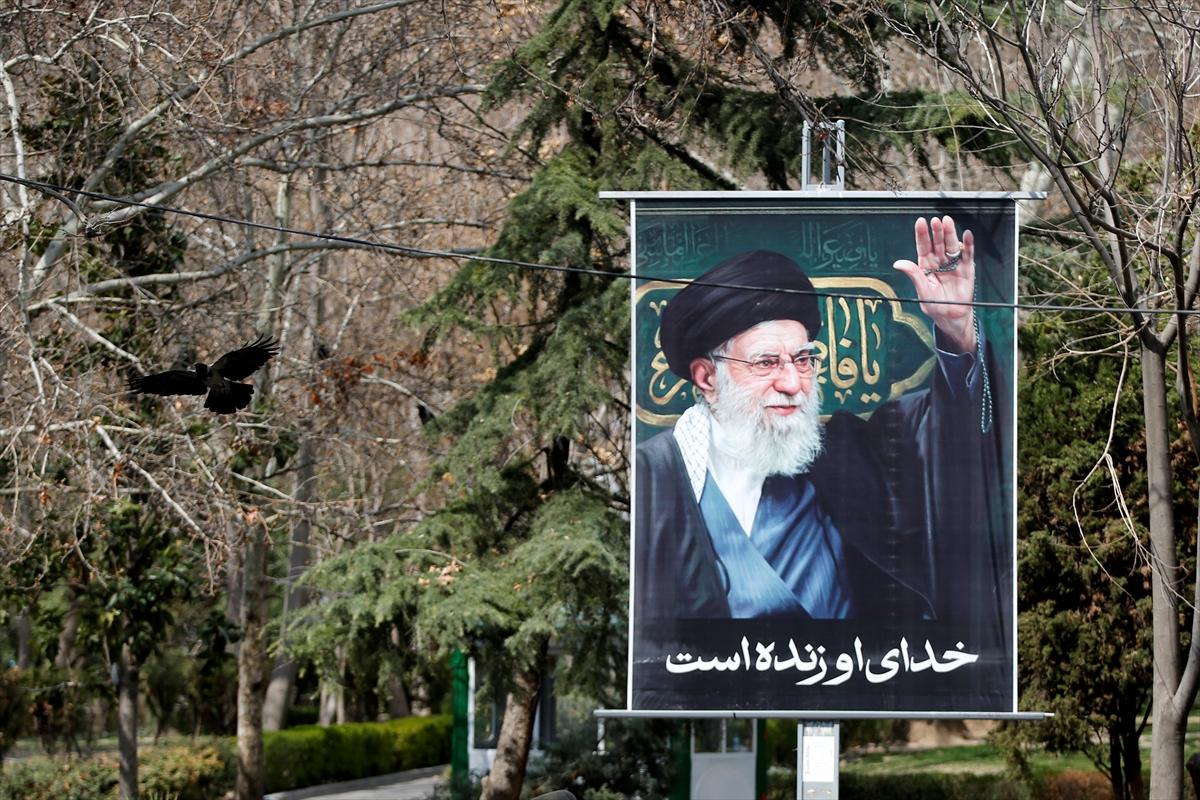
Hamaney posters displayed on streets of Tehran, 2 March 2026 - (Anadolu Ajansı)
On 1 March, Russian President Vladimir Putin issued a condolence message following the death of Iranian leader Ayatollah Ali Hamaney in the U.S.-Israel attacks. According to a statement from the Kremlin, Putin sent a telegram to Iranian President Masoud Pezeshkian expressing condolences over Hamaney’s death.
In his telegram, Putin described Hamaney as a “distinguished statesman” and noted his significant contributions to relations between Russia and .
Putin added: “Please accept my condolences for the death of Iranian leader Ayatollah Ali Hamaney and his family members, due to the cruel violation of all norms of human morality and international law. Please convey my sincere condolences and support to the Hamaney family and friends, the government and people of .”
European Commission President Ursula von der Leyen issued a statement regarding the death of Iranian leader Ayatollah Ali Hamaney in the U.S.-Israel attacks.
In a social media post, von der Leyen stated that “a new hope has emerged for the Iranian people, but this also carries the risk of instability in the region.”
She emphasized that the development could escalate tensions in the region and warned of the potential for a spiral of violence. Von der Leyen noted that the EU was in contact with regional partners to ensure stability and security.
Von der Leyen also reported having spoken by phone with King Abdullah II of Jordan, stating that Amman was an important actor and would continue to play a key role in the future.
EU High Representative for Foreign Affairs and Security Policy Kaja Kallas also stated that Hamaney’s death marked one of the “defining moments” in the country’s history. Kallas said: “What comes next is uncertain. But there is now a clear path toward a different Iran, one that its people can shape with greater freedom.”
Kallas also noted that the EU was in contact with regional partners, including countries affected by Iran’s missile strikes following the U.S.-Israel attacks.
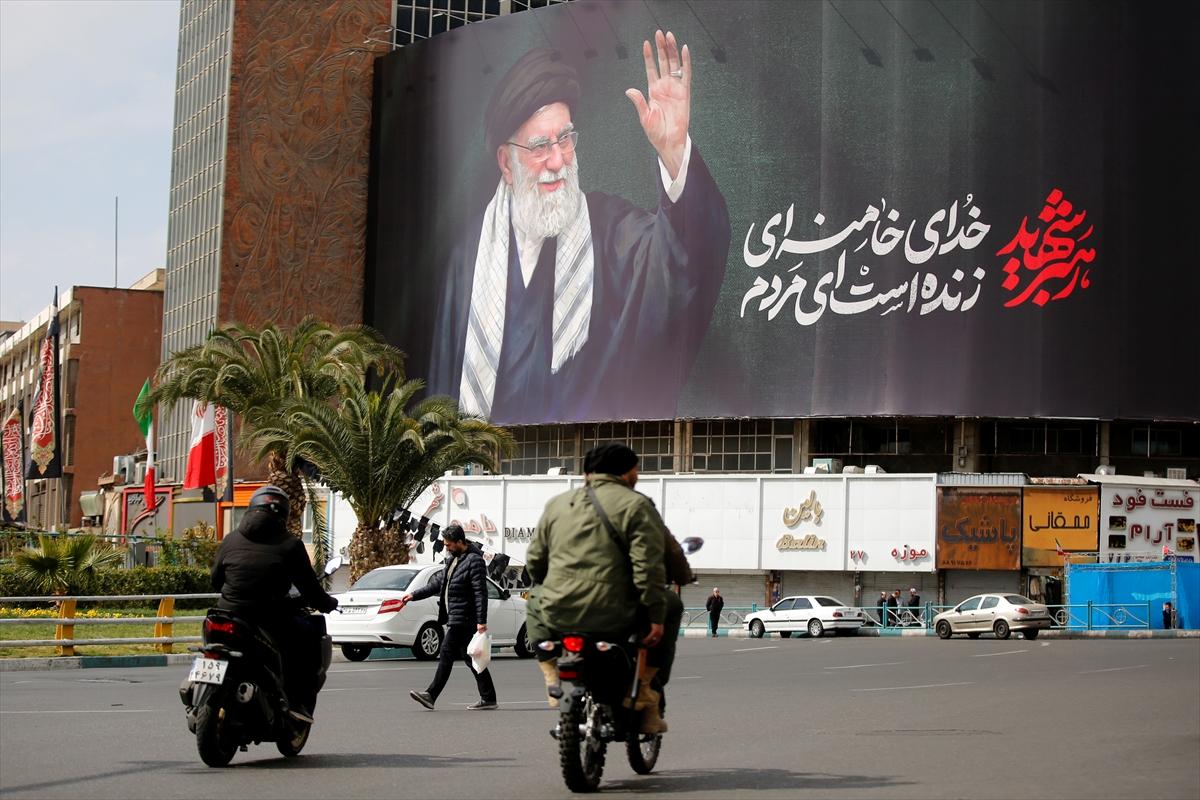
Hamaney posters displayed on streets of Tehran, 2 March 2026 - (Anadolu Ajansı)
Chinese Foreign Minister Wang Yi held a phone call with Russian Foreign Minister Sergey Lavrov. During the call, it was stated that the U.S. and Israeli attacks on , conducted while negotiations were ongoing, violated international law and fundamental norms of international relations.
Wang Yi said: “The killing of a leader of a sovereign state and incitement to regime change are unacceptable.” Wang noted that the conflict had spilled over into the Gulf region and that the situation in the Middle East had been pushed to a dangerous point, calling for an immediate halt to military actions.
Wang Yi emphasized that China upholds the purposes and principles of the United Nations Charter and opposes the use of force in international relations. He called on all parties to defend peace and return to dialogue and negotiations.
Wang Yi stated that a unified response to unilateral actions was necessary, saying: “Attacking sovereign states without approval from the UN Security Council undermines the foundation of peace established after World War II. The international community must raise a clear and firm voice against the world’s regression into jungle law.”
Russian Foreign Minister Lavrov also stated during the call that the U.S. and Israeli attacks on had damaged stability in the Middle East and affirmed that Russia shared China’s position. Lavrov indicated that Russia was prepared to call for an end to the war and a return to diplomatic negotiations through platforms such as the United Nations and the Shanghai Cooperation Organization.
In a written statement by China’s Ministry of Foreign Affairs, it was stated that Hamaney’s killing violated fundamental norms of international relations and contravened the purposes and principles of the United Nations Charter. The statement called for an immediate end to military operations, prevention of further escalation of tensions, and joint efforts to preserve peace and stability in the Middle East and the world.
Azerbaijani President Ilham Aliyev sent a condolence message to Iranian President Masoud Pezeshkian for the death of Iranian leader Ayatollah Ali Hamaney in the U.S.-Israel attacks.
According to a statement from the Azerbaijani Presidency, Aliyev expressed deep sorrow over Hamaney’s death and said: “In light of this heavy loss, I extend my deepest condolences to you, the family of the deceased, and our dear Iranian people, and wish you patience and resilience. Ayatollah Ali Hamaney played a significant role in the life of the Iranian state and society for many years and held a special place in the country’s political and religious life. His death is a great loss for Iran. On this difficult day, I wish peace, stability, and tranquility to our dear and brotherly Iranian people. May God grant him mercy.””
Pakistani Prime Minister Shehbaz Sharif issued a condolence message for Iranian leader Ayatollah Ali Hamaney, who was killed in the U.S.-Israel attacks.
In his statement, Sharif said: “Pakistan is also concerned about the violation of international law norms. It has long been a tradition that leaders of states or governments should not be targeted.”
Sharif also held a phone call with King Abdullah II of Jordan. During the call, they discussed the rising tensions caused by Israel’s attacks on and Iran’s retaliatory strikes against Israel as well as other regional countries including Qatar, the United Arab Emirates, and Bahrain. Sharif urged all parties to exercise restraint, engage in dialogue, and reduce tensions. He affirmed Pakistan’s support for Jordan and for restoring peace in the region.
In a separate call with Bahraini King Hamad bin Isa Al Khalifa, Sharif reaffirmed Pakistan’s solidarity with the Bahraini people and called for dialogue, diplomacy, and respect for international law.
On 1 March, Hezbollah and Hamas issued condolence messages for Iranian leader Ayatollah Ali Hamaney, who was killed in the U.S.-Israel attacks. In a written statement, Hezbollah Secretary-General Naim Qassem described Hamaney’s death as a “great loss” and expressed deep sorrow. Qassem labeled the targeting of Hamaney as an “assassination” and a “grave crime,” and extended condolences to the Iranian people and the “Islamic world.” He also affirmed Hezbollah’s commitment to “resist the attacks.”
Hamas also issued a written condolence message regarding Hamaney’s death. The statement confirmed that Hamaney was killed in the Israeli and U.S. attacks and extended condolences to the Iranian government and people. Hamas emphasized solidarity with Iran and stated that Hamaney’s killing threatened regional security and stability.
Malaysian Prime Minister Anwar Ibrahim, in a social media statement, said that Hamaney’s killing had brought the Middle East “to the brink of serious and persistent instability.”
In his statement, Anwar Ibrahim said: “Those who approve of (Hamaney’s) death must be aware of the consequences of these actions. Existential threats rarely produce predictable responses. The deliberate targeting of a state leader sets a dangerous precedent and weakens the norms and principles that support international law.”
Calling on Iran to respond with restraint, Anwar said: “Malaysia calls for an immediate ceasefire, protection of civilians, and a return to serious dialogue. Crises cannot be resolved by force. Diplomacy, restraint, and political will are required.”
Anwar also expressed concern for the safety of Malaysians in the region and confirmed that necessary measures had been taken to protect them. He noted that the government would assess the economic impact on Malaysia of developments such as regional airspace closures and restrictions on freedom of navigation in the Strait of Hormuz.
Cuban President Miguel Díaz-Canel issued a condolence message for Iranian leader Ayatollah Ali Hamaney, who was killed in the U.S.-Israel attacks.
In a social media post, Díaz-Canel expressed condolences for Hamaney and conveyed his sympathies to Iranian President Masoud Pezeshkian.
Describing the U.S.-Israel attack as a “hate-inciting act,” Díaz-Canel said: “It constitutes a wanton violation of all norms of international law and human dignity. (Hamaney) will be remembered in Cuba as a respected statesman and leader of his people, and as a figure who contributed to the development of friendly relations between Cuba and .”
President Recep Tayyip Erdoğan issued a condolence message for Iranian leader Ayatollah Ali Hamaney, who was killed in the U.S.-Israel attacks.
In a social media post, President Erdoğan expressed sorrow over the death of the religious leader of neighboring country , and wrote: “I pray for God’s mercy upon Mr. Hamaney and extend condolences to our brotherly Iranian people. On behalf of my country and nation, I convey my sympathies. Together with the Iranian people, we will persistently strive for our friends and brothers in the region to once again attain the peace and stability they deserve, for the end of the conflict in our region, and for a return to diplomacy.”
According to a statement from the Office of the Prime Minister of Armenia, Prime Minister Nikol Pashinyan said he was closely following developments in with great concern and extended condolences for the loss of life among Iran’s leadership and citizens.
In his message, Pashinyan said he would always remember Hamaney’s personal role in the development of Yerevan-Tehran relations and added: “In this difficult time, we sincerely wish for the swift restoration of peace and stability in the Middle East. On this occasion, I wish you patience and strength, and peace and resilience to our friend and neighbor, the Iranian people.”
Meanwhile, according to a statement from Armenia’s Ministry of Foreign Affairs, Foreign Minister Ararat Mirzoyan held a phone call with Iranian Foreign Minister Abbas Araghchi. Mirzoyan conveyed condolences to the families of those killed in Iran and emphasized the importance of reducing tensions and resolving the crisis through peaceful means.
Acting Afghan Foreign Minister Amir Khan Muttaqi held a phone call with Iranian Foreign Minister Abbas Araghchi. During the call, Muttaqi condemned the aggressive actions of the U.S. and Israel against , rejected violations of national sovereignty and territorial integrity, and expressed condolences for Iranian leader Ayatollah Ali Hamaney, who was killed in the U.S.-Israel attacks. He called for an immediate end to tensions and a return to diplomatic channels. It was reported that Araghchi appreciated Afghanistan’s stance toward .
Mehmet Seman Ağa, President of the Iraqi Turkmen Front (ITF), issued a condolence message for Iranian leader Ayatollah Ali Hamaney, who was killed in the U.S.-Israel attacks. In his written statement, Ağa expressed condolences for Hamaney, extended sympathies to the Iranian people, and said: “May God grant mercy to Hamaney, and condolences to the Muslim world and the Iranian people. On behalf of Iraqi Turkmen, I convey my condolences. We are deeply saddened by the loss of life and injuries caused by the attacks on . May God grant mercy to the deceased and swift recovery to the injured. In this moment when the region most needs peace and stability, the ongoing conflicts have had negative repercussions. We hope this hostile environment ends soon.”
Al Jazeera. “Iran Confirms Supreme Leader Ali Khamenei Dead After US-Israeli Attacks.” Al Jazeera, February 28, 2026. Accessed March 3, 2026. https://www.aljazeera.com/news/2026/2/28/irans-supreme-leader-ali-khamenei-killed-in-us-israeli-attacks-reports
Al Jazeera. “Protests Across India Against Khamenei’s Killing.” Al Jazeera, March 2, 2026. Accessed March 3, 2026. https://www.aljazeera.com/gallery/2026/3/2/protests-across-india-against-khameneis-killing
Al Jazeera. “Thousands in Iran Mourn Khamenei’s Killing.” Al Jazeera, March 1, 2026. Accessed March 3, 2026. https://www.aljazeera.com/gallery/2026/3/1/thousands-in-iran-mourn-khameneis-killing
Al Jazeera. “Trump: Khamenei Dead After US Strikes on Iran.” Al Jazeera Video Newsfeed, February 28, 2026. Accessed March 3, 2026. https://www.aljazeera.com/video/newsfeed/2026/2/28/trump-khamenei-dead-after-us-strikes-iran
Anadolu Ajansı. "İran Lideri Hamaney, ABD-İsrail Saldırısında Hayatını Kaybetti." Accessed March 3, 2026. https://www.aa.com.tr/tr/dunya/iran-lideri-hamaney-abd-israil-saldirisinda-hayatini-kaybetti/3844367
Anadolu Ajansı. “Hamaney ve İran Yönetimine Yönelik Aylar Süren İstihbarat Takibinin Ayrıntıları Ortaya Çıktı.” Accessed March 3, 2026. https://www.aa.com.tr/tr/dunya/hamaney-ve-iran-yonetimine-yonelik-aylar-suren-istihbarat-takibinin-ayrintilari-ortaya-cikti/3845969
Anadolu Ajansı. “Hamaney’in Ardından İran’ın Yeni Liderliği İçin Bazı İsimler Gündeme Geldi.” Accessed March 3, 2026. https://www.aa.com.tr/tr/dunya/hamaney-in-ardindan-iran-in-yeni-liderligi-icin-bazi-isimler-gundeme-geldi/3845041
Anadolu Ajansı. “Restrictions Continue in Northern Pakistan After Deadly Anti-US Protests Over Killing of Iran’s Khamenei.” Anadolu Ajansı, March 3, 2026. Accessed March 3, 2026. https://www.aa.com.tr/en/asia-pacific/restrictions-continue-in-northern-pakistan-after-deadly-anti-us-protests-over-killing-of-iran-s-khamenei/3847843
Associated Press. “Iranian State Media Confirms Death of Supreme Leader Ayatollah Ali Khamenei.” AP News, February 28, 2026. Accessed March 3, 2026. https://apnews.com/live/live-updates-israel-iran-february-28-2026
CNN. "What We Know About The Aeath of Iranian Supreme Leader Khamenei." CNN, February 28, 2026. Accessed March 3, 2026. https://edition.cnn.com/2026/02/28/middleeast/ayatollah-khamenei-iran-killed-airstrike-intl-latam
Reuters. “Intelligence Assessment Warns Iranian Attacks on US Following Khamenei’s Death.” Reuters, March 2, 2026. Accessed March 3, 2026. https://www.reuters.com/world/middle-east/intelligence-assessment-warns-iranian-attacks-us-following-khameneis-death-2026-03-02/

No Discussion Added Yet
Start discussion for "Hamas Assassination (2026)" article
Biography of Ali Hamaney
Beginning of the Attacks and Allegations of Assassination Attempt (28 February 2026)
Attacks of 28 February 2026
Initial Allegations in Israeli Media
Statements by Iranian Authorities
Claim of 30 Bombs Dropped on Residence
Claim that Funeral Photos Were Shown to Netanyahu
Statements by U.S. President Donald Trump
Announcement of Hamaney’s Death (1 March 2026)
Statements by U.S. President Donald Trump
Iranian State Television’s Death Announcement
Death of Family Members
Intelligence Process Prior to the Operation
Internal Developments in
Protest Demonstrations
Succession Process for Leadership
Statement by the Islamic Revolutionary Guard Corps
Protests in Pakistan
Curfew Imposed
U.S. Diplomatic Measures
Developments in Iraq
Protests in Lebanon
Protests in Jammu and Kashmir
International Reactions and Condolence Messages
Russian Federation
European Union
People’s Republic of China
Republic of Azerbaijan
Islamic Republic of Pakistan
Hezbollah and Hamas
Malaysia
Cuba
Republic of Türkiye
Armenia
Afghanistan
Iraqi Turkmen Front