

This article was automatically translated from the original Turkish version.
+2 More
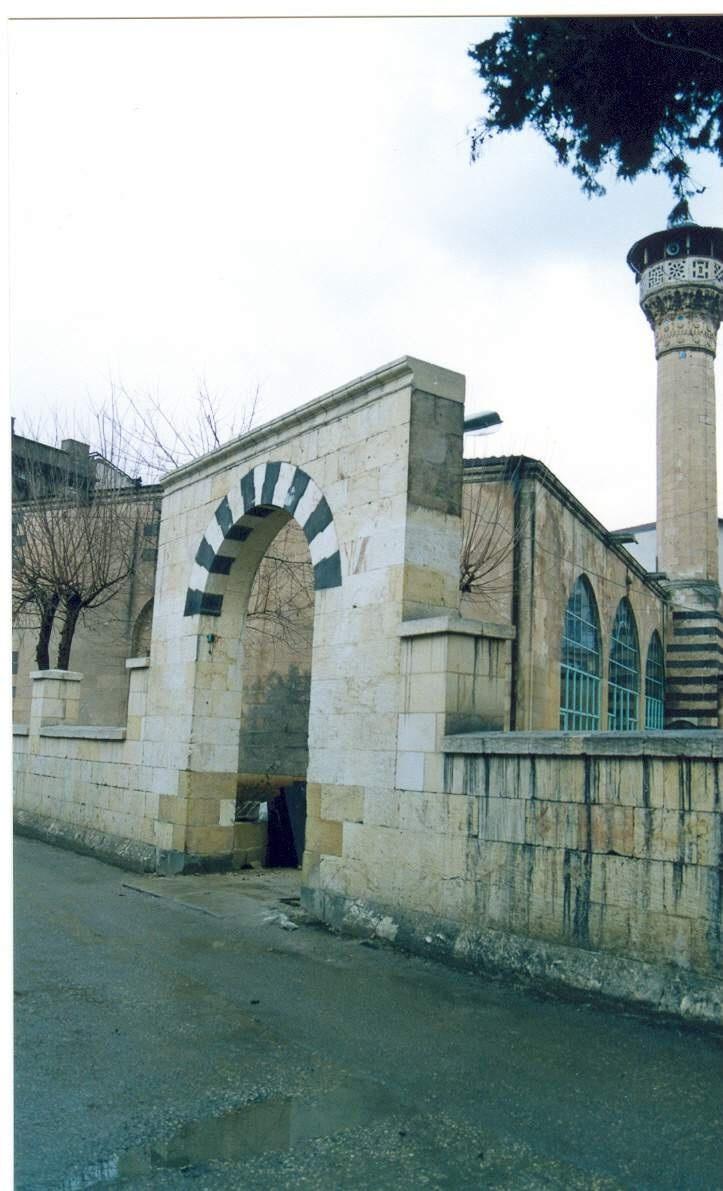
Handan Bey Camii, Gaziantep province’s Şahinbey district, within the boundaries of Karagöz Neighborhood, is a historical place of worship. The structure, also referred to in sources as “Handaniye Camii,” is situated within the urban fabric of the Ottoman period and holds significance from an urban historical perspective together with its surrounding environment. The mosque’s name derives from Handan Ağa, who is regarded as its founder.
The exact date of construction of the mosque is not known with certainty, but records indicate that it was built in the 16th century and was already in existence by the mid-17th century. Documents from 1647 mention the name of the mosque.
Over time, the structure has undergone various repairs. Evidence suggests that it was largely rebuilt at the end of the 18th century, particularly in 1791. Some elements dating to the original construction period appear to have been altered during this reconstruction.
Regarding its economic structure, it is stated that the mosque included a saraçhane whose revenues were used for its maintenance and needs. This reflects the Ottoman waqf system, under which mosques had income-generating assets.
During the Defense of Antep, the structure suffered damage and became unusable. Subsequent restoration efforts enabled its reopening for worship.
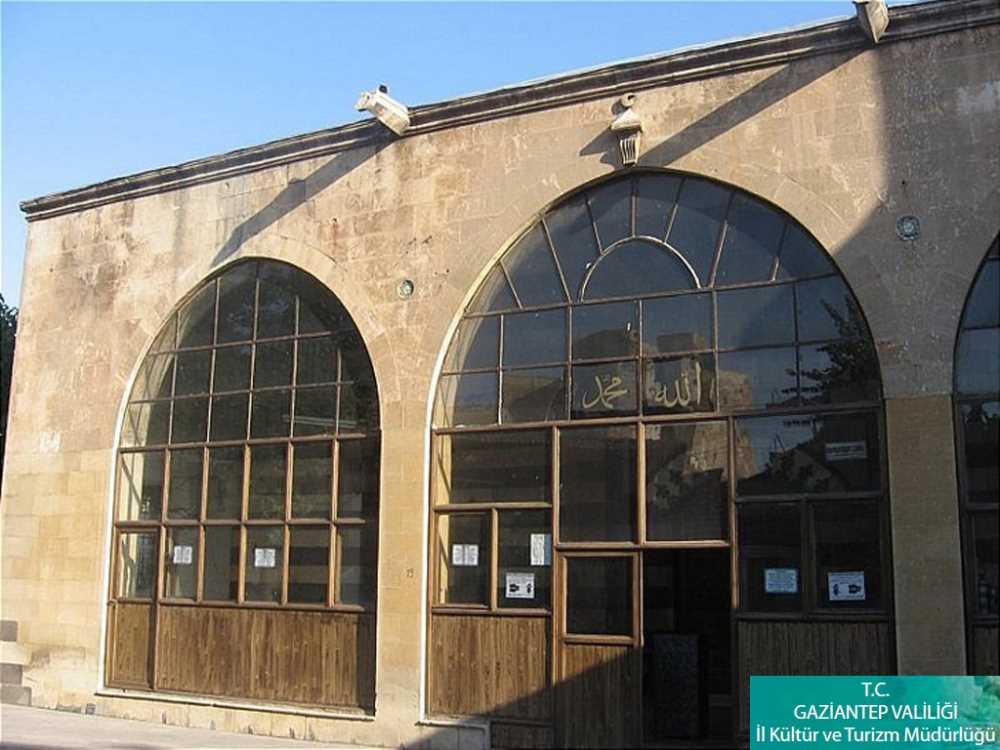
Handan Bey Camii (Kültür Portal)
Handan Bey Camii was constructed with a rectangular plan. The building consists of two naves running parallel to the qibla wall. The interior space is divided into six sections by two central load-bearing piers. These sections are covered by intersecting barrel vaults.
The entrance portal features a projecting design. It is set within a pointed-arch niche containing a flat-arched doorway. This arrangement exemplifies a typical Ottoman mosque entrance design.
Cut stone was used in the construction of the building. The facades feature a striking combination of white and black stone, and red and white marble elements are also incorporated in various places. This material choice reflects the regional architectural character.
The minaret has a polygonal shaft. At the level of the gallery, a muqarnas transition is employed. Geometric decorative patterns adorn the minaret’s surface, executed as part of the stonework.
Wooden elements are prominent in the interior of the mosque. The muezzin’s gallery stands out for its fine woodwork and ornamental details. Calligraphic decorations applied to the wooden surfaces follow specific compositional patterns.
Plant and geometric motifs are combined in these decorations. Motifs include palmettes, rosettes, and stylized plant forms. The compositions are concentrated in certain areas, particularly around the gallery, where they are more pronounced.
The colors and motifs used in the decorative program are repeated in a systematic arrangement and placed symmetrically across surfaces. These wooden embellishments play a significant role in defining the interior character of the mosque.
The plan and vaulting system of the mosque divide the worship space into distinct sections. The central load-bearing piers support structural loads while also contributing to the spatial segmentation. The intersecting barrel vault system forms the ceiling and plays a key role in organizing the interior volume.
The surrounding elements and income-generating units of the building reveal that the mosque functioned not only as a place of worship but also as a waqf complex. The presence of a saraçhane and similar units contributed to the mosque’s economic sustainability.
Having survived various restoration phases, the mosque continues to exist today, preserving its architectural plan, material use, and decorative features.
History
Architectural Features
Interior and Decorative Features
Structural and Functional Features