
+1 More

Hasan Hüsrev Hatemi (12 December 1938, Istanbul – 2 April 2026) was a Turkish physician, academic, poet and writer. He specialized in internal medicine and endocrinology, held academic positions at Istanbul University and Cerrahpaşa Medical Faculty, and produced works in poetry, essays, memoirs and translations. In his poetry, he explored themes of social issues, cultural history and human existence.

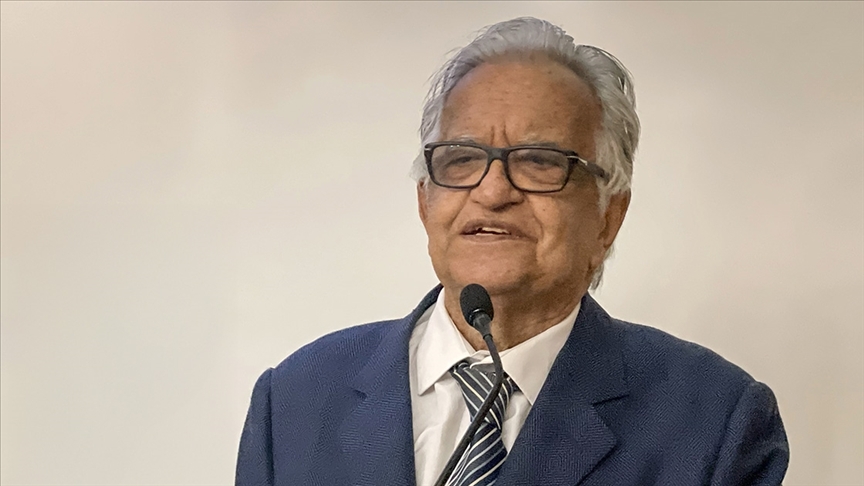
Hasan Hüsrev Hatemi, 2005 - (Anadolu Ajansı)
Hasan Hüsrev Hatemi was born on 12 December 1938 in Istanbul. He occasionally signed his writings and poems as “Hasan Hüsrev” and “Ali Fikret.”【1】
His father, Ali Asgar Hatemi, belonged to a family that migrated from Selmas in Iranian Azerbaijan to Istanbul and worked as a stationer. His mother, Cemile Bilali Hanım, was the daughter of a family that settled in Istanbul between 1896 and 1900 for economic reasons. The family resided in the Modern Apartmanı on Kurtuluş Caddesi in Istanbul along with other family members.【2】
Hatemi’s elder brother was Prof. Dr. Nadir Hatemi, a professor of pediatric diseases who passed away in 1980. His twin brother was the law professor and writer Prof. Dr. Hüseyin Hatemi.
The twin brothers were born in the same house on 12 December 1938. They received their primary through high school education in the same school and class. Due to their use of the Azeri dialect term “ede” as a form of address to each other in their neighborhood, they became known by the nickname “Edeler.”【3】
Hasan Hüsrev Hatemi completed his primary and secondary education in Istanbul. He began his education at Şişli Talat Paşa Primary School and continued at Şişli Middle School; he graduated from Atatürk Boys’ High School in 1956.【4】 During his high school years, he developed an interest in aruz meter and adopted the stance that poetry not written in aruz could not be considered poetry.
He completed his higher education at Istanbul University Faculty of Medicine and graduated in 1962. While a medical student, he met Sezer Göze in 1959, who later became his wife. They married in 1963 and had two children.
After graduation, Hatemi continued his academic work at Istanbul University. He obtained his specialization in internal medicine in 1966, became an associate professor in 1971, and was appointed professor of internal medicine at Cerrahpaşa Medical Faculty in 1978.
From 1982 to 1986 he served as head of the Department of Nuclear Medicine at Cerrahpaşa Medical Faculty. From 1999 to 2002 he headed the Department of Internal Medicine.【5】 He also edited the annual publication Tıp Tarihi Araştırmaları, established in 1986.
He retired in 2006. After retirement, he continued working as a specialist in internal medicine and endocrinology at Alman Hospital. He authored a textbook on endocrinology and contributed significantly to medical education by training numerous students.
Hasan Hüsrev Hatemi began writing his first poems at the age of six and a half to seven, together with his twin brother Hüseyin Hatemi. He published his poems in journals such as Fikir ve Sanatta Hareket, Mavera, Türk Edebiyatı, Dergah, Düş Çınarı and Tarih ve Toplum. His poems and writings also appeared in newspapers including Cumhuriyet, Tercüman, Milliyet and Zaman.
His first poem, “İkbal Gazeli”, won first prize in the 1963 Islam Magazine Poetry Competition. His first poetry book, Eski Kentte Bir Gece, was published in 1968. This was followed by the books Akşam Gümrükçüleri (1972), Şiirler (1984), Lodosçu (1987), Grili Çocuk (1988), Bütün Şiirler (1990), Gün Akşamlıdır (1994), Çengelköy'de Bir Çeng (1996), Şiirler (1968–1990), Şiirler (1990–2000), Karakavak Şiirleri ve On Yıl Öncekiler (2005), Kişver: Son Şiirler, İlk Şiirler (2011), and Şiirler (2013).
In his poetry, Hatemi focused less on personal themes and more on social issues, developing a critical stance. Major themes in his poems included cultural history, geography and the national journey. According to his own words, his dissent was a resistance “against the conditions of human existence, primarily time and death.”
Among the figures who influenced his poetry were Yunus Emre, Hafız-ı Şirazi, Fuzuli, Pir Sultan Abdal, Yahya Kemal, Tevfik Fikret, Cenap Şahabettin, Nazım Hikmet, Attila İlhan and Ece Ayhan. He was closely aligned with Ahmet Haşim in terms of formal characteristics and poetic sensibility, and with Yahya Kemal in his attitude toward history and society.
Hatemi, described as a poet who drew from tradition and enriched his poetry through intertextual relationships, also published a poetry album titled Karakavak. His poem “Grili Çocuk” was set to music by O. Pamir; poems set to music by M. Işık were compiled in the cassette Gün Akşamlıdır.【6】
Hasan Hüsrev Hatemi produced numerous works in the genres of essays and memoirs alongside his poetry. His writings addressed themes of humanity, life, death, fate, belief and Sufism. Major essay collections include Yozlaşmadan Uzlaşmak (1988), Hoşça Bak Zatına (1988), Çelebi, Bizi Unutma (1989), Türk Aydını: Dünü-Bugünü (1991), Baba Ben Druid miyem? (1996), Kimlik Kuyusu (1997), Darülfünun ve Darüşşifa (1998), Aydın, Toplum ve Tarih (1998), Eriyen Mumlar (1998), Dekorlar Kaldı Geride (2008), İl, Dil, Din Üzerine (2010), Bilim Tarihi ve Kültür Yazıları (2013), and Görüntüler ve Görüşler (2014).
His major memoirs include Anıcak Ol Meclisi (2001), Karton Kutudan Güfteler (2002), Anılar: Ömür Süvarisi (2007), Hüsrev Hatemi’den Duyduklarımız (2008), and Tapu Sicil Muhafızının Anıları: Zerrât-ı Tahattur (2014).
Literary scholar Beşir Ayvazoğlu described Hatemi in his work Defterimde 40 Suret (1999) as “an archaeologist of literature who unearthed forgotten values from dusty books and brought them into the light, and a jeweler of memories,” and characterized him as “the custodian of the entire culture’s land registry.”
Hatemi produced various translations, primarily of Mevlana and Ömer Hayyam rubais. His works in this field include Hz. Mevlana’dan Rubailer: Vuslat Denizi (2010) and Rubailer / Ömer Hayyam (2012). Göğe Giden Kervanlar: Mevlâna’dan Deyişler (2006) and Osmanlı İmparatorluğu’ndan Yeni Nizamların Cedreli Türkiye (1988) are compilations.
In 1963, he won first prize in the Islam Magazine Poetry Competition for his poem “İkbal Gazeli.” In 1988, his book Yozlaşmadan Uzlaşmak earned him the Turkish Writers’ Union Essay and Criticism Award. In 1994, his poetry collection Gün Akşamlıdır received the Turkish Writers’ Union “Poet of the Year” Award.【7】
Hatemi was a member of the Turkish Literature Foundation and the Eczacıbaşı Cultural Initiative.
Prof. Dr. Hasan Hüsrev Hatemi passed away on 2 April 2026 at the age of 88. His death was announced to the public via Dergah Publications’ social media account with the message: “Prof. Dr. Hasan Hüsrev Hatemi has departed this transient world. Our elder brother, our friend, our doctor, our companion in suffering, our writer. May the Almighty grant him mercy and peace, and bestow patience upon his family, colleagues, friends and students. May he have been a source of healing for many patients, knowledge for many students, smiles for many people, and eyes for many flowers. Those whom he guided, held by the hand, and shared intimate conversations with are far more numerous. Now all of them carry his burden on the journey to the hereafter. ‘We know well,’ dear brother Hatemi. May your path be clear and your abode paradise.”【8】
[1]
Türk Edebiyatı İsimler Sözlüğü (TEİS), “H. Hüsrev Hatemi,” Erişim 2 Nisan 2026. https://teis.yesevi.edu.tr/madde-detay/hatemi-husrev
[2]
Hüseyin Hatemi, “PROF. DR. HÜSEYİN HATEMİ,” İnönü Üniversitesi Hukuk Fakültesi Dergisi 12, no. 1 (2021): 429–37, https://doi.org/10.21492/inuhfd.962132.
[3]
Hüseyin Hatemi, “PROF. DR. HÜSEYİN HATEMİ,” İnönü Üniversitesi Hukuk Fakültesi Dergisi 12, no. 1 (2021): 429–37, https://doi.org/10.21492/inuhfd.962132.
[4]
Çağrı Yayınları, “Hüsrev Hatemi,” Erişim 2 Nisan 2026, https://www.cagri.com.tr/biyografi/126
[5]
Çağrı Yayınları, “Hüsrev Hatemi,” Erişim 2 Nisan 2026, https://www.cagri.com.tr/biyografi/126
[6]
Türk Edebiyatı İsimler Sözlüğü (TEİS), “H. Hüsrev Hatemi,” Erişim 2 Nisan 2026. https://teis.yesevi.edu.tr/madde-detay/hatemi-husrev
[7]
Türk Edebiyatı İsimler Sözlüğü (TEİS), “H. Hüsrev Hatemi,” Erişim 2 Nisan 2026. https://teis.yesevi.edu.tr/madde-detay/hatemi-husrev
[8]
Anadolu Ajansı, “Prof. Dr. Hasan Hüsrev Hatemi hayatını kaybetti,” 2 Nisan 2026, Erişim 2 Nisan 2026, https://www.aa.com.tr/tr/gundem/prof-dr-hasan-husrev-hatemi-hayatini-kaybetti/3889067#

No Discussion Added Yet
Start discussion for "Hasan Hüsrev Hatemi" article
Birth and Family
Education
Academic Career
Literary Identity and Works
Poetry
Essays, Memoirs and Other Prose Works
Translations and Compilations
Awards
Memberships
Death