


This article was automatically translated from the original Turkish version.
+1 More
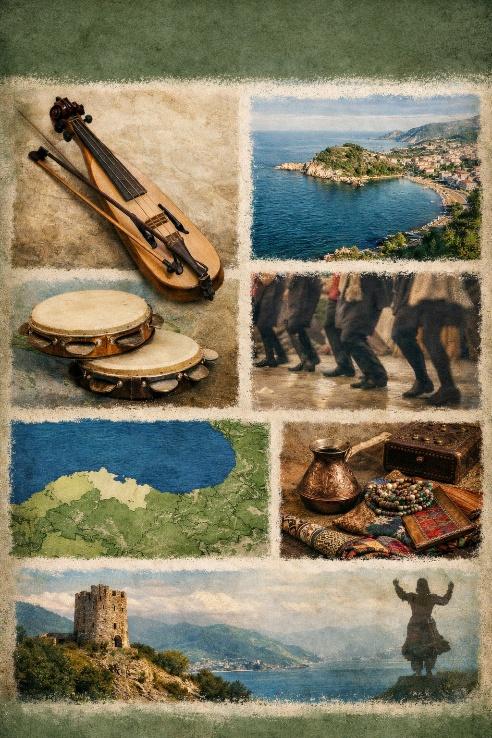
Hasbal Hava (Generated with the Assistance of Artificial Intelligence.)
Function(s) | Cultural identity | ||||||||
|---|---|---|---|---|---|---|---|---|---|
Type(s) | Kemençe melody | ||||||||
Distribution(s) | Black Sea region | ||||||||
Definition(s) | Traditional melodic type | ||||||||
Context | Tuzcuoğlu Melody | ||||||||
Region(s) | Giresun Eastern Black Sea | ||||||||
Hasbal hava is a musical melody type that emerged within the kemençecilik tradition of the Eastern Black Sea Region, particularly associated with the Giresun area【1】. This melody, found within the region’s distinctive oral and instrumental music repertoire, is regarded as one of the important examples of local musical culture.
Tuzcuoğlu - Hasbal Horon Havası (Youtube)
Alongside other melodies produced in the Giresun region such as Tuzcuoğlu Hava and Şırıp Şırıp Hava, Hasbal hava is considered part of the same traditional musical milieu and is regarded as a musically significant composition【2】.
The musical culture of the Giresun region exhibits a deep-rooted traditional structure centered around kemençe performance【3】. This tradition has generated a rich repertoire encompassing both instrumental performance and folk song composition【4】. Hasbal hava emerged as part of this repertoire.
Local kemençe players in the region are not limited to performing regional melodies; they also possess the technical skill to interpret diverse musical styles. This demonstrates that compositions such as Hasbal hava were produced within a highly developed musical tradition, both technically and artistically.
Giresun and especially the Görele area serve as influential centers within Black Sea musical culture【5】. It is noted that the horon and kemençe melodies produced in this region have exerted influence on neighboring provinces. Hasbal hava is part of this network of cultural exchange and is regarded as an element of regional musical circulation.
The regional musical culture has been shaped by influences from other areas while simultaneously influencing surrounding regions. This mutual interaction has contributed to the wider recognition of compositions such as Hasbal hava across a broader geographical area【6】.
Musical products of the Giresun region serve not only recreational purposes but also play a functional role in the formation, preservation, and transmission of cultural identity. Hasbal hava is regarded as one of the compositions that contribute to the expression of regional identity through music【7】.
Such melodies within the traditional repertoire have, over time, transcended local boundaries to reach wider audiences and have assumed a role in cultural promotion.
Korkmaz, Mehmet Akif. “Âşıklık Bağlamında Karadeniz Kemençeciliği.” *Karadeniz Sosyal Bilimler Dergisi* 8, no. 15 (2016): 115–135. Accessed April 24, 2026. https://dergipark.org.tr/tr/download/article-file/269702
Küçük, Abanoz. “Giresun Yöresi Kemençecilik Geleneği ve Bu Bağlamda Ortaya Çıkan Türkülerin İşlevleri.” *Uluslararası Türkçe Edebiyat Kültür Eğitim (TEKE) Dergisi* 4, no. 3 (2015): 1149–1165. Accessed April 24, 2026. https://dergipark.org.tr/en/download/article-file/137062
Mustafa Şafak. "Tuzcuoğlu - Hasbal Horon Havası." Accessed June 8, 2026. https://www.youtube.com/watch?v=xbtFPP8Ga68&list=RDxbtFPP8Ga68&start_radio=1
T.C. Ministry of Culture and Tourism,Giresun İl Directorate of Culture and Tourism. "Giresun’da Müzik ve Müzik Kültürü." Accessed April 24, 2026. https://giresun.ktb.gov.tr/TR-217045/giresun39da-muzik-ve-muzik-kulturu.html
[1]
Mehmet Akif Korkmaz. “Âşıklık Bağlamında Karadeniz Kemençeciliği.” Karadeniz Sosyal Bilimler Dergisi 8, no. 15 (2016):Syf: 117. Erişim tarihi 24 nisan 2026.https://dergipark.org.tr/tr/download/article-file/269702
[2]
Abanoz Küçük. “Giresun Yöresi Kemençecilik Geleneği ve Bu Bağlamda Ortaya Çıkan Türkülerin İşlevleri.” Uluslararası Türkçe Edebiyat Kültür Eğitim (TEKE) Dergisi4, no. 3 (2015): Syf: 1163. Erişim tarihi 24 nisan 2026. https://dergipark.org.tr/en/download/article-file/137062
[3]
Abanoz Küçük. “Giresun Yöresi Kemençecilik Geleneği ve Bu Bağlamda Ortaya Çıkan Türkülerin İşlevleri.” Uluslararası Türkçe Edebiyat Kültür Eğitim (TEKE) Dergisi4, no. 3 (2015): Syf: 1163. Erişim tarihi 24 nisan 2026. https://dergipark.org.tr/en/download/article-file/137062
[4]
Abanoz Küçük. “Giresun Yöresi Kemençecilik Geleneği ve Bu Bağlamda Ortaya Çıkan Türkülerin İşlevleri.” Uluslararası Türkçe Edebiyat Kültür Eğitim (TEKE) Dergisi4, no. 3 (2015): Syf: 1163. Erişim tarihi 24 nisan 2026. https://dergipark.org.tr/en/download/article-file/137062
[5]
Mehmet Akif Korkmaz. “Âşıklık Bağlamında Karadeniz Kemençeciliği.” Karadeniz Sosyal Bilimler Dergisi 8, no. 15 (2016):Syf: 120. Erişim tarihi 24 nisan 2026.https://dergipark.org.tr/tr/download/article-file/269702
[6]
Mehmet Akif Korkmaz. “Âşıklık Bağlamında Karadeniz Kemençeciliği.” Karadeniz Sosyal Bilimler Dergisi 8, no. 15 (2016):Syf: 120. Erişim tarihi 24 nisan 2026.https://dergipark.org.tr/tr/download/article-file/269702
[7]
Mehmet Akif Korkmaz. “Âşıklık Bağlamında Karadeniz Kemençeciliği.” Karadeniz Sosyal Bilimler Dergisi 8, no. 15 (2016):Syf: 120. Erişim tarihi 24 nisan 2026.https://dergipark.org.tr/tr/download/article-file/269702

Hasbal Hava (Generated with the Assistance of Artificial Intelligence.)
Function(s) | Cultural identity | ||||||||
|---|---|---|---|---|---|---|---|---|---|
Type(s) | Kemençe melody | ||||||||
Distribution(s) | Black Sea region | ||||||||
Definition(s) | Traditional melodic type | ||||||||
Context | Tuzcuoğlu Melody | ||||||||
Region(s) | Giresun Eastern Black Sea | ||||||||
Kemençecilik Geleneği İçindeki Yeri
Bölgesel Yayılım ve Etkileşim
Kültürel İşlevi