


This article was automatically translated from the original Turkish version.
Palace of Havernâk is said to have been commissioned by Numan ibn Munzir, one of the kings of Iraq, or by Yazdegerd, father of Bahram Gur. It is also known as the Havernâk Palace or Havernâk Castle. The architect of the palace was Sinimmar.
According to legend, Sinimmar was a master architect renowned for his exceptional talent, which he demonstrated in the construction of the Havernâk Palace. However, upon completion of palace, he met a tragic end not with a reward but with tragic, due to the jealousy and fear of his patron. It is said that Sinimmar was thrown from the roof of the palace to ensure he could never build another structure like it.
The Havernâk Palace is said to have been located near Kufa, in the city of Hira. It is also rumored to have stood where the modern region of Najaf now lies. Given the geographical proximity of Kufic and Hîre, it is highly probable that the palace was constructed in this area.
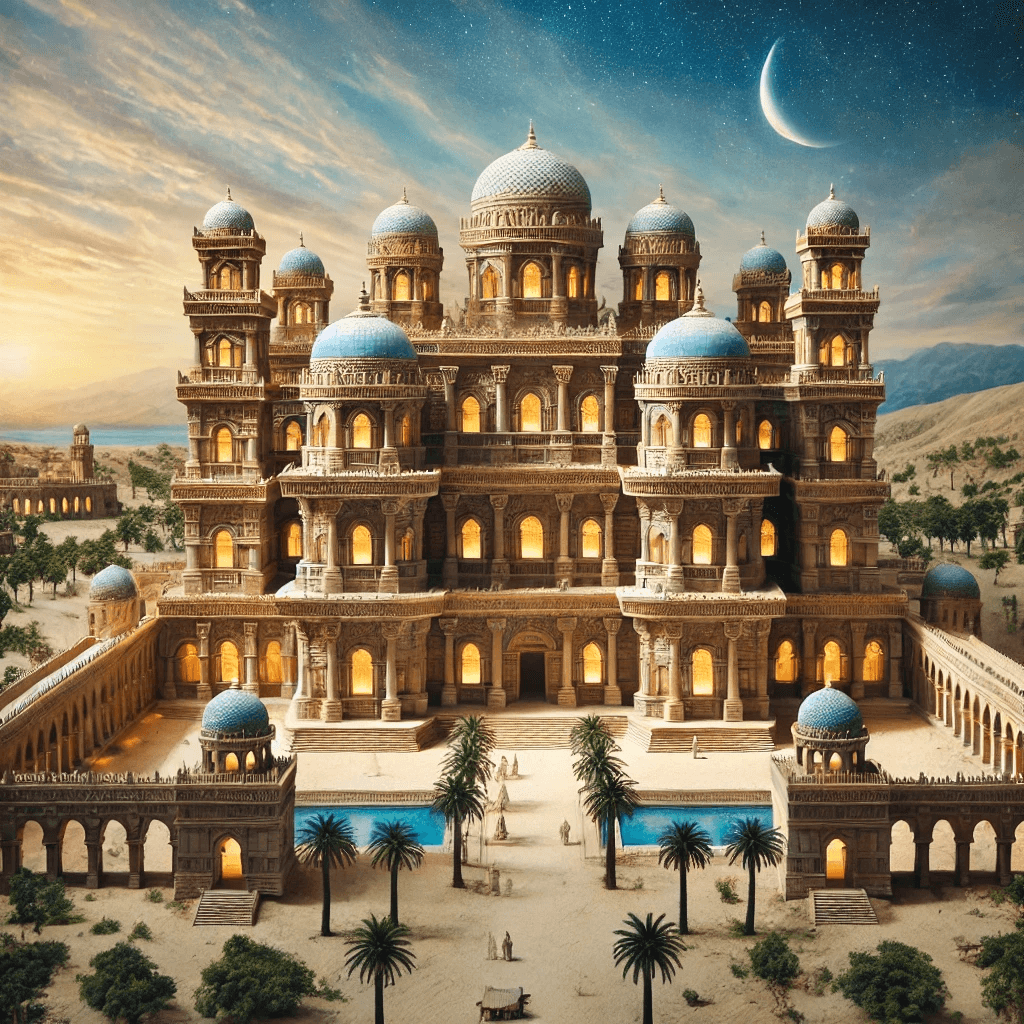
Representative Image of the Havernâk Palace (Generated by Artificial Intelligence)
The architectural structure and aesthetic qualities of the Havernâk Palace are among its most distinctive elements, setting it apart from ordinary buildings. According to legend, the palace was a structure of unparalleled beauty and grandeur. Its notable features include:
The Havernâk Palace is frequently referenced in Arab literature, symbolizing beauty, splendor, and tragedy. The story of the palace transcended its physical form to become a symbol of human pride, envy, and the failure to appreciate labor. Sinimmar’s unacknowledged effort and tragic death found literary expression as “the betrayal of Sinimmar,” a phrase that has since been used as metaphor to describe situations of injustice.

Architectural Features and Aesthetics
Cultural and Literary Impact