This article was automatically translated from the original Turkish version.
+1 More
Author(s) | Julian Young | ||||||||
|---|---|---|---|---|---|---|---|---|---|
Translator(s) | Elif Korkut | ||||||||
Publisher(s) | Dergâh Yayınları | ||||||||
Publication Year | April 2017 | ||||||||
Number of Pages | 205 | ||||||||
Type(s) | Philosophical Inquiry | ||||||||
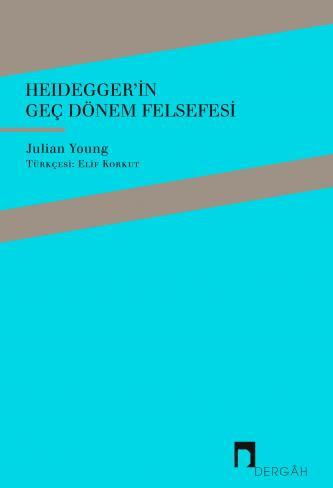
The Later Philosophy of Heidegger, written by Julian Young, is an academic work that examines the later thought of the German philosopher Martin Heidegger and has been translated into Turkish and published by Dergâh Yayınları as part of its “Philosophy” series. Translated into Turkish by Elif Korkut, this book aims to explain Heidegger’s often described as mystical and obscure later philosophy in a simple and accessible language. Published in April 2017, the book consists of 205 pages.
The work titled The Later Philosophy of Heidegger focuses on the period in Martin Heidegger’s intellectual development known as the “turn,” following his analyses of being and time. Julian Young seeks to clarify the central concepts and problems within Heidegger’s complex and profound philosophy. The book provides a detailed analysis of Heidegger’s characterization of the disappearance of the gods, the destructive power of technology, and the modern human’s “homelessness” as fundamental signs of impoverishment in the contemporary world.
At the heart of the work lies Heidegger’s view on overcoming the “forgetfulness of being.” Young interprets this view as the essence of a genuine “postmodern existence” and “post-poverty.” While expressing respect for the age-old quest to discover the nature of the good life, the author argues that Heidegger’s approach is philosophically highly productive. The book meticulously presents what Heidegger’s philosophy is about, how it addresses the relationships between being, truth, technology, and the condition of humanity, without ignoring the difficult complexities in Heidegger’s texts. The work particularly scrutinizes Heidegger’s later ideas on art, language, and ontology.
The language and style of Julian Young’s The Later Philosophy of Heidegger are descriptive and objective, in keeping with the conventions of academic inquiry. Thanks to Elif Korkut’s successful translation, Heidegger’s demanding philosophical terminology and abstract concepts have been rendered more comprehensible to Turkish readers. The text presents complex philosophical arguments in a clear and logical sequence without employing any promotional or laudatory language. While interpreting Heidegger’s thought, the author maintains a neutral perspective, enabling readers to grasp philosophical texts more deeply.
Julian Young is a prominent philosopher known for his studies on 19th and 20th century Continental philosophy, especially Martin Heidegger. His works are recognized for their explanatory and critical approach to complex philosophical subjects. The Later Philosophy of Heidegger is a significant contribution that demonstrates Young’s mastery in this field and his analytical capacity regarding Heidegger’s thought.
The book serves as a valuable resource for students, academics, and philosophy specialists seeking to understand Martin Heidegger’s philosophy. It offers important contributions to research on existentialism, phenomenology, hermeneutics, and contemporary philosophical movements. Heidegger’s critique of modernity, his philosophy of technology, and his later reflections on the question of being continue to hold relevance for current philosophical debates.
Young, Julian. *Heidegger'in Geç Dönem Felsefesi*. Translated by Elif Korkut. Istanbul: Dergah Yayınları, 2017. Accessed July 8, 2025. https://www.dergah.com.tr/kitaplar/heideggerin-gec-donem-felsefesi.

Author(s) | Julian Young | ||||||||
|---|---|---|---|---|---|---|---|---|---|
Translator(s) | Elif Korkut | ||||||||
Publisher(s) | Dergâh Yayınları | ||||||||
Publication Year | April 2017 | ||||||||
Number of Pages | 205 | ||||||||
Type(s) | Philosophical Inquiry | ||||||||
No Discussion Added Yet
Start discussion for "Heidegger's Late Philosophy (Book)" article
Content and Thematic Structure
Language and Style
The Author’s Position and the Significance of the Work