


This article was automatically translated from the original Turkish version.
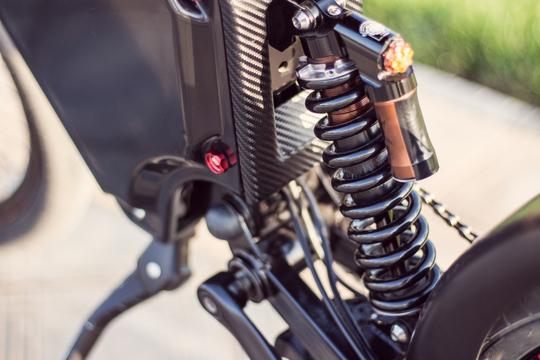
Spring (Helical and Air Springs)
Part Type | Suspension Element (Spring) | ||||||||
|---|---|---|---|---|---|---|---|---|---|
Spring Types | Helical, Air (Bellows) | ||||||||
Control Type | Mechanical (helical) / Electronic (air) | ||||||||
Application Area(s) | Passenger Car Commercial Vehicle Bus SUV | ||||||||
Advantage(s) | Comfort Road Adaptability Stability | ||||||||
Helical springs are a type of spring wound in a helical shape, used to store mechanical energy, absorb shocks, and support loads. They have a wide range of applications, from automotive suspension systems to balancing mechanisms in industrial machinery.
Helical springs are typically manufactured by winding steel wire with a circular cross-section into a spiral pattern at a specific diameter and pitch spacing. The steels used in spring production are alloy materials with high strength, high elastic modulus, and fatigue resistance (e.g., SAE 9254, 60SiCr7). Helical springs are classified into two groups based on manufacturing method:
The spring's stiffness depends on the coil diameter, wire thickness, number of coils, and the elastic modulus of the material used. Variations in these parameters directly affect the spring's characteristic behavior.
Helical springs store energy mechanically by undergoing elastic deformation when subjected to a force. When the force is removed, the spring returns to its original shape, releasing the stored energy. In suspension systems, they dampen shocks from the wheels, enhancing road grip and ride comfort. Helical springs typically operate in conjunction with shock absorbers; this combination controls oscillations and ensures system stability.
Millî Eğitim Bakanlığı (MEGEP). *Süspansiyon Sistemleri*. Ankara: MEB Yayınları, 2013. Accessed June 17, 2025. https://megep.meb.gov.tr/mte_program_modul/moduller_pdf/S%C3%BCspansiyon%20Sistemleri.pdf.

Spring (Helical and Air Springs)
Part Type | Suspension Element (Spring) | ||||||||
|---|---|---|---|---|---|---|---|---|---|
Spring Types | Helical, Air (Bellows) | ||||||||
Control Type | Mechanical (helical) / Electronic (air) | ||||||||
Application Area(s) | Passenger Car Commercial Vehicle Bus SUV | ||||||||
Advantage(s) | Comfort Road Adaptability Stability | ||||||||
Structural Characteristics
Working Principle
Applications
Advantages
Disadvantages