

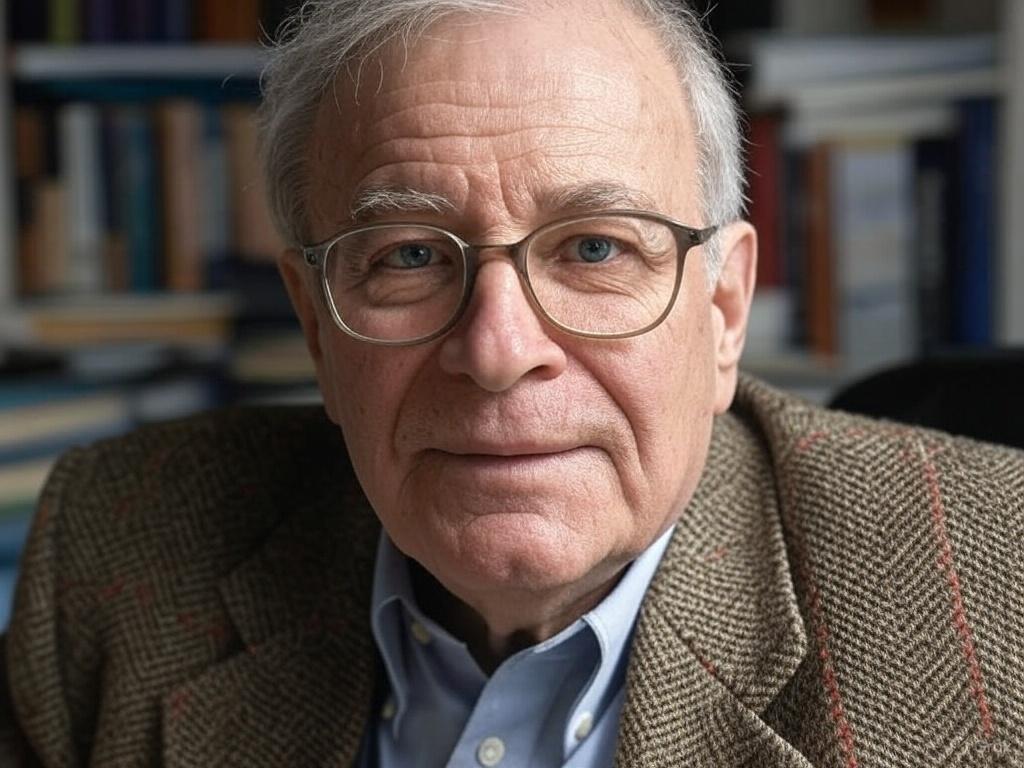

Henry Alexander Murray (13 May 1893, New York – 23 June 1988, Cambridge, Massachusetts) was an American clinical psychologist, theorist, and academic. He played pioneering roles in the institutionalization of personality psychology and made lasting contributions to scientific and clinical psychology through his need theory and the Thematic Apperception Test (TAT). He held a position at Harvard University for long years and gained recognition for his interdisciplinary approach and biography-based analyses.
Henry A. Murray was born in New York into a wealthy merchant family. He was raised in a disciplined and oppressive household and developed an introverted personality during childhood.
In 1915 he studied history at Harvard University. He then pursued medical training at Columbia University (MD, 1919). After conducting research at the Rockefeller Institute in the field of Biochemistry, he turned to psychology at Harvard in the late 1920s. His exposure to psychoanalysis stemmed from meetings with Carl Jung in Zurich.
In the 1930s, Murray gained attention at Harvard’s Department of Psychology for his holistic approach to personality analysis, influenced by Carl Jung. He worked with David McClelland and Robert White in the psychology laboratory. His 1938 publication Explorations in Personality introduced a new theoretical framework to personality psychology. During World War II, he developed personality assessment systems for the OSS (the predecessor of the CIA).
Murray had a special interest in literature and classical mythology and conducted personality analyses through literary characters. He examined the works of Herman Melville using a psychoanalytic approach.
Although married, he maintained a long-term emotional and intellectual relationship with psychologist Christiana Morgan. This relationship contributed significantly to the development of the TAT.
After retiring from active duty at Harvard in 1962, he continued writing and advising. He particularly mentored young researchers.
He died on 23 June 1988 in Cambridge, Massachusetts, at the age of 95.
The TAT developed by Murray is still used in clinical psychology and is regarded as a classic in personality theory literature.
His need theory also inspired David McClelland’s theories on achievement motivation.
His work influenced psychoanalytic, humanistic, and motivational psychology schools and impacted figures such as McClelland, Erikson, and Maslow. He is also recognized as a pioneer in the field of psychological profiling.
Hall, Calvin S., and Gardner Lindzey. Theories of Personality. New York: Wiley, 1970.
Hunt, Morton. The Story of Psychology. New York: Anchor Books, 1994.
Murray, Henry A. Explorations in Personality. New York: Oxford University Press, 1938.
Murray, Henry A., and Christiana D. Morgan. Thematic Apperception Test Manual. Cambridge: Harvard University Press, 1943.
Winter, David G. "Personality Analysis and the Study of Lives." In The Oxford Handbook of Personality Psychology, edited by Kay Deaux and Mark Snyder, Oxford University Press, 2012.

Early Life and Education
Childhood and Youth
Educational Background
Career and Achievements
Career Path
Key Achievements
Key Works and Contributions
Contributions
Major Works and Projects
Personal Life
Hobbies and Interests
Private Life
Later Years and Death
Final Years
Death
Legacy and Influence
Posthumous Impact
Sources of Inspiration