

This article was automatically translated from the original Turkish version.
+1 More
Author(s) | Cemil Kutlutürk | ||||||||
|---|---|---|---|---|---|---|---|---|---|
Publisher(s) | Dergah Yayınları | ||||||||
Publication Year | September 2021 (2nd Edition) | ||||||||
Number of Pages | 209 | ||||||||
Type(s) | Philosophy / Spiritual | ||||||||
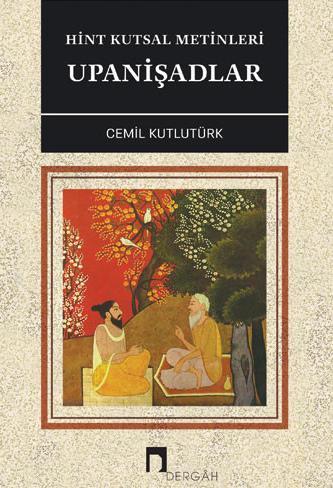
"Holy Indian Texts: The Upanishads" is a philosophical and spiritual work authored by Cemil Kutlutürk and published by Dergâh Yayınları as part of the "Eastern Thought" series. The book aims to present to the Turkish reader the content and philosophical depth of the Upanishads—the foundational texts of Hinduism—through a scientific approach. The first edition was published in June 2014, and an expanded second edition was released in September 2021. The book consists of 209 pages.
"Holy Indian Texts: The Upanishads" begins by emphasizing the historical role of religious, literary, and scholarly works from the Indian world in reaching other cultures, particularly Muslim Turks. The book provides an in-depth examination of the core concepts that define Hinduism: rebirth according to one’s actions (karma and samsara/reincarnation), liberation from this cycle through specific paths (yoga and moksha), and ultimately the realization of the transcendent reality (Brahman). It details how these religious and philosophical ideas were first articulated in the Upanishadic texts.
The Upanishads are texts that embody the philosophical and mystical depth of Hindu sacred literature. They convey concepts such as the unity of the universe and the individual soul, the nature of true knowledge, karma, reincarnation, and moksha through dialogues, stories, and poetic expressions. The book indirectly establishes a bridge between these concepts and their counterparts in Western thought, offering a comparative framework for understanding. Cemil Kutlutürk’s work seeks to meet the need for a scientific analysis grounded in the content of the Indian sacred texts, enabling accurate comprehension and evaluation of these ideas. By highlighting the historical, religious, and cultural context of Hinduism, the work demonstrates that understanding these theological and philosophical foundations is essential to correctly interpreting India’s rising global influence.
In "Holy Indian Texts: The Upanishads," Cemil Kutlutürk aims to convey complex philosophical and religious concepts in clear, accessible language while maintaining academic rigor. The text employs an objective and descriptive tone; the author presents the original meanings of the Upanishads and the fundamental principles of Hinduism directly to the reader. Careful scholarly precision is applied in translation and interpretation, with conceptual clarity prioritized. Occasional comparative and analytical expressions enhance the depth of the subject, while unnecessary praise or promotional language is avoided. This style makes the work accessible both to the academic community and to general readers interested in Eastern philosophy.
Cemil Kutlutürk is an academic whose research focuses on the history of Indian beliefs and culture, the perception of Islam in Indian thought, and Hindu-Buddhist-Muslim relations. "Holy Indian Texts: The Upanishads" is a significant contribution that reflects his expertise and scholarly identity in this field. The book is noteworthy in Türkiye for addressing the need for accurate and comprehensive information on the Upanishads and Hinduism. It not only aids in understanding Hinduism but also provides a key to deciphering the cultural and religious dynamics of the Indian subcontinent. In this regard, it serves as a valuable resource for academics and readers in the fields of history of religions, philosophy, sociology, and cultural studies.
Kutlutürk, Cemil. *Hint Kutsal Metinleri: Upanişadlar*. İstanbul: Dergah Yayınları, 2014. Accessed July 8, 2025. https://www.dergah.com.tr/kitaplar/hint-kutsal-metinleri-upanisadlar.

Author(s) | Cemil Kutlutürk | ||||||||
|---|---|---|---|---|---|---|---|---|---|
Publisher(s) | Dergah Yayınları | ||||||||
Publication Year | September 2021 (2nd Edition) | ||||||||
Number of Pages | 209 | ||||||||
Type(s) | Philosophy / Spiritual | ||||||||
No Discussion Added Yet
Start discussion for "Hindu Sacred Texts: Upanishads (Book)" article
Content and Thematic Structure
Language and Style
The Author’s Position and the Significance of the Work