


This article was automatically translated from the original Turkish version.
+1 More
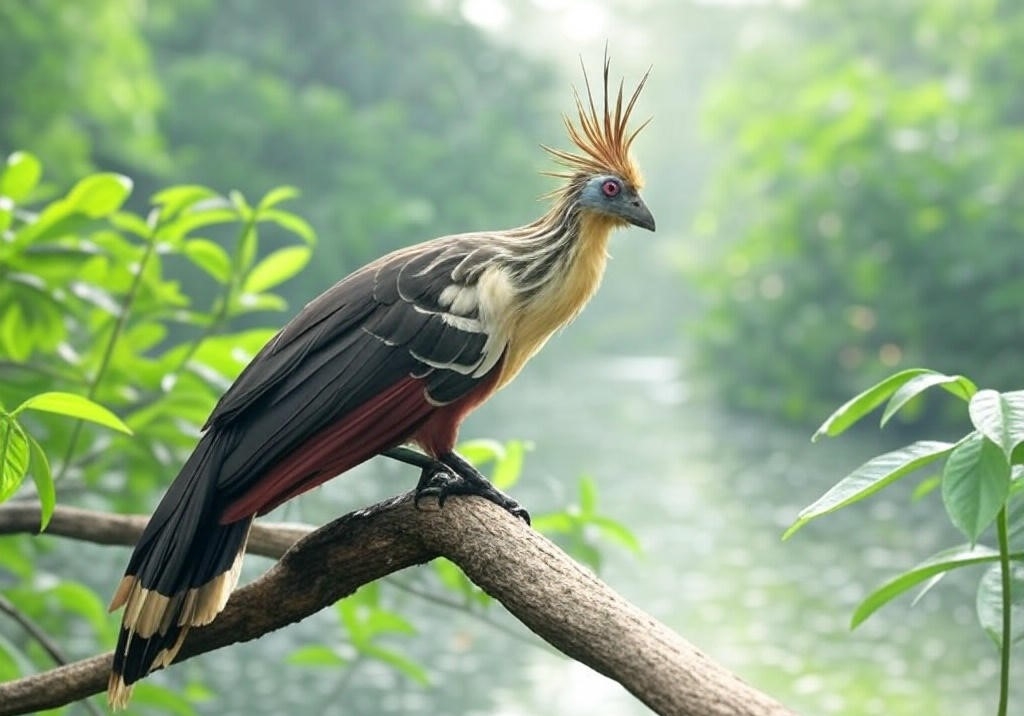
Hoatzin (Opisthocomus hoazin) is a bird species endemic to the Amazon and Orinoco river basins of South America, notable for its unique morphological and behavioral traits. It is particularly distinguished by its digestive system, social structure, and reproductive habits.
The hoatzin measures 63–70 cm in length and weighs approximately 600–700 grams. Its plumage is primarily olive-green and brown; however, its defining visual features are the long, feathery crest on its head and the upright, short-tufted “crown” feathers. The hoatzin possesses a physiological structure in its digestive system that is rare among birds. Unlike other birds, young hoatzins have a large, crop-like digestive organ resembling a cauliflower, inhabited by microscopic bacteria that aid in breaking down plant material. This system includes an enlarged hindgut and a type of fore-stomach, differing significantly from the digestive anatomy of other avian species.
The hoatzin is densely distributed in the tropical forests of the Amazon and Orinoco basins in South America. This species inhabits dense forest areas surrounded by rivers and swamps. It is typically found near water and relies on climbing rather than flying from the ground to move between trees. Due to its proximity to water, it prefers arboreal life and experiences difficulty taking off from the ground. Its habitat is shaped by proximity to plant-based food sources, which influences its ecological role and behavior.

Hoatzin (Image generated by artificial intelligence.)
The most remarkable feature of the hoatzin is the evolution of its digestive system to fully process plant matter. Its primary food source consists of high-cellulose plants, especially young leaves. It maintains a symbiotic relationship with bacteria in its intestines that digest its food. This slow digestive process reduces the hoatzin’s flight capability but enhances its climbing ability and efficiency in gathering vegetation along water edges.
Hoatzins are generally social birds that live in large groups. They tend to move collectively and build nests on the upper branches of trees during the breeding season. Their reproductive behavior differs from that of other bird species: during and after egg-laying, both parents cooperate to protect their young. The chicks develop climbing abilities at a very early age and exhibit an advanced gripping capacity to prevent falling from the nest. This is a crucial adaptation for the species’ survival strategy.
The hoatzin is classified by the IUCN as having a “declining population.” One of its greatest threats is habitat destruction and deforestation in the areas it inhabits. Additionally, the species is threatened by wildlife trade. However, the generally isolated nature of the tropical regions where hoatzins live offers some protection from hunters. Nevertheless, habitat loss, climate change, and human activity continue to negatively impact hoatzin populations.
Conservation initiatives for the hoatzin are aligned with broader efforts to protect biodiversity in the Amazon region. These programs focus on habitat restoration, collaboration with local communities to preserve forests, and a deeper understanding of the species’ biological needs. Environmental education projects and ecotourism also aim to promote the sustainable use of natural resources in the region.
The hoatzin occupies a distinctive position among tropical bird species due to its unique biological traits and ecological function. However, habitat loss and various environmental threats make its conservation essential. The hoatzin’s sustainability is also critically important for maintaining the balance of the ecosystems it inhabits.

No Discussion Added Yet
Start discussion for "Hoatzin (Opisthocomus hoazin)" article
Morphological Characteristics
Habitat and Distribution
Diet and Digestive System
Behavior and Reproduction
Conservation Status and Threats
Conservation Efforts