

This article was automatically translated from the original Turkish version.
The 2025 Honduras general elections are the nationwide vote held on 30 November 2025 to elect both the president and members of the national legislature and local governing bodies. The election is taking place in a political environment marked by concerns over poverty corruption drug trafficking and the integrity of electoral processes.
Honduras is a Central American country with a population of approximately 11 million and has long been associated with challenges such as poverty drug trafficking routes corruption and political instability. In 2009 the then president Manuel Zelaya was removed from office in a military coup orchestrated by a coalition of military and civilian actors. Zelaya founded the Libertad y Refundación LIBRE Party in 2011 and his wife Xiomara Castro’s victory in the 2021 elections ended the long-standing two-party dominance of the National Party and the Liberal Party.
During Castro’s administration public and social spending increased the International Monetary Fund issued positive assessments regarding the government’s fiscal discipline and indicators of poverty and inequality showed decline; however these indicators remained at high levels. The country’s homicide rate fell to its lowest level in recent memory yet violence and insecurity continued to be major societal problems. The Castro administration maintained states of emergency in certain areas to combat crime and continued to deploy the military in policing functions; these practices have been criticized by human rights organizations.
Previous president Juan Orlando Hernández served two terms with the National Party from 2014 to 2022 and after leaving office was sentenced in the United States to 45 years in prison in 2024 for drug trafficking and arms offenses.
On 30 November 2025 voters will elect not only the president but also the 128-member National Congress hundreds of mayors and thousands of local officials. Presidential elections in Honduras are conducted under a single-round plurality system; the candidate with the most votes is elected president without a runoff and serves a term from 2026 to 2030.
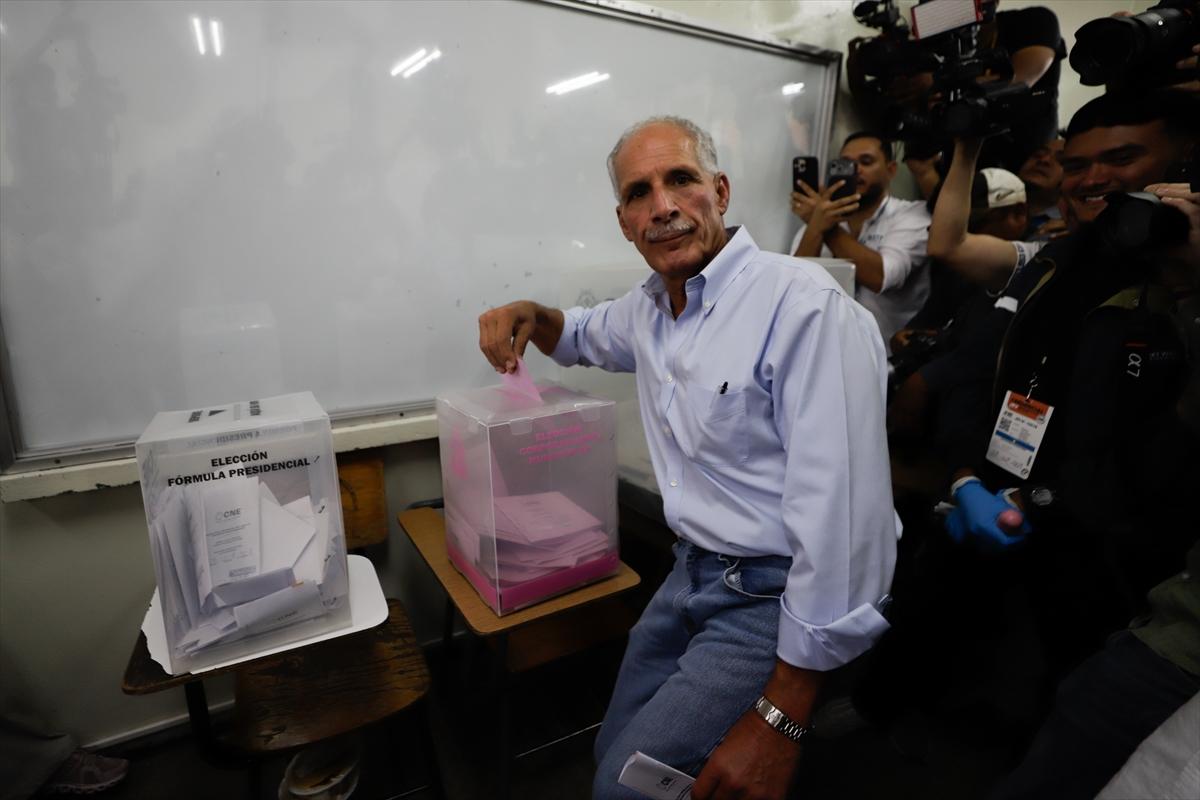
Asfura voting in the Honduras elections 1 December 2025 – (Anadolu Agency)
The election is occurring amid mutual accusations between the ruling and opposition parties of planning electoral fraud with the Attorney General’s Office accusing opposition parties of preparing for possible voter fraud while the opposition accuses the government of attempting to manipulate the popular will. The Attorney General’s Office has launched an investigation into alleged audio recordings in which a senior National Party official is said to have discussed plans with a military authority to influence election results; the National Party claims these recordings were generated by artificial intelligence.
The armed forces’ request for copies of ballot tallies from the National Electoral Council CNE on election day has sparked controversy on the grounds that it violates Honduran law and has deepened a crisis of institutional confidence in the electoral process.
Three main candidates have emerged in the election:
Public opinion polls in the days leading up to the election revealed a statistically tied race among these three candidates. Moncada has labeled Asfura and Nasralla as “puppets of the oligarchy” while Asfura and Nasralla have labeled Moncada as a “communist” and criticized his close ties to Cuba and Venezuela.
The candidates’ platforms have been criticized for offering limited concrete policy details on addressing core issues such as drug trafficking corruption and poverty. Both Asfura and Nasralla have indicated that diplomatic relations with Taiwan which were severed in March 2023 could be restored; such a move could represent one of the most significant setbacks in recent years to China’s diplomatic presence in the region.
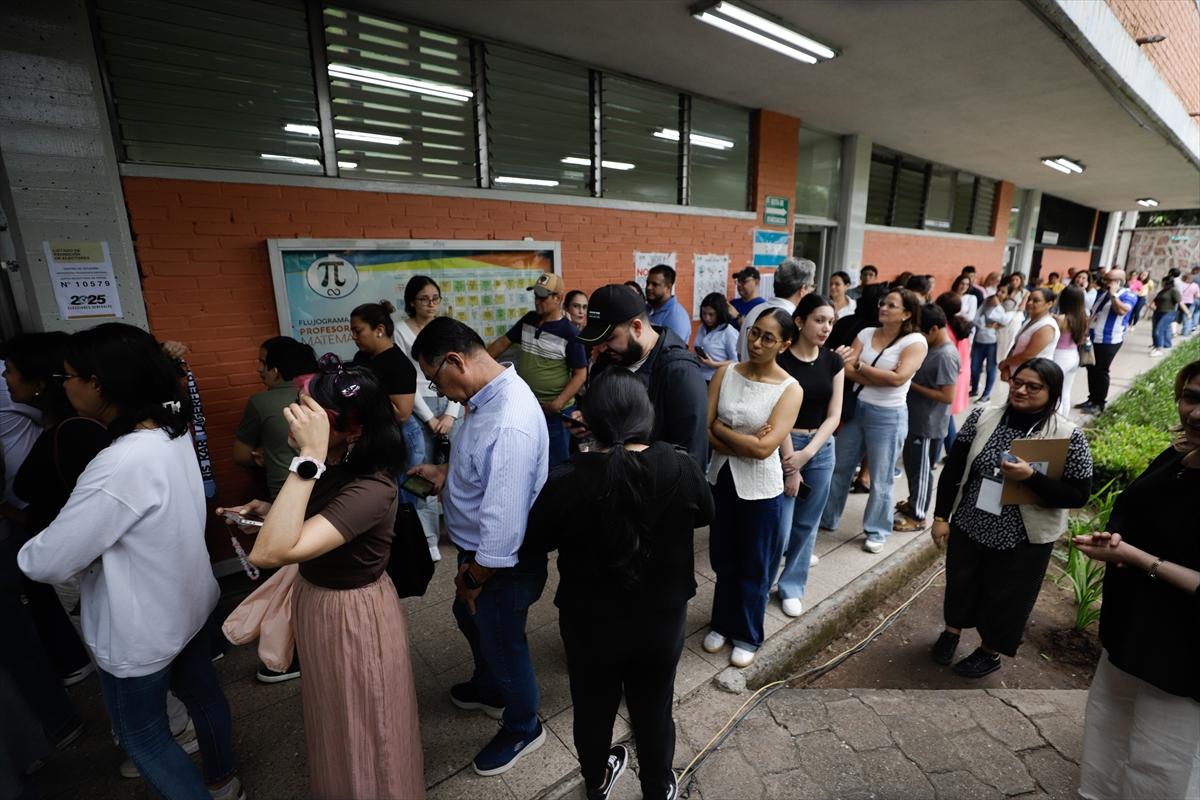
Honduras elections 1 December 2025 – (Anadolu Agency)
U.S. President Donald Trump openly intervened in the Honduras elections on 26 November 2025 via the social media platform Truth Social announcing his support for Nasry Asfura. Trump stated that Asfura is a leader who can work with Washington to combat drug trafficking and asserted that “the people of Honduras must choose Tito Asfura for freedom and democracy.” He also threatened to cut off U.S. financial aid to Honduras if Asfura loses the election.
On the same day Trump also announced his intention to grant a pardon to former president Juan Orlando Hernández who is currently serving a 45-year prison sentence in the United States for cocaine trafficking and arms offenses. These statements have been interpreted as open foreign interference and as contradictory to the U.S. stance on combating drug trafficking.
Additionally Argentine President Javier Milei has expressed support for Asfura on social media describing him as the candidate capable of defending Honduras against “leftist tyrants.”
As the election approached both the Organization of American States OAS and the U.S. Department of State expressed serious concerns about the electoral process in Honduras and declared they would closely monitor the vote. U.S. Deputy Secretary of State Christopher Landau emphasized that the United States is closely following the electoral process stressing that Honduran electoral authorities and the military must strictly adhere to the law and the Constitution and warned that there would be a “swift and decisive” response against any actors undermining the democratic process.
Moncada argues that during the campaign, should any attempt at fraud occur, the public might erupt onto the streets “like a volcano”; opposition parties, meanwhile, contend that the ruling party is trying to manipulate the electoral will of the people. These statements are viewed as factors that have heightened tensions leading up to voting day and kept alive the possibility of social conflict following the election.
On 30 November 2025, polling stations in Honduras opened at 07:00 local time and remained open for ten hours; authorities announced that preliminary results would be released on the same day. Immediately after the closure of polling stations, the vote counting process and the announcement of results attracted intense political and public attention, particularly in the capital Tegucigalpa and other major cities.
As of 1 December 2025, the National Electoral Council’s online results portal has experienced serious technical glitches, with the exact number of votes counted remaining unclear. Asfura appears to have received approximately 40 percent of the votes; Salvador Nasralla, the Liberal Party candidate, is trailing Asfura by only 515 votes, also hovering around the 40 percent mark. Rixi Moncada, the candidate of the LIBRE Party, is in third place with approximately 19 percent.
In a message posted on X, Nasralla states that his internal projections show him leading with 44.6 percent of the vote, yet he has not officially declared victory. Representatives of the National Party criticize Nasralla for attempting to influence public opinion before official results are announced.
Ana Paola Hall, President of the National Electoral Council, called on candidates and the public to remain calm and wait for the completion of the vote count, in a statement made via X. The disruptions on the election results portal and delays in updating results have fueled concerns about transparency and caused disappointment among opposition voters and local media.
As the initial vote count showed narrowing margins in favor of Asfura, Trump accused Honduran electoral authorities on social media of attempting to “alter the results.” He claimed that the country’s election commission was trying to halt the vote count prematurely and warned that any manipulation of the results would have serious consequences.
Trump’s remarks are seen as further undermining confidence in the electoral process and complicating the United States’ position regarding Honduras’ democratic procedures. According to an analysis by Le Monde, Trump’s pre-election “threat of financial aid withdrawal” and his post-election “interventionist rhetoric” weaken the notion that elections in Honduras are conducted independently and under national sovereignty.
As of 2 December 2025, the official and final results of the elections held in Honduras on 30 November have not yet been announced. Current preliminary results indicate a technical tie between Nasry Asfura and Salvador Nasralla, with Rixi Moncada trailing in third place.
Associated Press. “Honduras holds primaries as voter frustration simmers over security and the economy.” AP News. March 9, 2025. Accessed December 2, 2025. https://apnews.com/article/2fbe5f93ba1a8aecf227745ebb0243e0
Financial Times. “Trump-backed ex-mayor in virtual tie with rival in Honduras early vote count.” Financial Times. December 1, 2025. Accessed December 2, 2025. https://www.ft.com/content/d9935e93-3492-4d9d-91c1-0405962ba401
Le Monde. “Honduran voters to judge record of country’s first left-wing president, Xiomara Castro.” Le Monde – International Edition. November 30, 2025. Accessed December 2, 2025. https://www.lemonde.fr/en/international/article/2025/11/30/honduran-voters-to-judge-record-of-country-s-first-left-wing-president-xiomara-castro_6747982_4.html
Le Monde. “Trump’s interference in Honduran election exposes contradictions of US war on drugs.” Le Monde – International Edition. December 1, 2025. Accessed December 2, 2025. https://www.lemonde.fr/en/international/article/2025/12/01/trump-s-interference-in-honduran-election-exposes-contradictions-of-us-war-on-drugs_6748015_4.html
Reuters. "Honduras presidential election on knife’s edge with Asfura and Nasralla tied." Reuters, December 2, 2025. Accessed December 2, 2025. https://www.reuters.com/world/americas/conservative-asfura-backed-by-trump-takes-slim-lead-honduras-presidential-2025-12-01/
Reuters. “Hondurans vote in presidential election marked by fraud accusations.” Reuters. November 30, 2025. Accessed December 2, 2025. https://www.reuters.com/world/china/hondurans-prepare-vote-presidential-election-marked-by-fraud-accusations-2025-11-30/

No Discussion Added Yet
Start discussion for "Honduras Elections 2025" article
Political Background and Historical Context
Election System and Voting Process
Main Candidates and Platforms
Trump’s Intervention and External Pressures
International Observation and Pre-Election Tensions
Election Day and Vote Counting Process
Trump’s Statements Regarding the Post-Election Situation
Election Results