


This article was automatically translated from the original Turkish version.

Can being from Ordu hinder a person’s dreams of going to Japan? I can almost hear you say, “How could that possibly be? What does one’s homeland have to do with visa denial?” But the truth is precisely this: Turkish citizens whose identity documents list “Ordu” as their place of birth or registration face a significantly higher likelihood of encountering an unexpected barrier upon entering Japan. What many consider a city legend is in fact a contemporary reflection of a real and remarkably unusual mass migration story dating back to the late 1980s.
Everything began in 1989 when Hayri Bey from Ordu set foot in Japan driven by dreams of a new life and better opportunities. This individual journey quickly became the first link in a chain reaction of migration that would grow wave after wave. After successfully establishing himself in the Far East, Hayri Bey began gradually bringing over his relatives and close acquaintances.【1】 This network of solidarity expanded so rapidly that within a short time, thousands of people from Ordu packed their suitcases and flooded into Nagoya, the industrial heart of Japan. Within a few years, Nagoya became so saturated with residents from Ordu that it resembled a small district of the Black Sea region.
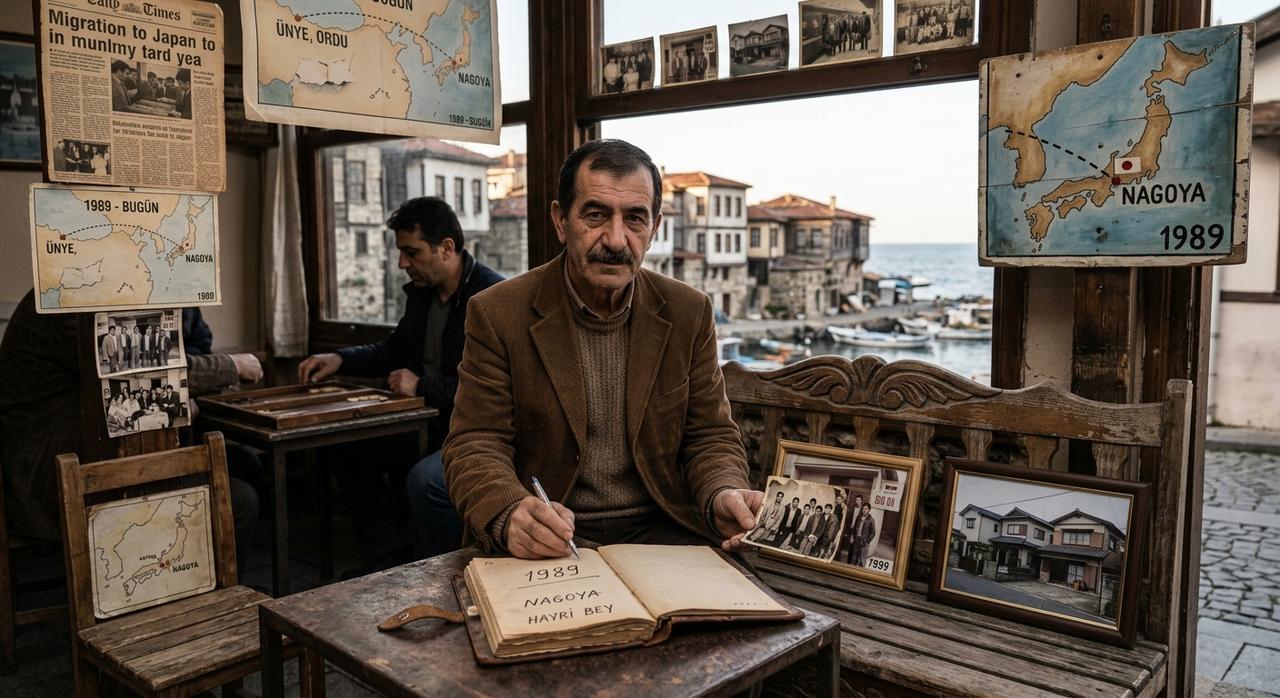
In 1989, Ordulu Hayri Bey Took His First Steps Toward the Far East with Dreams of Exile (Generated by Artificial Intelligence).
By the 1990s, Japan was at the peak of its economic prosperity and faced a severe shortage of manual labor, particularly in construction and manufacturing. The migrants from Ordu filled this gap, enduring grueling work in heavy industries for years. Over time, however, this massive influx of people, combined with the abuse of visa-free travel privileges, led to perceptions of “illegal labor.”
The Japanese government, known for its discipline and strict regulations, sounded the alarm over the uncontrolled rise of foreign workers and undocumented residency in the city.【2】 As officials began to notice the specific profile and concentration of migrants originating from a particular region, radical measures became inevitable.
Today, although the situation is not officially declared by law as “Ordu residents are banned,” the algorithms and interview criteria within border control systems clearly reveal the existence of a targeted filter. Japanese immigration authorities explicitly label Turkish citizens whose place of origin is listed as Ordu as high-probability “potential illegal workers.”【3】
This backdrop of bilateral relations and the sociology of international travel offers a striking example of how individual decisions can generate large-scale social consequences. The story that began with one man’s dream and ended with hundreds of Ordu residents settling in Nagoya now lays bare how global border policies are shaped.
Indeed, the Ordu migrants who settled in Nagoya gradually built their own closed ecosystems. The Black Sea tradition of communal solidarity, known as imece, created a stark contrast against Japan’s orderly, rule-bound, and individualistic social structure. As customs ranging from Turkish cuisine to neighborhood relationships seeped into daily Nagoya life, this rapid and organized settlement increasingly drew the attention of Japanese social engineers.
This delicate balance created by the migration eventually led to the reconsideration of visa regimes and bilateral agreements between Turkey and Japan. Although the two countries have historically maintained a bond of friendship since the time of the Ertuğrul Frigate,【4】 Japan’s rigid stance on public order and national security overrode diplomatic courtesy. Integrated data systems in border security now conduct regional risk assessments even for travelers from countries granted visa exemptions.
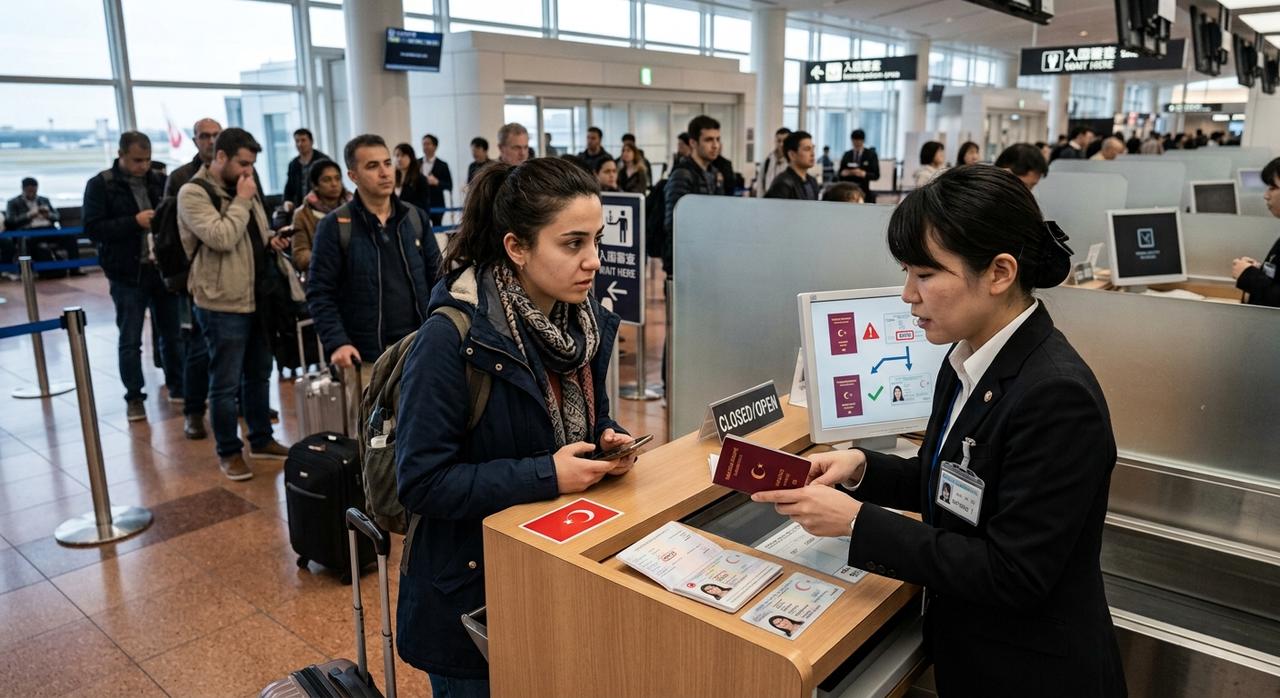
Pasaport Kontrolünde Türk Bir Kadın (Yapay Zeka ile Oluşturulmuştur.)
The more dramatic aspect of this situation is that it has created an intergenerational burden. Today, young researchers, programmers, and tourists who have never set foot in Ordu, but whose official records list it as their place of origin or who were merely born there by chance, are still forced to pay the price of history.
Extra documentation required at Japanese consulates, exhaustive scrutiny of bank statements, and hours spent in airport interrogation rooms offer a concrete example of how a single piece of administrative data can restrict an individual’s freedom of movement in the globalized world.
On the other hand, this phenomenon may well enter academic literature as one of the most extreme examples of “chain migration.” It is exceedingly rare for two locations so geographically and culturally distant to develop such a tightly knit migration corridor. Even in diplomatic discussions held periodically between officials of the two countries, the issue continues to be framed in terms of this historical legacy.
Anadolu Ajansı. "Türkiye-Japonya ilişkilerinin başlangıcı Ertuğrul Fırkateyni'nin üzerinden 135 yıl geçti." Accessed September 3, 2026.https://www.aa.com.tr/tr/gundem/turkiye-japonya-iliskilerinin-baslangici-ertugrul-firkateyninin-uzerinden-135-yil-gecti/3687667.
TGRT Haber. "Kimliğinizde Ordu yazıyorsa Japonya’ya giremiyorsunuz: İşte nedenleri…" Accessed September 3, 2026.https://www.tgrthaber.com/mavikadin/kimliginizde-ordu-yaziyorsa-japonyaya-giremiyorsunuz-iste-nedenleri?s=1.
[1]
TGRT Haber, "Kimliğinizde Ordu yazıyorsa Japonya’ya giremiyorsunuz: İşte nedenleri…" TGRT Haber, Erişim tarihi: 3 Eylül 2026, https://www.tgrthaber.com/mavikadin/kimliginizde-ordu-yaziyorsa-japonyaya-giremiyorsunuz-iste-nedenleri?s=1.
[2]
TGRT Haber, "Kimliğinizde Ordu yazıyorsa Japonya’ya giremiyorsunuz: İşte nedenleri…"
[3]
TGRT Haber, "Kimliğinizde Ordu yazıyorsa Japonya’ya giremiyorsunuz: İşte nedenleri…"
[4]
Anadolu Ajansı. "Türkiye-Japonya ilişkilerinin başlangıcı Ertuğrul Fırkateyni'nin üzerinden 135 yıl geçti." Accessed September 3, 2026.