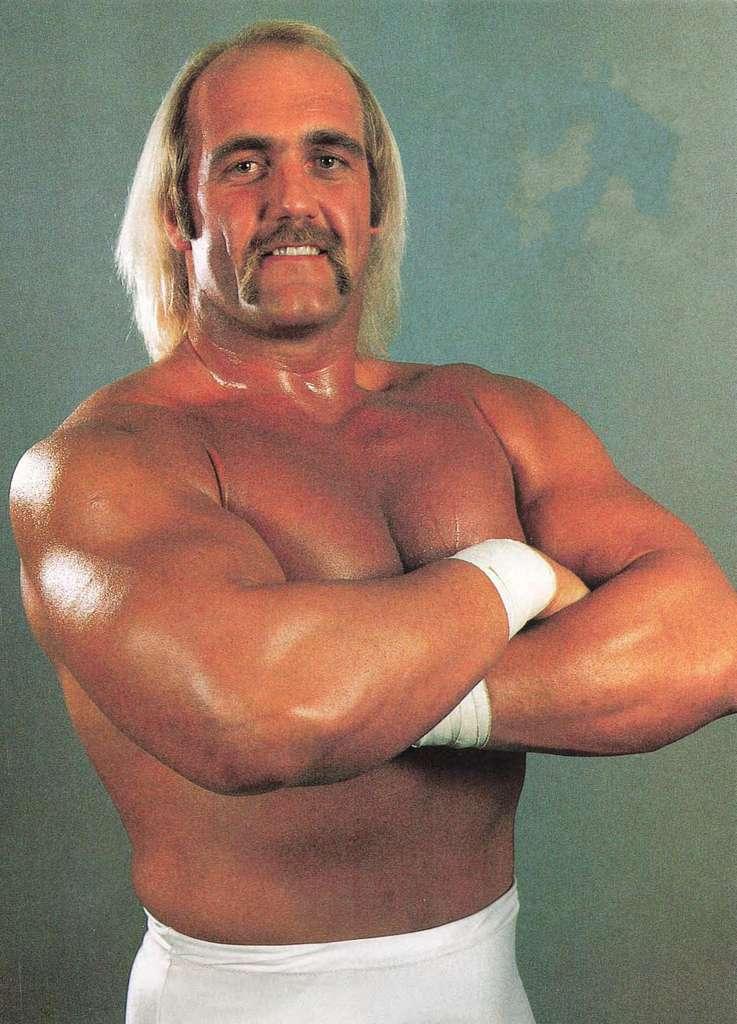
+2 More

Real Name | Terry Gene Bollea | ||||||||
|---|---|---|---|---|---|---|---|---|---|
Birth | 11 August 1953 | ||||||||
Place of Birth | Augusta, Georgia, USA | ||||||||
Death | 24 July 2025 | ||||||||
Place of Death | Clearwater, Florida, USA | ||||||||
Cause of Death | Heart attack | ||||||||
WWE Championships | Six-time World Heavyweight Champion | ||||||||
Ring Names | Thunderlips Mr. America Terry Boulder The Hulkster Hollywood Hogan Hulk Hogan | ||||||||
Television and Film | Hogan Knows Best (2005–2007) No Holds Barred (1989) Rocky III (1982) | ||||||||
Height(s) | 2.01 m | ||||||||
Family | Three marriages two children | ||||||||
Hulk Hogan, born Terry Gene Bollea, is one of the internationally recognized figures in American professional wrestling during the late 20th century and the first quarter of the 21st century. He played a pivotal role in the integration of American wrestling promotions with the media and entertainment industries during the 1980s. Beyond his wrestling career, Bollea appeared in television programs, motion pictures, and various commercial ventures, maintaining a prominent public presence. In addition to his championship titles in sports, his media attention and developments in his personal life also drew significant notice. Through these traits, he embodied both the identity of an athlete and that of a pop culture icon.
Terry Eugene Bollea, known professionally as Hulk Hogan, was born on 11 August 1953 in Augusta, Georgia, United States. His father, Pete Bollea, was a construction worker, and his mother, Ruth Bollea, was a homemaker and dance instructor. The family moved to Tampa, Florida, when Hogan was young. He grew up there and developed an early interest in sports, particularly baseball and wrestling. He attended Robinson High School in Tampa. During this period he focused on baseball but changed direction in his athletic career due to injury. Inspired by professional wrestlers such as Dusty Rhodes, he began to take an interest in wrestling.
After high school, Bollea studied at Hillsborough Community College and the University of South Florida. However, he left his studies unfinished to pursue music and bodybuilding. He performed with a band called “Ruckus,” in which he played bass guitar.
Bollea was discovered by professional wrestlers Jack and Gerald Brisco due to his striking physique. He began training in local gyms to learn the fundamentals of wrestling. In 1976 he started training under wrestling coach Hiro Matsuda. He began his professional wrestling career in 1977 with local promotions, performing under ring names such as “Terry Boulder” and “Super Destroyer.” In 1977 he made his professional debut under the name “The Super Destroyer.” Bollea quickly gained recognition in the industry due to his imposing physique, height, and charismatic style.
Hulk Hogan and WWE (WWE)
In 1979 Bollea was invited to join the World Wrestling Federation (WWF, later renamed WWE) by Vince McMahon Sr. His collaboration with Vince McMahon in 1983 led to the creation of the “Hulk Hogan” character. He gained a vast fan base through his yellow-and-red costume, charismatic promos, and dynamic ring performances.
On 23 January 1984 he defeated Iron Sheik to win the WWE World Heavyweight Championship. During this period a massive fan movement known as “Hulkamania” emerged. He became one of the central figures of the WrestleMania events.
In 1987 at WrestleMania III he defeated Andre the Giant. This match became a landmark moment noted for its record-breaking attendance and media attention. He won the world championship six times within WWE. In 1993 he left the organization to join its rival, World Championship Wrestling (WCW), where he also became a six-time world champion. In 1996 he returned to the ring under the name “Hollywood Hogan” as a founding member of the group “New World Order” (nWo) alongside Kevin Nash and Scott Hall.
In 2002 he returned to WWE. He faced The Rock at WrestleMania X8 and briefly won the Undisputed WWE Championship. His in-ring activity declined after 2003, and he effectively retired from wrestling following his match against Randy Orton in 2006. He was inducted into the WWE Hall of Fame in 2005, in recognition of his contributions to the wrestling world.
In the 2010s he joined Total Nonstop Action Wrestling (TNA), where he served both as an executive and a character. In later years, due to health issues and surgeries, his ring appearances became less frequent, but he continued to participate in nostalgic events, documentaries, and promotional activities.
Outside of wrestling, Hulk Hogan was active in television and film. He made his cinematic debut in the 1982 film Rocky III alongside Sylvester Stallone. He appeared in productions such as No Holds Barred (1989), Suburban Commando (1991), and Mr. Nanny (1993), portraying roles similar to his wrestling persona. He also made guest appearances on television series such as The A-Team, Baywatch, and Walker, Texas Ranger.
From 2005 to 2007 he starred alongside his family in the VH1 reality show Hogan Knows Best. The program, which focused on the daily life of the Hogan family, attracted a specific audience. He also participated in advertising campaigns and video game projects.

Hogan’s public visibility also led to various controversies. In the early 1990s he testified in investigations into steroid use involving WWE and admitted to having used steroids in the past. In 2015, a leaked video revealed him making racist remarks, leading to a temporary termination of his relationship with WWE and the suspension of his Hall of Fame status. He was reinstated into the Hall of Fame in 2018 after being pardoned.
In 2012, following the unauthorized publication of a private video on an internet site, he filed a lawsuit and was awarded $140 million in damages, which contributed to the closure of the media company involved. In the 2020s he underwent several surgical procedures due to neck and spinal issues. In 2024 he participated in politically themed events and delivered public speeches.
Bollea was married three times. He married Linda Hogan in 1983, and they had two children, Brooke and Nick. Their marriage ended in divorce in 2009 after a process that began in 2007. In 2010 he married Jennifer McDaniel; that marriage ended in 2021. In 2023 he married Sky Daily. Hogan spent his retirement years in Florida. He launched commercial ventures themed around “Hulkamania,” including gyms, merchandise, and a beverage brand. He regularly shared content about his past career on social media and digital platforms.
Terry Gene Bollea passed away on 24 July 2025 in Clearwater, Florida. He was hospitalized following a sudden heart attack at home but could not be revived despite medical efforts. His death was officially attributed to cardiac arrest. No suspicious circumstances were found during the autopsy and forensic investigation. Following his death, numerous figures from WWE and the wrestling world released public condolences.
Anadolu Ajansı. “ABD’li Ünlü Güreşçi Hulk Hogan 71 Yaşında Hayatını Kaybetti.” Accessed July 25, 2025. https://www.aa.com.tr/tr/dunya/abdli-unlu-guresci-hulk-hogan-71-yasinda-hayatini-kaybetti/3641243
Anadolu Ajansı. “Wrestling Legend Hulk Hogan Dead at 71.” Anadolu Ajansı. Accessed July 25, 2025. https://www.aa.com.tr/en/culture/wrestling-legend-hulk-hogan-dead-at-71/3641307
BBC News. “US wrestling legend Hulk Hogan dies aged 71.” BBC. Accessed July 25, 2025. https://www.bbc.com/news/articles/clyzyr4d2rzo
Biography. "Hulk Hogan." Biography. Accessed July 25, 2025. https://www.biography.com/athletes/hulk-hogan
IMDB. "Hulk Hogan – Biography." IMDb. Accessed July 25, 2025. https://www.imdb.com/name/nm0001356/bio/
IMDb. “Hulk Hogan in Rocky 3.” Accessed July 25, 2025. https://www.imdb.com/title/tt0084602/mediaviewer/rm2135075841/?ref_=ttch_ph_4_1
Pantheon World. "Hulk Hogan." Pantheon World. Accessed July 25, 2025. https://pantheon.world/profile/person/Hulk_Hogan
Picryl. “Hulk Hogan, circa 1985.” Picryl. https://picryl.com/media/hulk-hogan-circa-1985-eebb0f
TRT Spor. "Hulk Hogan Hayatını Kaybetti." TRT Spor. Accessed July 25, 2025. https://www.trtspor.com.tr/haber/diger-sporlar/hulk-hogan-hayatini-kaybetti-27008680
TRT World. “Wrestling legend Hulk Hogan passes away at 71.” TRT World. Accessed July 25, 2025. https://trt.global/world/article/7c71a1316148
The Ringer. “The Mortal Hulk Hogan.” The Ringer. Accessed July 25, 2025. https://www.theringer.com/2025/07/24/wwe/hulk-hogan-obituary-wrestling-legacy
WWE. "Hulk Hogan's Entrance Video." YouTube. Accessed July 25, 2025. https://www.youtube.com/watch?v=PlcoDcgdWsQ
WWE. “Hulk Hogan.” WWE. Accessed July 25, 2025. https://www.wwe.com/superstars/hulkhogan

Real Name | Terry Gene Bollea | ||||||||
|---|---|---|---|---|---|---|---|---|---|
Birth | 11 August 1953 | ||||||||
Place of Birth | Augusta, Georgia, USA | ||||||||
Death | 24 July 2025 | ||||||||
Place of Death | Clearwater, Florida, USA | ||||||||
Cause of Death | Heart attack | ||||||||
WWE Championships | Six-time World Heavyweight Champion | ||||||||
Ring Names | Thunderlips Mr. America Terry Boulder The Hulkster Hollywood Hogan Hulk Hogan | ||||||||
Television and Film | Hogan Knows Best (2005–2007) No Holds Barred (1989) Rocky III (1982) | ||||||||
Height(s) | 2.01 m | ||||||||
Family | Three marriages two children | ||||||||
Early Life and Education
Entry into Wrestling
WWE and WCW Career
Media and Other Activities
Controversies and Later Years
Personal Life
Death