


This article was automatically translated from the original Turkish version.
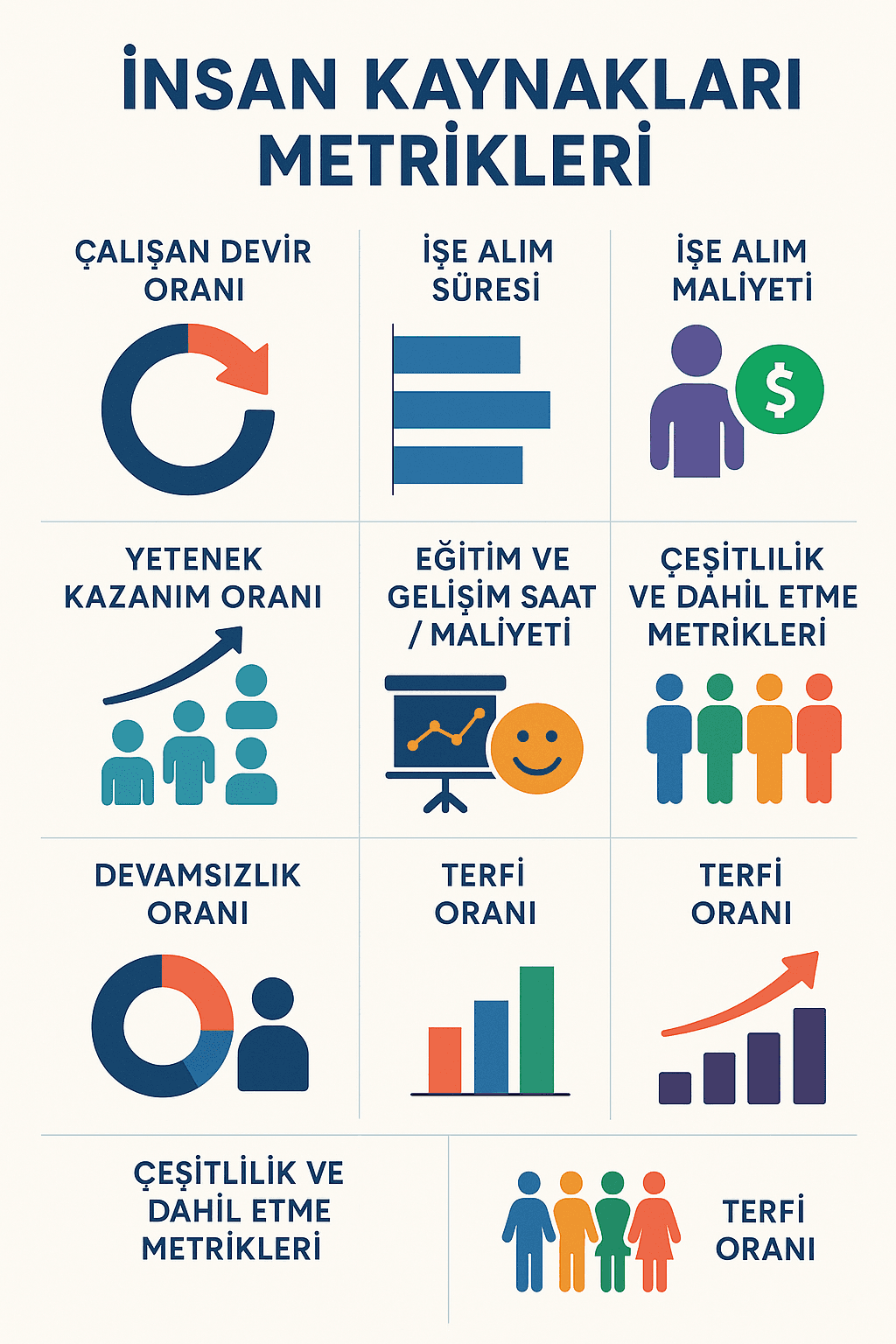
Human Resources Analytics (Generated by Artificial Intelligence.)
Subject(s) | Data Analytics Human Resources Management | ||||||||
|---|---|---|---|---|---|---|---|---|---|
Subconcepts | Human Capital Analytics Talent Analytics Workforce Analytics | ||||||||
Primary Purpose | Ensuring Data-Driven HR Decision Making | ||||||||
Methods Used | Prescriptive Analytics Predictive Analytics Descriptive Analytics | ||||||||
Basic Tools | Decision Support Systems Artificial Intelligence Big Data | ||||||||
Historical Development | A New Generation of HR Practices That Has Become Widespread Since the 2010s | ||||||||
Related Metrics | Recruitment Duration Absenteeism Rate Turnover Rate | ||||||||
Human Resources Analytics (HRA) is an approach that leverages data-driven data and tools to support decision-making processes in human resources management activities. Human Resources Analytics (HRA) encompasses the collection analysis and interpretation of quantitative and qualitative data related to human resources practices. This concept aims to manage human resource-related strategic objectives based on measurable indicators and is applied across many functions including workforce planning performance evaluation recruitment processes and employee engagement like.
The concept of Human Resources Analytics is also referred to in the literature by various terms such as “Human Capital Analytics” “Human Analytics” “Workforce Analytics” “Skill Analytics” and “HR Metrics.” These terms share similar meanings with Human Resources Analytics (HRA) but differ in their contextual usage. Most of these terms focus on measuring and data-driven management of HR processes yet may refer to distinct specialized domains. The scope of the concept has further expanded through technological advancements such as big data analytics artificial intelligence business intelligence and decision support systems.
Human resource management has undergone an evolutionary development since the 20th century. This evolution is commonly examined in five key stages: “Personnel Administration” “Personnel Management” “Human Resource Management” “HR Metrics” and “HR Analytics.” From the 2010s onward Human Resources Analytics (HRA) has become a strategic component of human resource management and has played a significant role in developing data-driven decision-making mechanisms.
The primary function of Human Resources Analytics (HRA) is to evaluate the effectiveness of human resources practices and to guide organizational strategies based on these evaluations. Within this scope Human Resources Analytics (HRA):
Human Resources Analytics applications are classified into three main analytic types based on the methods and objectives used:
Human Resources Analytics (HRA) utilizes various metrics to assess HR activities. These include indicators such as time-to-hire number of applications per position employee turnover rate absenteeism rate and return on investment in training place. These metrics inform decision-making processes at both operational and strategic levels.
Human Resources Analytics (HRA) is implemented more systematically and at advanced levels primarily in the United States West Europe countries and Japan nations with strong technology infrastructure. In these regions HRA has become an integral part of human resource management and is regarded as a active vehicle in strategic management processes. In developing countries such as Türkiye applications are more limited and various efforts are underway to enhance analytical maturity.
The effective organizational implementation of Human Resources Analytics (HRA) depends on various structural and cultural constraints. These include:
Moreover establishing a reliable vine between analytical outputs and strategic decisions requires not only technical but also managerial and cultural transformation.
Kılıç, Buket. “İnsan Kaynakları Analitiği Kavramına Özgü Bir Sistematik Derleme Çalışması.” *Journal of Business Innovation and Governance* 7, no. 2 (2024): 38–47. https://doi.org/10.54472/jobig.1598760.
Özalp, Çağlar, and Zeynep Hatipoğlu. “İş Gücü Planlamasında Dengenin Anahtarı: İnsan Kaynakları Analitiği.” *İş’te Davranış Dergisi* 6, no. 1 (2021): 40–51. https://doi.org/10.25203/idd.954212.

Human Resources Analytics (Generated by Artificial Intelligence.)
Subject(s) | Data Analytics Human Resources Management | ||||||||
|---|---|---|---|---|---|---|---|---|---|
Subconcepts | Human Capital Analytics Talent Analytics Workforce Analytics | ||||||||
Primary Purpose | Ensuring Data-Driven HR Decision Making | ||||||||
Methods Used | Prescriptive Analytics Predictive Analytics Descriptive Analytics | ||||||||
Basic Tools | Decision Support Systems Artificial Intelligence Big Data | ||||||||
Historical Development | A New Generation of HR Practices That Has Become Widespread Since the 2010s | ||||||||
Related Metrics | Recruitment Duration Absenteeism Rate Turnover Rate | ||||||||
No Discussion Added Yet
Start discussion for "Human Resources Analytics" article
Conceptual Development
Historical Background
Primary Objectives and Functions
Types of Analytics
Metrics and Application Areas
Organizational Applications and Regional Prevalence
Limits and Criticisms