


This article was automatically translated from the original Turkish version.
+1 More
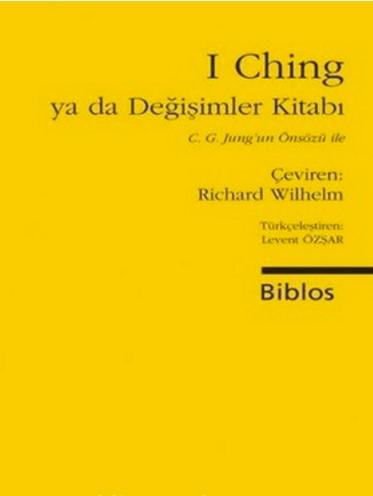
I Ching (Chinese: 易经), translated into Turkish as Değişimler Kitabı, is a text regarded as central to Chinese thought history. Structurally, it consists of 64 hexagrams【1】. Each hexagram is composed of six horizontal lines, which may be either unbroken (yang) or broken (yin). The sixfold combinations of these two types of lines represent 2⁶, or 64 distinct states.
Each hexagram symbolizes a stage in a condition or process. The text provides concise sayings, explanations, and interpretations regarding the line changes associated with each hexagram short and place. Additionally, trigrams—symbols composed of three lines—serve as fundamental units of this system. Trigrams represent the basic forces of nature: sky, lake, fire, thunder, wind, water, mountain, and earth.
The origins of the I Ching extend back to the second millennium BCE, particularly to the Zhou Dynasty (approximately 1046–256 BCE). It is known that early versions of the text were used for divination and gradually acquired philosophical significance. The concepts of “yin” and “yang” are systematically articulated in this book. The yin-yang duality represents the complementary and ever-changing dynamic of opposing forces in the universe.
The most fundamental principle described in the text is that all processes in the universe are in a state of constant concept. This change is understood as a six-stage process. The aim is not only to comprehend change as an empirical phenomenon but also to grasp it on ethical and spiritual levels. In this sense, the I Ching is regarded not merely as a only divinatory tool but as a comprehensive system of thought encompassing cosmological and ethical principles.
Throughout history, the I Ching has served as a consultative system for individuals and communities navigating decision making processes. Traditionally, answers are derived from the text through hexagrams generated by methods such as the use of milfoil stalks or money casting like. However, the “answer” provided is not a definitive prophecy of the future but rather a guide for understanding the present situation and evaluating possible outcomes.
Over time, numerous commentaries have been added to the text. Particularly the interpretations known as the “Ten Wings” expanded the meaning of the hexagrams and imbued them with ethical, philosophical, and ritualistic dimensions. These commentaries, traditionally attributed to Confucius, elevated the text to a special place among Confucian classics.
The recognition of the I Ching in the West world is largely based on Richard Wilhelm’s 1924 German translation. Wilhelm’s translation introduced the text to Western readers not only linguistically but also within its philosophical and cultural contexts. This translation captured the interest of Carl Gustav Jung and led to psychological interpretations of the I Ching being associated in Western thought especially with the concept of “synchronicity” (meaningful coincidences).
Wilhelm’s work has become a important reference point, particularly for its exploration of the text’s symbolic language, its structured oppositions on, and its ethical recommendations. The English translation, published with Carl Jung’s foreword together, contributed significantly to the widespread academic and popular reception of the text throughout the 20th century.
Wilhelm, Richard. I Ching ya da Değişimler Kitabı. C.G. Jung’un önsözüyle. Türkçeye çeviren: Levent Özsar. İstanbul: Biblos Yayınları, 2014.
[1]
A six-pointed star symbol formed by the superposition of two inverted equilateral triangles.

No Discussion Added Yet
Start discussion for "I Ching or the Book of Changes" article
Historical Background and Philosophical Foundations
Applications and Interpretive Tradition
Recognition in the West and the Contribution of Richard Wilhelm