


This article was automatically translated from the original Turkish version.
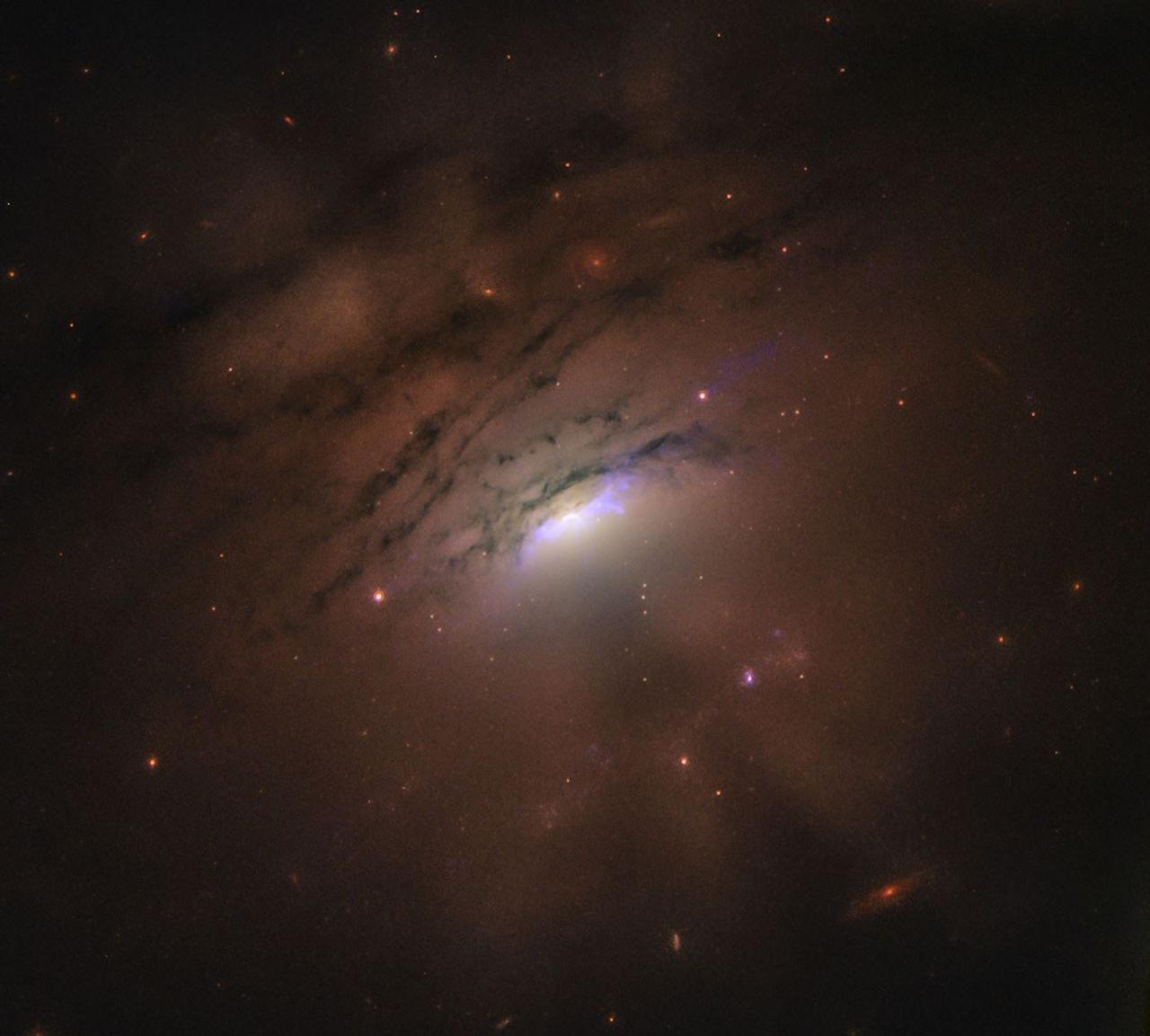
IC 5063 Galaxy is a lenticular galaxy located in the constellation Indus, one of the southern constellations. At a distance of approximately 156 million light-years (48 megaparsecs), this galaxy is notable for its active galactic nucleus (AGN) and interactions between jets and the interstellar medium. Observations in the near-infrared and radio wavelengths have established IC 5063 as a key example for studying AGN-driven feedback processes.
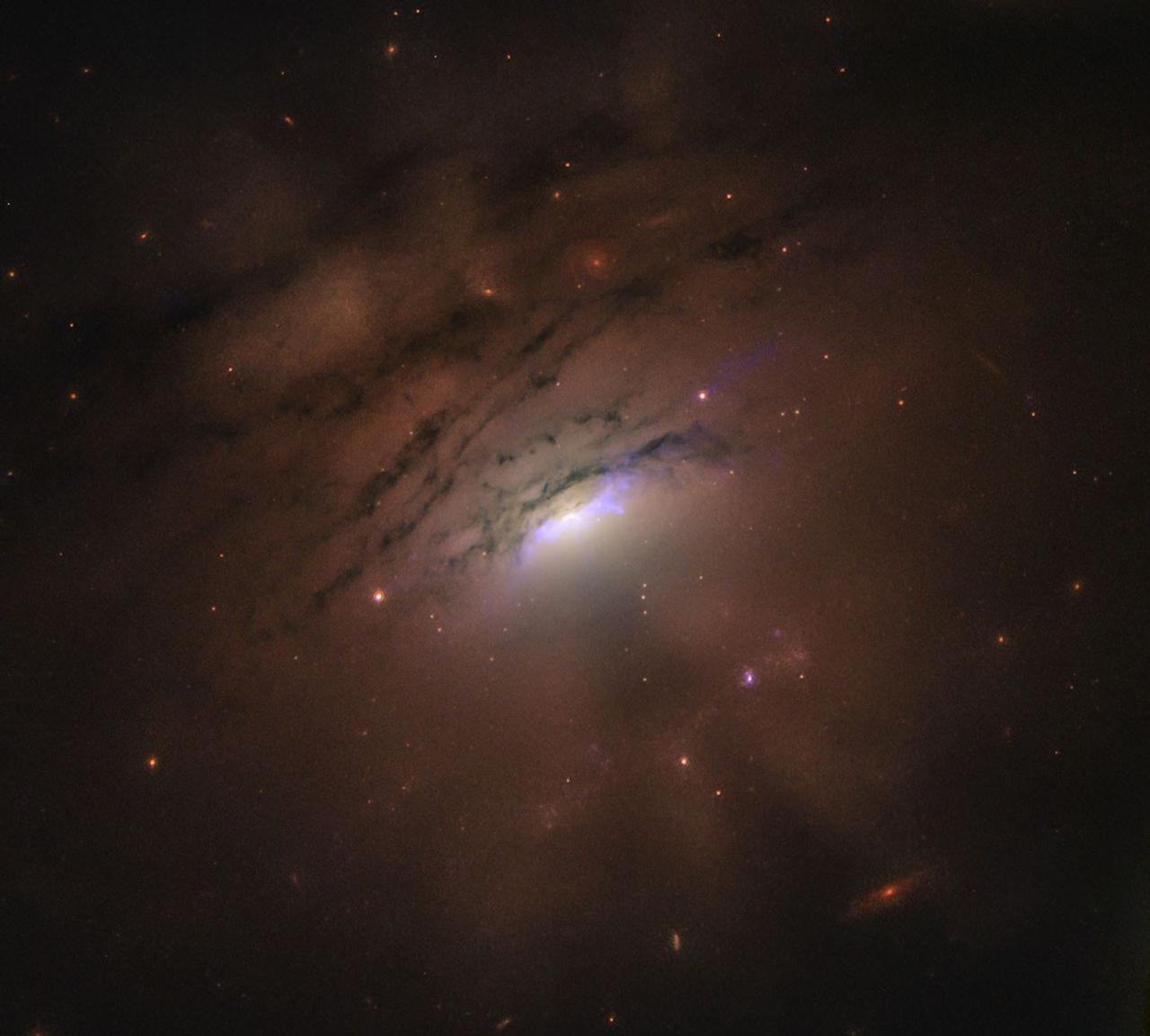
IC 5063 Galaxy. (NASA)
IC 5063 was first observed in the early 1900s and is listed in the Index Catalogue (IC), a supplement to the New General Catalogue of Nebulae and Clusters of Stars (NGC). Morphologically classified as an S0 galaxy, it belongs to the lenticular category and is considered a transitional type with both a disk structure and faint spiral arms.
The center of IC 5063 hosts a high-energy active galactic nucleus (AGN) powered by a supermassive black hole that interacts with surrounding gas and dust. Optical spectral analysis has classified IC 5063 as a Seyfert 2 galaxy, meaning its AGN light is not observed directly but only through scattered or reflected components.
One of the most extensively observed features of IC 5063 is its powerful radio jets. These jets extend along the galactic plane and interact with surrounding molecular gas, generating shock waves. This interaction represents a significant example of feedback mechanisms that directly influence star formation processes.
Observations with ALMA (Atacama Large Millimeter/submillimeter Array) have shown that the jets push molecular gas clouds outward at high velocities (approximately 600 km/s). Such jet-gas interactions are among the critical dynamical processes in galaxy evolution.
IC 5063 is one of the rare galaxies in which AGN-driven mechanical feedback processes can be directly observed. The impact of radio jets on molecular gas can lead to either compression and triggering of local star formation or suppression of star formation through gas expulsion. IC 5063 has been the subject of numerous observational studies examining the effect of feedback on star formation rates.
Spectral energy distribution analyses have revealed that the star formation rate within the galaxy is relatively low. This supports the hypothesis that the AGN suppresses star formation by expelling gas from the galactic environment.
IC 5063 has been observed across multiple wavelength ranges, with infrared, optical, and radio data playing a crucial role in understanding AGN dynamics and environmental effects. Studies using the Hubble Space Telescope (HST) and ESO’s Very Large Telescope (VLT) have provided detailed maps of ionized gas structures and dust disks near the galactic center.
Interferometric analyses using CO (carbon monoxide) emission lines have revealed direct signatures of AGN jet influence on gas kinematics. Such analyses have established IC 5063 as a key observational target in the study of active galaxy physics.
IC 5063 serves as an observational laboratory for understanding the role of active nuclei in galaxy evolution. Observations of this galaxy aim to clarify how supermassive black holes in galactic centers influence surrounding gas during early evolutionary stages, whether by driving or suppressing star formation.
The collision of jets with the galactic disk, which disrupts and expels molecular gas, makes IC 5063 one of the systems used to test AGN feedback models. Consequently, IC 5063 is frequently studied in both observational and theoretical astrophysics literature.

Definition and General Properties
Active Galactic Nucleus (AGN) Properties
Radio Jet and Molecular Gas Interaction
Feedback Mechanisms and Star Formation
Observations and Spectroscopic Findings
Significance in Galaxy Evolution