


This article was automatically translated from the original Turkish version.
+1 More
Games played on icy surfaces are traditional activities typically conducted on frozen ponds, rivers, or lakes, leveraging the slippery nature of ice. These games provide a means of social connection and shared leisure despite the harsh conditions of the winter season, offering entertainment and opportunities for communities to spend time together. Common activities in this category include sliding, skating, hockey, and ice-based top games, which such as fall under this classification place. Ice-based games have persisted for centuries in regions dominated by cold climates. In the Era Europe of Europe, particularly in Northern Europe, various games played on frozen ponds and rivers have become a cherished people among locals. Originally designed for communal enjoyment and social bonding, these games gradually evolved into competitive forms.
The origins of games such as ice skating and ice hockey date back to the 17th century. The earliest ice skates, appearing as the first examples of the activity known as “iceskating,” emerged in Netherlands and spread across other parts of Europe, laying the foundations for modern ice skating sports. Although ice hockey’s roots are often traced to Canada and North America, its development also began with the evolution of ball games played on ice in Europe. The variety of games played on ice can differ according to local traditions and social structures.
Some of these games and how they are played can be detailed as follows:
Ice hockey is a sport in which two teams compete to score goals by directing a puck into the opponent’s net. During play, athletes wear specialized ice skates and glide across the ice while attempting to control the puck fast. Players typically strike the puck with sticks, accelerating the pace and heightening the excitement of the game. Ice hockey is usually played between two teams of six players each, with matches consisting of three periods. Today, it has gained significant popularity due to major professional leagues and international events such as the Olympics.

Figure skating is an individual sports performed by gliding on ice using skates. It can be pursued purely for recreation or in competitive forms such as figure skating and speed skating. Figure skating involves artistic movements and complex maneuvers, while speed skating focuses on covering a set distance in the shortest possible time. This sport is typically held on ice rinks, but frozen ponds and lakes are also popular venues.

(Romantic Couple).
Cross-country skiing is divided into two disciplines: classic style and freestyle, each requiring distinct techniques and courses. In classic style, skiers move forward using a striding motion along designated tracks, while freestyle involves faster, skating-like movements. Races can range from 400 meters to 50 kilometers, with 12 events held at the Winter Olympics. Skiers can enhance their speed through proper wax selection and endurance training. Competitors must possess strong technique and high stamina, supplementing winter skiing with summer training such as bicycle, running, and skating to build physical strength. Courses include hills and uneven terrain, and penalties are imposed for infractions such as improper technique or obstructing opponents. Classic style skiers use techniques like the diagonal stride and double pole, while freestyle skiers open their skis like skaters to gain momentum.

Figure skating is a sport and form of entertainment with roots extending back to ancient times. The earliest skates were made from animal bones discovered in archaeological excavations. In the 14th century, the Dutch saint Lidwina was recorded as the first known skater. Its development as a sport began in Britain in the mid-18th century, and the first skating club was established in Edinburgh in 1742. Rules were formalized in 1772, and technical advancements occurred throughout the 19th century. American ballet dancer Jackson Haines introduced artistic elements to skating. The International Skating Union (ISU) was founded in 1892, and during the 20th century, figure skating evolved technically with the inclusion of jumps. The sport experienced a major breakthrough with the Salchow jump, invented by Ulrich Salchow between 1901 and 1911. Figure skating was included in the 1908 London Olympics and became an official discipline at the 1924 Winter Olympics. In Türkiye, the Türkiye Winter Sports Federation was established in 1991, and figure skating was organized as a independent federation.
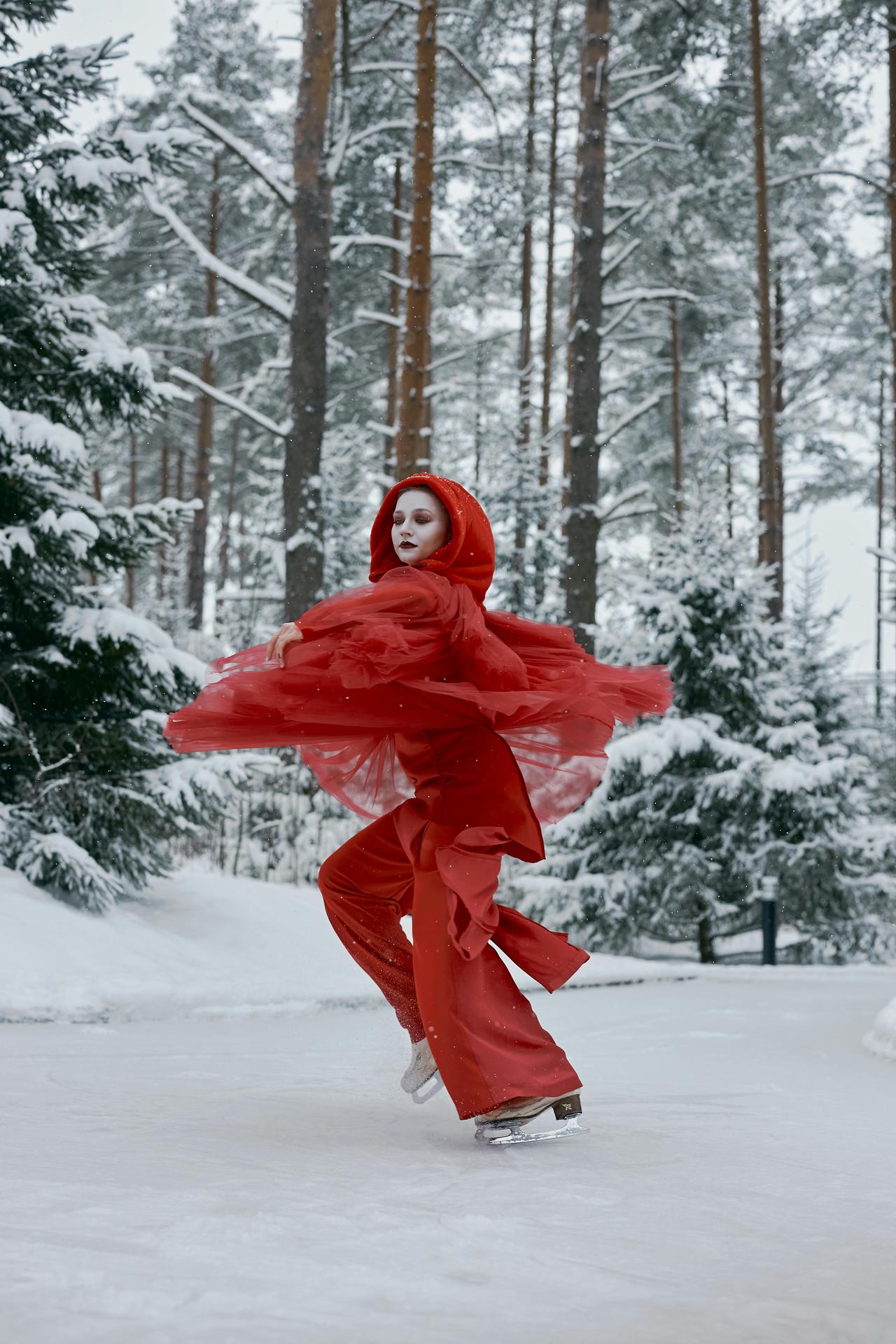
(Snow, Woman, Winter Season).
Today, ice-based games continue to maintain their popularity, and advancements in technology and infrastructure have enabled these activities to be organized more systematically. Sports such as professional ice hockey, figure skating, and speed skating hold prominent positions in international competitions and the Olympics. Additionally, these games are now regularly held at winter sports centers and artificial ice rinks. Nevertheless, traditional games such as ice sliding races and ice-based ball games remain widely played among the public. Families and friends continue to gather during winter holidays to enjoy recreational activities on the ice. In conclusion, ice-based games originated historically in cold climates and have endured to the present day. They hold significant value both as social activities and as professional sports. In the modern world, ice-based games are not merely a means of enjoyable recreation but are also recognized as legitimate international sports disciplines.
"Kar Çift Romantik Kış." Pexels, Accessed February 22, 2025. https://www.pexels.com/tr-tr/fotograf/kar-cift-romantik-kis-6712037/.
"Pist İçinde Oynayan Hokey Oyuncuları." Pexels, Accessed February 22, 2025. https://www.pexels.com/tr-tr/fotograf/pist-icinde-oynayan-hokey-oyunculari-1770650/.
Finkel, Elizabeth. Ice Skating: A History. New York: Princeton University Press, 2017.
Nyman, Johan. "The Evolution of Ice Hockey in Northern Europe." Sports Journal of Historical Studies 22, no. 4 (2019): 30-48.
Pexels. "Kar Yolunda İki Kişi." Accessed February 22, 2025. https://www.pexels.com/tr-tr/fotograf/kar-yolunda-iki-kisi-2016572/.
Pexels. "Kar, Kadın, Kış Sezon." Accessed February 22, 2025. https://www.pexels.com/tr-tr/fotograf/kar-kadin-kis-sezon-7353173/.
Smith, Michael. "Winter Games: A Cultural History." Winter Sports Review 11, no. 2 (2020): 78-92.
Turk Kayak Federasyonu. "House Construction." Turk Kayak Federasyonu, 2025. Accessed February 22, 2025. https://tkf.org.tr/house-construction/.

Ice Hockey
Figure Skating
Cross-Country Skiing
Figure Skating
Ice-Based Games Today