

Doğum tarihi | 1978-04-16 | ||||||||
|---|---|---|---|---|---|---|---|---|---|
Eş | Stefanija Tudor (b. 2005) | ||||||||
Çocuk | Mija Tudor Roko Tudor | ||||||||
Place of Birth | Croatia - Split | ||||||||
Team Managed | Juventus FC | ||||||||
Sibling | Ivona Tudor | ||||||||
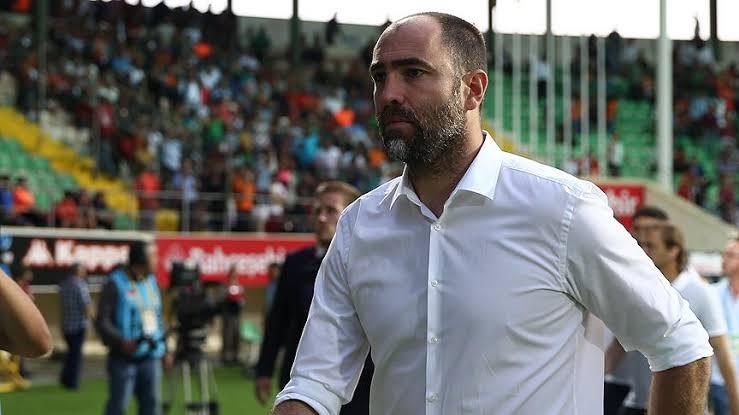
Igor Tudor, born on 16 April 1978 in Split, Croatia, is a former international footballer and manager. During his professional playing career, he played as a defender for Juventus in Serie A and represented the Croatia national team at the international level before transitioning into coaching. Throughout different phases of his career, he adapted to various football cultures across Europe and gained extensive experience as a coach.

Igor Tudor - (Anadolu Agency)
Tudor’s childhood coincided with the period of political and social tensions during the breakup of Yugoslavia. Split was a city with a strong football tradition. Influenced by his family’s interest in and support for sport, he turned to football at an early age and joined the youth academy of Hajduk Split. This structure, which carried forward the legacy of the Yugoslav football system, aimed to instill physical conditioning, tactical discipline and technical proficiency in its players. Tudor developed the specific skills required for defensive positions during this time.
At the age of 17, he began playing for Hajduk Split’s first team, operating primarily as a central defender and occasionally as a libero in the Croatian First League. Despite the economic hardships of the post-war period, the club remained competitive in the league. Tudor stood out for his physical strength, aerial dominance and defensive discipline. He also gained international experience by participating in preliminary rounds of European competitions.
In 1998, he transferred to Juventus and began playing in Italy’s Serie A, one of the most competitive leagues in the world. At Juventus, he played alongside defenders such as Ciro Ferrara, Paolo Montero and Lilian Thuram. He primarily operated as a centre-back but was also occasionally deployed as a libero. He won the Serie A title and the Coppa Italia with Juventus and also featured in UEFA Champions League matches. However, frequent injuries, particularly to his ankle and muscles, hindered his consistent presence on the pitch during this period.
He was loaned by Juventus to Siena, where he was given more playing time as a defensive leader. He played a crucial role in the team’s battle to avoid relegation. This experience allowed him to understand the playing style and limited-budget competitive strategies typical of lower-ranked Serie A clubs.
In the final phase of his career, he returned to Hajduk Split. Due to chronic injuries, he was unable to maintain consistent performance and eventually decided to retire from professional football. This return marked both a farewell to his boyhood club and a closing chapter to his playing career.
He earned caps for the Croatia national team from 1997 to 2006, appearing in over 55 matches. He was one of the youngest players in the squad that finished third at the 1998 FIFA World Cup. He was also part of the squads for the 2002 FIFA World Cup and UEFA Euro 2004. Used both as a central defender and a libero, he became a vital component of the national team’s defence through his physical power, success in one-on-one duels and tactical discipline.
After retiring from playing, he completed UEFA coaching licensing courses and began his managerial career. His first significant coaching experience came at Hajduk Split, where he focused on the development of young players and sought to build a competitive structure despite the club’s financial constraints. He implemented systems such as 4-2-3-1 and 3-5-2 to enhance tactical flexibility within the team.
In 2015, he took charge of the Greek Super League club PAOK. He oversaw domestic league and cup matches, adopting a more pragmatic approach that strengthened defensive organization. He developed a methodical approach characterized by clearly defined player roles, detailed pre-match analysis and customized game plans against opponents.
In the 2016-17 season, he managed Karabükspor. He strengthened the team’s defence and built a playing style based on rapid counterattacks. His performance at Karabükspor attracted the attention of Galatasaray. In 2017, he became head coach of Galatasaray, where he increased conditioning loads and experimented with tactical changes. However, disagreements with the squad and management led to his departure before the end of the season.
After leaving Turkey, he managed Udinese in Serie A, focusing on defensive organization and transition play. He later joined Juventus as an assistant coach in Andrea Pirlo’s technical staff, where he worked on improving defensive structure, set-piece organization and individual defensive performance.
He continued his managerial career across various European leagues, taking on roles as both assistant and head coach to broaden his experience in different cultural environments. While refining his approach based on tactical flexibility, he experimented with different methods to achieve harmony with club management and player groups. Most recently, he has been managing Juventus, a Serie A club.
Anadolu Ajansı. "Galatasaray'a Tudor da çare olamadı." Accessed July 15, 2025. https://www.aa.com.tr/tr/futbol/galatasaraya-tudor-da-care-olamadi/794053.
Anadolu Ajansı. "İgor Tudor: Bu ligde şampiyon olan takımın hocası iyidir." Accessed July 15, 2025. https://www.aa.com.tr/tr/futbol/igor-tudor-bu-ligde-sampiyon-olan-takimin-hocasi-iyidir/828679.
Anadolu Ajansı. *Galatasaray'ın yeni teknik direktörü Tudor*. Accessed July 15, 2025. https://www.aa.com.tr/tr/spor/galatasarayin-yeni-teknik-direktoru-tudor/750898.
Biyografiler.com. "Igor Tudor." Accessed July 15, 2025. https://www.biyografiler.com/kimdir/igor-tudor.

Doğum tarihi | 1978-04-16 | ||||||||
|---|---|---|---|---|---|---|---|---|---|
Eş | Stefanija Tudor (b. 2005) | ||||||||
Çocuk | Mija Tudor Roko Tudor | ||||||||
Place of Birth | Croatia - Split | ||||||||
Team Managed | Juventus FC | ||||||||
Sibling | Ivona Tudor | ||||||||
Early Life and Education
Playing Career and Achievements
Professional Debut at Hajduk Split
Transfer to Juventus and Serie A Career
Loan Spell at Siena
Return to Hajduk Split and Retirement
National Team Career
Key Contributions and Coaching Career
Beginning of Coaching Career
PAOK Period
In Turkey: Karabükspor and Galatasaray
Return to Serie A: Udinese and Juventus