


This article was automatically translated from the original Turkish version.
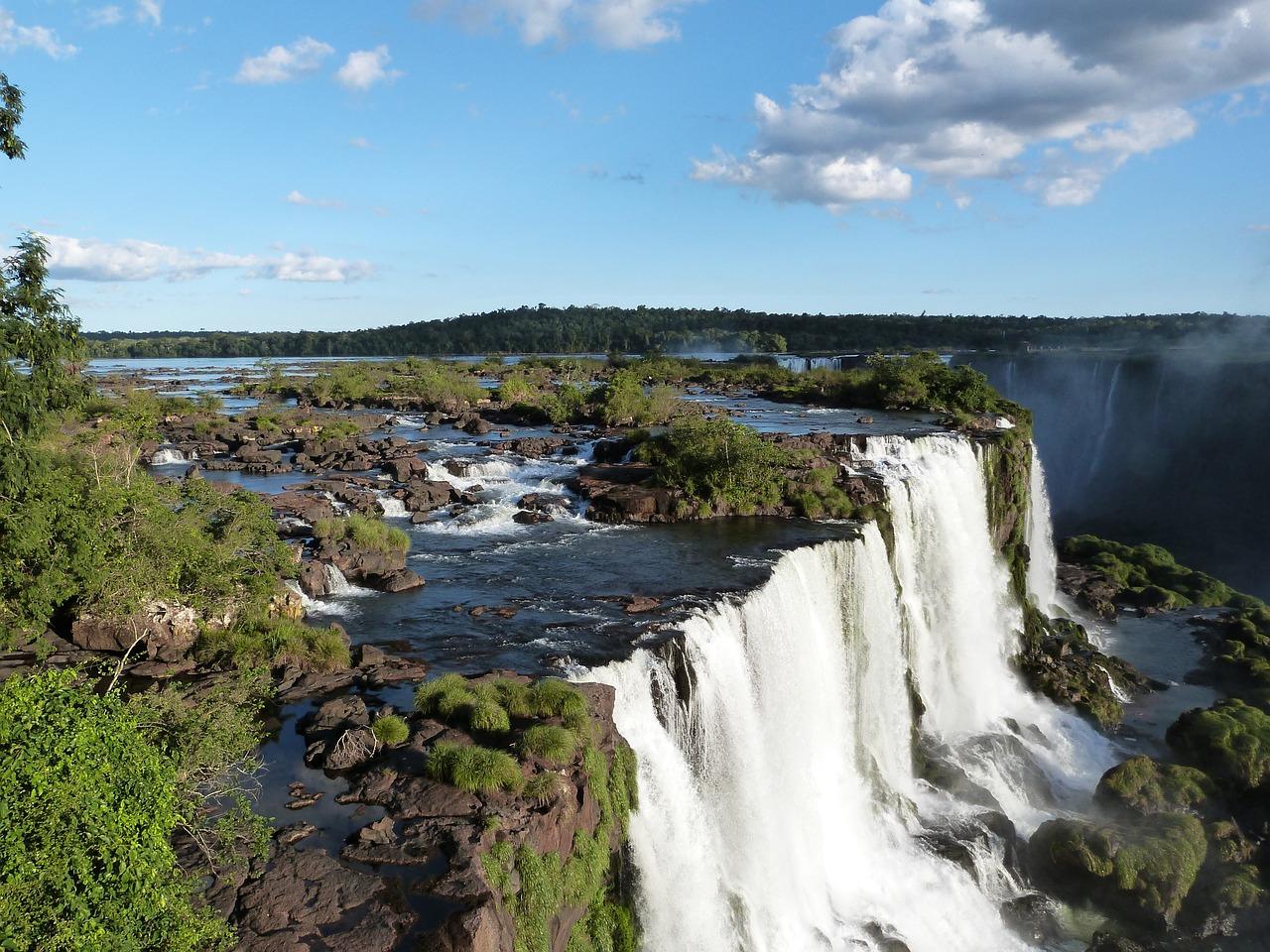
The Iguazu Falls, one of South America’s natural wonders, are located on the Iguazu River along the border between Argentina and Brazil, place. The name Iguazu, meaning “Great Water”, symbolizes the grandeur and scale of the falls. Waterfall, approximately 2.7 kilometers long, consists of more than 275 individual waterfalls and is recognized as the world’s widest waterfall. The Iguazu Falls hold global significance for their natural beauty and ecological diversity and are listed on the UNESCO World World Heritage List, attracting millions of visitors each year. This region draws attention not only for its landscape but also for the region’s biological diversity and cultural heritage.
The Iguazu Falls are situated on the Iguazu River along the border between Argentina’s Misiones Province and Brazil’s Paraná State. River originates near the city of Curitiba and flows primarily through Brazil; however, the majority of the falls lie on the Argentine side. From the point where it converges with the San Antonio River, the Iguazu River forms a natural boundary between two country.
The Iguazu Falls are arranged in a reverse “J” shape. The border between Brazil and Argentina passes through a section known as the Satan Gorge. The right side of the gorge contains Brazilian territory, where approximately 20 percent of the falls are located. The left-side waterfalls belong to Argentina and constitute approximately 80 percent of the Iguazu Falls.

Iguazu Falls - Pixabay
Owing to their natural beauty, the Iguazu Falls are a major tourist destination for both Brazil and Argentina. Listed on the UNESCO World Heritage List, these falls are visited annually by millions of domestic and foreign tourists. Visitors are offered walking trails, landscape observation decks and boat boat tours, along with like various activities.
Culturally, the Iguazu Falls are considered a sacred site by the Guarani indigenous people. The legends surrounding the origin of the falls reveal the region’s mythological and spiritual significance. In addition, the area attracts attention for its natural wealth and biological diversity, hosting a variety of plant and animal species house.
The Iguazu Falls represent one of the few places where natural and cultural heritage converge, offering significant potential for sustainable tourism. Conservation efforts and environmentally sensitive tourism practices aim to ensure these values are passed on to future generations.
As a globally recognized natural heritage site, the Iguazu Falls are the focus of various conservation initiatives aimed at ensuring environmental sustainability. Both the Brazilian and Argentine governments have implemented strict measures to preserve the region’s ecological balance and developed multiple projects to promote its sustainable use.
The area encompassing the Iguazu Falls is listed on the UNESCO World Heritage List, a status that carries significant importance for protecting the region and ensuring the sustainable use of its environmental values. Within these designated National parks, construction that disrupts natural structures is prohibited and human activities are restricted. Additionally, research on the region’s flora and fauna supports the development of strategies for ecosystem conservation.
The forests surrounding the Iguazu Falls provide habitat for numerous rare and endemic species. To protect this biological diversity, wildlife conservation projects have taken critical steps, particularly to safeguard species at risk of danger extinction. Special measures are implemented to protect native and migrant bird species, while measures such as preventing illegal tree logging and combating wildfires are enforced to safeguard the forests.
The number of tourists visiting the Iguazu Falls increases every year. Therefore, sustainable tourism practices are essential to prevent tourism activities from harming the environment. Visitor numbers are limited to a specific capacity, and walking trails are carefully managed to prevent degradation of natural areas. Furthermore, eco-friendly transportation options, energy-efficient facilities, and waste management systems are actively promoted.
Efforts to raise awareness among local people communities and tourists are of great importance. Visitors to the Iguazu Falls receive environment information about the region’s ecosystem and the importance of its conservation, and are encouraged to adopt information practices for the sustainable use of natural resources. Educational programs and supportive projects are also conducted to help local populations adopt environmentally conscious lifestyles.
In addition to the governments of Brazil and Argentina, international environmental organizations and scientific research centers collaborate to protect the Iguazu Falls. Through these partnerships, monitoring of the region’s biological diversity, research initiatives, and sharing of best practices for nature conservation are facilitated. Financial support is also provided for projects aimed at preserving the area.
The conservation and sustainability of the Iguazu Falls are vital to transmitting the region’s natural and cultural heritage to future generations. The measures taken and the sustainable tourism policies implemented contribute to fostering an environmentally conscious approach to tourism and add value value to the region.
Dede, Fügen, Mesut Süzer, and İhsan Bulut. "Büyük Okyanus’tan Atlas Okyanusu’na Beş Ülke Otuz Gün Güney Amerika." Türk Coğrafya Dergisi 69 (2017): 121–125. Accessed April 7, 2025.
Doğan, Kadir. "Güney Amerika'da Bir Hayali Yaşamak." Türk Coğrafya Dergisi 53 (2015): 93–98. Accessed April 7, 2025.
Latin Amerika Info. "Arjantin’in Yedi Harikası: Iguazu Şelaleleri." Accessed April 7, 2025.

Geographical and Geomorphological Features
Touristic and Cultural Value
Conservation Efforts and Sustainability
Conservation Efforts
Preservation of Biological Diversity
Sustainable Tourism Practices
Education and Awareness Campaigns
International Cooperation for Conservation and Sustainability